
Fact Check: U.S. Violent Crime Plunges to Lowest Levels in a Century
Despite widespread public perception of a national crime wave, federal and independent data confirm that U.S. violent crime and homicide rates have plummeted to historic lows in 2026.
By Factlen Editorial Team

- Data Analysts & Criminologists
- Argues the historic drop is driven by post-pandemic normalization and local community violence interventions.
- Federal Administration
- Credits aggressive federal law enforcement, gang disruptions, and strict immigration policies for the safer streets.
- Mainstream Observers
- Reports the broad statistical decline while tracking the political battle over who deserves the credit.
What's not represented
- · Victims of unreported crimes
- · Local community violence interrupters
Why this matters
Public anxiety about crime heavily influences voting behavior, neighborhood investment, and personal stress levels. Understanding that American streets are statistically safer now than at almost any point in modern history allows citizens to make decisions based on data rather than fear.
Key points
- Preliminary FBI data shows a 9.3% drop in overall violent crime and an 18.1% drop in murders from 2024 to 2025.
- Criminologists project the national homicide rate will fall to 4.0 per 100,000 residents, the lowest level recorded since 1900.
- The decline is broad-based, with homicides falling in 31 out of 35 major American cities evaluated by the Council on Criminal Justice.
- Experts attribute the drop to post-pandemic normalization and local violence intervention programs, while the federal administration credits aggressive law enforcement policies.
For the past five years, a pervasive narrative has dominated American political discourse and local news broadcasts: the United States is gripped by an unprecedented wave of violent crime. Public polling consistently shows that a majority of Americans believe crime is rising nationally, fueling anxiety and shaping electoral outcomes. Yet, a comprehensive review of federal, local, and independent data from 2024 through early 2026 reveals a starkly different reality. Rather than experiencing a crime wave, the nation is currently undergoing one of the steepest declines in violent crime in modern history.[2][3]
The statistical plunge is not a minor statistical anomaly, but a broad-based, multi-year trend that has effectively erased the pandemic-era spike in violence. According to a historic early data release from the Federal Bureau of Investigation in May 2026, violent crime decreased by an estimated 9.3 percent from 2024 to 2025. This follows a confirmed 4.5 percent drop the previous year, signaling a sustained downward trajectory across almost every category of interpersonal violence.[1][7]
The most dramatic evidence of this shift is found in the national homicide rate. During the height of the COVID-19 pandemic in 2020, the U.S. murder rate surged to 6.7 per 100,000 residents, sparking widespread alarm. However, data compiled by the Council on Criminal Justice (CCJ) from 35 major American cities shows that homicides plummeted by 21 percent in 2025 alone, representing nearly a thousand fewer lives lost in those jurisdictions.[2][3]

If this urban trend holds true across the final nationwide federal data, criminologists project that the U.S. homicide rate will drop to approximately 4.0 per 100,000 residents. That figure would eclipse the previous modern low of 4.4 recorded in 2014, and would represent the lowest national murder rate observed since at least the year 1900.[2][6]
The decline is not isolated to a few progressive or conservative strongholds; it is a remarkably uniform national phenomenon. The CCJ's analysis found that homicides decreased in 31 out of the 35 cities evaluated, with cities like Denver, Omaha, and Washington D.C. seeing drops of 40 percent or more. Furthermore, early 2026 data from 67 major law enforcement agencies indicates that the downward momentum has continued into the first quarter of the new year.[3][5]
Beyond lethal violence, other major crime categories are seeing similar, albeit slightly less dramatic, reductions. The FBI's preliminary 2025 data indicates that robberies fell by 18.5 percent, rapes decreased by 7.6 percent, and aggravated assaults dropped by 7.2 percent. Even property crimes, which had remained stubbornly high in some jurisdictions, decreased by an estimated 12.4 percent nationally.[1]

Beyond lethal violence, other major crime categories are seeing similar, albeit slightly less dramatic, reductions.
As the evidence of a historic drop becomes undeniable, a fierce debate has emerged over what exactly is driving the decline—and who deserves the political credit. The Trump administration has aggressively claimed ownership of the falling crime rates. In a series of statements, the White House and federal law enforcement officials have attributed the drop to a return to "law and order" policies, aggressive immigration enforcement, and the deployment of federal resources to major cities.[3][6]
FBI Director Kash Patel recently highlighted the agency's role in disrupting gangs, seizing fentanyl, and increasing violent crime arrests as the primary catalysts for the safer streets. "Media gymnastics can't hide the reality that this administration brought law and order back," Patel stated, pointing to the 2025 statistics as validation of a more aggressive federal posture.[3]
However, independent researchers and criminologists offer a different, more structural explanation for the plunging crime rates. Many experts argue that the decline is primarily the result of the country finally normalizing after the profound social and economic shocks of the COVID-19 pandemic. As schools reopened, community institutions resumed normal operations, and the initial spike in pandemic-era gun sales plateaued, the unique pressures that drove the 2020 crime wave naturally receded.[2]
Another crucial factor cited by researchers is the massive infusion of federal funding into local communities via the American Rescue Plan Act. This legislation allocated billions of dollars to state and local governments, much of which was funneled into community violence intervention programs, victim services, and local law enforcement training. These hyper-local initiatives, which focus on mediating disputes before they escalate to gunfire, are credited with driving down violence in some of the nation's most historically dangerous neighborhoods.[2][4]

Despite the historic success of these programs, their future is currently a point of intense political friction. In early 2026, the Department of Justice terminated hundreds of previously awarded grants, evaporating roughly $500 million in promised funds for community violence intervention and criminal justice research. The administration argued these grants were wasteful, while advocates warn that defunding these grassroots programs could jeopardize the very safety gains the nation is currently celebrating.[4]
While the data overwhelmingly points to a safer America, criminologists caution that the numbers do not capture everything. The FBI's transition to a new National Incident-Based Reporting System (NIBRS) has caused some friction in data collection, though participation has rebounded to cover 96 percent of the population. Furthermore, victimization surveys consistently show that certain crimes, particularly sexual assaults and domestic violence, remain chronically underreported to law enforcement.[1][7]
Ultimately, the evidence pack reveals a profound disconnect between statistical reality and public perception. While political rhetoric and social media algorithms continue to amplify individual instances of violence, the macro-level data tells a story of historic recovery. The United States in 2026 is experiencing a level of public safety that, statistically speaking, most living Americans have never witnessed before.[2][6]
How we got here
2014
The U.S. homicide rate hits a modern low of 4.4 per 100,000 residents.
2020-2021
Violent crime and homicides surge during the social and economic disruptions of the COVID-19 pandemic.
2023-2024
Crime rates begin a steady decline as pandemic pressures recede and federal rescue funds reach local communities.
May 2026
The FBI releases historic early data confirming a massive 18.1% drop in murders for 2025, pushing rates to a century-low.
Viewpoints in depth
Criminologists & Data Analysts
Argues the historic drop is driven by post-pandemic normalization and local community violence interventions.
Independent researchers point out that the 2020 crime spike was a historical anomaly caused by the unprecedented social and economic disruptions of the COVID-19 pandemic. As schools reopened, community institutions resumed normal operations, and the initial spike in pandemic-era gun sales plateaued, the unique pressures that drove the crime wave naturally receded. Furthermore, criminologists emphasize the impact of billions of dollars in federal rescue funds that were channeled into local community violence intervention programs, which successfully mediated conflicts in historically dangerous neighborhoods before they escalated to gunfire.
Federal Administration
Credits aggressive federal law enforcement, gang disruptions, and strict immigration policies for the safer streets.
The White House and federal law enforcement agencies argue that the plunging crime rates are the direct result of a return to 'law and order' policies. Officials point to aggressive federal surges into major cities, the disruption of thousands of gangs, and massive seizures of illicit fentanyl as the primary catalysts for the safer streets. From this perspective, the historic drop in homicides and violent crime validates a tough-on-crime approach and strict immigration enforcement, framing the statistical decline as a hard-won victory for federal policy rather than a natural post-pandemic normalization.
What we don't know
- Whether the recent federal defunding of community violence intervention grants will cause crime rates to rebound in marginalized neighborhoods.
- The exact ratio of credit that belongs to local community programs versus federal law enforcement surges.
- The true rate of chronically underreported crimes, such as domestic violence and sexual assault, which are not fully captured by police data.
Key terms
- Uniform Crime Reporting (UCR) Program
- The FBI's nationwide, cooperative statistical effort compiling crime data reported by local law enforcement agencies.
- Community Violence Intervention
- Programs that use evidence-based strategies and local community members to mediate conflicts and prevent violence before it occurs.
- Homicide Rate
- The number of murders and non-negligent manslaughters per 100,000 residents in a given year.
Frequently asked
Is violent crime actually rising in the US?
No. Federal and independent data show violent crime is currently experiencing one of the steepest declines in modern history, with homicides reaching a century-low.
Why do people think crime is up?
High-profile individual incidents amplified by social media and political rhetoric often create a perception of rising crime, even when macro-level data shows a steep decline.
What is driving the drop in crime?
Experts attribute the decline to a combination of post-pandemic social normalization, community violence intervention programs, and targeted law enforcement efforts.
Sources
Source coverage
7 outlets
3 viewpoints surfaced







[1]Federal Bureau of InvestigationFederal Administration
FBI Releases Historic Early Look at Annual Crime Data
Read on Federal Bureau of Investigation →[2]Council on Criminal JusticeData Analysts & Criminologists
What's Driving the Drop in Homicide? How Low Might It Go?
Read on Council on Criminal Justice →[3]TIMEMainstream Observers
Why Crime Rates Are Falling Across the U.S.
Read on TIME →[4]The ConversationData Analysts & Criminologists
Violent crime is at its lowest in a century but the funding that helped reduce it is disappearing
Read on The Conversation →[5]AxiosMainstream Observers
Violent crime rates plunge in America's big cities
Read on Axios →[6]The White HouseFederal Administration
ICYMI: “Violent crime plummets across major U.S. cities”
Read on The White House →[7]CBS NewsMainstream Observers
Crime down in every category in 2024, FBI report says
Read on CBS News →
More in news politics
See all 9 stories →US-Iran Deal
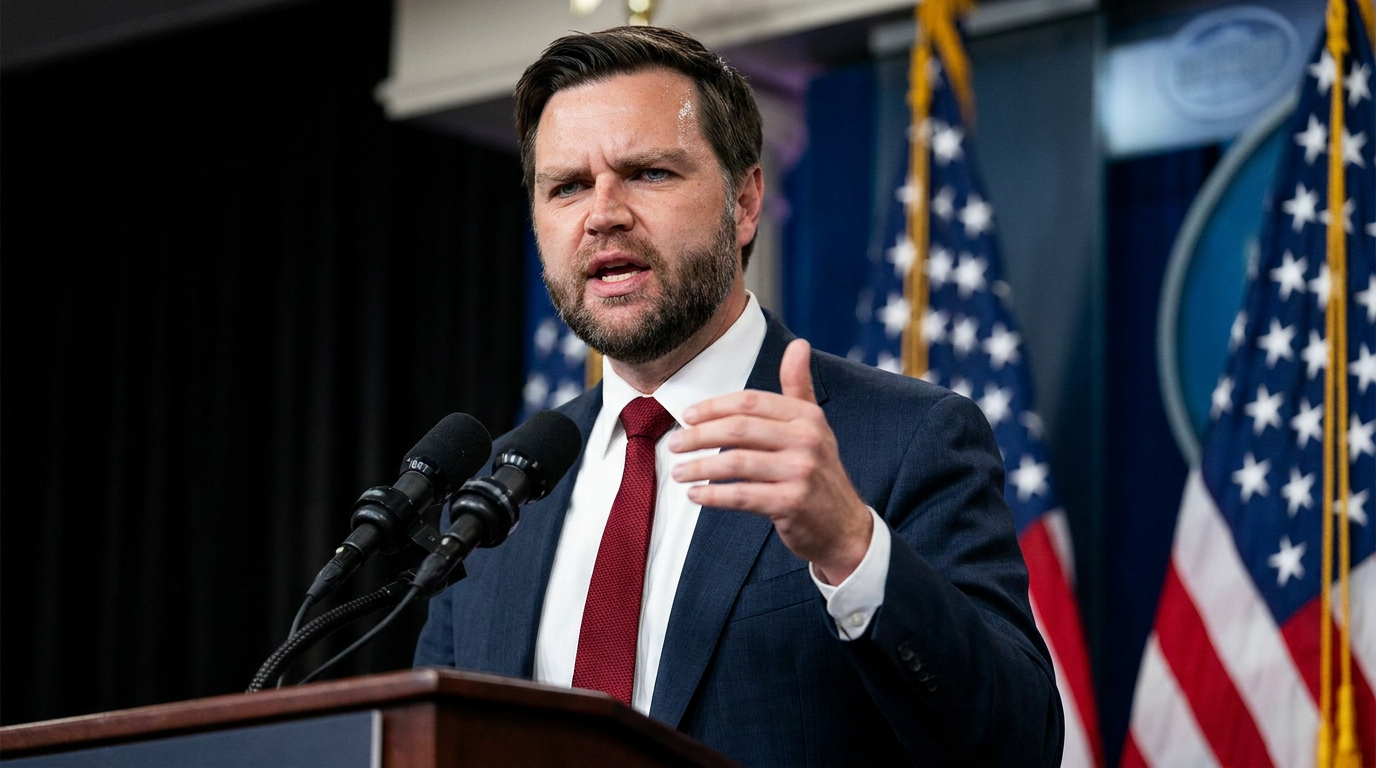
U.S. and Iran Sign Agreement to End War; Vance Lashes Out at Israeli Critics
7 sources
U.S.-Iran Deal
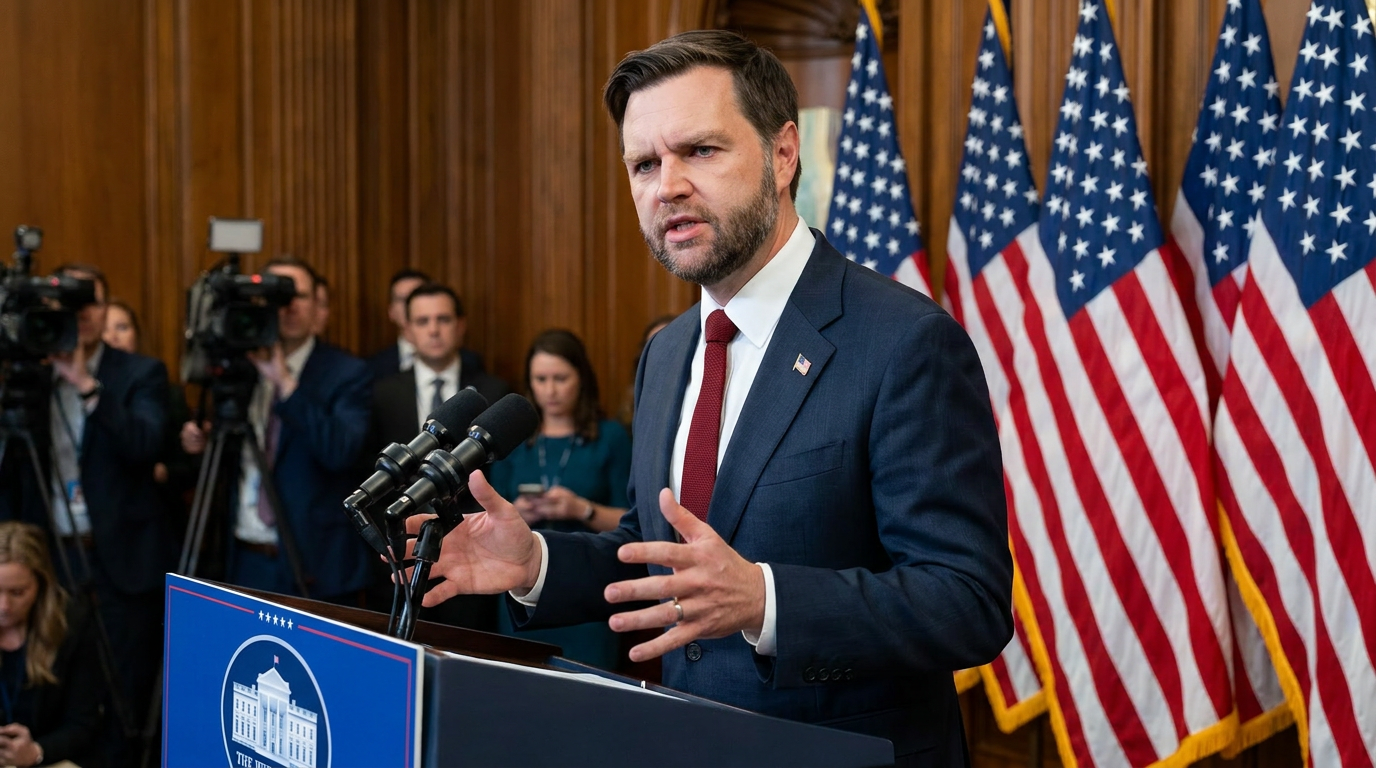
U.S. and Iran Sign 14-Point Agreement to End War, Sparking Fierce Backlash from Israel
6 sources

U.S.-Iran Relations
Vance Rebukes Israeli Critics of U.S.-Iran Peace Agreement, Warning Against Alienating 'Only Powerful Ally'
8 sources

Cognitive Defense
The Science of 'Prebunking': How Psychological Inoculation is Defeating Misinformation
6 sources

Every angle. Every day.
Get news politics stories with full source coverage and perspective breakdowns delivered to your inbox.