
EV Battery Showdown 2026: LFP vs. NMC vs. Solid-State
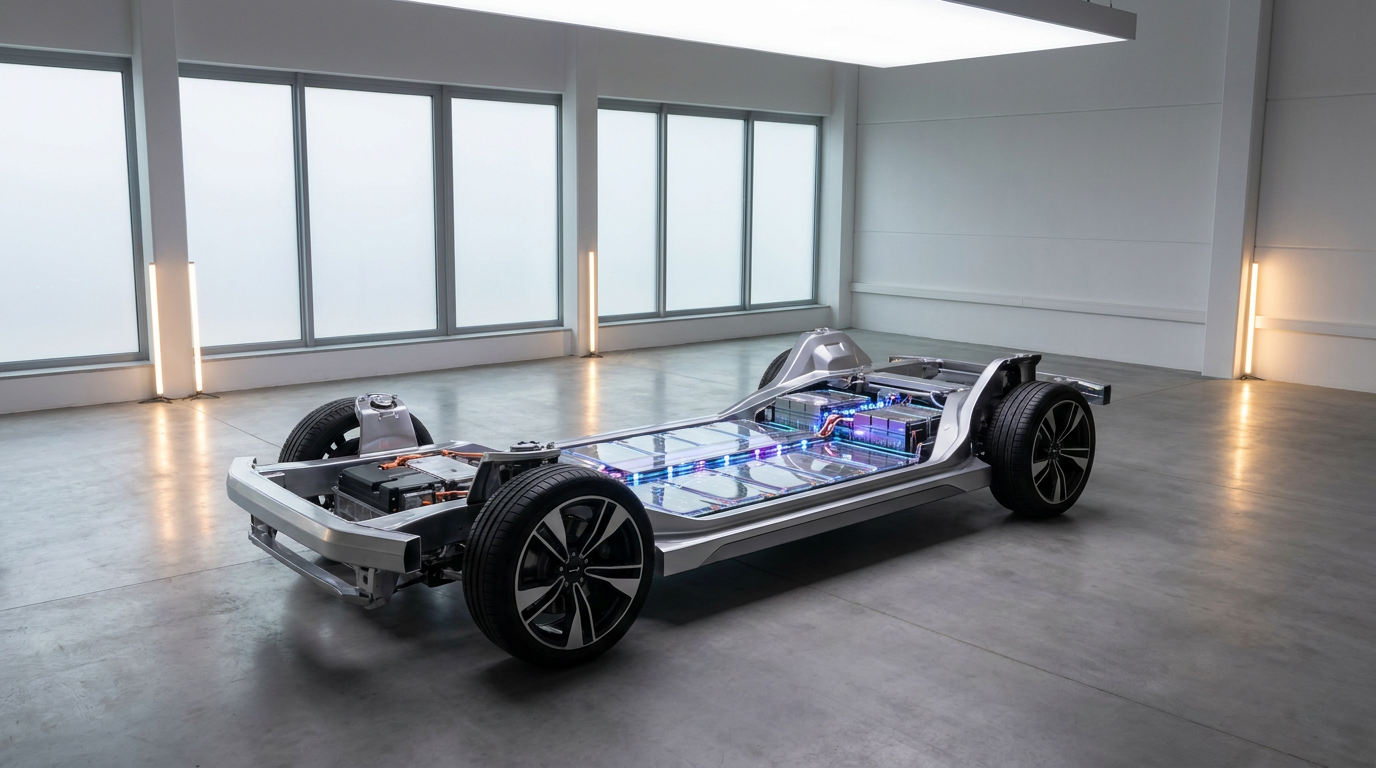
As electric vehicles evolve, the battery under the floorboard dictates price, range, and lifespan. Here is how the three dominant chemistries of 2026 compare for buyers and investors.
By Factlen Editorial Team
- Value & Longevity Advocates
- Prioritize total cost of ownership, daily reliability, and ethical supply chains.
- Performance & Range Enthusiasts
- Prioritize maximum driving distance, towing capacity, and premium vehicle dynamics.
- Next-Gen Technologists
- View solid-state chemistry as the ultimate endgame that solves the compromises of both LFP and NMC.
What's not represented
- · Raw material mining communities
- · Battery recycling industry
Why this matters
The battery accounts for up to 40% of an EV's cost. Choosing the right chemistry determines whether a car will last a decade of daily commuting or deliver the 600-mile range needed for cross-country road trips.
Key points
- LFP batteries now command 50% of the global market, offering lower costs and 5,000+ charge cycles.
- NMC batteries remain the standard for premium EVs, providing higher energy density for longer road trips.
- Solid-state batteries are entering real-world road tests in 2026, promising 600-mile ranges.
- Consumers must now choose their EV based on daily driving habits rather than just brand loyalty.
The electric vehicle revolution has officially moved past the early adopter phase, and in 2026, the most critical decision a buyer makes is no longer the brand on the hood, but the chemistry under the floorboard. The battery accounts for a massive portion of a vehicle's total cost and dictates everything from how far it can drive to how long it will last. Today, the market is defined by a fierce three-way competition: the highly reliable Lithium Iron Phosphate (LFP), the performance-oriented Nickel Manganese Cobalt (NMC), and the emerging, futuristic Solid-State technology. Understanding the trade-offs between these three architectures is essential for anyone navigating the modern automotive landscape.[6]
Lithium Iron Phosphate, or LFP, has quietly staged a massive market takeover over the last half-decade. For LFP, the primary argument is unmatched durability and economic value. Because it uses abundant iron and phosphorus rather than expensive, volatile metals, it is significantly cheaper to produce. Furthermore, its highly stable olivine crystal structure allows it to be charged to 100% daily without accelerating degradation, a major convenience for everyday drivers who want to plug in every night without micromanaging their battery health.[1][5]
Against LFP, the main drawback is its physical footprint and weight. It simply cannot hold as much energy per pound as its rivals. The evidence for this trade-off is clear in 2026 market data: LFP cells average a highly affordable $78 per kilowatt-hour and can endure upwards of 5,000 charge cycles, but their energy density peaks around 160 to 200 watt-hours per kilogram. This means an LFP battery must be physically larger and heavier to achieve the same driving range as a premium alternative.[2][5]

Ultimately, LFP fits well when a driver primarily commutes, charges at home nightly, prioritizes a vehicle that will last a decade with minimal capacity loss, and wants a lower upfront purchase price. It does not fit when a driver frequently tows heavy loads, regularly embarks on cross-country road trips requiring maximum range between stops, or lives in extreme sub-zero climates where LFP's cold-weather performance can temporarily dip.[5][6]
On the other end of the established spectrum sits Nickel Manganese Cobalt, or NMC. For NMC, the core argument is absolute performance and energy density. By utilizing nickel and cobalt, these batteries pack significantly more power into a smaller, lighter space. This chemistry is the engine behind the 300-plus-mile ranges and blistering acceleration times that initially made electric vehicles desirable to the mass market, allowing automakers to build sleek sedans and capable trucks without weighing them down with massive battery packs.[1][5]
On the other end of the established spectrum sits Nickel Manganese Cobalt, or NMC.
Against NMC, the primary arguments are cost, supply chain ethics, and a shorter lifespan. The evidence shows that NMC cells cost roughly $105 to $120 per kilowatt-hour, keeping the sticker price of NMC-equipped vehicles high. Furthermore, they typically degrade to 80% capacity after 1,500 to 2,000 cycles, and manufacturers explicitly advise against charging them past 80% for daily use to preserve their health. They also rely heavily on cobalt, a metal fraught with global supply chain and ethical mining concerns.[2][5]

NMC fits well when a buyer demands maximum range, drives a heavy luxury SUV or truck where weight savings are critical, and relies heavily on public fast-charging networks during long highway journeys. It does not fit when a buyer is strictly budget-conscious, plans to keep the car for fifteen years of heavy daily cycling, or wants the simplicity of plugging in to 100% every single night without worrying about long-term battery degradation.[1][6]
While LFP and NMC battle for current supremacy, 2026 is the year Solid-State batteries have finally transitioned from laboratory hype to real-world asphalt. For Solid-State, the argument is that it represents the ultimate endgame of battery physics. By replacing the flammable liquid electrolyte found in traditional lithium-ion cells with a solid conductive material, these batteries promise to solve range anxiety, fire risks, and charging wait times simultaneously.[3][4]
Against Solid-State, the immediate drawback is that it remains an unscaled, premium technology with a massive initial price premium. The evidence of its potential, however, is staggering: companies like Factorial, currently testing with Stellantis in Dodge Chargers in North America, and Dongfeng in China, are achieving energy densities between 350 and 480 watt-hours per kilogram. This unlocks ranges exceeding 600 miles on a single charge and allows the battery to rocket from 15% to 90% capacity in just 18 minutes.[3][4]

Solid-State fits well when an early-adopting buyer wants absolute bleeding-edge technology, requires internal-combustion levels of range and refueling speed, and is willing to pay a luxury premium for a flagship vehicle. It does not fit when a consumer needs an affordable, mass-market commuter car today, as widespread, budget-friendly commercialization of solid-state tech is still several years away from matching LFP's massive economies of scale.[4][6]
The global market is already reflecting these distinct use cases. According to industry tracking, LFP has surged from a 10% market share in 2020 to capturing roughly 50% of the global EV battery market in 2026, dominating the entry-level and standard-range sectors. Meanwhile, NMC maintains its stronghold in the North American and European premium markets, where long highway driving distances make energy density a non-negotiable requirement for many households.[1][5]
As automakers continue to diversify their lineups, the concept of a single 'best' battery has become obsolete. Instead, the industry has matured into a landscape of specialized tools. Whether a driver prioritizes the million-mile durability of LFP, the road-trip readiness of NMC, or the futuristic performance of Solid-State, the power to choose the right chemistry has finally been handed over to the consumer, making the transition to electric transportation more adaptable than ever.[6]

How we got here
2020
LFP batteries account for roughly 10% of the global EV market, largely confined to niche applications.
2025
LFP crosses the 50% global market share threshold, driven by massive adoption in standard-range vehicles.
2026
Major automakers begin real-world road testing and mass production of next-generation solid-state batteries.
Viewpoints in depth
Value & Longevity Advocates
Prioritize total cost of ownership, daily reliability, and ethical supply chains.
This camp argues that the EV revolution can only succeed if vehicles are affordable for the middle class. They champion LFP technology because it strips out expensive, ethically fraught metals like cobalt, driving the price of battery packs down to roughly $78 per kilowatt-hour. Furthermore, they emphasize that a battery capable of 5,000 charge cycles effectively outlasts the chassis of the car itself, creating a robust secondary market for used EVs and stationary home storage.
Performance & Range Enthusiasts
Prioritize maximum driving distance, towing capacity, and premium vehicle dynamics.
For this group, the primary barrier to EV adoption is 'range anxiety' and the physical weight of the vehicles. They argue that NMC remains the gold standard because its high energy density (up to 300 Wh/kg) allows automakers to build lighter cars that can travel over 300 miles on a single charge. They view the higher cost and shorter cycle life as acceptable trade-offs for the ability to take cross-country road trips without being tethered to charging stations every two hours.
Next-Gen Technologists
View solid-state chemistry as the ultimate endgame that solves the compromises of both LFP and NMC.
This perspective sees current liquid-electrolyte batteries as a transitional technology. By pointing to 2026 road tests from companies like Factorial and Dongfeng, they argue that solid-state batteries—which offer 600-mile ranges, 18-minute fast charging, and near-zero fire risk—will fundamentally change transportation. While acknowledging the current high manufacturing costs, they believe scaling this technology is the only way to fully replace internal combustion engines in heavy-duty and aviation sectors.
What we don't know
- Exactly when solid-state batteries will reach price parity with current LFP and NMC chemistries.
- How the used car market will value 10-year-old EVs with different battery degradation profiles.
Key terms
- LFP (Lithium Iron Phosphate)
- A battery chemistry known for high safety, long lifespan, and lower cost, though it holds less energy per pound than premium alternatives.
- NMC (Nickel Manganese Cobalt)
- A high-energy-density battery chemistry that provides longer driving ranges but costs more and degrades faster than LFP.
- Solid-State Battery
- An emerging technology that replaces liquid electrolytes with a solid material, enabling massive range increases and ultra-fast charging.
- Energy Density
- The amount of energy a battery can store relative to its weight, usually measured in watt-hours per kilogram (Wh/kg).
- Thermal Runaway
- A dangerous chain reaction where a battery cell overheats uncontrollably, a risk that is significantly lower in LFP and solid-state designs.
Frequently asked
Can I charge my EV to 100% every day?
If your vehicle has an LFP battery, yes; manufacturers encourage charging to 100% to keep the battery calibrated. For NMC batteries, it is recommended to stop at 80% for daily driving to prevent premature degradation.
Will solid-state batteries make current EVs obsolete?
Not immediately. While solid-state offers incredible range and charging speeds, it will remain a high-cost premium option for several years before reaching the mass-market affordability of current LFP and NMC cells.
Why are LFP batteries cheaper to produce?
LFP batteries use iron and phosphorus, which are abundant and inexpensive materials. They completely avoid cobalt and nickel, which are costly and subject to volatile global supply chains.
Sources
Source coverage
6 outlets
3 viewpoints surfaced






[1]International Energy Agency (IEA)Value & Longevity Advocates
Global EV Outlook 2026: Battery Market Share and Chemistry Trends
Read on International Energy Agency (IEA) →[2]BloombergNEFPerformance & Range Enthusiasts
2026 Q2 Battery Price Survey: LFP vs NMC Cost Dynamics
Read on BloombergNEF →[3]ElectrekNext-Gen Technologists
Factorial, Stellantis test solid-state EV batteries in real life
Read on Electrek →[4]CarNewsChinaNext-Gen Technologists
Dongfeng Motor's solid-state batteries scheduled for mass production in H2 2026
Read on CarNewsChina →[5]MotorWattValue & Longevity Advocates
LFP vs NMC Battery: The Definitive 2026 Technical Comparison
Read on MotorWatt →[6]Factlen Editorial TeamNext-Gen Technologists
Synthesis by Factlen editorial team
Read on Factlen Editorial Team →
Every angle. Every day.
Get guides stories with full source coverage and perspective breakdowns delivered to your inbox.