
EU Urges UK to Match Chinese EV Tariffs to Preserve 'Made in Europe' Market Access
Brussels has warned London that failing to align with European tariffs on Chinese electric vehicles could result in trade barriers for UK-built cars.
By Adrien Caron

- European Commission
- Alignment is necessary to protect the European single market from subsidized Chinese imports.
- UK Automotive Industry
- Exclusion from European trade protections poses an existential threat to British manufacturing.
- UK Government
- Balancing domestic economic needs against strict political red lines regarding European integration.
Perspectives this story doesn't cover
- Chinese automakers facing the tariffs
- UK consumers seeking affordable EVs
Fast facts
- The European Union has urged the UK to match its 45% tariffs on Chinese electric vehicles.
- Brussels warns that divergence could exclude British-built cars from upcoming 'Made in Europe' trade protections.
- The UK automotive industry states that €24 billion in cross-Channel trade is at risk if an agreement is not reached.
- UK Prime Minister Andy Burnham has ruled out rejoining the EU customs union to solve the tariff discrepancy.
Why this matters
For car buyers, this ultimatum dictates the future cost of transitioning to electric driving. Matching the tariffs will raise the sticker price of affordable Chinese EVs, while refusing could trigger European trade barriers that threaten domestic manufacturing jobs.
The binding constraint for the British automotive industry is frictionless access to the European mainland—a condition that currently dictates the survival of local plants, but which now hinges on a new ultimatum. The European Union has formally pressed the United Kingdom to match its steep tariffs on Chinese-made electric vehicles. If London refuses, Brussels warns that British-built cars could face exclusion from upcoming "Made in Europe" trade protections, threatening €24 billion in cross-Channel automotive trade.[2][4]
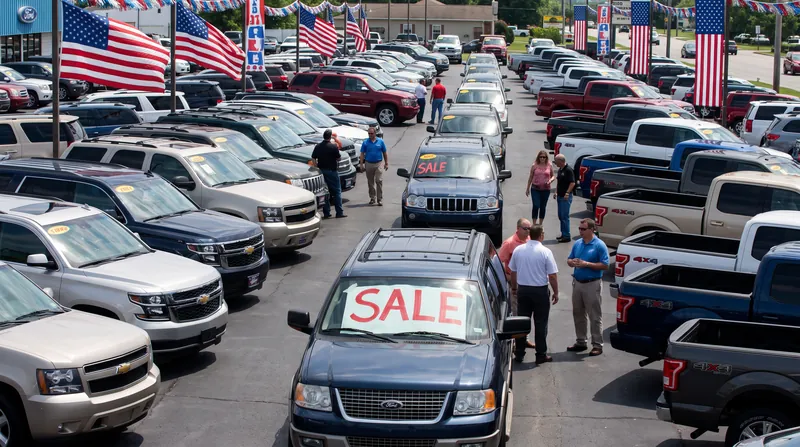
For a household weighing the switch to an electric vehicle, the policy crossroad translates directly to the dealership lot. Aligning with the 27-nation European bloc means budget-friendly Chinese brands—which rapidly captured nearly 16% of the UK new car market by August 2026—will see immediate price hikes, removing the cheapest options from the market. Conversely, rejecting the tariffs keeps those imports affordable but risks triggering European duties on cars assembled in Sunderland or Oxford, threatening the manufacturing jobs that anchor those local economies.[2][4]
European officials argue the alignment is necessary to prevent the UK from becoming a dumping ground for heavily subsidized Chinese vehicles. Over the past 24 months, since 2024, the EU has imposed tariffs of up to 45% on Chinese-built cars to counter what the European Commission deemed unfair trade practices. With the EU having erected its own tariff walls, a tariff-free Britain would serve as an open back door. "The concern today is no longer a hyper-competitive, globalised Britain on Europe's doorstep, but a Britain that could become a backdoor into the European market for Chinese goods," a second EU official told the Financial Times.[2][4]
The British government is now weighing the economic trade-offs against the European Commission's Industrial Accelerator Act. Under the "Made in Europe" proposal, European-made products receive preferential treatment in public contracts. If the UK diverges on tariffs, UK-built cars like the Nissan Leaf could fall outside the "Made in Europe" definition. Furthermore, post-Brexit rules of origin taking effect in 2027 will already see UK electric vehicle exports to Europe attract a 10% tariff unless an agreement is reached, compounding the pressure on domestic factories.[2][4]
The automotive industry is urging both sides to find a compromise before the new rules take effect. Mike Hawes, chief executive of the UK's Society of Motor Manufacturers and Traders, warned that "excluding the UK from 'Made in Europe' would be an own goal, weakening competitiveness, reducing scale and limiting consumer choice." However, UK Prime Minister Andy Burnham has reiterated his commitment to Labour Party red lines, ruling out membership in a customs union. Until a formal tariff schedule is adopted or rejected in London, the pricing of next year's electric vehicle inventory remains in a holding pattern.[2][4]
The automotive industry is urging both sides to find a compromise before the new rules take effect.
The binding constraint for the British automotive industry is frictionless access to the European mainland—a condition that currently dictates the survival of local plants, but which now hinges on a new ultimatum. The European Union has formally pressed the United Kingdom to match its steep tariffs on Chinese-made electric vehicles. If London refuses, Brussels warns that British-built cars could face exclusion from upcoming "Made in Europe" trade protections, threatening €24 billion in cross-Channel automotive trade.[2][4]
For a household weighing the switch to an electric vehicle, the policy crossroad translates directly to the dealership lot. Aligning with the 27-nation European bloc means budget-friendly Chinese brands—which rapidly captured nearly 16% of the UK new car market by August 2026—will see immediate price hikes, removing the cheapest options from the market. Conversely, rejecting the tariffs keeps those imports affordable but risks triggering European duties on cars assembled in Sunderland or Oxford, threatening the manufacturing jobs that anchor those local economies.[2][4]
European officials argue the alignment is necessary to prevent the UK from becoming a dumping ground for heavily subsidized Chinese vehicles. Over the past 24 months, since 2024, the EU has imposed tariffs of up to 45% on Chinese-built cars to counter what the European Commission deemed unfair trade practices. With the EU having erected its own tariff walls, a tariff-free Britain would serve as an open back door. "The concern today is no longer a hyper-competitive, globalised Britain on Europe's doorstep, but a Britain that could become a backdoor into the European market for Chinese goods," a second EU official told the Financial Times.[2][4]
The British government is now weighing the economic trade-offs against the European Commission's Industrial Accelerator Act. Under the "Made in Europe" proposal, European-made products receive preferential treatment in public contracts. If the UK diverges on tariffs, UK-built cars like the Nissan Leaf could fall outside the "Made in Europe" definition. Furthermore, post-Brexit rules of origin taking effect in 2027 will already see UK electric vehicle exports to Europe attract a 10% tariff unless an agreement is reached, compounding the pressure on domestic factories.[2][4]
The automotive industry is urging both sides to find a compromise before the new rules take effect. Mike Hawes, chief executive of the UK's Society of Motor Manufacturers and Traders, warned that "excluding the UK from 'Made in Europe' would be an own goal, weakening competitiveness, reducing scale and limiting consumer choice." However, UK Prime Minister Andy Burnham has reiterated his commitment to Labour Party red lines, ruling out membership in a customs union. Until a formal tariff schedule is adopted or rejected in London, the pricing of next year's electric vehicle inventory remains in a holding pattern.[2][4]
Sources
Source coverage
6 outlets
3 viewpoints surfaced






- [1]The Irish TimesUK Automotive Industry
EU urges UK to raise tariffs on Chinese cars to avoid 'made in Europe' barriers
Read on The Irish Times → - [2]EV PoweredUK Automotive Industry
EU 'tells UK to raise tariffs on Chinese cars' to avoid made-in-Europe barriers
Read on EV Powered → - [3]GokhshteinUK Government
UK Weighs Chinese EV Tariffs as EU Pressure Mounts
Read on Gokhshtein → - [4]Anadolu AgencyEuropean Commission
EU presses UK to raise tariffs on Chinese cars to prevent 'Made in Europe' barriers
Read on Anadolu Agency → - [5]Euronext MarketsEuropean Commission
EU urges Britain to raise tariffs on Chinese cars, FT says
Read on Euronext Markets → - [6]Seoul Economic DailyUK Government
EU Presses U.K. to Raise Tariffs on Chinese Cars
Read on Seoul Economic Daily →
Comments
More in Automotive & Transportation
See all →Vehicle Safety Standards
The 25 Percent Threshold: How Federal Standard 138 Dictates When Your Car's Tire Pressure Light Illuminates
8 sources
Vehicle Safety
Volkswagen Group Expands Steering Recall to 4 Million Vehicles Globally
6 sources
Battery Diagnostics
The 12.6 Volt Minimum: How Open-Circuit Voltage Indicates a Lead-Acid Battery's State of Charge
3 sources
Auto Labor
Unifor Ratifies Ford Deal, Securing $1.25 Billion Investment and Setting Precedent for GM, Stellantis
6 sources

Every angle. Every day.
Get Automotive & Transportation stories with full source coverage and perspective breakdowns delivered to your inbox.