
Emergency Crews Contain Four Union Pacific Derailments in Texas Without Injury
First responders successfully managed four separate Union Pacific freight train derailments across Texas on Thursday, securing 44 derailed cars without any reported injuries or public hazardous material threats.

On August 20, 2026, emergency response networks across the state of Texas faced an unusual and demanding stress test: four separate Union Pacific freight train derailments occurred within a matter of hours of each other. The incidents spanned the vast geography of the state, stretching from El Paso in the far west to Marshall in the east, alongside additional derailments in Mansfield and Macdona.
In total, 44 railcars left the tracks, including several tank cars carrying hazardous materials. Yet, despite the sheer scale and geographic spread of the simultaneous incidents, local fire departments, law enforcement, and specialized hazmat teams successfully contained every single site without a single reported injury or public health threat.[1][2]
The largest and most complex of the four incidents unfolded in central El Paso just before noon, when 18 railcars derailed near the intersection of Interstate 10 and Cotton Street, with ten of those cars completely overturning. Recognizing the potential severity of the situation, the El Paso Fire Department immediately classified the response as a Hazmat Condition 2.
They deployed 17 fire units and approximately 40 firefighters to the scene, including their highly trained Hazmat Task Force. While authorities confirmed that some material had spilled at the site, rapid containment measures and thorough testing ensured the substance posed absolutely no threat to the surrounding community. Furthermore, the Texas Department of Transportation quickly inspected nearby highway bridges, confirming that the infrastructure sustained no structural damage.[1][2]
As emergency crews in El Paso worked diligently to secure their site, two additional derailments occurred roughly 15 minutes apart later in the afternoon. At approximately 2:30 p.m., ten Union Pacific railcars derailed at a grade crossing in Mansfield, located southeast of downtown Fort Worth.
The derailment sparked a small grass fire, which the Mansfield Fire Department quickly extinguished before it could spread to nearby properties. Crucially, responders—assisted by a specialized hazmat team from the neighboring Grand Prairie Fire Department—conducted a thorough hazard assessment and confirmed that none of the tank cars involved in the Mansfield incident had leaked any of their contents.[1][2]
Shortly after the Mansfield incident, at approximately 2:45 p.m., another ten railcars derailed near Macdona, a community situated just west of San Antonio. Bexar County sheriff's deputies quickly arrived on the scene to establish traffic control around the blocked roadway near U.S. Highway 90 and LaCoste Road, ensuring that motorists were safely diverted away from the wreckage.
Union Pacific officials reported that there were no spilled materials at the Macdona site, allowing cleanup crews to begin their remediation efforts safely and without delay. The final incident of the day occurred east of Marshall in Harrison County, where six cars—including hazmat tank cars—derailed. Local emergency services confirmed that these tanks remained completely intact, with no hazardous release reported.[1][2][3]
The successful containment of all four derailment sites highlights the critical and indispensable role of coordinated, multi-jurisdictional emergency response systems. When a major rail incident occurs, local fire and police units are typically the first responders on the scene, tasked with the immediate responsibilities of hazard assessment, fire suppression, and establishing secure perimeters.
They work in seamless tandem with specialized regional hazmat teams—such as the Grand Prairie unit that provided crucial assistance in Mansfield—and railroad personnel who bring the heavy equipment and specialized knowledge necessary for large-scale remediation. This layered, collaborative approach ensures that even when multiple incidents threaten to strain state resources, each site receives the specific expertise required to prevent the situation from escalating.[2]
A key factor in preventing public harm during these types of incidents is the robust structural design of modern hazardous material tank cars. Following high-profile rail disasters in previous decades, federal regulators and the rail industry have mandated significant engineering upgrades, including thicker steel shells, advanced thermal protection systems, and reinforced top and bottom valves for cars carrying dangerous goods.
The fact that tank cars in both the Mansfield and Marshall derailments left the tracks and sustained impact forces without releasing their contents serves as a powerful real-world validation of these safety upgrades, demonstrating their effectiveness in mitigating environmental and public health risks during crash scenarios.
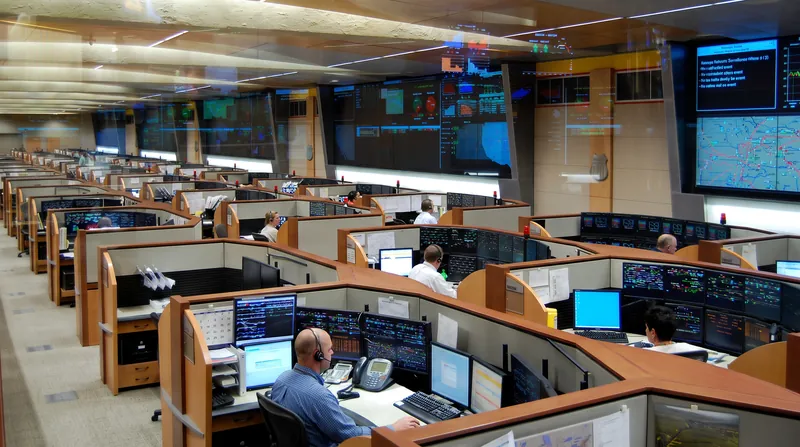
The logistical challenge of managing four simultaneous derailments also rigorously tests the communication networks established between the railroad operators and local municipal authorities. Union Pacific utilizes a sophisticated, centralized dispatch system that is designed to immediately alert regional emergency managers the moment a train goes into emergency braking or loses track integrity.
This rapid notification protocol allows local fire departments and hazmat teams to mobilize their resources and begin staging their response before the full scope of the incident is even known by the train crew, shaving critical minutes off the response time and enabling faster containment of potential hazards.
While the exact mechanical or operational causes of the four derailments remain under active investigation by Union Pacific and federal regulatory authorities, the events of August 20 clearly demonstrate the resilience and effectiveness of modern incident management protocols.
The rapid deployment of emergency resources and the structural integrity of the railcars themselves all contributed to a scenario where potential disasters were systematically reduced to manageable logistical challenges. For prospective homebuyers evaluating properties near major freight corridors, or current homeowners concerned about proximity to industrial infrastructure, the day served as a reassuring demonstration of the safety nets designed to protect local real estate and community well-being.
Moving forward, the focus for both the railroad and local authorities shifts from emergency containment to infrastructure repair and comprehensive root-cause analysis. Union Pacific engineering crews are working around the clock to clear the remaining debris, repair damaged track beds, and restore full operational service to the affected subdivisions.
Moving forward, the focus for both the railroad and local authorities shifts from emergency containment to infrastructure repair and comprehensive root-cause analysis.
Meanwhile, the extensive data gathered from these four distinct sites will likely be analyzed by safety experts to inform future regulations, refine emergency training programs, and ensure that first responders remain fully prepared for the complex and evolving realities of modern freight transport.[1][2]
Key points
- Four separate Union Pacific freight trains derailed across Texas on August 20, 2026, involving a total of 44 railcars.
- The incidents occurred in El Paso, Mansfield, Macdona, and Marshall, prompting multi-jurisdictional emergency responses.
- Despite the involvement of hazardous material tank cars at multiple sites, no injuries or public health threats were reported.
- Local fire departments and specialized hazmat teams successfully contained all four sites, demonstrating the effectiveness of modern incident management protocols.
What we don’t know
- The specific mechanical or operational causes behind each of the four derailments remain under investigation by Union Pacific and federal authorities.
- The total financial cost of the infrastructure damage, environmental remediation, and service disruptions has not yet been publicly disclosed.
How we got here
11:43 a.m.
An 18-car derailment in central El Paso triggers a Hazmat Condition 2 response.
2:30 p.m.
Ten cars derail in Mansfield, sparking a small grass fire that is quickly extinguished.
2:45 p.m.
Another ten cars derail near Macdona, prompting traffic control measures.
Evening
Roads begin to reopen as emergency crews secure the sites and Union Pacific begins cleanup operations.
- Emergency Management Officials
- First responders prioritize immediate containment, hazard assessment, and public safety.
- Rail Industry Representatives
- Rail companies focus on coordinating with local agencies, deploying specialized cleanup equipment, and restoring track operations.
- Local Homeowners and Buyers
- Residents and prospective buyers evaluate how proximity to freight infrastructure impacts property safety and long-term value.
Perspectives this story doesn't cover
- Environmental Monitoring Agencies
- Local Residents Near Derailment Sites
Sources
Source coverage
3 outlets
3 viewpoints surfaced



- [1]Railway SupplyEmergency Management Officials
Four Union Pacific Train Derailments Hit Texas
Read on Railway Supply → - [2]TrainsRail Industry Representatives
This derailment in Mansfield, Texas, was one of four for Union Pacific
Read on Trains → - [3]San Antonio Express-NewsLocal Homeowners and Buyers
10 rail cars on a Union Pacific train derailed Thursday afternoon in far west Bexar County
Read on San Antonio Express-News →
More in Automotive & Transportation
See all →Cooling Systems
The 15 PSI Cap: How Pressurizing the Cooling System Raises the Boiling Point and Prevents Cavitation
5 sources
Rail Engineering
The 1-Inch Gap and the Draft Gear: How Train Couplers Manage Slack and Prevent Derailment
6 sources
Locomotive Engineering
How the Diesel Engine Acts as a Generator to Power a Locomotive's Traction Motors
4 sources
Transmission Tech
How the Variable-Diameter Pulleys of a CVT Trade Torque for Infinite Gear Ratios
6 sources

Comments
Every angle. Every day.
Get Automotive & Transportation stories with full source coverage and perspective breakdowns, free every day.