
DOL Signals Intent to Restore Narrow 'Joint Employer' Standard, Easing Franchise Liability
The U.S. Department of Labor is moving to reinstate a business-friendly definition of joint employment, limiting when corporate brands and staffing agencies can be held legally responsible for labor violations. The proposed shift would require companies to exert 'direct and immediate' control over workers to share liability.

Share this story
In short
- The Department of Labor is moving to restore a narrow 'joint employer' standard.
- The rule limits liability for corporate franchisors and client companies using staffing agencies.
- Companies must exert 'direct and immediate' control over workers to be held liable.
The U.S. Department of Labor has officially signaled its intent to restore a narrower, business-friendly interpretation of the "joint employer" standard under the Fair Labor Standards Act. The move, outlined in the agency's latest regulatory agenda, marks the beginning of a formal rulemaking process to redefine when multiple companies share legal responsibility for the same group of workers.[1][2]
At the heart of the regulatory shift is a fundamental question of modern labor law: when a worker is hired by a local franchise or a temporary staffing agency, to what extent is the overarching corporate brand or the client company liable for wage and hour violations? The joint employer doctrine exists to answer that exact question, determining whether a worker can hold multiple entities accountable for unpaid overtime or minimum wage breaches.[3][4]
Under the newly proposed framework, the Department of Labor intends to reinstate a "direct and immediate control" test. This means a corporate entity would only be considered a joint employer if it explicitly exercises significant control over the terms and conditions of a worker's employment, rather than merely possessing the theoretical right to do so.[1][2]
Specifically, the agency is expected to rely on a four-factor balancing test. To be deemed a joint employer, a company must actively hire or fire the employee, supervise and control their work schedules, determine their rate and method of payment, and maintain their employment records.[2]
This represents a stark departure from broader interpretations that consider "indirect" or "reserved" control. Under broader standards, a corporate franchisor could be held liable simply because its franchise agreement gives it the right to dictate operational standards, even if corporate management never actually steps in to manage the local staff.[3][4]
The franchise business model is particularly sensitive to these definitions. In a typical fast-food or retail franchise, the corporate headquarters licenses its brand, recipes, and operational software to an independent local owner. The local owner is responsible for hiring the cashiers, setting the schedules, and running the payroll.
Franchisors have long argued that holding them jointly liable for a local owner's wage violations undermines the entire premise of the franchise model. If corporate headquarters faces legal exposure for the actions of thousands of independent operators, they argue, they would be forced to exert massive, centralized control over every local storefront, effectively turning independent small business owners into middle managers.[4]
Staffing agencies and their client companies face a similar dynamic. When a logistics company hires a temp agency to provide warehouse workers, the logistics company dictates the overarching tasks and safety standards, but the temp agency handles the actual employment contracts, benefits, and payroll.
Under a narrow joint employer standard, the logistics company is largely insulated from liability if the temp agency fails to pay proper overtime, provided the logistics company did not directly manage the workers' pay rates or HR records. Industry advocates argue this clarity is essential for the flexible staffing sector to function efficiently.[1]
Conversely, labor advocates and worker rights organizations view the narrow standard as a corporate shield that encourages the outsourcing of legal liability. They argue that corporate franchisors and large client companies dictate the economic realities of the workplace through strict vendor agreements and operational software, effectively controlling the workers while dodging the legal responsibilities of an employer.[3]
When a local franchisee goes bankrupt or a fly-by-night staffing subcontractor disappears without paying its workers, a narrow joint employer standard often leaves those workers with no legal recourse to recover their stolen wages from the deeper pockets of the corporate brand that ultimately profited from their labor.[4]
The definition of a joint employer has been subject to intense regulatory whiplash over the past decade, swinging wildly depending on the administration in power. The Obama administration issued guidance favoring a broad interpretation, focusing on the "economic realities" of the relationship and indirect control.[3]
In 2020, the Trump administration finalized a rule that codified the narrow, four-factor "direct control" test, providing a major victory for business groups. However, a federal judge subsequently struck down portions of that rule, and the Biden administration officially rescinded it, attempting to restore a broader standard that considered indirect control.[1][3]
Now, in 2026, the Department of Labor is moving to resurrect the narrow 2020 framework. The agency argues that the direct control test provides much-needed clarity and predictability for businesses, reducing frivolous litigation and allowing the franchise and staffing industries to operate with legal certainty.[2][4]
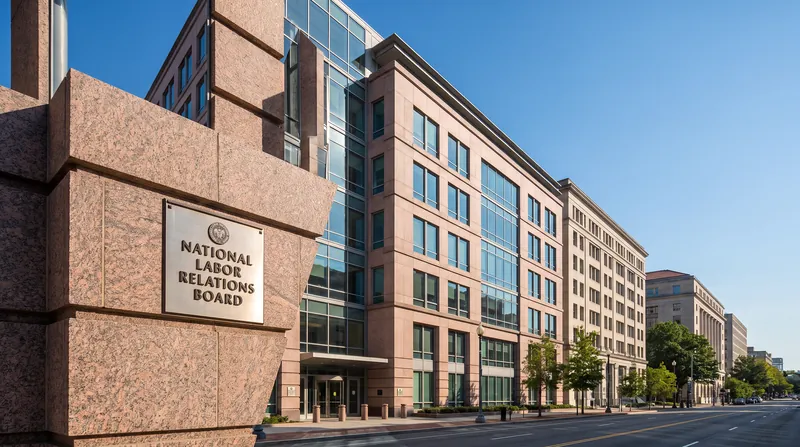
It is crucial to distinguish the Department of Labor's standard under the Fair Labor Standards Act from the National Labor Relations Board's (NLRB) joint employer standard. While the DOL rule governs wage and hour liability, the NLRB rule governs union organizing and collective bargaining obligations. Though the two agencies often move in parallel ideological directions, they operate under different statutes.[3]
The DOL's signaling is just the first step in a lengthy administrative process. The agency must now publish a formal Notice of Proposed Rulemaking, open the floor for public comment, and eventually issue a final rule. Given the history of the joint employer doctrine, the final regulation is almost certain to face immediate legal challenges from labor advocates and state attorneys general.[1][2]
Definitions
- Fair Labor Standards Act (FLSA)
- The federal law that establishes minimum wage, overtime pay, recordkeeping, and youth employment standards.
- Joint Employer Doctrine
- A legal principle determining when multiple entities share responsibility and liability for the same employee.
- Franchisor
- The overarching corporate brand that licenses its trademarks and business model to independent local operators.
- Direct and Immediate Control
- A legal test requiring a company to actively manage a worker's hiring, firing, pay, or schedule to be considered an employer.
Questions & answers
What is a joint employer?
A joint employer is a legal designation where two or more companies share control over a worker's employment, making both companies legally responsible for complying with labor laws like minimum wage and overtime.
How does this affect franchise owners?
A narrow standard protects corporate franchisors from being sued for the labor violations of their independent local franchise owners, reinforcing the separation between corporate headquarters and local operations.
Does this impact union organizing?
No. The Department of Labor's rule only applies to wage and hour laws under the Fair Labor Standards Act. Union organizing is governed separately by the National Labor Relations Board.
When does the new rule take effect?
The DOL has only signaled its intent to draft the rule. It must go through a formal proposal, a public comment period, and final publication, which typically takes several months to a year.
Analysis by camp
Business and Employer Groups
Argues that a narrow standard protects the franchise model and provides necessary legal clarity for staffing agencies.
Industry advocates, including franchise associations and staffing groups, argue that broad joint employer standards pose an existential threat to their business models. They contend that if a corporate brand is held liable for the actions of an independent franchisee, the brand will be forced to micromanage local operations, effectively destroying the independence of small business owners. For staffing agencies, clear lines of liability are necessary to assure client companies that they will not be sued for utilizing temporary labor.
Worker Advocacy and Labor Law
Argues that narrow standards allow corporations to dictate working conditions while shielding themselves from wage theft liability.
Labor advocates argue that the 'direct control' test ignores the economic realities of the modern workplace. They point out that corporate franchisors use strict vendor agreements, algorithmic scheduling software, and operational mandates to tightly control how local employees work, even if they don't directly sign the paychecks. By narrowing the definition of an employer, advocates argue the government allows massive corporations to outsource legal liability, leaving vulnerable workers unable to recover stolen wages when subcontractors or franchisees go bankrupt.
Regulatory and Policy Observers
Focuses on the administrative whiplash of the rule and the legal mechanics of the Fair Labor Standards Act.
Legal analysts highlight the severe regulatory whiplash surrounding the joint employer doctrine, noting that the standard has flipped back and forth with every change in presidential administration over the last decade. Observers emphasize that this constant shifting creates massive compliance headaches for human resources departments. They also stress the importance of distinguishing the DOL's wage-and-hour rules from the NLRB's union-organizing rules, which operate on separate legal tracks despite sharing the 'joint employer' terminology.
- Business and Employer Groups
- Argues that a narrow standard protects the franchise model and provides necessary legal clarity for staffing agencies.
- Worker Advocacy and Labor Law
- Argues that narrow standards allow corporations to dictate working conditions while shielding themselves from wage theft liability.
- Regulatory and Policy Observers
- Focuses on the administrative whiplash of the rule and the legal mechanics of the Fair Labor Standards Act.
Perspectives this story doesn't cover
- Small Franchise Owners
- Independent Contractors
Sources
Source coverage
4 outlets
3 viewpoints surfaced




- [1]ReutersRegulatory and Policy Observers
U.S. Labor Department signals return to narrow joint employer rule
Read on Reuters → - [2]U.S. Department of LaborRegulatory and Policy Observers
Regulatory Agenda: Joint Employer Status Under the Fair Labor Standards Act
Read on U.S. Department of Labor → - [3]Congressional Research ServiceRegulatory and Policy Observers
The Fair Labor Standards Act (FLSA) and Joint Employment
Read on Congressional Research Service → - [4]Factlen Editorial TeamRegulatory and Policy Observers
Synthesis by Factlen editorial team
Read on Factlen Editorial Team →
More in Careers & Work
See all →Labor Law Mechanics
Why Five Seats, Quorums, and Three-Vote Majorities Dictate NLRB Labor Precedent
2 sources
Disability Policy
DOL Proposes Rescinding 7% Disability Hiring Goal for Federal Contractors
2 sources

AI Infrastructure
The Great Reallocation: Why Tech is Shedding 140,000 Jobs to Fund a $725 Billion AI Buildout
8 sources

Visa Policy
DOL Moves to Finalize H-1B Prevailing Wage Hike, Raising Entry-Level Threshold to 34th Percentile
7 sources

Comments
Every angle. Every day.
Get Careers & Work stories with full source coverage and perspective breakdowns, free every day.