
Do 2026's Premium Sleep Trackers Actually Work? An Evidence-Based Review
Independent clinical trials reveal that while top consumer sleep trackers excel at measuring total sleep time, their ability to accurately identify specific sleep stages remains flawed compared to medical polysomnography.
By Factlen Editorial Team
- Clinical Sleep Researchers
- Medical professionals who emphasize the limitations of consumer hardware compared to laboratory testing.
- Consumer Tech Reviewers
- Technology analysts who evaluate devices based on usability, software ecosystems, and behavioral impact.
- Evidence-Based Consumers
- Data-driven users who synthesize clinical validation studies to optimize their health tracking.
What's not represented
- · Individuals with severe insomnia
- · Sleep medicine clinicians diagnosing apnea
Why this matters
Millions of consumers base their daily routines, exercise intensity, and health anxiety on the data provided by their sleep trackers. Understanding the scientific limitations of these devices prevents unnecessary worry and helps users extract the true, actionable value from their wearable data.
Key points
- Top consumer wearables detect the difference between sleep and wakefulness with over 90 percent accuracy.
- Devices struggle to accurately classify specific sleep stages, frequently defaulting to 'light sleep' when sensor data is ambiguous.
- The Oura Ring currently leads the market in staging accuracy, largely due to the superior optical signal obtained from the finger.
- Experts recommend focusing on long-term personal baselines and trends rather than obsessing over the absolute accuracy of a single night's sleep score.
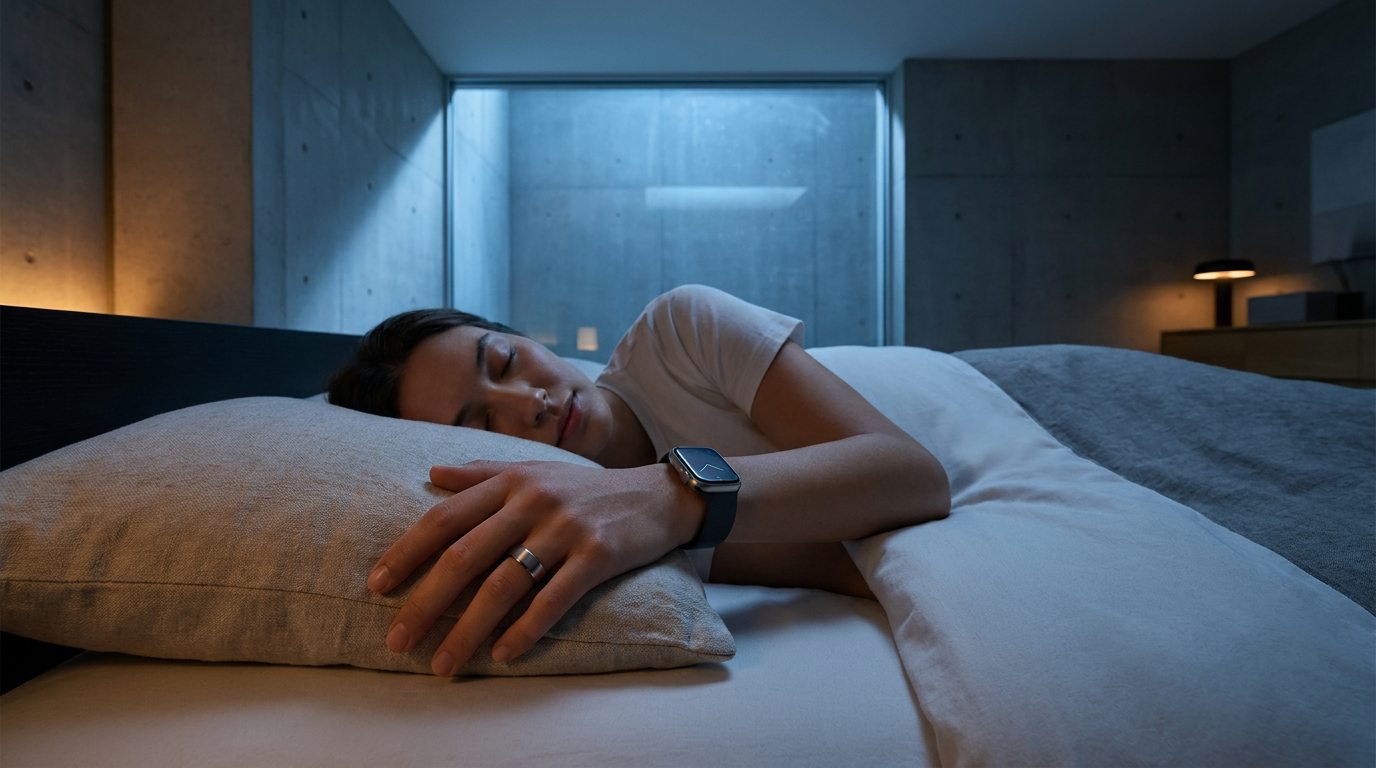
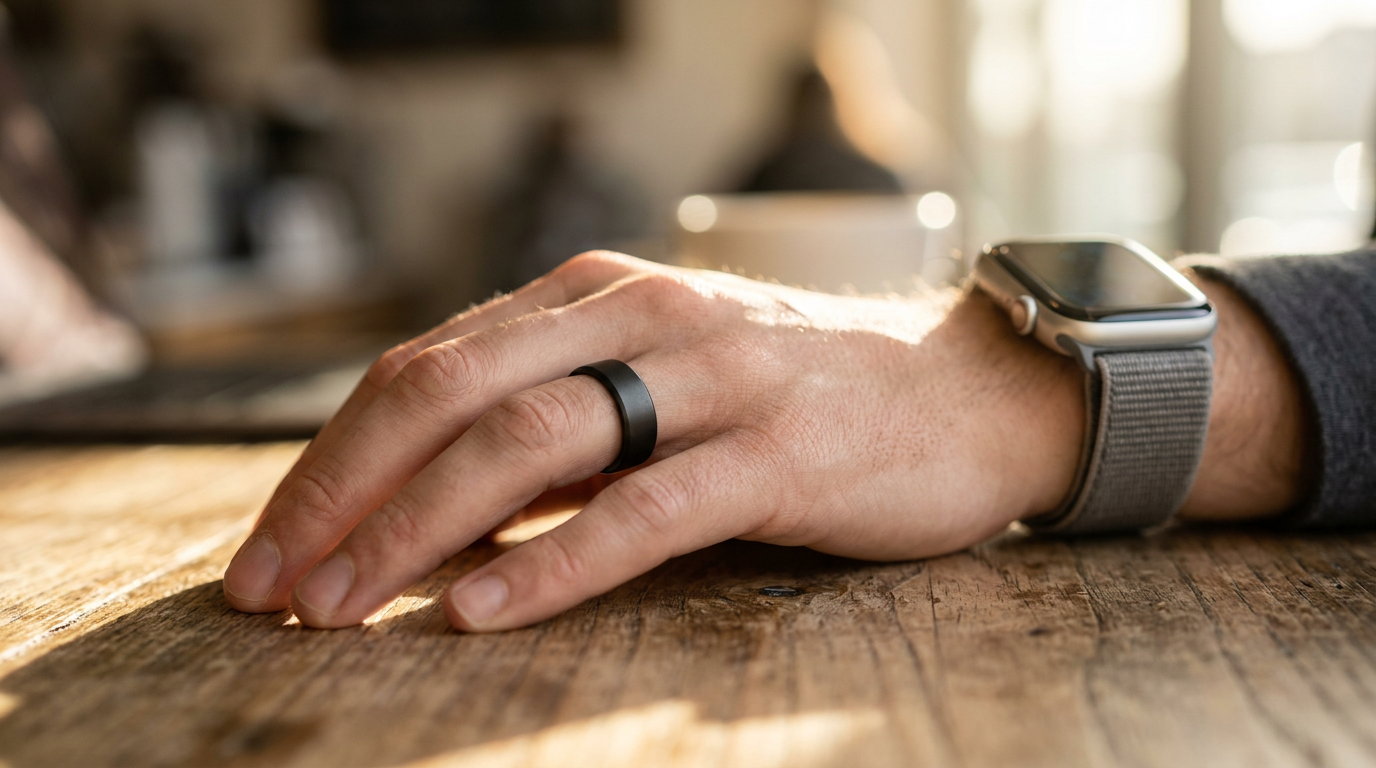
Millions of consumers are strapping on the Oura Ring 4, Apple Watch Series 11, and Whoop 5.0 before bed, trusting these premium wearables to decode their nightly rest. The marketing surrounding these devices promises perfect visibility into our overnight recovery, breaking down light, deep, and rapid eye movement (REM) sleep into neat, color-coded graphs that dictate how hard we should exercise or work the next day. However, a growing body of independent clinical research from 2024 through 2026 reveals a stark divide between what these devices claim to measure and what they actually capture. As the technology becomes ubiquitous, understanding the scientific reality behind the algorithms is essential for anyone relying on a sleep score to manage their health.[5][6]
To understand the accuracy of commercial sleep trackers, researchers compare them against polysomnography (PSG), which serves as the clinical gold standard in sleep medicine. A laboratory PSG involves wiring a patient's scalp to an electroencephalogram (EEG) to measure actual brainwaves, alongside sensors that monitor respiratory rate, blood oxygen, and muscle activity. Consumer wearables, by contrast, do not measure brainwaves. Instead, they rely on photoplethysmography (PPG) to track heart rate and blood flow, accelerometers to track wrist or finger movement, and thermistors to track skin temperature. These proxy metrics must be fed into proprietary machine-learning algorithms that attempt to guess what the brain is doing based on what the cardiovascular and musculoskeletal systems are doing. It is worth noting that even the gold standard is imperfect; human sleep experts reading the exact same clinical PSG data disagree on the sleep stage roughly 25 percent of the time, highlighting the inherent difficulty of the task.[1][2]
The good news for consumers is that these proxy metrics are exceptionally good at determining the simple binary of whether you are asleep or awake. A comprehensive 2025 study published in Sleep Advances, conducted at the University of Antwerp, tested six major wearables against PSG. The researchers found that all of the devices detected sleep epochs with greater than 90 percent sensitivity. If your primary goal is to measure total sleep time, or to track sleep latency—the amount of time it takes you to fall asleep after turning out the lights—today's premium devices are highly reliable and offer a genuinely useful window into your basic sleep hygiene.[1][4]

The technological breakdown occurs when devices attempt to divide that total sleep time into specific architectural stages. Because heart rate and movement are blunt instruments for guessing complex brain states, four-stage classification—separating wakefulness, light sleep, deep sleep, and REM sleep—remains a significant scientific challenge. A rigorous validation study conducted at Brigham and Women's Hospital compared the Oura Ring Gen3, Apple Watch Series 8, and Fitbit Sense 2 simultaneously against PSG. The results highlighted the inherent limitations of relying on wrist-based optical sensors to map the human sleep cycle.[2]
In the Brigham study, the Apple Watch significantly struggled with deep sleep, underestimating it by an average of 43 minutes per night while simultaneously overestimating light sleep by 45 minutes. Fitbit exhibited a similar pattern, overestimating light sleep while missing crucial deep sleep epochs. The Oura Ring performed the best among the tested devices, achieving a 79.5 percent sensitivity for deep sleep and showing no statistically significant difference from PSG in its overall stage estimations. Clinical researchers attribute Oura's slight edge partly to its form factor; the blood vessels in the finger provide a cleaner, more stable optical blood flow signal than the wrist, which is subject to more movement artifact.[2][6]

Fitbit exhibited a similar pattern, overestimating light sleep while missing crucial deep sleep epochs.
Across the wearable industry, sleep algorithms share a common, highly conservative bias when interpreting ambiguous data. When a device's sensors receive mixed signals—perhaps an elevated heart rate combined with low movement—and cannot confidently distinguish between wakefulness, deep sleep, or REM, the software defaults to categorizing the epoch as light sleep. This "light sleep bias" explains why many healthy, well-rested users wake up to alarming digital scores suggesting they received almost no deep, restorative sleep. The device simply lacked the confidence to award the deep sleep classification, defaulting to the safest algorithmic guess.[1][3]
Furthermore, clinical reviews note that wearable accuracy degrades significantly on nights when a user experiences highly fragmented sleep or suffers from insomnia. The more a person tosses and turns, or lies awake perfectly still, the more the algorithms struggle to interpret the physiological data. Devices frequently misclassify periods of quiet wakefulness as light sleep, artificially inflating the total sleep time for individuals who actually spent hours staring at the ceiling. Consequently, researchers warn that commercial wearables perform worst on the exact populations that need sleep interventions the most: those with clinical sleep disorders.[3][4]
The proprietary nature of the daily "Sleep Score" or "Readiness Score" presents another hurdle for evidence-based medicine. Because companies like Whoop, Oura, and Apple do not publish the exact mathematical weights and algorithms used to calculate these gamified metrics, the scores cannot be utilized for clinical medical diagnosis. A score of 85 on one platform might represent entirely different physiological phenomena than an 85 on another. While these scores are highly effective at motivating behavioral changes, they remain a black box that frustrates sleep medicine physicians trying to incorporate patient data into formal treatment plans.[3][5]

Despite these clinical limitations, researchers and tech analysts broadly agree that these devices hold immense value as behavioral modification tools. While a tracker might be objectively wrong about your exact minutes of REM sleep on a given Tuesday, it is consistently wrong in the exact same way. Because the sensor hardware and algorithmic biases remain static from night to night, the longitudinal trends the device captures are highly actionable. Users are encouraged to ignore the absolute numbers and focus entirely on their own personal baselines.[5][7]
This baseline-focused approach unlocks the true utility of the modern sleep tracker. If your device reports a 20 percent drop in deep sleep or a significant suppression of heart rate variability (HRV) after a late-night meal, a stressful workday, or alcohol consumption, that relative change is a real, measurable physiological signal. The absolute minute count of the sleep stage may be inaccurate, but the directional trend accurately reflects the toll those lifestyle choices took on your central nervous system. By shifting the focus from clinical precision to directional lifestyle coaching, consumers can extract profound value from their wearables without falling victim to data-induced anxiety.[3][7]
The integration of advanced health screening features is also shifting the value proposition of these devices away from pure sleep staging. In late 2024, Apple received FDA clearance for a sleep apnea detection feature on the Apple Watch, which uses the accelerometer to monitor breathing disturbances over a 30-day period. While it cannot officially diagnose the condition, it acts as a vital early-warning system for a dangerous disorder that goes undiagnosed in millions of adults. This pivot toward screening for specific, measurable mechanical disruptions rather than guessing brain states represents a maturation of the wearable market.[5][7]
Ultimately, 2026's premium sleep trackers are best viewed as sophisticated pattern-recognition engines rather than flawless medical diagnostic tools. They excel at highlighting how daily friction—stress, diet, exercise, and environment—impacts overnight recovery. As long as users approach the data with a clear understanding of the hardware's limitations, avoiding the trap of orthosomnia (an unhealthy obsession with achieving perfect sleep metrics), these devices remain one of the most powerful tools available for taking proactive control of personal health and daily energy levels.[3][7]
How we got here
1970s
Polysomnography (PSG) is established as the clinical gold standard for sleep medicine.
2015
Early wrist-worn fitness trackers begin offering basic movement-based sleep tracking.
2020
Consumer devices integrate photoplethysmography (PPG) to track heart rate variability during sleep.
2024
Independent clinical trials reveal significant discrepancies in four-stage sleep classification among premium wearables.
2026
The latest generation of devices shifts focus from absolute stage accuracy to longitudinal trend analysis and recovery coaching.
Viewpoints in depth
Clinical Sleep Researchers
Medical professionals who emphasize the limitations of consumer hardware compared to laboratory testing.
Clinical researchers argue that because consumer wearables cannot measure brainwaves (EEG), their sleep stage estimations are fundamentally educated guesses based on heart rate and movement. They caution against using proprietary 'sleep scores' for medical purposes, noting that the devices perform worst on individuals who actually have sleep disorders, as fragmented sleep confuses the algorithms.
Consumer Tech Reviewers
Technology analysts who evaluate devices based on usability, software ecosystems, and behavioral impact.
Tech reviewers acknowledge the clinical limitations but argue that absolute accuracy misses the point of consumer wearables. They emphasize that devices like the Oura Ring and Whoop excel at gamifying health, driving positive behavioral changes, and providing a unified ecosystem that helps users understand how alcohol, late meals, and exercise impact their overnight recovery.
Evidence-Based Consumers
Data-driven users who synthesize clinical validation studies to optimize their health tracking.
This camp focuses on the longitudinal value of wearable data rather than single-night accuracy. By understanding the 'light sleep bias' and the hardware's limitations, evidence-based consumers use trackers to establish personal baselines. They look for relative deviations—such as a sudden drop in heart rate variability or a spike in resting heart rate—as actionable signals for impending illness or overtraining.
What we don't know
- How accurately these devices perform on individuals with severe, diagnosed sleep disorders, as most validation studies are conducted on healthy adults.
- The exact mathematical weights and proprietary algorithms used by companies like Whoop and Oura to calculate their daily readiness scores.
- The extent to which skin pigmentation bias affects the accuracy of the photoplethysmography (PPG) sensors used in the latest 2026 hardware.
Key terms
- Polysomnography (PSG)
- The clinical gold standard for sleep testing, which measures brain waves, blood oxygen, heart rate, and breathing in a laboratory setting.
- Photoplethysmography (PPG)
- The optical sensor technology used by smartwatches and rings to measure heart rate and blood flow using light.
- Sleep Latency
- The amount of time it takes a person to transition from being fully awake to falling asleep.
- Cohen's Kappa
- A statistical measure used in scientific studies to determine the level of agreement between a wearable device's data and clinical polysomnography.
- Epoch
- A short, fixed period of time (typically 30 seconds) used by researchers and algorithms to categorize sleep stages.
Frequently asked
Can a sleep tracker diagnose sleep apnea?
No. While devices like the Apple Watch Series 11 have FDA clearance to detect signs of moderate to severe sleep apnea, they cannot officially diagnose the condition. They serve as an early-warning screening tool.
Why does my tracker say I get almost no deep sleep?
Wearable algorithms have a conservative bias; when they cannot confidently determine your sleep stage from heart rate and movement data, they default to logging it as light sleep, artificially lowering your deep sleep totals.
Does wearing a tracker on my finger vs. wrist matter?
Yes. Clinical studies suggest that finger-based sensors, like the Oura Ring, often capture a cleaner optical blood flow signal than wrist-based sensors, slightly improving their staging accuracy.
Are daily sleep scores medically validated?
No. The "Sleep Score" or "Readiness Score" provided by companies is calculated using proprietary algorithms that are not standardized or validated for clinical medical use.
Sources
Source coverage
7 outlets
3 viewpoints surfaced







[1]Sleep AdvancesClinical Sleep Researchers
A performance validation of six commercial wrist-worn wearable sleep-tracking devices for sleep stage scoring compared to polysomnography
Read on Sleep Advances →[2]SensorsClinical Sleep Researchers
Accuracy of Three Commercial Wearable Devices for Sleep Tracking in Healthy Adults
Read on Sensors →[3]Clinical CorrelationsClinical Sleep Researchers
The Clinical Utility of Commercial Sleep Trackers
Read on Clinical Correlations →[4]JMIR mHealth and uHealthClinical Sleep Researchers
Accuracy of Wearable Consumer Sleep Trackers: Prospective Validation Study
Read on JMIR mHealth and uHealth →[5]CNETConsumer Tech Reviewers
Best Sleep Trackers of 2026
Read on CNET →[6]Sleep FoundationConsumer Tech Reviewers
The Best Sleep Trackers of 2026, Tested and Reviewed
Read on Sleep Foundation →[7]Factlen Editorial TeamEvidence-Based Consumers
Synthesis by Factlen editorial team
Read on Factlen Editorial Team →

More in shopping
See all 5 stories →

Every angle. Every day.
Get shopping stories with full source coverage and perspective breakdowns delivered to your inbox.