
Detroit Automakers Warn Revised USMCA Rules Could Add Billions in Annual Costs
General Motors, Ford, and Stellantis are warning the White House that proposed revisions to the United States-Mexico-Canada Agreement could add at least $2 billion in annual costs per company.
By Tao Yang

If you are planning to buy a new car in the next few years, the sticker price may be heavily influenced by a trade dispute currently unfolding in Washington. The Big Three U.S. automakers—General Motors, Ford, and Stellantis—are warning the White House that proposed revisions to the United States-Mexico-Canada Agreement (USMCA) could add at least $2 billion in annual costs per company.
The push comes as the administration seeks to tighten the rules governing how vehicles are built and where their parts originate, setting up a high-stakes clash between domestic industrial policy and the realities of global manufacturing.[1][2]
At the center of the debate are the "rules of origin" that dictate whether a vehicle can cross North American borders without facing steep tariffs. The administration is pushing to raise the U.S.-made content threshold to at least 50%, while simultaneously considering an increase to the overall North American content requirement from its current level of 75%. For an industry that relies on deeply integrated, cross-border supply chains, these changes represent a fundamental rewrite of the economic calculus that has governed North American auto production for decades.[1][2]
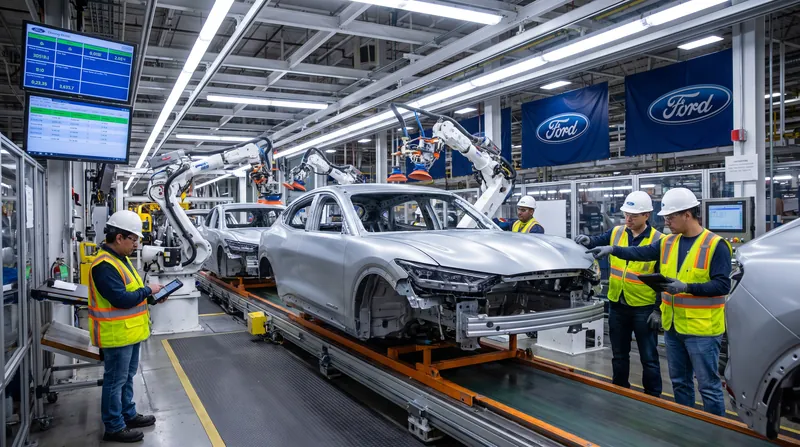
The mechanics of modern vehicle manufacturing make rapid shifts incredibly difficult. A single vehicle's production often involves parts and sub-assemblies crossing between the United States, Mexico, and Canada multiple times before final assembly. Tighter rules of origin mean that automakers would have to rapidly retool their supply chains, shifting sourcing away from established, cost-effective suppliers in Mexico or overseas. If they fail to meet the new thresholds, they face tariffs that compound through the tier suppliers and ultimately land in the final unit cost.[4]
The financial toll of the shifting trade landscape is already mounting. General Motors projects that it will face between $2.5 billion and $3.5 billion in gross tariff-related expenses this year alone, a figure that the company notes could represent more than 20% of its operating profit. Ford, meanwhile, estimates its net tariff impact at roughly $1 billion for the year. These costs stack on top of existing levies implemented over the past year covering steel, aluminum, and auto parts imported from Mexico and Canada.[1][5]
Detroit automakers argue that these proposed rules put them at a severe competitive disadvantage compared to foreign rivals. The American Automotive Policy Council, which represents the Big Three, points out that Japanese, South Korean, and European manufacturers currently face a flat 15% tariff on vehicles exported to the United States. In contrast, U.S. automakers pay approximately 25% on vehicles imported from Mexico and Canada, creating a disparity that executives warn could erode their market share and profitability.[1][6]
In response to the mounting pressure, some production shifts are already underway. Ford recently announced it would move production of its Lincoln models intended for the U.S. market from China to American factories. The move signals an effort to align with domestic manufacturing priorities ahead of the upcoming trade talks, as automakers attempt to demonstrate their commitment to U.S. industrial growth while simultaneously lobbying for more workable trade thresholds.[1][5]
Beyond the immediate tariff costs, the broader automotive supply chain is grappling with a crisis of predictability. In July, the United States declined to renew the USMCA for a full 16-year term, instead opting for an annual review process. Automotive industry groups warn that this rolling uncertainty is creating a chilling effect on long-term investments. Logistics providers and tier suppliers are hesitant to commit capital to new North American facilities when the foundational trade rules could be rewritten year over year.[3]
The lobbying effort is now intensifying as trade representatives from the U.S., Mexico, and Canada prepare for another round of negotiations next month. Automakers are mobilizing their trade associations and pressing their case with lawmakers from auto-producing states, arguing that a more protectionist stance could invite retaliation and disrupt the deeply integrated North American market. The ultimate outcome will determine whether the industry absorbs a multibillion-dollar hit, fundamentally restructures its manufacturing footprint, or passes the escalating costs directly onto the consumer.[2][4]
Key points
- Detroit's Big Three warn that proposed USMCA revisions could add at least $2 billion in annual costs per company.
- The proposals would require vehicles to contain at least 50% U.S.-made content to qualify for lower tariffs.
- GM expects up to $3.5 billion in gross tariff expenses this year, while Ford projects a $1 billion hit.
- Automakers argue the rules create a competitive disadvantage against foreign manufacturers facing lower flat tariffs.
How we got here
2020
The USMCA replaces NAFTA, introducing stricter rules of origin for automotive manufacturing across North America.
July 2026
The U.S. declines to renew the USMCA for a full 16-year term, shifting the agreement to an annual review process.
August 2026
Detroit automakers formally warn the White House that proposed content threshold increases could cost them billions annually.
September 2026
U.S. and Mexican trade officials are scheduled to hold the next round of negotiations regarding the trade pact's revisions.
- Detroit Automakers
- Focus on maintaining competitive pricing and preserving established cross-border supply chains.
- Trade Policy Advocates
- Prioritize domestic job creation and the onshoring of critical manufacturing capacity.
- Supply Chain & Logistics Sector
- Emphasize the need for long-term regulatory stability to justify capital investments.
Perspectives this story doesn't cover
- Consumer Advocacy Groups
- Mexican and Canadian Trade Officials
Sources
Source coverage
6 outlets
3 viewpoints surfaced






- [1]CBT NewsDetroit Automakers
Revised USMCA proposals could cost billions annually, Detroit automakers warn
Read on CBT News → - [2]Roic AIDetroit Automakers
Detroit Automakers to Argue to White House That Revised North American Trade Deal Could Cost Them Billions, Sources Say
Read on Roic AI → - [3]Automotive LogisticsSupply Chain & Logistics Sector
Automakers warn USMCA review threatens investment in North American automotive supply chains
Read on Automotive Logistics → - [4]NewsquawkSupply Chain & Logistics Sector
Detroit automakers to argue to White House that revised North American trade deal could cost them billions
Read on Newsquawk → - [5]Ground NewsTrade Policy Advocates
Detroit Automakers Fear North American Trade Deal Revamp Could Cost Them Billions
Read on Ground News → - [6]MarkLinesDetroit Automakers
Detroit automakers warn revised USMCA rules could raise costs
Read on MarkLines →
More in Automotive & Transportation
See all →Suspension Architecture
MacPherson Strut vs. Double Wishbone: The Trade-Offs in Cost, Packaging, and Dynamic Camber Control
4 sources
Air Traffic Control
400 Air Traffic Controllers Warn US Aviation System at 'Breaking Point' Over Withheld Pay Raise
4 sources

Volkswagen Overhaul
Volkswagen Announces Plan to Cut 50,000 Jobs and Halve Model Portfolio by 2035
3 sources

Aerodynamics
The Aerodynamics of Winglets: How Wingtip Devices Slash Fuel Consumption and Extend Aircraft Range
6 sources

Comments
Every angle. Every day.
Get Automotive & Transportation stories with full source coverage and perspective breakdowns, free every day.