
The 2026 eVTOL Breakthrough: How Air Taxis Work and When You Can Ride One
With major FAA certification milestones cleared and real-world demonstration flights underway, electric vertical takeoff and landing (eVTOL) aircraft are shifting from concept to commercial reality in 2026.
By Dev Anand

In April 2026, an electric aircraft lifted off from John F. Kennedy International Airport, climbed into the New York airspace, and touched down at a Manhattan heliport just seven minutes later. By car, that same journey during rush hour routinely takes over an hour. The demonstration flight, conducted by California-based Joby Aviation, marked a turning point for urban transportation: the shift from computer-generated renderings to physical reality.[1][3]
The aircraft that completed this journey belongs to a new category of aviation known as eVTOL—electric vertical takeoff and landing. Designed to operate like a helicopter but fly with the efficiency of an airplane, these vehicles represent the first entirely new class of civil aircraft certified in nearly 80 years. After more than a decade of development, billions in venture capital, and thousands of test flights, the industry has reached the precipice of commercial operations in 2026.[1][2][5]
To understand why eVTOLs are viable now, one must look at the mechanism powering them: Distributed Electric Propulsion (DEP). Traditional helicopters rely on a single massive combustion engine driving a complex mechanical rotor system. If that central system fails, the aircraft is in immediate peril. eVTOLs, by contrast, distribute power across multiple independent electric motors.[4]
The Joby S4, for example, utilizes six electrically powered tilting rotors. Because these rotors are electric, they can respond to flight-control inputs in milliseconds, adjusting their speed independently to maintain stability. This redundancy means that even if one or two motors fail, the aircraft can still land safely. The fly-by-wire software manages the complexity, allowing the pilot to fly the aircraft using simplified controls rather than the notoriously difficult collective and cyclic sticks of a traditional helicopter.[4]
Beyond safety, DEP solves the greatest barrier to urban air mobility: noise. Helicopters generate a deafening, pulsating roar because their large rotor blades must spin at incredibly high speeds, often breaking the sound barrier at the tips. Because eVTOLs use multiple smaller rotors, those blades can spin much slower. The result is an acoustic profile that manufacturers claim is roughly 100 times quieter than a conventional helicopter, producing a hum that blends into the background noise of a city.[1]
While the physics of electric flight have been proven, the regulatory pathway has historically been the industry's highest hurdle. The Federal Aviation Administration (FAA) requires any new passenger aircraft to obtain a Type Certificate—a rigorous, multi-year process proving the design meets exhaustive safety standards. Because eVTOLs fit neither the airplane nor the helicopter rulebooks, the FAA had to create a bespoke "powered-lift" regulatory framework.[3]
In early 2026, the regulatory logjam finally broke. Joby Aviation became the first manufacturer to clear Stage 4 of the FAA's five-stage certification process. Stage 4 is the critical "Implementation Phase," where scrutiny shifts from reviewing engineering documents to inspecting physical hardware. FAA officials directly assessed the propulsion systems and flight controls of production-intent aircraft built at Joby's California facility, confirming that the physical machines match the approved blueprints.[3]
With Stage 4 complete, the industry has entered the final endgame: Stage 5. This involves FAA test pilots formally flying the conforming aircraft for credit across all performance conditions. Competitors are close behind; Archer Aviation has also announced record progress in its certification pathway for its Midnight aircraft, closing its means of compliance and expanding piloted flight tests.[2][3]
Recognizing that waiting for final passenger rules could stall American leadership in the sector, the White House and the FAA launched the eVTOL Integration Pilot Program (eIPP) in March 2026. This initiative flips the traditional script on aviation certification. Rather than waiting for the ink to dry on final regulations before allowing any commercial activity, the eIPP permits early operations in an immature regulatory environment to gather real-world data.[5]
The eIPP spans 26 states and involves dozens of industry partners. It allows manufacturers to conduct pre-certification commercial flights for cargo, medical logistics, and emergency response. By flying these non-passenger missions, companies can accumulate thousands of hours of operational data, which the FAA will then use to finalize the rules for passenger air taxis.[5]
Archer Aviation is a primary participant in the eIPP, deploying its Midnight aircraft in Texas, Florida, and New York to build out local operating teams and infrastructure. Meanwhile, Wisk Aero—a Boeing subsidiary—is using the program in Texas to test its Gen 6 autonomous aircraft, gathering the massive datasets required to eventually certify pilotless flight.[2]
While the US regulatory framework matures, the first paying passengers will likely fly overseas. Both Joby and Archer are targeting commercial launches in the United Arab Emirates—specifically Dubai and Abu Dhabi—in the second half of 2026. These regions have aggressively built out the necessary "vertiport" infrastructure and established localized regulatory approvals that leverage, but do not strictly wait for, the final FAA timeline.[1][2]
In the United States, the commercial rollout is expected to follow shortly after final FAA certification, likely in 2027. Major airlines are already positioning themselves as the primary distributors of this service. Delta Air Lines has partnered with Joby to offer premium airport-to-city-center transfers, while United Airlines is backing Archer. The ultimate showcase for the technology is slated for the 2028 Los Angeles Olympic Games, where air taxis are expected to ferry attendees across the notoriously congested city.[1][2]
For the general public, the most pressing question is cost. Initially, these flights will be priced as a premium service. Early estimates suggest a trip from an airport to a downtown vertiport will cost between $50 and $200, roughly the price of a high-end black car service but completed in a fraction of the time. As manufacturing scales—aided by partnerships like Toyota's integration into Joby's production line—the cost per seat-mile is expected to drop, democratizing access to the sky.[1][3]
Despite the immense progress in 2026, uncertainties remain. Battery density continues to dictate the operational limits of electric flight. Current lithium-ion technology restricts the realistic range of most eVTOLs to between 100 and 160 kilometers, making them strictly urban and regional vehicles rather than replacements for commercial jetliners. Furthermore, cities must upgrade their electrical grids to support the massive charging demands of high-frequency vertiports.[4]
Nevertheless, the milestones achieved in the first half of 2026 have fundamentally altered the trajectory of advanced air mobility. The successful demonstration flights in New York, the clearance of FAA Stage 4, and the launch of the eIPP have proven that the technology is no longer speculative. The third era of aviation—defined by quiet, electric, vertical flight—is no longer a question of if, but exactly when.[1][3]
Key points
- Joby Aviation completed a landmark 7-minute demonstration flight from JFK Airport to Manhattan in April 2026.
- The FAA cleared Joby through Stage 4 of the certification process, shifting focus to physical hardware testing.
- The White House launched the eVTOL Integration Pilot Program (eIPP) across 26 states to gather early operational data.
- Initial commercial air taxi launches are targeted for late 2026 in the UAE, with US operations following in 2027.
What we don’t know
- How quickly local electrical grids can be upgraded to support the high-capacity charging demands of commercial vertiports.
- The exact date the FAA will issue the first final Stage 5 Type Certificate for passenger operations.
- How the general public will react to the visual presence and noise profile of eVTOLs operating at scale over cities.
How we got here
2009
Joby Aviation is founded, beginning the long development cycle of electric vertical flight.
2018
The FAA begins developing a bespoke powered-lift certification framework for eVTOLs.
Nov 2025
Joby begins power-on testing of its first FAA-conforming aircraft.
Mar 2026
The White House and FAA launch the eVTOL Integration Pilot Program (eIPP) across 26 states.
Apr 2026
Joby completes a 7-minute JFK-to-Manhattan demonstration flight, proving the urban use case.
Late 2026
Targeted initial commercial launches in the UAE and early pre-certification operations in the US.
- Aviation Industry Press
- Focuses on the technological milestones, certification progress, and commercial timelines of the manufacturers.
- Financial Analysts
- Evaluates the operational maturity, cash burn, and investment viability of pre-revenue eVTOL companies.
- Regulatory Agencies
- Emphasizes the creation of safe operational frameworks, public-private partnerships, and infrastructure readiness.
Perspectives this story doesn't cover
- Local city council members managing zoning for new vertiports
- Commercial airline pilots evaluating the transition to fly-by-wire eVTOL systems
Sources
Source coverage
5 outlets
3 viewpoints surfaced





- [1]MiGFlug.com BlogAviation Industry Press
eVTOL Air Taxis: What You Need to Know Before 2026 Ends
Read on MiGFlug.com Blog → - [2]World AirnewsAviation Industry Press
ARCHER TARGETS INITIAL US EVTOL OPERATIONS IN 2026 FOLLOWING FAA CERTIFICATION MILESTONE
Read on World Airnews → - [3]LongYieldFinancial Analysts
The Last Gate: Joby Aviation Clears FAA Stage 4 While Flying Over Manhattan
Read on LongYield → - [4]ecomotorsnewsAviation Industry Press
The most advanced commercial eVTOLs in 2026
Read on ecomotorsnews → - [5]Federal Aviation AdministrationRegulatory Agencies
The eIPP: What You Need to Know
Read on Federal Aviation Administration →
More in Automotive & Transportation
See all →Urban Air Mobility
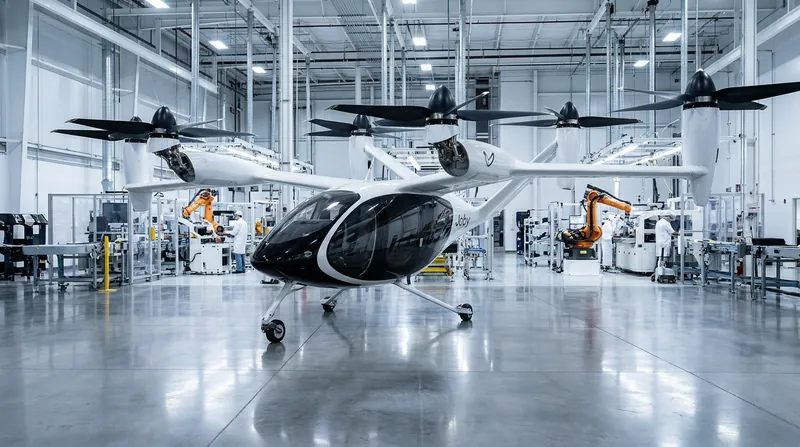
How eVTOL Air Taxis Are Making the Leap From Concept to Commercial Flight in 2026
2 sources
Urban Air Mobility
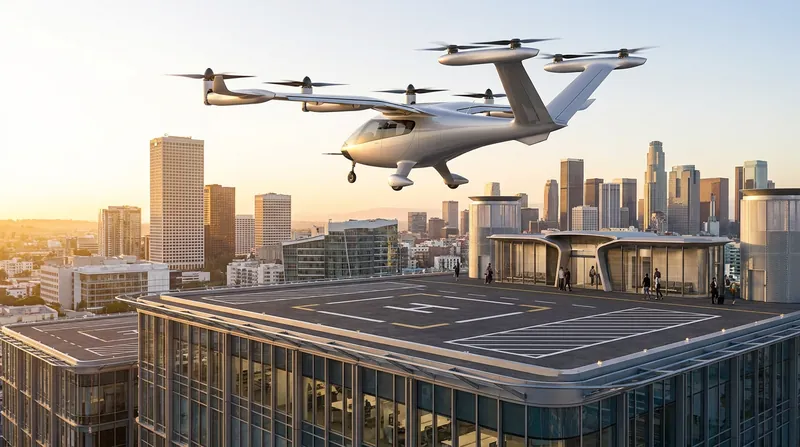
How Electric Air Taxis Are Finally Moving From Science Fiction to Commercial Reality
3 sources
Aviation Tech
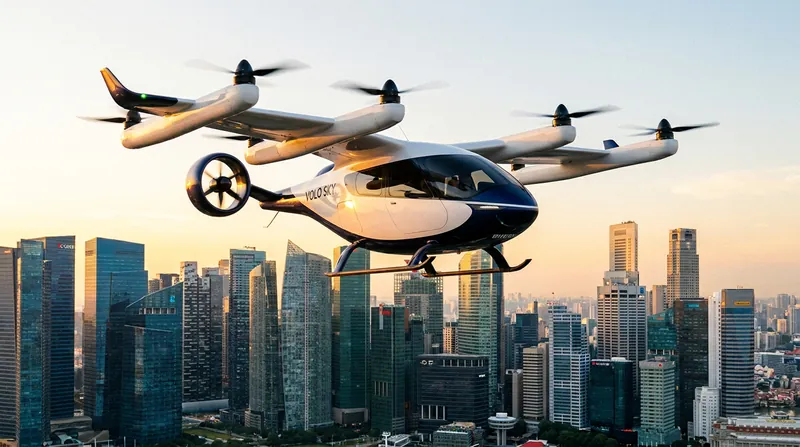
The 'All-Wing' Aircraft Revolution: How JetZero's Blended Wing Body Aims to Cut Fuel Burn by 50%
3 sources
Aircraft Design
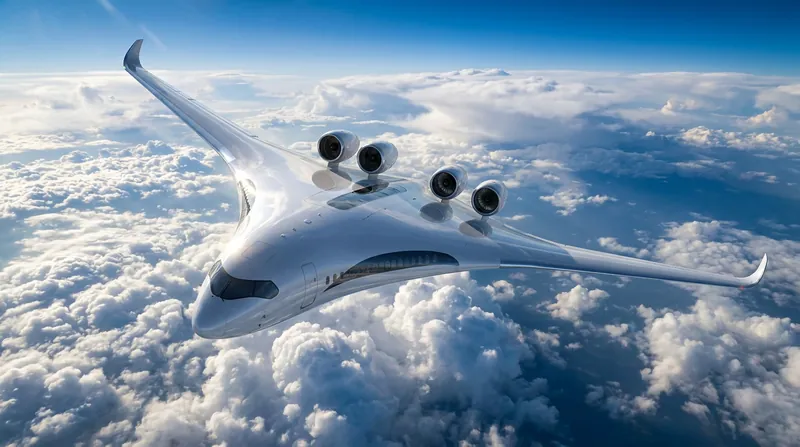
How the Blended Wing Body is Rewriting the Rules of Aviation
3 sources
Comments
Every angle. Every day.
Get Automotive & Transportation stories with full source coverage and perspective breakdowns, free every day.