
CoreWeave Agrees to Acquire Core Scientific for $9 Billion in Major AI Data Center Consolidation
AI cloud provider CoreWeave will acquire digital infrastructure firm Core Scientific in an all-stock deal, securing massive power capacity for high-performance computing. The transaction highlights a growing industry trend of repurposing cryptocurrency mining facilities to meet the surging energy demands of enterprise artificial intelligence.
By Factlen Editorial Team
- AI Cloud Providers
- Focus on vertical integration and securing long-term power capacity to de-risk expansion.
- Digital Asset Miners
- View the AI boom as a lucrative pivot to monetize existing high-density infrastructure.
- Enterprise AI Customers
- Prioritize stable, scalable, and compliant access to computing power without hardware overhead.
What's not represented
- · Local utility operators managing the grid strain from gigawatt-scale data centers.
- · Environmental advocates concerned about the carbon footprint of AI infrastructure.
Why this matters
As artificial intelligence models grow exponentially more complex, the ultimate bottleneck for innovation is no longer software, but physical electricity. This $9 billion consolidation proves that securing massive, gigawatt-scale power infrastructure is now the most critical—and expensive—prerequisite for the next generation of enterprise technology.
Key points
- CoreWeave has agreed to acquire Core Scientific in an all-stock transaction valued at approximately $9 billion.
- The deal provides CoreWeave with 1.3 gigawatts of contracted power, a critical resource for AI data centers.
- Core Scientific shareholders will receive a 66% premium over the stock's price prior to acquisition rumors.
- Verticalizing the data center infrastructure is projected to save CoreWeave $10 billion in future lease overhead.
- The acquisition highlights a broader industry trend of repurposing cryptocurrency mining facilities for enterprise AI workloads.
- CoreWeave expects to generate $500 million in annual run-rate cost savings by the end of 2027.
In a transaction that underscores the shifting bottlenecks of the artificial intelligence boom, CoreWeave has officially signed a definitive agreement to acquire Core Scientific for approximately $9 billion. The all-stock deal merges one of the industry’s fastest-growing AI cloud providers with a pioneer in high-density digital infrastructure. While the generative AI narrative has largely been dominated by software breakthroughs and advanced microchips, this acquisition highlights a stark physical reality: the ultimate constraint on future innovation is the availability of power and steel. By absorbing Core Scientific, CoreWeave is securing the foundational real estate required to maintain its rapid growth trajectory in an increasingly resource-constrained market.[1][2]
The sheer scale of the artificial intelligence revolution has created an unprecedented and immediate bottleneck in the form of electricity. As technology giants and specialized startups alike race to train increasingly complex large language models, the demand for high-performance computing has vastly outstripped the available capacity of traditional data centers. Building new facilities from the ground up requires navigating years of regulatory approvals, zoning laws, and grid connection queues. Consequently, companies that already possess active, large-scale power contracts have become the most valuable players in the hardware ecosystem, prompting a wave of consolidation as cloud providers scramble to secure their physical footprints.[3][5]
Enter the cryptocurrency miners. Over the past decade, companies like Core Scientific spent billions of dollars securing massive, multi-megawatt power contracts and constructing high-density facilities designed specifically to mine Bitcoin and other digital assets. These sites were engineered to handle immense electrical loads and dissipate the extreme heat generated by thousands of continuously running processors. Following a prolonged 'crypto winter' and structural changes in digital asset networks, these energy-intensive sites have emerged as the most coveted real estate in the broader technology sector, perfectly suited to be repurposed for the rigorous demands of enterprise artificial intelligence.[1][3]
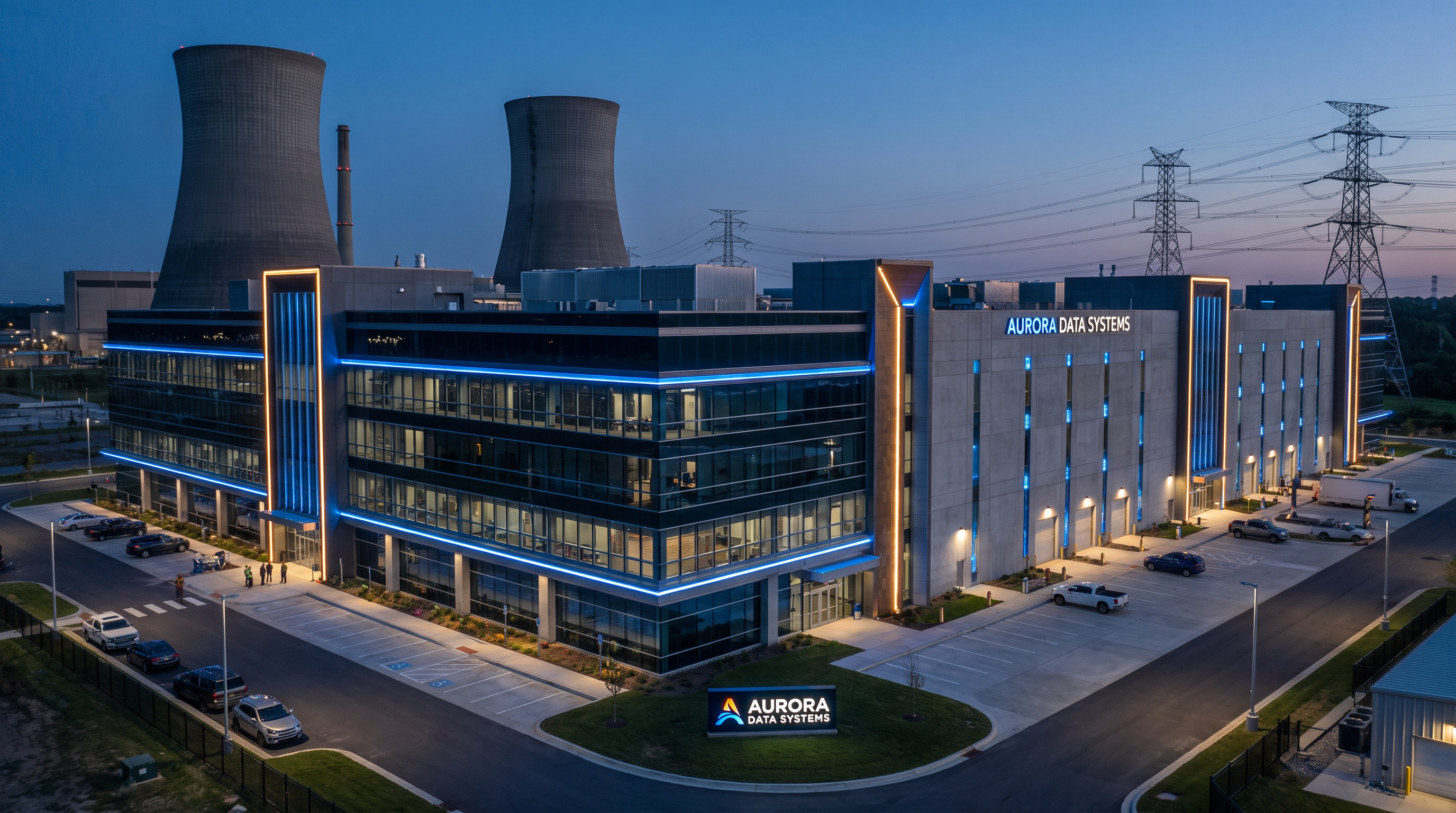
CoreWeave’s acquisition is fundamentally a strategic land grab for this highly prized electrical capacity. Through this definitive agreement, the AI hyperscaler gains immediate, vertical control over 1.3 gigawatts of gross power distributed across Core Scientific’s extensive national footprint. To put that staggering figure into perspective, 1.3 gigawatts is roughly equivalent to the total energy output of a commercial nuclear reactor, or enough electricity to continuously power approximately 750,000 standard residential homes. Securing this volume of active power in a single transaction allows CoreWeave to bypass the multi-year delays currently plaguing new data center construction projects.[2][5]

Beyond the immediate operational capacity, the acquisition includes a highly lucrative pipeline for an additional one gigawatt of potential power expansion. In an era where securing new grid connections can take up to half a decade due to infrastructural hurdles and utility constraints, buying existing, expandable capacity is the fastest and most reliable route to scale. This forward-looking pipeline ensures that CoreWeave can continue to deploy tens of thousands of next-generation Nvidia graphics processing units without facing sudden halts in its deployment schedule due to facility limitations.[2][4]
The financial mechanics of the merger clearly underscore the massive premium currently placed on active digital infrastructure. Under the terms of the agreement, Core Scientific stockholders will receive 0.1235 newly issued shares of CoreWeave Class A common stock for each share they currently hold. This fixed exchange ratio values Core Scientific at $20.40 per share, representing a substantial 66 percent premium over its trading price before initial acquisition rumors surfaced in late June. The all-stock nature of the deal also allows Core Scientific investors to maintain a stake in the combined entity’s future upside.[1][5]
For CoreWeave, the $9 billion price tag is heavily offset by the promise of massive long-term operational efficiencies. By verticalizing its supply chain—meaning the company will now own the physical buildings and hold the direct power contracts rather than renting space from third-party colocation providers—CoreWeave expects to fundamentally restructure its balance sheet. The company projects that this vertical integration will eliminate more than $10 billion in cumulative future lease overhead that it would have otherwise paid over the next twelve years to maintain its existing contractual sites.[1][2]
For CoreWeave, the $9 billion price tag is heavily offset by the promise of massive long-term operational efficiencies.
In addition to eliminating future lease liabilities, the combined company projects it will achieve $500 million in annual run-rate cost savings by the end of 2027. CoreWeave Chief Executive Officer Michael Intrator emphasized that owning this foundational layer of infrastructure significantly enhances operating efficiency and fundamentally de-risks the company's future expansion trajectory. By controlling the physical environment, CoreWeave can optimize cooling systems, power distribution, and network architecture specifically for its proprietary AI workloads, rather than adapting to the generalized constraints of rented colocation space.[2][6]
The transaction represents a stunning and highly profitable turnaround for Core Scientific. Following a sharp drop in global Bitcoin prices and soaring industrial energy costs, the infrastructure provider was forced to file for Chapter 11 bankruptcy protection in late 2022. However, the company successfully restructured its debt and emerged from bankruptcy in early 2024 with a radically updated strategic vision: pivoting its high-density colocation facilities away from volatile cryptocurrency mining and toward the rapidly booming, highly stable enterprise artificial intelligence market.[1]

That strategic pivot proved to be incredibly lucrative. The two companies initially formalized their partnership last year, signing a series of comprehensive 12-year contracts in which Core Scientific agreed to provide 200 megawatts of dedicated infrastructure specifically for CoreWeave’s operations. Recognizing the immense value of these sites, CoreWeave actually attempted to buy the company outright for roughly $1 billion in mid-2024. Core Scientific’s board firmly rejected that initial cash offer, arguing that it significantly undervalued the company’s long-term potential in the AI space—a calculation that has now been spectacularly vindicated.[1][4]
The successful execution of this $9 billion acquisition sets a definitive new benchmark for the digital infrastructure industry. Financial analysts and market observers note that this deal will likely serve as the primary blueprint for other large-scale digital asset miners looking to transition their facilities from cryptocurrency to enterprise computing. As power remains the ultimate constraint for AI expansion, any company holding active, gigawatt-scale utility contracts is now viewed as a prime acquisition target for hyperscalers desperate to expand their physical footprints.[1][3]
However, the process of repurposing legacy cryptocurrency infrastructure for enterprise artificial intelligence is not without significant technical and operational challenges. While both workloads require massive amounts of raw power and advanced cooling capabilities, enterprise AI demands a vastly higher standard of operational reliability. Tech giants, healthcare organizations, and research institutions require strict network redundancy, comprehensive physical security protocols, and rigorous regulatory compliance frameworks that go far beyond the standard requirements of a traditional Bitcoin mining operation. Ensuring zero downtime is critical when training multi-million-dollar AI models.[3]
To meet these stringent enterprise standards, CoreWeave will need to invest substantial capital to retrofit and upgrade Core Scientific’s existing facilities. The company must implement advanced liquid cooling systems, reinforce network backbones, and establish the governance guardrails required by its top-tier clients. Acknowledging this shift in focus, CoreWeave has already indicated to investors that it may eventually divest, spin off, or entirely repurpose Core Scientific’s legacy digital asset mining operations, ensuring the combined entity remains purely focused on high-performance computing and AI infrastructure.[3][6]
This massive consolidation reflects a broader maturation and stabilization within the artificial intelligence sector. As global spending on AI infrastructure is projected by market researchers to exceed $200 billion over the next five years, the industry is moving past the initial, chaotic scramble for individual microchips. Instead, the market is entering a phase of deep structural integration, where the biggest players are securing the entire vertical stack—from the silicon processors and the software platforms down to the concrete floors and the high-voltage power lines.[3][4]

CoreWeave, which successfully completed its initial public offering in March 2025, has strategically positioned itself as a premier 'GPU-as-a-Service' provider. By offering specialized, cloud-accessible clusters of Nvidia chips optimized for AI training and inference, it provides a highly attractive alternative for enterprises that do not want to purchase, house, and maintain their own rapidly depreciating hardware. This model relies entirely on CoreWeave’s ability to guarantee uninterrupted, high-speed access to compute power, making the reliability of its physical data centers paramount.[5][6]
With this landmark acquisition, CoreWeave not only secures the physical space necessary to house its rapidly expanding fleet of processors but also significantly reduces its overall cost of capital. Owning the underlying real estate and the associated power contracts provides the company with vastly greater financing flexibility. Instead of relying solely on equity or expensive venture debt, CoreWeave can now pursue traditional infrastructure financing strategies, leveraging its hard physical assets to fund future data center buildouts at a much lower interest rate.[2][4]
Ultimately, the $9 billion merger between CoreWeave and Core Scientific highlights the inescapable physical constraints of the modern digital economy. While artificial intelligence is often conceptualized as an ethereal technology existing purely in the cloud, the reality is that the cloud requires vast tracts of land, thousands of tons of steel, and gigawatts of continuous electricity. As the AI arms race accelerates, these tangible, physical resources are now driving the largest and most consequential deals in the global technology sector.[1][5]
How we got here
Late 2022
Core Scientific files for bankruptcy amid falling Bitcoin prices and rising energy costs.
Early 2024
Core Scientific emerges from bankruptcy and begins pivoting its facilities toward AI hosting.
June 2024
Core Scientific rejects an initial $1 billion acquisition offer from CoreWeave as significantly undervalued.
March 2025
CoreWeave successfully completes its initial public offering (IPO) to fund further expansion.
July 2025
CoreWeave and Core Scientific announce a definitive $9 billion all-stock merger agreement.
Viewpoints in depth
AI Cloud Providers
Focus on vertical integration and securing long-term power capacity to de-risk expansion.
For hyperscalers and specialized AI cloud providers, the physical constraints of the power grid have become the primary threat to growth. By acquiring infrastructure companies outright, these providers eliminate the uncertainty of leasing and gain direct control over gigawatt-scale power contracts. This vertical integration not only reduces long-term capital costs but ensures they have the dedicated physical space required to deploy next-generation, liquid-cooled GPU clusters without waiting years for new grid connections.
Digital Asset Miners
View the AI boom as a lucrative pivot to monetize existing high-density infrastructure.
Cryptocurrency miners spent years navigating volatile digital asset markets while building massive, energy-intensive facilities. Following the crypto winter and structural changes like Ethereum's 'Merge,' many of these companies found themselves with highly valuable power contracts but declining mining revenues. The transition to hosting enterprise AI workloads represents a highly profitable lifeline, allowing them to lease or sell their specialized infrastructure at a premium to tech companies desperate for immediate capacity.
Enterprise AI Customers
Prioritize stable, scalable, and compliant access to computing power without hardware overhead.
Organizations training large language models or running complex predictive analytics require immense computational power, but few want to manage the physical hardware or negotiate industrial power contracts. These customers rely on 'GPU-as-a-Service' platforms to provide scalable, on-demand access to compute. Their primary concern regarding infrastructure consolidation is ensuring that repurposed crypto facilities meet the stringent physical security, network redundancy, and regulatory compliance standards required for sensitive enterprise data.
What we don't know
- How quickly CoreWeave will divest or wind down Core Scientific's legacy cryptocurrency mining operations.
- The exact capital expenditure required to retrofit all of Core Scientific's existing facilities to meet enterprise AI security and redundancy standards.
- Whether regulatory bodies will scrutinize the rapid consolidation of gigawatt-scale power contracts by a handful of AI hyperscalers.
Key terms
- Gigawatt (GW)
- A unit of power equal to one billion watts, used to measure the massive energy capacity required by large-scale data centers.
- GPU-as-a-Service
- A cloud computing model where customers rent access to powerful graphics processing units for AI tasks without owning the physical hardware.
- High-Performance Computing (HPC)
- The use of supercomputers and parallel processing techniques to solve complex computational problems, such as training large AI models.
- Vertical Integration
- A business strategy where a company owns its supply chain—in this case, an AI cloud provider owning the physical data centers that house its servers.
- Colocation
- A data center facility where businesses can rent space for servers and computing hardware, sharing the cost of power, cooling, and security.
Frequently asked
Why is an AI company buying a Bitcoin miner?
Bitcoin miners possess massive, secured power contracts and high-density facilities. AI companies need this exact infrastructure to run energy-intensive GPU clusters.
How much power is involved in this deal?
CoreWeave is acquiring 1.3 gigawatts of contracted power, which is roughly equivalent to the output of a nuclear reactor, with another 1 gigawatt available for future expansion.
What happens to Core Scientific's crypto mining operations?
CoreWeave has indicated it may eventually repurpose or divest the legacy crypto mining business to focus entirely on enterprise AI and high-performance computing.
Sources
Source coverage
6 outlets
3 viewpoints surfaced






[1]ReutersAI Cloud Providers
CoreWeave to buy Core Scientific in $9 billion deal to meet AI power needs
Read on Reuters →[2]CoreWeaveAI Cloud Providers
CoreWeave to Acquire Core Scientific in a $9 Billion Deal
Read on CoreWeave →[3]Network WorldEnterprise AI Customers
With AI infrastructure demand skyrocketing, GPU-rich crypto facilities are being repurposed
Read on Network World →[4]PYMNTSEnterprise AI Customers
CoreWeave is acquiring data center infrastructure provider Core Scientific in a $9 billion deal
Read on PYMNTS →[5]TechzineDigital Asset Miners
CoreWeave buys Core Scientific for $9 billion
Read on Techzine →[6]Constellation ResearchDigital Asset Miners
CoreWeave buys Core Scientific for $9 billion
Read on Constellation Research →

More in finance
See all 5 stories →Private Markets
The Mechanics of Private Market Access: Why the SEC Advisory Committee Endorses Registered Funds
7 sources

Tokenized Assets
Robinhood Unveils Ethereum Layer-2 Network for Tokenized Assets and On-Chain Finance
3 sources

Social Security
The Mechanics of Social Security: What the 2032 Trust Fund Depletion Means for Your Retirement
7 sources

Every angle. Every day.
Get finance stories with full source coverage and perspective breakdowns delivered to your inbox.