
RTD Cocktail Revolution: Premixed Drinks Volume Surges 44% as Traditional Spirits Market Declines
Consumers are trading traditional liquor bottles for premium canned cocktails, driving a massive surge in the ready-to-drink market while legacy spirits face a historic slump.
By Factlen Editorial Team
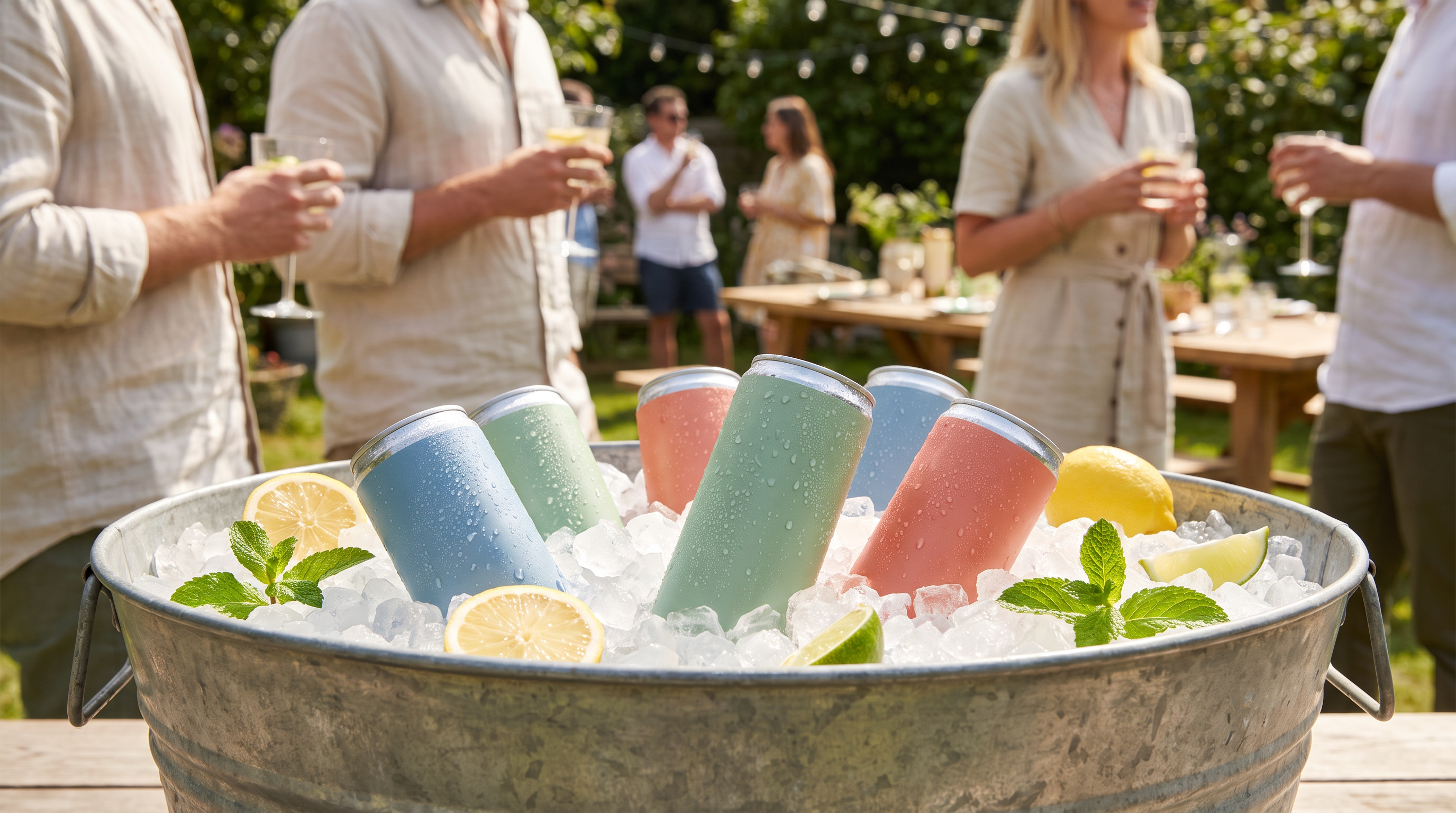
- Beverage Industry Analysts
- Argues that the shift represents a permanent structural change in how alcohol is consumed, driven by convenience and changing demographics.
- Consumer Trend Forecasters
- Focuses on the migration of bar culture to the home and the desire for frictionless, high-quality experiences.
- Legacy Distillers
- Views the trend cautiously as a double-edged sword that keeps consumers engaged but cannibalizes higher-margin full-bottle sales.
- Economic Observers
- Interprets the rise of canned cocktails as 'depremiumization'—a symptom of consumers seeking affordable luxuries amid inflation.
What's not represented
- · Craft Bartenders
- · Anti-Alcohol Advocacy Groups
Why this matters
The explosive rise of canned cocktails is fundamentally rewriting the economics of the alcohol industry, forcing legacy brands to adapt or face obsolescence. For consumers, this shift means unprecedented access to bar-quality drinks at a fraction of the upfront cost and effort, permanently changing how we entertain and unwind.
Key points
- Premixed cocktail volumes have surged 44%, making it the primary growth engine in the beverage alcohol sector.
- Traditional full-bottle spirits have seen a historic volume decline of roughly 4% to 6% over the same period.
- The market is shifting away from malt-based hard seltzers toward authentic, spirit-based canned cocktails.
- Economic pressures are driving consumers to view $15 RTD four-packs as an affordable luxury compared to $100 premium bottles.
- Legacy distillers are aggressively acquiring RTD brands to offset the cannibalization of their core products.
The modern liquor aisle is undergoing a radical transformation. For decades, the measure of a sophisticated home bar was the collection of glass bottles gathering dust on a cart. Today, those bottles are increasingly being bypassed in favor of aluminum cans. The ready-to-drink (RTD) cocktail has evolved from a sugary novelty into the primary growth engine of the global beverage alcohol industry, fundamentally altering how consumers purchase and enjoy spirits.[1]
The numbers reveal a stark divergence in consumer behavior. Over the past year, the volume of premium premixed cocktails surged by an astonishing 44%, defying a broader economic slump that has pressured discretionary spending across the board. This explosive growth is not merely a pandemic-era hangover, but a durable shift in how people choose to drink, driven by a demand for convenience, quality, and portion control.[1][3]
Conversely, the traditional spirits market is facing a historic contraction. Sales volumes for full bottles of whiskey, vodka, and rum declined by roughly 4% to 6% over the same period. Industry analysts have dubbed this phenomenon a "tale of two markets," where the convenience of a perfectly mixed canned cocktail is cannibalizing the sales of the very base spirits used to make them.[3]

To understand the mechanism behind this shift, one must look at the evolution of the RTD category itself. The current boom is not driven by the malt-based hard seltzers that dominated the late 2010s. Instead, the growth is almost entirely fueled by spirit-based RTDs—beverages made with actual distilled vodka, tequila, or gin, rather than fermented cane sugar or malt.[3]
This distinction is crucial. Consumers are increasingly scrutinizing ingredient labels and demanding authenticity. A canned margarita made with real agave tequila and lime juice offers a fundamentally different value proposition than a malt beverage with artificial flavoring. This shift toward authentic ingredients has allowed RTDs to shed their low-brow reputation and enter the premium category.[1]
The primary driver of this revolution is the desire to eliminate the "mixology project." Crafting a high-quality cocktail at home requires purchasing multiple expensive bottles of base spirits, liqueurs, bitters, and fresh garnishes, not to mention the requisite skill and time. For a generation of consumers who prioritize frictionless experiences, the appeal of cracking open a cold, perfectly balanced cocktail is undeniable.[1][2]
This dynamic has redefined the industry concept of "premiumization." For the past two decades, premiumization meant convincing consumers to trade up from a $30 bottle of whiskey to a $60 bottle. Today, the definition has fractured. Consumers are drinking less overall, but they are willing to pay a premium for a $15 four-pack of craft canned cocktails that delivers an immediate, high-quality experience without the commitment of a full bottle.[2][3]
Economic anxiety is also playing a counterintuitive role. While inflation has tightened household budgets, making a $100 bottle of premium tequila a difficult purchase to justify, a $20 pack of premium RTDs serves as an accessible luxury. The Distilled Spirits Council of the United States (DISCUS) notes that this migration to RTDs is keeping consumers engaged with the spirits category, even as they spend less per overall volume.[2]

Health and wellness trends are further accelerating the shift. Modern RTDs offer built-in portion control and transparent nutritional information, aligning perfectly with the "mindful drinking" movement. Consumers can easily track their intake of calories, sugar, and alcohol by volume (ABV), which typically ranges from a sessionable 4% to a more robust 10% or higher for premium offerings.[1][3]
Health and wellness trends are further accelerating the shift.
The demographic profile of the RTD consumer skews heavily toward Millennials and Generation Z. These cohorts are less bound by traditional drinking rituals and more open to flavor experimentation. They are driving demand for complex profiles—such as gin infused with botanicals, spicy margaritas, and espresso martinis—that would be intimidating to mix from scratch.[3]
Retailers are aggressively adapting to this new reality. The migration of bar culture into the grocery store has transformed retail layouts. Supermarkets and convenience stores are dedicating massive cooler space to RTDs, recognizing that these products offer higher velocity and better margins than traditional beer, while appealing to a broader demographic.

The major legacy distillers are not sitting idle as their bottle sales decline. Companies like Diageo, Brown-Forman, and Gallo have pivoted hard into the RTD space, either by acquiring successful independent brands or by leveraging their flagship spirits into canned formats. The strategy is clear: if consumers are going to drink less from the bottle, the brand must meet them in the can.
However, the RTD boom is not without its friction points. The market is rapidly becoming saturated, with hundreds of new brands launching every year. Shelf space in retail coolers is finite, and industry experts warn that a shakeout is inevitable. Only brands with clear differentiation, superior liquid quality, and strong distribution networks are likely to survive the coming consolidation.[3]
Regulatory hurdles also present a significant challenge. In many jurisdictions, spirit-based RTDs are taxed at a much higher rate than malt-based beverages or beer of the exact same alcohol content. This archaic tax structure restricts where spirit-based RTDs can be sold—often limiting them to dedicated liquor stores rather than grocery aisles—and artificially inflates their retail price.

Despite these headwinds, the trajectory of the market is clear. Internal shopper data indicates that RTD purchases are no longer a seasonal novelty or a fleeting trend; they have become permanently embedded in regular drinking routines. The convenience, quality, and accessibility of the format have fundamentally raised the baseline expectation for what a casual drink should be.[3]
Ultimately, the RTD cocktail revolution represents a democratization of the craft cocktail experience. By removing the barriers of cost, skill, and time, the industry has successfully packaged the expertise of a high-end bartender into an aluminum can. As traditional spirits continue to search for their footing in a changing economy, the ready-to-drink segment stands as a testament to the power of meeting the consumer exactly where they are.[1]
How we got here
Late 2010s
Malt-based hard seltzers explode in popularity, introducing consumers to the convenience of canned alcoholic beverages.
2020–2021
Pandemic lockdowns spark a massive surge in home bartending and premium spirit sales.
2023
Consumer fatigue with complex home mixology leads to a pivot toward spirit-based, authentic canned cocktails.
2025–2026
RTD volumes surge by double digits while traditional full-bottle spirits experience a historic volume decline.
Viewpoints in depth
Beverage Industry Analysts
Tracking the structural shift from bottles to cans.
Market analysts view the RTD boom not as a fleeting trend, but as a permanent structural realignment of the beverage industry. They point to the data showing that even as overall alcohol consumption flattens or declines, the RTD segment continues to post double-digit growth. This suggests that consumers are not simply adding canned cocktails to their existing habits, but actively substituting them for traditional beer, wine, and full-bottle spirits. Analysts emphasize that the brands succeeding in this space are those that treat the can as a premium vessel rather than a budget compromise.
Legacy Distillers
Navigating the cannibalization of their core products.
For traditional spirits manufacturers, the RTD revolution is a complex challenge. On one hand, canned cocktails offer a vital lifeline to keep younger demographics engaged with their brand ecosystems. On the other hand, every four-pack of premixed margaritas sold potentially represents a lost sale of a highly profitable 750ml bottle of tequila. Distillers are attempting to thread the needle by launching their own premium RTD lines, hoping to capture the convenience-driven consumer without entirely devaluing the prestige of their flagship glass bottles.
Economic Observers
Viewing the trend through the lens of inflation and budget constraints.
Economic analysts interpret the massive shift toward RTDs as a classic symptom of consumer belt-tightening, a phenomenon some term 'depremiumization.' While consumers still want the experience of a craft cocktail, inflation and economic anxiety have made the upfront investment in a fully stocked home bar unpalatable. The $15 to $20 price point of a premium RTD four-pack functions as an 'affordable luxury'—allowing consumers to treat themselves to high-quality ingredients without the financial commitment of purchasing full bottles of premium liquor.
What we don't know
- How many of the hundreds of independent RTD brands will survive the inevitable market consolidation and shelf-space crunch.
- Whether archaic tax structures that penalize spirit-based RTDs will be reformed to allow broader grocery store distribution.
- If the decline in traditional spirits represents a permanent generational shift or a temporary economic pause.
Key terms
- RTD (Ready-to-Drink)
- Pre-mixed, packaged beverages that are ready for immediate consumption without additional preparation.
- Spirit-Based RTD
- A canned or bottled cocktail made with actual distilled liquor, such as vodka, tequila, or gin, rather than a malt base.
- Malt-Based RTD
- A beverage, such as a traditional hard seltzer, where the alcohol is derived from fermented malt or cane sugar rather than distilled spirits.
- Premiumization
- The industry trend of consumers choosing higher-quality, more expensive products over standard or budget options.
- ABV (Alcohol by Volume)
- A standard measure of how much alcohol is contained in a given volume of an alcoholic beverage.
Frequently asked
What does RTD stand for in the beverage industry?
RTD stands for 'Ready-to-Drink.' It refers to pre-mixed beverages, such as canned cocktails, hard seltzers, and hard teas, that require no additional preparation or mixing before consumption.
Why are traditional spirits sales declining?
Traditional spirits are facing declines due to a combination of economic inflation tightening consumer budgets, a generational shift toward lower-alcohol options, and the sheer convenience of pre-mixed RTD alternatives.
Are all canned cocktails made with real liquor?
No. The market is divided between 'malt-based' RTDs (like most hard seltzers, which use fermented cane sugar or malt) and 'spirit-based' RTDs, which use actual distilled liquor like vodka, tequila, or gin. The current growth surge is primarily in the spirit-based category.
Are canned cocktails cheaper than making drinks at home?
While the per-drink cost of a canned cocktail is often higher than pouring from a full bottle, the upfront cost is much lower. Consumers save money by not having to purchase multiple expensive bottles of base spirits, liqueurs, and mixers to create a single recipe.
Sources
Source coverage
3 outlets
4 viewpoints surfaced



[1]ForbesConsumer Trend Forecasters
Why Ready-To-Drink Cocktails Keep Growing In 2026
Read on Forbes →[2]Wine-SearcherEconomic Observers
Pre-mixed cocktails in a can are dominating the US drinks market
Read on Wine-Searcher →[3]IWSR Drinks Market AnalysisBeverage Industry Analysts
RTD cocktails/long drinks volumes are forecast to double globally
Read on IWSR Drinks Market Analysis →
Every angle. Every day.
Get food drink stories with full source coverage and perspective breakdowns delivered to your inbox.