
Comparing Indie Film Financing: The International Co-Production Pact vs. The Traditional Pre-Sale
As the 2026 Venice Film Festival highlights a surge in cross-border studio partnerships, independent filmmakers face a stark choice between the upfront security of a Minimum Guarantee and the long-term equity of a Co-Production.

- Indie Producers & Co-Financiers
- Favor equity co-productions to retain IP ownership, access international subsidies, and avoid predatory recoupment waterfalls.
- Traditional Sales Agents
- Advocate for the security of Minimum Guarantees to cash-flow productions and mitigate risk for independent creators.
Perspectives this story doesn't cover
- Gap Financiers
- Local Film Commissions
The fate of an independent film isn't sealed on a festival stage in Venice or Telluride, nor is it decided when the final color grade is locked. The outcome is actually determined months earlier in a windowless market room when a producer chooses their financing structure. That single piece of paper dictates whether a breakout hit buys the director a house or merely pays off a distributor's marketing debt. At the 2026 Venice Film Festival, the choice dominating the Gap-Financing Market boils down to two fundamentally opposed philosophies: the traditional Minimum Guarantee (MG) pre-sale and the International Co-Production Pact.[6]
For decades, the Minimum Guarantee was the gold standard of independent cinema financing. A producer would take a script and a star to a market, and a territory distributor would commit a fixed upfront sum—an MG—for the rights to release the film in their country. The producer would then take those guaranteed contracts to a bank, which would lend against 70% to 90% of the face value to fund the actual shoot.[3]
But the security of an MG comes at a steep backend cost, buried deep in the contract's recoupment waterfall. When a film generates revenue, the distributor first takes a distribution fee off the top—typically 25% to 35% for domestic releases. Next, the distributor recoups their Prints and Advertising (P&A) spend. Finally, they recoup the MG itself.[4][5]
As Promise Legal's 2026 contract guide bluntly warns filmmakers: "You received the $25,000 at signing but receive nothing additional until the MG is fully recouped." If the P&A spend is uncapped, the distributor can spend at levels that mathematically eliminate any chance of the filmmaker reaching net profit, leaving the creator with zero backend overages on a hit.[5]
This mathematical reality—combined with shrinking MG offers in the streaming era—has driven a surge in the alternative model: the International Co-Production Pact. Instead of selling off territories to the highest bidder, producers are forming strategic alliances across borders before the cameras even roll.[6]
This mathematical reality—combined with shrinking MG offers in the streaming era—has driven a surge in the alternative model: the International Co-Production Pact.
The 2026 Venice Film Festival has become a showcase for this shift. On Saturday, Spanish indie studio Impulse Cinema and Italy's Fandango announced a strategic partnership to jointly finance and produce films across both territories. By pooling resources, neither company has to shoulder the entire budget, and both retain an equity stake in the final product rather than just a distribution license.[1]
A similar strategy is reshaping the Middle Eastern market. Cairo-based MAD Solutions and Egyptian platform IRTH struck a pan-Arab development pact at Venice to jointly package and support film and TV projects. These alliances allow producers to tap into multiple national film funds and tax incentives simultaneously.[2]
The Co-Production model strips away the illusion of upfront safety provided by an MG. The filmmakers and their studio partners are on the hook for the budget, absorbing the total loss if the film flops. However, because there is no MG to recoup, and the partners share the P&A burden, the equity holders participate in the upside immediately from the first dollar of profit.[6]
"Under the pact, Mad Solutions and Irth will jointly develop, package and support film," demonstrating how these deals move distributors upstream into the creative process. The distributor becomes a true partner rather than a toll collector at the end of the waterfall.[2]
The choice between the two models ultimately depends on the producer's risk tolerance and access to capital. If a producer lacks equity investors and needs guaranteed contracts to secure a bank loan, the traditional MG pre-sale remains a necessary lifeline. The upfront cash provides a guaranteed floor, even if it sacrifices the ceiling.[3]
Conversely, if a production team can leverage cross-border tax credits and strategic studio partnerships—like the Impulse-Fandango alliance—the Co-Production Pact preserves the long-tail value of the intellectual property. A successful co-production yields steady, decades-long passive income, whereas an MG deal might never pay out another cent after the premiere.[1][6]
Competing readings
The Minimum Guarantee Pre-Sale
The distributor pays an upfront advance against future royalties, assuming the financial risk of a flop in exchange for highly favorable recoupment terms.
The Case For: Provides immediate, guaranteed collateral. Banks will lend against 70% to 90% of the contract's face value, allowing producers to cash-flow the shoot. The Case Against: The recoupment waterfall mathematically cripples backend profits. Distributors take a 25–35% fee off the top, then deduct uncapped P&A, then recoup the MG before the filmmaker sees a second check. Fits well when: The production lacks equity financing and needs guaranteed territorial contracts to secure a bank loan. Does not fit when: The film is fully equity-financed and the creators want to maximize their long-tail streaming royalties.
The International Co-Production Pact
Studios across different territories pool equity and access local tax incentives to jointly finance the film, retaining ownership rather than licensing it away.
The Case For: Preserves the intellectual property's long-term earning power and unlocks lucrative national film funds. Partners share the backend from the first dollar of profit. The Case Against: Zero financial floor. If the film fails to find an audience, the co-producers absorb 100% of the loss. It also requires navigating complex, competing legal and creative jurisdictions. Fits well when: Producers have strong relationships in multiple countries and the project naturally spans diverse cultural markets. Does not fit when: The producers need immediate, risk-free cash to pay deferred crew salaries, or the project is strictly hyper-local with no international appeal.
- 25–35%
- Standard domestic distribution fee
- 70–90%
- Bank loan rate against MG face value
- 10% / 90%
- Standard MG payment split (signature / delivery)
Sources
Source coverage
6 outlets
2 viewpoints surfaced






- [1]VarietyIndie Producers & Co-Financiers
Spain’s Impulse Cinema and Italy’s Fandango Forge Strategic Partnership to Boost Co-Production and Sales Opportunities (EXCLUSIVE)
Read on Variety → - [2]DeadlineIndie Producers & Co-Financiers
MAD Solutions & IRTH Strike Pan-Arab Development & Production Strategic Partnership – Venice
Read on Deadline → - [3]Vitrina AITraditional Sales Agents
How Independent Producers Are Securing Minimum Guarantees Faster
Read on Vitrina AI → - [4]ThoolieTraditional Sales Agents
Indie Film Distribution Checklist
Read on Thoolie → - [5]Promise LegalIndie Producers & Co-Financiers
Tools for Film contract guide
Read on Promise Legal → - [6]Factlen Editorial TeamIndie Producers & Co-Financiers
Synthesis by Factlen editorial team
Read on Factlen Editorial Team →
Comments
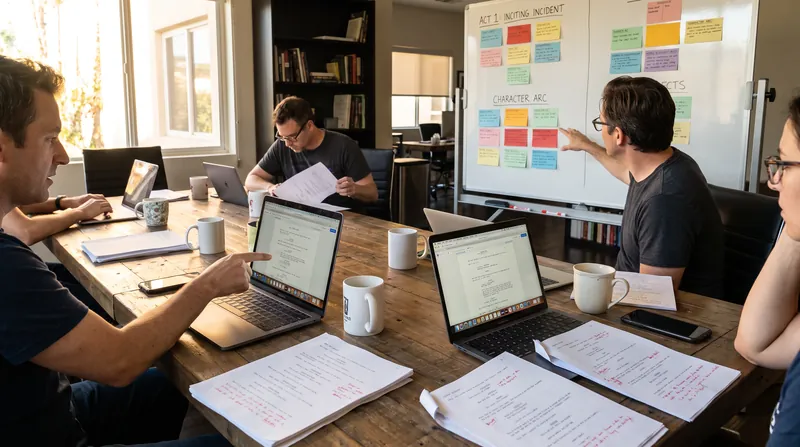
More in Entertainment
See all →Cinema Technology
12-bit 4:4:4 XYZ Color Space: How the DCI Specification Ensures Consistent Color in Theaters
7 sources

Acoustic Science
The 15-Minute Limit: How 100 dBA Concert Noise Exceeds Safe Exposure in Minutes
8 sources
Podcast Strategy
Comparing Podcast Release Strategies: The Binge Drop vs. The Weekly Rollout
3 sources
Nintendo Direct
Nintendo Announces Two-Day Direct Event for Zelda's 40th Anniversary and Switch 2 Winter Lineup
6 sources
Every angle. Every day.
Get Entertainment stories with full source coverage and perspective breakdowns delivered to your inbox.