
Clinical Data Reveals the True Accuracy of Consumer Sleep Trackers
Recent clinical validation studies have put top consumer sleep trackers to the test against medical-grade equipment. While devices excel at detecting basic sleep duration, their algorithmic estimates of deep and REM sleep often fall short, prompting experts to warn against over-reliance on daily scores.
By Factlen Editorial Team
- Clinical Researchers
- Scientists focused on validating consumer devices against medical-grade polysomnography.
- Consumer Tech Reviewers
- Reviewers prioritizing daily usability, ecosystem integration, and actionable lifestyle insights.
- Sleep Medicine Physicians
- Doctors managing the psychological and practical impacts of sleep tracking on patients.
What's not represented
- · Users with severe, diagnosed insomnia
- · Manufacturers of medical-grade polysomnography equipment
Why this matters
Millions of consumers base their daily routines and anxiety levels on the sleep scores generated by their wearables. Understanding exactly where these devices are medically accurate—and where they are merely guessing—empowers you to use the data to build healthier habits without falling victim to tech-induced stress.
Key points
- Top wearables detect sleep versus wake states with over 95% accuracy compared to clinical equipment.
- Wrist-based trackers consistently underestimate deep sleep, often miscategorizing it as light sleep.
- The Oura Ring currently leads consumer devices in sleep staging accuracy due to its finger-based form factor.
- Apple Watch's FDA-cleared sleep apnea detection marks a major shift from wellness tracking to medical screening.
- Doctors warn of 'orthosomnia,' a condition where obsessing over sleep tracker scores actively worsens sleep quality.
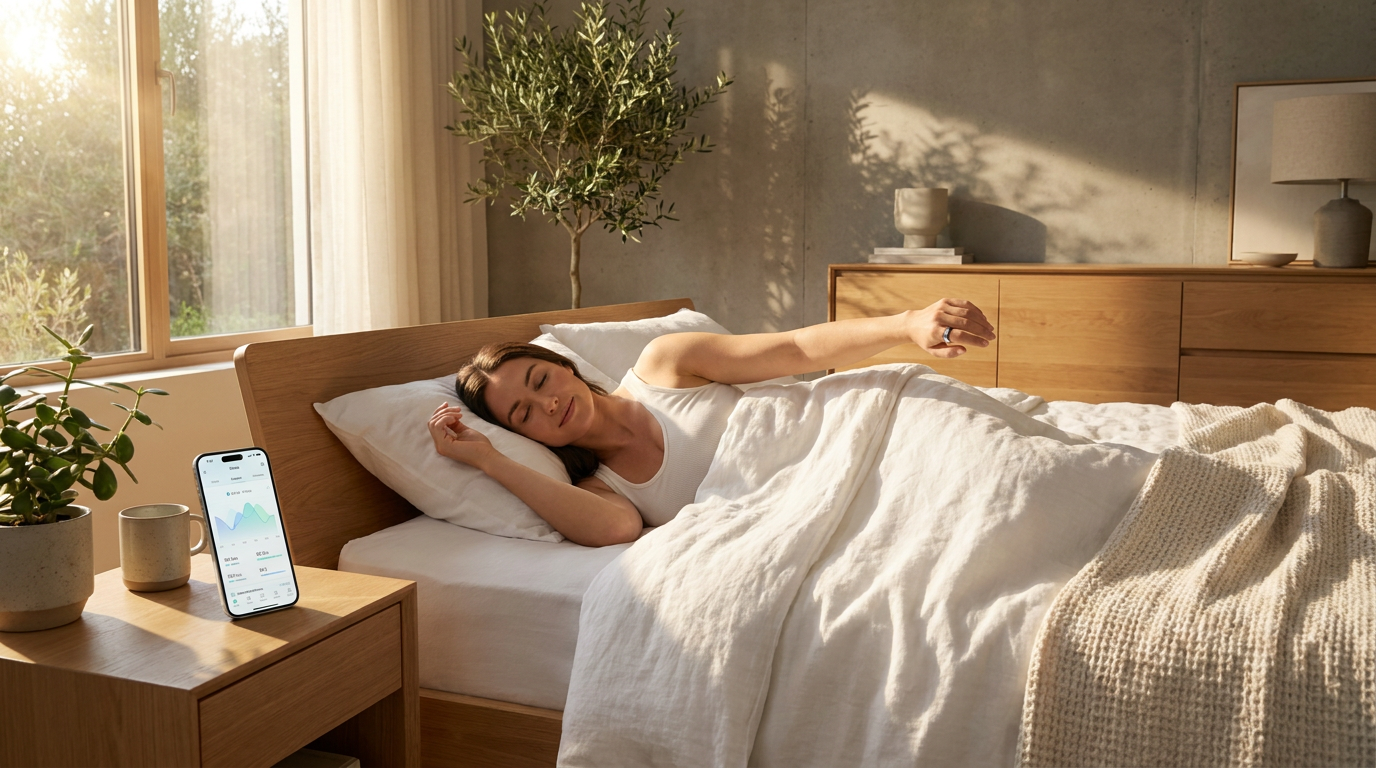
More than one-third of American adults now outsource the evaluation of their nightly rest to a piece of silicon and glass. Consumer sleep tracking has evolved from a niche biohacking hobby into a mainstream morning ritual, with devices promising to decode the mysteries of our circadian rhythms. Whether it is an Apple Watch strapped to the wrist, an Oura Ring on the finger, or a Whoop band tracking recovery, these wearables generate daily scores that dictate how millions of people feel about their energy levels before they even pour their first cup of coffee. As the technology becomes ubiquitous, understanding its true capabilities is essential for consumers.[3][4][5]
But as the market for sleep tech expands, a critical question has emerged in both consumer tech circles and sleep medicine clinics: how much of this data is actually true? For years, the algorithms powering these devices were proprietary black boxes, leaving users to trust the manufacturer's claims. Now, a wave of independent clinical validation studies published between 2024 and 2026 has finally put these commercial trackers head-to-head against polysomnography—the medical gold standard that measures actual brain waves, eye movement, and muscle activity.[1][3][5][6]
The resulting evidence pack reveals a nuanced reality that challenges the marketing narratives of major tech companies. Today's premium wearables are remarkably sophisticated at certain biometric tasks, yet fundamentally limited by their form factor when it comes to others. For consumers looking to optimize their rest, understanding where the evidence is strong—and where the algorithms are merely guessing—is the difference between actionable health insights and unnecessary morning anxiety. The data clearly delineates which metrics should be trusted and which should be viewed as broad estimates.[1][2][3]
The strongest evidence supports the ability of modern wearables to detect basic sleep and wake states. When researchers tested the Apple Watch Series 8, Oura Ring Gen3, and Fitbit Sense 2 against in-lab polysomnography, all three devices demonstrated a sensitivity of 95 percent or higher for simply knowing whether a user was asleep or awake. If you want to know exactly what time you finally drifted off and what time your alarm actually woke you up, the optical heart rate sensors and accelerometers in these devices are highly reliable.[1][5]

This baseline accuracy is crucial because total sleep duration remains the most important metric for general health and cognitive function. While the devices tend to slightly underestimate total sleep time by anywhere from three to twelve minutes across the board, their precision in mapping the broad boundaries of the night is clinically validated. For the average user trying to ensure they hit a consistent seven-to-eight-hour window, the hardware is more than capable of providing an honest accounting of time spent in bed, allowing for reliable long-term habit tracking.[1][5][6]
However, the evidence grows significantly weaker when these devices attempt to divide that sleep into specific stages: light, deep, and rapid eye movement (REM). Because consumer wearables rely on heart rate variability, respiration, and movement rather than electroencephalogram (EEG) brain waves, sleep staging is ultimately an algorithmic estimation. Clinical trials show that accuracy drops sharply once the devices try to categorize the depth of sleep, revealing the inherent limitations of relying solely on cardiovascular and kinetic data to map neurological states.[1][3]
Among the major competitors, the Oura Ring consistently performs best in stage classification, setting the benchmark for consumer accuracy. In recent validation studies, the Oura Ring demonstrated between 76 and 80 percent sensitivity in matching polysomnography for light, deep, and REM sleep. Researchers attribute this edge to the ring form factor, which allows sensors to sit flush against the finger's capillaries, capturing a stronger and more consistent pulse signal than a device shifting around on a sweaty wrist during the night.[1][4][5]
Conversely, wrist-based smartwatches struggle notably with deep sleep estimation, a metric highly prized by users seeking physical recovery. The Fitbit Sense was found to underestimate deep sleep by an average of 15 minutes per night while overestimating light sleep by 18 minutes. The Apple Watch exhibited an even wider margin of error in clinical settings, underestimating deep sleep by an average of 43 minutes and overestimating light sleep by 45 minutes, significantly skewing the user's perception of their restorative rest.[1]

Conversely, wrist-based smartwatches struggle notably with deep sleep estimation, a metric highly prized by users seeking physical recovery.
For a user obsessing over a lack of deep sleep on their morning Apple Watch report, this data provides vital context and reassurance. The device is likely miscategorizing restorative deep sleep as light sleep due to minor bodily movements or heart rate fluctuations that do not actually reflect a shift in brainwave states. Sleep medicine physicians routinely remind patients that a low deep-sleep score on a wearable is more likely a hardware limitation than a genuine neurological deficit requiring medical intervention.[1][2][3]
Where wrist wearables are currently making their strongest evidence-based pivot is in the realm of medical screening rather than pure sleep staging. In late 2024 and 2025, Apple secured FDA clearance and CE marking in Europe for sleep apnea detection. By utilizing the accelerometer to track microscopic movements associated with breathing disturbances, the Apple Watch can now flag moderate-to-severe obstructive sleep apnea over a 30-day tracking period, transforming the smartwatch into a legitimate preliminary diagnostic tool.[7]
This shift from wellness tracking to clinical screening represents a major leap in utility for the average consumer. While a watch cannot definitively diagnose sleep apnea—that still requires a physician and a home or lab sleep test—its ability to serve as an early warning system for a condition that affects millions of undiagnosed adults is backed by robust internal and independent validation. For users struggling with heavy snoring or unexplained daytime fatigue, this feature alone justifies the wearable's place on the nightstand.[3][7]
Meanwhile, devices like the Whoop 5.0 have carved out an evidence-backed niche in athletic recovery, prioritizing overall systemic strain over granular sleep architecture. Rather than focusing purely on sleep stages, Whoop aggregates sleep duration, resting heart rate, and heart rate variability to calculate a daily physiological strain capacity. While its clinical sleep staging accuracy trails slightly behind Oura, its holistic approach to cardiovascular recovery is highly valued by users managing intense training loads and seeking actionable guidance on daily exertion levels.[7]

But the proliferation of this highly quantified data has birthed a new, well-documented psychological phenomenon known in medical circles as orthosomnia. Coined by researchers at Northwestern University and Rush University, orthosomnia refers to an unhealthy obsession with achieving perfect sleep metrics. In a study published in the Journal of Clinical Sleep Medicine, doctors detailed how intense reliance on sleep trackers actually increased stress levels, creating a hyper-aroused state that made it significantly harder for patients to fall asleep.[2]
The study revealed a troubling paradox where patients trusted their devices more than their own bodies or the expertise of their doctors. Even when medical professionals conducted clinical sleep studies and assured these patients they did not have insomnia, the patients continued to suffer from anxiety because they were not measuring up to their tracker's arbitrary definition of a 'good' sleep score. The negative feedback loop of waking up, seeing a low score, and worrying about being tired creates a self-fulfilling prophecy of daytime fatigue.[2][3]
"It can make you obsessive, which is counterproductive to sleep," notes Dr. Seema Khosla, a sleep medicine specialist who frequently reviews tracker data with her patients in the clinic. She emphasizes that if a user feels rested upon waking but their app tells them they slept poorly, they should always trust their physiological sensation over the algorithm. The device is best utilized as a tool for spotting long-term behavioral trends, not as a daily report card that dictates human energy levels and mood.[3]

Despite the genuine risks of orthosomnia, the broader clinical consensus remains cautiously optimistic about the net benefit of these devices for the general public. A randomized crossover trial involving healthy individuals found that wearing a sleep tracker and receiving daily feedback actually improved perceived nighttime sleep quality over time. The devices act as an effective accountability mechanism, encouraging users to prioritize their bedtime, reduce late-night screen time, and limit evening alcohol consumption in pursuit of a better baseline.[3][6]
When users see the immediate, quantified impact of a late-night espresso or a stressful evening email session on their resting heart rate, they are significantly more likely to modify their behavior. The true value of a consumer sleep tracker does not lie in its ability to perfectly replicate a $3,000 polysomnography study in a clinical laboratory. It lies in its ability to make the invisible physiological consequences of our daily lifestyle habits visible and actionable on a continuous basis.[1][3][6]
Ultimately, the evidence suggests a clear, pragmatic framework for consumers navigating the crowded wearable market. Use these devices to establish consistent sleep schedules, monitor long-term cardiovascular baselines, and screen for severe breathing disturbances like sleep apnea. But when it comes to the exact minute-by-minute breakdown of deep versus light sleep, the healthiest approach is to take the data with a grain of salt, take off the watch if it causes anxiety, and focus simply on how you feel when you wake up.[1][2][3][7]
How we got here
2020–2022
Early validation studies highlight significant inaccuracies in wrist-based sleep staging.
Late 2023
Oura releases its Gen3 ring with updated algorithms, significantly closing the accuracy gap with clinical equipment.
Oct 2024
Independent studies confirm top wearables now achieve over 95% accuracy in basic sleep/wake detection.
Late 2024
Apple receives FDA clearance for its sleep apnea detection feature, shifting wearables from wellness tools to medical screeners.
2026
Clinical consensus emphasizes the behavioral benefits of tracking while warning against data-induced 'orthosomnia'.
Viewpoints in depth
Clinical Researchers
Scientists focused on validating consumer devices against medical-grade polysomnography.
For the clinical community, the primary concern is the gap between marketing claims and physiological reality. Researchers emphasize that while optical sensors are excellent at tracking heart rate and movement, they cannot directly measure the electroencephalogram (EEG) brain waves required to definitively stage sleep. Consequently, they view consumer wearables as useful tools for estimating total sleep duration and detecting broad disruptions, but caution against using them to diagnose specific sleep architecture deficits like a lack of deep sleep.
Consumer Tech Reviewers
Reviewers prioritizing daily usability, ecosystem integration, and actionable lifestyle insights.
Tech analysts evaluate these devices through the lens of user experience rather than strict medical compliance. From this perspective, a tracker's value lies in its ability to influence behavior—such as prompting a user to go to bed earlier or highlighting the negative impact of alcohol on resting heart rate. They argue that even if a device is off by 20 minutes on deep sleep, its long-term trend lines are highly accurate and provide enough directional data to help users build healthier nighttime routines.
Sleep Medicine Physicians
Doctors managing the psychological and practical impacts of sleep tracking on patients.
Practicing sleep specialists occupy the middle ground, balancing the benefits of data collection against the rising tide of 'orthosomnia.' Physicians appreciate when a smartwatch flags potential sleep apnea, allowing them to intervene early with proper medical testing. However, they frequently have to counsel patients who are perfectly healthy but suffer from anxiety induced by low 'sleep scores.' Their consensus is that patients should use trackers for broad accountability but must learn to trust their own subjective feelings of restfulness over an algorithm's daily grade.
What we don't know
- Whether future software updates can bridge the gap in sleep staging accuracy without requiring EEG brainwave sensors.
- The long-term psychological impact of daily biometric tracking on the general population's baseline anxiety levels.
- How upcoming non-wearable 'nearable' devices like radar-equipped smart displays will compare to wrist and ring trackers in clinical settings.
Key terms
- Polysomnography (PSG)
- The medical gold standard for sleep studies, which measures brain waves, blood oxygen, heart rate, and breathing to accurately diagnose sleep disorders.
- Orthosomnia
- An unhealthy obsession with achieving perfect sleep scores on a tracking device, often leading to increased anxiety and poorer sleep.
- Sleep Staging
- The process of categorizing sleep into distinct phases, including light sleep, deep (slow-wave) sleep, and rapid eye movement (REM) sleep.
- Heart Rate Variability (HRV)
- The fluctuation in the time intervals between adjacent heartbeats, used by wearables to estimate stress levels and physical recovery.
- Sensitivity
- In clinical testing, the ability of a device or test to correctly identify a specific condition or state, such as accurately detecting when a person is truly asleep.
Frequently asked
Are sleep trackers accurate enough to diagnose sleep disorders?
No. While devices like the Apple Watch are FDA-cleared to screen for signs of sleep apnea, they cannot officially diagnose disorders. A clinical polysomnography (PSG) study is still required for a formal medical diagnosis.
Which wearable is best for tracking deep and REM sleep?
Clinical validation studies show the Oura Ring currently outperforms wrist-based trackers in sleep staging accuracy, achieving up to 80% sensitivity compared to medical-grade equipment.
Why does my tracker say I get very little deep sleep?
Wrist-based wearables frequently underestimate deep sleep—sometimes by up to 45 minutes—because they rely on movement and heart rate rather than brain waves. If you feel rested, your device is likely miscategorizing your sleep stages.
What is orthosomnia?
Orthosomnia is a psychological condition where an individual becomes unhealthily obsessed with achieving perfect sleep metrics on their tracker, which paradoxically increases anxiety and worsens their actual sleep quality.
Sources
Source coverage
7 outlets
3 viewpoints surfaced







[1]MDPI SensorsClinical Researchers
Accuracy of Three Commercial Wearable Devices for Sleep Tracking in Healthy Adults
Read on MDPI Sensors →[2]SleepopolisSleep Medicine Physicians
Study Finds Sleep Trackers Could Make You Sleep Worse
Read on Sleepopolis →[3]CBS NewsSleep Medicine Physicians
Do sleep trackers help you get better sleep?
Read on CBS News →[4]Garage Gym ReviewsConsumer Tech Reviewers
Expert Comparison: Oura Ring vs Apple Watch (2026)
Read on Garage Gym Reviews →[5]CNETConsumer Tech Reviewers
I Tested Three Sleep Trackers for 30 Days. Here's the One I'd Actually Use
Read on CNET →[6]Journal of Clinical Sleep MedicineClinical Researchers
Effect of wearables on sleep in healthy individuals: a randomized crossover trial and validation study
Read on Journal of Clinical Sleep Medicine →[7]Back2SleepConsumer Tech Reviewers
Whoop vs Oura Ring vs Apple Watch for Sleep Apnea: 2026 Accuracy Test
Read on Back2Sleep →
Every angle. Every day.
Get shopping stories with full source coverage and perspective breakdowns delivered to your inbox.