
Built to Bend: How Aerospace Engineering and AI Keep Flights Safe During Severe Turbulence
While mid-air bumps often cause passenger anxiety, modern aircraft are engineered to withstand forces far beyond natural weather events. A new wave of AI forecasting and real-time data sharing is now allowing pilots to avoid rough air entirely.
By Factlen Editorial Team
- Aviation Engineers
- Focus on structural integrity, ensuring aircraft can physically withstand extreme aerodynamic forces.
- Meteorologists & Data Scientists
- Focus on predicting atmospheric conditions using advanced AI and real-time data networks.
- Flight Crews & Regulators
- Focus on cabin safety protocols and minimizing injuries to unsecured passengers and staff.
What's not represented
- · Anxious passengers seeking psychological reassurance
- · Airlines balancing fuel costs with turbulence-avoidance rerouting
Why this matters
Understanding the mechanics of flight safety transforms turbulence from a source of panic into a testament to human engineering, helping millions of anxious travelers fly with confidence.
Key points
- Modern aircraft wings are tested to withstand 150% of the maximum aerodynamic forces they will ever encounter.
- The IATA Turbulence Aware platform allows thousands of planes to share real-time turbulence data to help other pilots avoid rough air.
- AI weather models can now predict invisible Clear Air Turbulence faster and more accurately than traditional supercomputers.
- Nearly 80% of turbulence-related injuries happen to flight attendants, highlighting the danger of being unbuckled.
The sudden jolt of a commercial airliner dropping a few feet in mid-air is enough to make even seasoned travelers grip their armrests. The illuminated seatbelt sign and the captain's voice asking the crew to take their seats often trigger a primal fear of falling. Yet, while turbulence feels violent inside the cabin, it is a completely routine atmospheric phenomenon that poses virtually zero threat to the structural integrity of a modern jet.[6]
To understand why planes are safe in rough air, it helps to understand what turbulence actually is. The atmosphere is an ocean of fluid, constantly churning due to temperature changes, mountain ranges, and jet streams. When an aircraft flies through these shifting currents, it experiences rapid changes in lift, causing the bumps and drops passengers feel.[2]
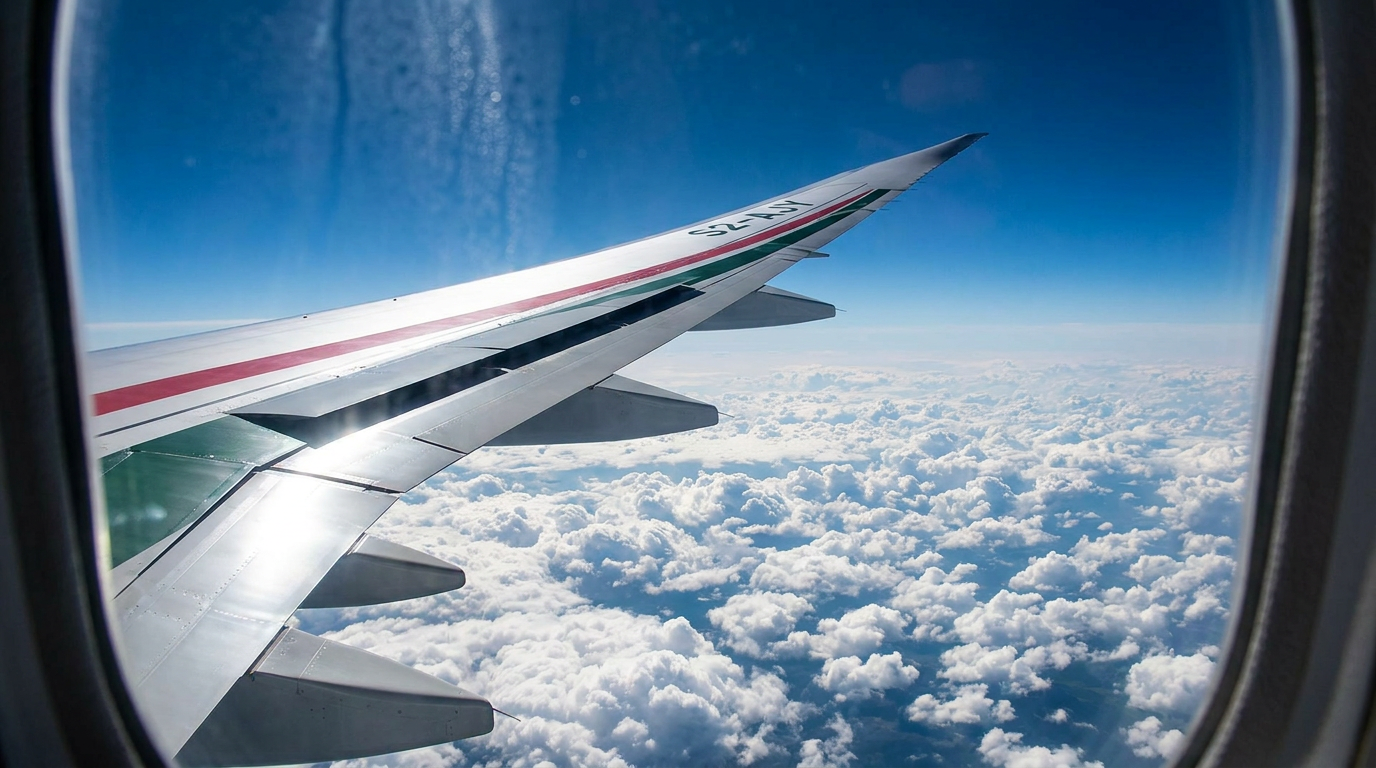
The most common fear among anxious flyers is that severe turbulence could snap an aircraft's wings. Aviation engineers have spent decades ensuring this is a physical impossibility under natural weather conditions. Modern aircraft wings are not rigid structures; they are highly engineered suspension systems designed to flex and absorb the energy of turbulent air, much like the shock absorbers on a car.[5][6]
Before any new commercial aircraft is certified to fly, its structural limits are tested in massive hangars. During these "ultimate load" tests, mechanical rigs bend the wings upward to simulate forces far beyond what the plane could ever encounter in the real world. The Federal Aviation Administration (FAA) and international regulators require wings to withstand 150 percent of the maximum aerodynamic load they would experience in the most extreme, once-in-a-lifetime storm.[2][5]
The results of these stress tests are visually staggering. During the certification of the Airbus A350, the aircraft's carbon-fiber composite wings were bent upward by an astonishing 5.2 meters (over 17 feet) before reaching their breaking point. This immense flexibility means that when a plane hits a severe air pocket, the wings simply flex to absorb the blow, keeping the fuselage stable and intact.[5][6]

While the aircraft itself is virtually indestructible in rough air, the aviation industry has shifted its focus from merely surviving turbulence to avoiding it entirely. For decades, pilots relied on subjective radio reports from other planes, describing the air as "light chop" or "severe turbulence." Today, that analog system is being replaced by precise, automated data networks.[1]
In 2018, the International Air Transport Association (IATA) launched the Turbulence Aware platform, a global data-sharing network that crowdsources smooth air. As of the mid-2020s, over 28 major airlines and thousands of aircraft continuously feed automated turbulence metrics into the system.[1]
In 2018, the International Air Transport Association (IATA) launched the Turbulence Aware platform, a global data-sharing network that crowdsources smooth air.
Instead of relying on human descriptions, modern aircraft use their onboard sensors to calculate the Eddy Dissipation Rate (EDR)—an objective, mathematical measurement of atmospheric turbulence. This data is instantly anonymized and beamed to a central platform, which then broadcasts a real-time map of turbulent zones to pilots and dispatchers worldwide, allowing them to adjust their altitude or route before they ever hit the rough patch.[1]

The next frontier in turbulence safety is predicting rough air before any plane flies through it. Historically, Clear Air Turbulence (CAT)—which occurs without visual warnings like clouds or storms—has been notoriously difficult to forecast using traditional physics-based meteorological models.[3]
That is changing rapidly with the introduction of Artificial Intelligence in weather forecasting. Deep neural networks, trained on decades of historical atmospheric data, can now recognize the subtle patterns that precede severe turbulence. Models like Google DeepMind's GraphCast and the European Centre for Medium-Range Weather Forecasts' AIFS can generate highly accurate global weather predictions in under a minute, drastically outperforming traditional supercomputer simulations.[4][7]
By integrating these AI models into flight planning software, airlines can now foresee micro-weather events and CAT with unprecedented accuracy. This allows dispatchers to optimize flight paths hours before takeoff, saving fuel and ensuring a smoother ride for passengers.[4]

If the planes are unbreakable and the forecasting is getting better, why does turbulence still cause injuries? The data points to a single, preventable factor: unsecured humans and objects inside the cabin.[3]
A comprehensive safety research report by the National Transportation Safety Board (NTSB) analyzed turbulence-related accidents and found that the vast majority of serious injuries occur when people are not wearing their seatbelts. Flight attendants, who are required to walk the aisles to secure the cabin, account for nearly 80 percent of all turbulence-related injuries.[3]
The FAA's guidance on the matter is remarkably straightforward: the safest place to be during a flight is in a seat with the lap belt securely fastened. When passengers ignore the seatbelt sign, a sudden drop can cause them to momentarily lift out of their seats, risking injury when the aircraft stabilizes.[2][3]
Ultimately, the science of aviation safety has transformed turbulence from a life-threatening hazard into a mere inconvenience. Between wings that can bend like trees in a hurricane, global networks that share real-time atmospheric data, and AI models that predict the invisible, modern commercial flight remains the safest mode of transportation in human history.[6]
How we got here
2006
The FAA issues a comprehensive advisory circular on preventing turbulence injuries, emphasizing seatbelt compliance.
2018
IATA launches the Turbulence Aware platform to crowdsource real-time atmospheric data from commercial flights.
2021
The NTSB publishes a major study showing that unbuckled passengers and crew suffer the vast majority of turbulence injuries.
2023
Google DeepMind publishes GraphCast, proving AI can outperform traditional weather models in global forecasting.
2024
ECMWF operationalizes AIFS, bringing AI weather forecasting into mainstream aviation use.
Viewpoints in depth
Aviation Engineers
Focus on structural limits and material science, emphasizing that planes are built to withstand forces far beyond natural weather.
For aerospace engineers, turbulence is an solved mathematical problem. By utilizing advanced carbon-fiber composites and aluminum alloys, manufacturers design wings that function as massive shock absorbers. During certification, these structures are subjected to 'ultimate load' tests, where they are mechanically bent to 150 percent of the highest aerodynamic stress they could ever face in flight. Engineers emphasize that while the cabin may shake violently, the airframe itself is operating well within its safe structural margins.
Meteorologists & Data Scientists
Focus on the shift from physics-based models to AI neural networks for predicting Clear Air Turbulence.
The meteorological community views turbulence as a data challenge. Historically, predicting Clear Air Turbulence (CAT) was difficult because it doesn't present visual cues like storm clouds. Today, data scientists are deploying deep neural networks that analyze decades of atmospheric patterns to predict micro-weather events. By combining these AI forecasts with real-time Eddy Dissipation Rate (EDR) data crowdsourced from thousands of planes, meteorologists are creating a dynamic, predictive map of the sky that allows dispatchers to route flights around rough air before they even take off.
Flight Crews & Regulators
Focus on cabin safety, emphasizing that the only real danger is human non-compliance with seatbelt rules.
For flight attendants and aviation regulators like the FAA and NTSB, the structural integrity of the plane is a given; the real variable is human behavior. Safety data consistently shows that the aircraft itself survives severe turbulence unscathed, but unsecured passengers and crew do not. Because flight attendants are required to walk the aisles to check compliance, they suffer nearly 80 percent of all turbulence-related injuries. Regulators stress that the simplest and most effective safety technology on board is the lap belt.
What we don't know
- Exactly how much climate change will increase the frequency and severity of Clear Air Turbulence in the coming decades.
- Whether AI forecasting models will eventually become reliable enough to completely eliminate unexpected turbulence encounters.
Key terms
- Clear Air Turbulence (CAT)
- Turbulence that occurs in cloudless regions, making it invisible to pilots and traditional weather radar.
- Eddy Dissipation Rate (EDR)
- An objective, mathematical metric used by aircraft sensors to measure the intensity of atmospheric turbulence.
- Ultimate Load
- The maximum stress an aircraft component is designed to withstand during testing, typically 150% of the highest expected flight forces.
- Numerical Weather Prediction (NWP)
- Traditional weather forecasting that uses complex physics equations and supercomputers to simulate the atmosphere.
Frequently asked
Can turbulence cause a plane to crash?
No. Modern commercial aircraft are engineered to withstand forces far exceeding any natural turbulence. There has not been a turbulence-caused crash of a modern commercial jet in decades.
Why do the wings bounce during a flight?
Wings are designed to be highly flexible. This flexibility acts like a suspension system, absorbing the energy of rough air and preventing structural damage to the fuselage.
Is climate change making turbulence worse?
Some atmospheric studies suggest that warming global temperatures are increasing wind shear in jet streams, which may lead to a higher frequency of Clear Air Turbulence in the future.
Sources
Source coverage
7 outlets
3 viewpoints surfaced






[1]International Air Transport Association (IATA)Meteorologists & Data Scientists
Turbulence Aware Platform
Read on International Air Transport Association (IATA) →[2]Federal Aviation AdministrationFlight Crews & Regulators
AC 120-88A - Preventing Injuries Caused by Turbulence
Read on Federal Aviation Administration →[3]National Transportation Safety BoardFlight Crews & Regulators
Preventing Turbulence-Related Injuries in Air Carrier Operations
Read on National Transportation Safety Board →[4]European Centre for Medium-Range Weather ForecastsMeteorologists & Data Scientists
AIFS: ECMWF's Artificial Intelligence Forecasting System
Read on European Centre for Medium-Range Weather Forecasts →[5]AirbusAviation Engineers
A350 Ultimate Load Wing Stress Test
Read on Airbus →[6]Factlen Editorial Team
Synthesis by Factlen editorial team
Read on Factlen Editorial Team →[7]Google DeepMindMeteorologists & Data Scientists
GraphCast: AI model for faster and more accurate global weather forecasting
Read on Google DeepMind →
Every angle. Every day.
Get travel stories with full source coverage and perspective breakdowns delivered to your inbox.