
BNEF Lowers Global EV Forecast, Projects 19% US Sales Drop Due to Federal Policy Rollback
BloombergNEF projects global electric vehicle sales will hit a record 23 million in 2026, but has slashed its long-term US adoption forecast following the withdrawal of federal support.
By Tao Yang

Share this story
The global electric vehicle transition is entering a deeply uneven phase. According to the newly released Electric Vehicle Outlook 2026 from BloombergNEF, global passenger EV sales are projected to reach a record 23 million units this year, accounting for 27 percent of all new cars sold worldwide.
This represents a significant leap from just five years ago, when EVs captured a mere 9 percent of the global market. However, beneath the headline growth lies a complex geographic divergence. For the second consecutive year, analysts have downgraded their long-term adoption forecasts, pointing to a stark deceleration in the United States and a maturing market in China that is fundamentally reshaping the trajectory of global transportation.[1]
The most dramatic revision in the 2026 outlook centers on the United States, where passenger EV sales are projected to plummet by 19 percent this year. This contraction is not driven by a sudden technological failure or a spike in battery costs, but rather by a profound shift in the regulatory environment.
The full withdrawal of federal support for electrification—most notably the rollback of national fuel-economy targets and the scaling back of consumer incentives originally established under the Inflation Reduction Act—has fundamentally altered the calculus for American car buyers. Without these policy levers, the financial bridge that helped early adopters cross the affordability gap has effectively collapsed.[1]
The long-term implications of this American policy reversal are severe. BloombergNEF now projects that electric vehicles will account for just 17 percent of passenger vehicle sales in the United States by 2030. This figure represents a staggering downward revision; just last year, the forecast stood at 27 percent, and in 2024, analysts confidently projected a 48 percent market share by the end of the decade.
Automakers have responded to this shifting landscape by dramatically curtailing their ambitions, with production of at least 27 existing and future EV models being reduced, delayed, or canceled entirely over the past year.[2]
Furthermore, the chilling effect of tariffs and rising global trade barriers has insulated the American market from the downward price pressure exerted by international competition. By restricting the entry of highly affordable, mass-market EVs produced overseas, domestic consumers are left with a narrower, more expensive range of options. Consequently, the revised forecast suggests that by 2040, only 24 percent of the total United States vehicle fleet will be electric, leaving the country heavily reliant on internal combustion engines for decades to come.[1][2]
Across the Pacific, China remains the undisputed heavyweight of the global electric vehicle sector, yet its growth engine is also showing signs of moderation. In 2026, electric vehicles are expected to make up nearly 64 percent of all domestic car sales in China, cementing its status as the most advanced major EV market in the world.
However, the days of exponential, subsidy-fueled expansion are ending. The Chinese government has systematically tightened the eligibility requirements for EV incentives, forcing the industry to transition from a state-supported rapid growth phase into a highly competitive, mature market.
This maturation in China means that while absolute sales volumes remain massive, the year-over-year growth rate is slowing. EV sales in China are projected to increase by 10 percent this year, a noticeable deceleration from the 16 percent gain recorded in 2025 and the massive 39 percent jump seen in 2024.
Despite this cooling domestic growth, China's influence on the global stage remains unparalleled. The country continues to benefit from a deeply integrated supply chain, lower input costs, and intense domestic competition, which collectively result in the lowest lithium-ion battery prices globally.[1][2]
While the United States and China navigate their respective slowdowns, the most dynamic growth in the electric vehicle sector is now occurring in emerging markets. Regions across Southeast Asia, Latin America, and parts of the Middle East are recording some of the fastest EV adoption rates in the world. This surge is largely driven by a combination of falling battery costs, a desire for oil import independence, and the aggressive introduction of affordable models by Chinese automakers seeking new avenues for expansion.[3]
The data from these emerging economies reveals a rapid transformation. In Singapore, nearly half of all cars sold in 2025 were electric. Vietnam followed closely with a 39 percent adoption rate, while Thailand reached 27 percent. In Turkey, passenger EV sales more than doubled in a single year, capturing 22 percent of total vehicle sales. These figures demonstrate that when affordable electric options are paired with supportive industrial policies, consumer adoption can scale rapidly, even without the extensive charging infrastructure seen in wealthier Western nations.[1][3]
The dynamics of these emerging markets also highlight a critical strategic divergence: the role of domestic manufacturing versus imported Chinese brands. In Thailand, Chinese automakers have thoroughly dominated the landscape, accounting for 88 percent of all EVs sold. Conversely, countries that have nurtured domestic champions are seeing different results.
In Vietnam, domestic automaker VinFast accounted for 98 percent of the country's EV sales, while in Turkey, the local manufacturer Togg emerged as the market's second-largest EV brand. This indicates that emerging markets can achieve high penetration rates either by opening their doors to Chinese imports or by heavily subsidizing local production.[1]
Globally, the fundamental barrier to universal EV adoption remains affordability, though the gap is steadily closing. In major European markets such as Germany, Italy, and the United Kingdom, battery-electric vehicles currently carry a 17 percent price premium over comparable internal combustion engine cars. While this remains a significant hurdle for middle- and lower-income buyers, it represents a marked improvement from 2024, when the average price premium stood at 34 percent. The continued decline in lithium-ion battery costs is the primary mechanism driving this convergence.
However, matching the cost efficiency of the Chinese supply chain remains a profound challenge for Western manufacturers. Efforts to localize battery production in North America and Europe are accelerating, but these regions still suffer from smaller manufacturing scales and less integrated supply networks. Until Western automakers can achieve parity in battery production costs, they will likely continue to struggle with profitability. Recent reports indicate that legacy automakers have collectively incurred tens of billions in EV-related losses as they attempt to scale production while keeping prices competitive.[1][2]
Despite the near-term volatility and regional disparities, the macroeconomic impact of road transport electrification remains inevitable. BloombergNEF projects that global road fuel demand will definitively peak in 2029. Under the firm's baseline economic transition scenario, the combined effects of fleet electrification and ongoing fuel-efficiency improvements are expected to displace 25.8 million barrels of oil demand per day by 2040. To put this into perspective, this reduction is four times larger than the total oil displacement expected across the aviation, marine, and petrochemical sectors combined.[3]
Yet, the physical reality of the global automotive fleet dictates that this transition will be a multi-decade process. Fleet turnover is inherently slow; cars built today will remain on the road for fifteen to twenty years. Because of this inertia, analysts project that electric passenger vehicles will not outnumber internal combustion engine vehicles on global roads until 2047. The path forward requires not just technological innovation, but sustained, predictable policy support to ensure that the infrastructure and economic incentives align with the long-term goal of decarbonized transport.[1]
Key points
- Global EV sales are expected to hit a record 23 million in 2026, capturing 27% of the worldwide passenger car market.
- US sales are projected to fall 19% this year due to the rollback of federal support and fuel-economy targets.
- BloombergNEF slashed its 2030 US EV adoption forecast to 17%, down from a projection of 48% just two years ago.
- China's EV market continues to dominate with a 64% domestic share, though year-over-year growth is moderating as the market matures.
Open questions
- Whether future US political administrations will attempt to reinstate EV incentives or fuel-economy mandates before 2030.
- How quickly Western automakers can close the battery manufacturing cost gap with deeply integrated Chinese supply chains.
- If the rapid EV adoption rates seen in emerging markets can be sustained as their electrical grid infrastructure faces increased demand.
Timeline
2024
Analysts project that EVs will account for 48% of US passenger vehicle sales by 2030, driven by strong federal incentives.
2025
The US adoption forecast for 2030 is revised downward to 27% amid early signs of policy shifts and market hesitation.
June 2026
BloombergNEF releases its updated outlook, projecting a 19% drop in US sales for the year and slashing the 2030 adoption estimate to just 17%.
2029
The projected year when global road fuel demand will reach its absolute peak before beginning a permanent decline.
2047
The estimated year when electric passenger vehicles will finally outnumber internal combustion engine vehicles on global roads.
- Industry Analysts
- Focuses on the macroeconomic data, tracking the uneven global transition, battery cost curves, and long-term oil displacement.
- US Market Observers
- Highlights the chilling effect of policy rollbacks and tariffs, noting the resulting 19% sales drop and reduced automaker investments in the American market.
- Emerging Market Advocates
- Emphasizes the rapid adoption occurring in Southeast Asia and Latin America, driven by affordable models and a desire for oil independence.
Perspectives this story doesn't cover
- Legacy Automaker Executives
- Fossil Fuel Industry Analysts
Sources
Source coverage
3 outlets
3 viewpoints surfaced



- [1]BloombergNEFIndustry Analysts
Electric Vehicle Outlook 2026
Read on BloombergNEF → - [2]The Edge SingaporeUS Market Observers
EVs expected to account for 17% of US passenger vehicle sales in 2030
Read on The Edge Singapore → - [3]Green Building AfricaEmerging Market Advocates
Global EV sales to top 23 million in 2026 as emerging markets drive growth
Read on Green Building Africa →
More in Automotive & Transportation
See all →Hybrid Adoption
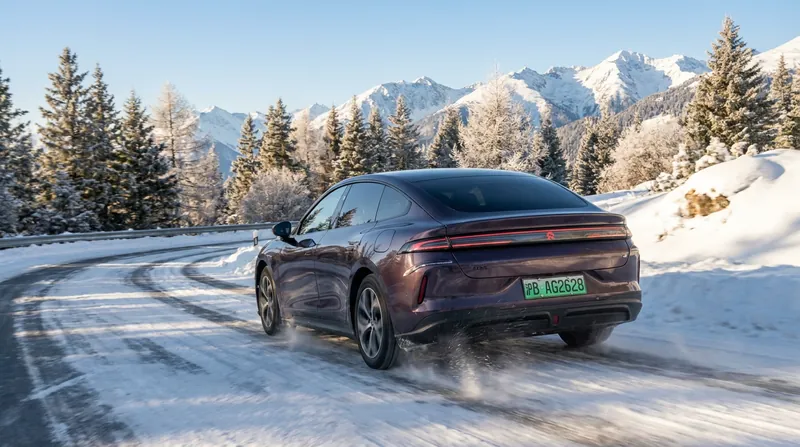
Toyota's Electrified Vehicles Surpass 50% of Quarterly Global Production Volume
5 sources
AI Infrastructure
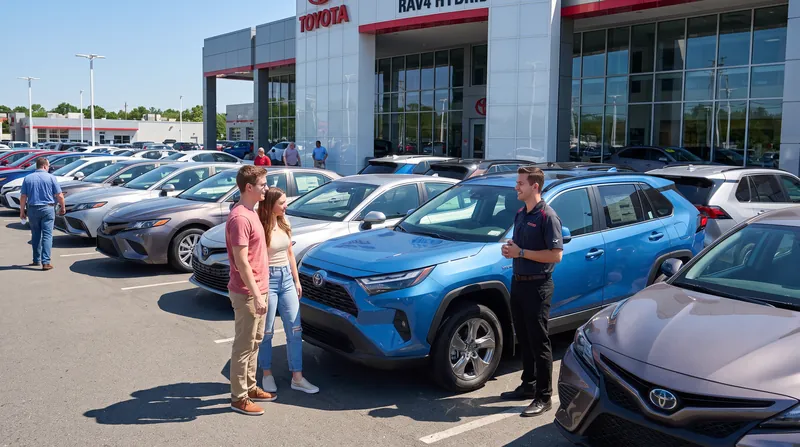
CATL Chairman Proposes Repurposing 40 Million EVs as Distributed AI Compute Infrastructure
2 sources
EV Mandate
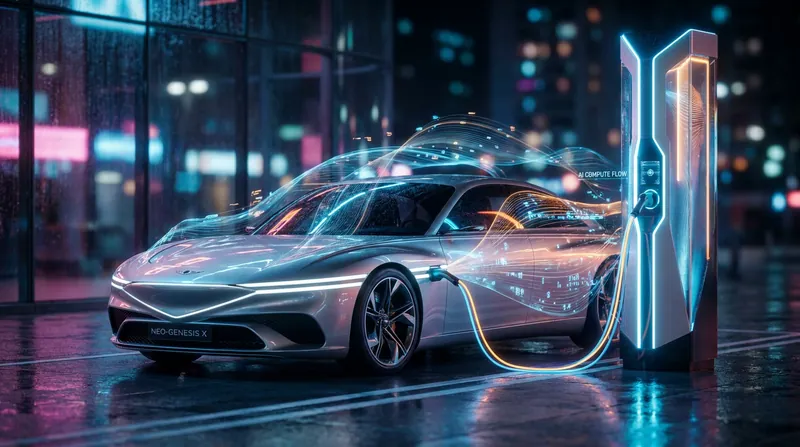
EU Council Proposes Rollback of 2035 EV Mandate, Allowing 10% Emissions Offset
6 sources
Battery Chemistry
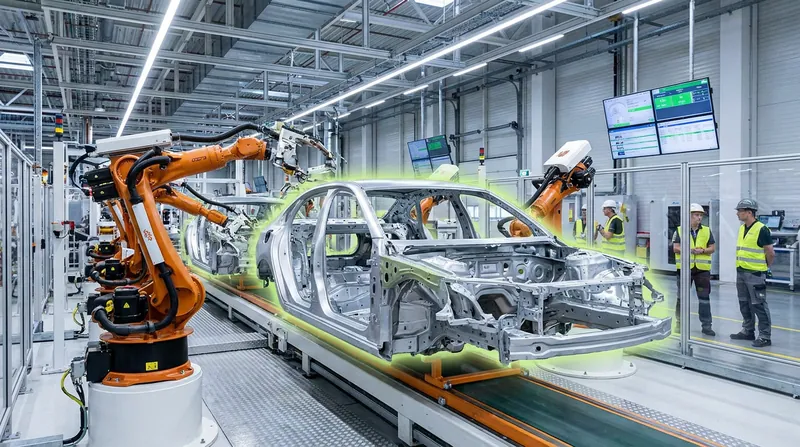
CATL Begins Mass Production of Sodium-Ion EV Batteries, Targeting Cost and Extreme Cold Performance
2 sources
Comments
Every angle. Every day.
Get Automotive & Transportation stories with full source coverage and perspective breakdowns, free every day.