
Before You Buy: The Clinical Evidence on Oura, Whoop, and Apple Watch Sleep Tracking
Consumer sleep trackers excel at measuring total sleep time and heart rate variability, but clinical studies show they still struggle to accurately map specific sleep stages like REM and deep sleep.
By Factlen Editorial Team
- Clinical Researchers
- Value the broad data collection but warn against over-reliance on sleep staging and the rising risk of orthosomnia.
- Tech & Fitness Reviewers
- Focus on the actionable insights derived from HRV trends, app ecosystems, and the physical comfort of the devices.
- Factlen Synthesis
- Advocates using trackers for macro-level habit changes rather than micro-analyzing nightly sleep architecture.
What's not represented
- · Budget device users
- · People with diagnosed clinical sleep disorders
Why this matters
With premium sleep trackers costing upwards of $300 plus monthly subscriptions, understanding what these devices can and cannot measure scientifically helps you avoid wasting money and prevents data-induced sleep anxiety.
Key points
- Consumer sleep trackers are highly accurate at measuring total sleep time and resting heart rate.
- Devices struggle to accurately map specific sleep stages (REM, Deep, Light) because they cannot measure brain waves.
- Heart Rate Variability (HRV) is the most reliable metric wearables use to gauge physical recovery.
- Obsessing over daily sleep scores can lead to 'orthosomnia,' a form of data-induced sleep anxiety.
- The best use of a tracker is identifying how lifestyle choices like alcohol or late meals affect your baseline trends.
Millions of consumers are strapping computers to their wrists and fingers before bed, chasing the promise of optimized recovery and perfect sleep scores. Devices like the Oura Ring, Whoop strap, and Apple Watch have transformed sleep from a passive biological necessity into a gamified metric. But as the wearable market expands, a critical question remains for buyers: how much of this data is actually grounded in clinical science?[1][4]
To answer this, we must look past the marketing copy and examine how these devices perform against polysomnography (PSG)—the clinical gold standard for sleep tracking. PSG involves sleeping in a lab while wired to electroencephalogram (EEG) sensors that measure actual brain waves, alongside monitors for blood oxygen, respiration, and muscle activity. Consumer wearables, by contrast, must guess what your brain is doing based entirely on movement and heart rate data gathered from your skin.[1][2]
The strongest evidence in favor of consumer sleep trackers lies in their ability to measure Total Sleep Time (TST) and Sleep Efficiency. Modern accelerometers and optical heart rate sensors are remarkably adept at detecting the physiological shift that occurs when you transition from wakefulness to sleep. When your heart rate drops and your movement ceases, the algorithms reliably log the start of your sleep cycle.[2][5]
Systematic reviews of commercial sleep trackers consistently show that top-tier devices achieve 90% to 95% accuracy in distinguishing sleep from wakefulness when compared to clinical PSG. If your primary goal is simply to know whether you are getting seven or eight hours of rest a night, the current generation of wearables provides highly reliable, actionable data.[2]

However, the evidence becomes significantly weaker when evaluating Sleep Staging—the breakdown of your night into Light, Deep (Slow-Wave), and REM sleep. Wearable companies heavily market these metrics, often assigning users a daily "score" based on how much REM or Deep sleep they achieved. But scientifically, mapping sleep stages without measuring brain waves is an exercise in educated guessing.[1][6]
Because they lack EEG capabilities, consumer trackers use proxies like heart rate variability (HRV), respiration rate, and micro-movements to infer sleep stages. While REM sleep does correlate with specific cardiovascular patterns, the translation is imperfect. Clinical studies repeatedly demonstrate that consumer devices struggle to accurately differentiate between Light and Deep sleep, often confusing the two.[2][7]
Because they lack EEG capabilities, consumer trackers use proxies like heart rate variability (HRV), respiration rate, and micro-movements to infer sleep stages.
Independent testing and clinical validations suggest that even the most advanced consumer wearables only achieve about 50% to 60% accuracy in sleep staging compared to a lab setting. This means that if your app tells you that you only got 30 minutes of Deep sleep last night, there is a substantial margin of error. Experts advise using these staging numbers as a loose trend line rather than an absolute medical truth.[2][6]
Where modern wearables truly shine, and where the clinical evidence is overwhelmingly positive, is in the measurement of Heart Rate Variability (HRV) and Resting Heart Rate (RHR). Optical sensors have evolved to the point where their cardiovascular measurements are nearly indistinguishable from clinical electrocardiograms (ECG) for resting individuals.[4][6]
HRV is a powerful indicator of autonomic nervous system balance. A higher HRV generally indicates that your body is well-recovered and ready for strain, while a lower HRV can signal stress, overtraining, or impending illness. Devices like Whoop and Oura lean heavily on HRV to generate their daily "Readiness" or "Recovery" scores, and sports science strongly supports this approach.[4][5]

Yet, the proliferation of this granular data has birthed a new psychological phenomenon: orthosomnia. Coined by sleep researchers, orthosomnia refers to an unhealthy obsession with achieving perfect sleep tracking metrics. Ironically, the anxiety of wanting a high sleep score can trigger a stress response that actively prevents the user from falling asleep.[3][7]
Clinical sleep specialists report a rising number of patients seeking treatment for insomnia who bring spreadsheets of wearable data to their appointments. In many of these cases, the patients feel terrible not because they slept poorly, but because their device told them they slept poorly. The nocebo effect—where negative expectations yield negative outcomes—is a real risk of the quantified self movement.[3][7]
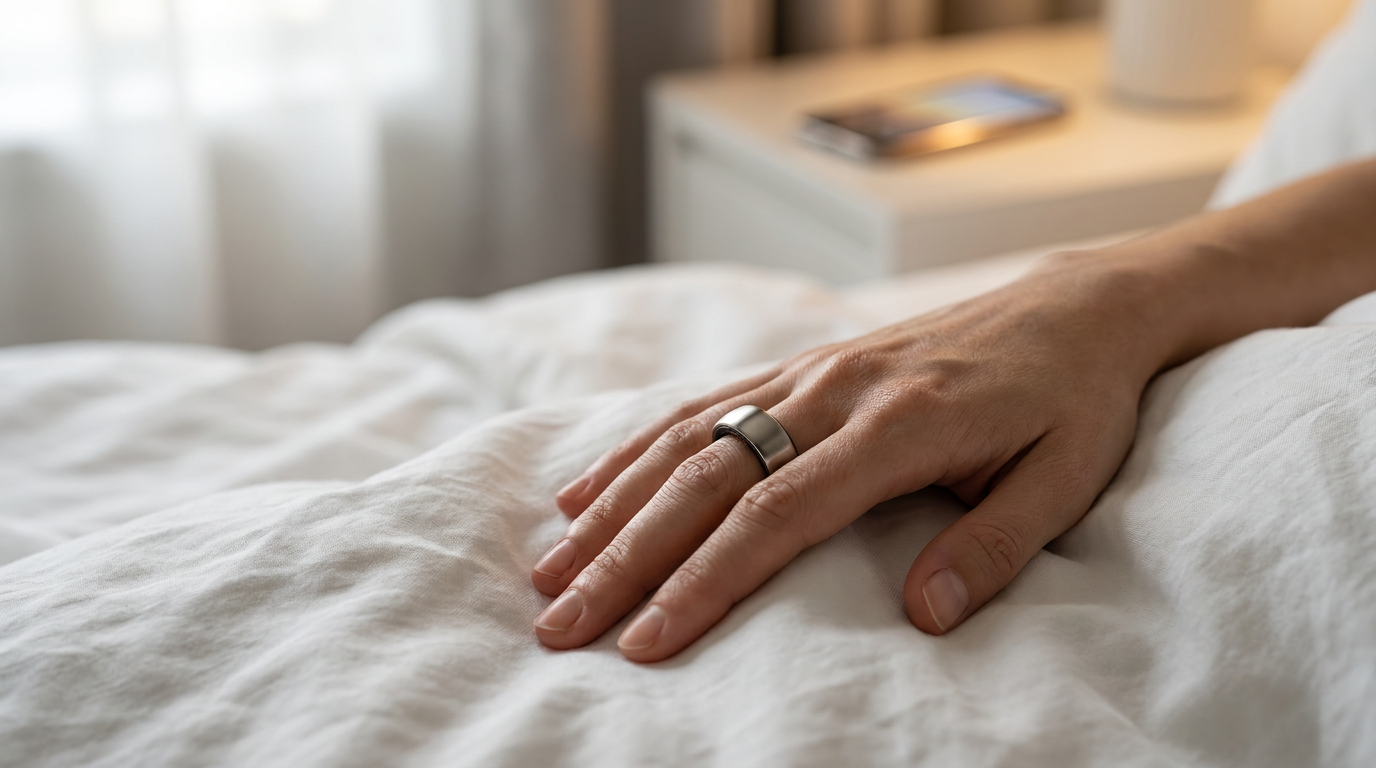
When choosing a device, form factor often matters more than marginal differences in sensor accuracy. A tracker is only useful if you actually wear it consistently. Many users find sleeping with a bulky smartwatch uncomfortable, leading them to prefer the unobtrusive Oura Ring or the soft fabric band of the Whoop strap. Conversely, Apple Watch users often prefer having a single device that handles daytime smart features alongside nighttime tracking.[4][5]

The most scientifically sound way to use a sleep tracker is for macro-level behavioral modification. The data is incredibly useful for revealing broad lifestyle correlations—such as proving to yourself that drinking alcohol before bed drastically lowers your HRV, or that eating late meals delays your resting heart rate drop. These insights allow users to make concrete, positive changes to their routines.[1][7]
Ultimately, the clinical evidence suggests a balanced approach to consumer sleep technology. Buy a tracker to monitor your total sleep duration, track your cardiovascular recovery trends, and identify lifestyle habits that disrupt your rest. But when the app tells you that you missed your REM sleep goal by twelve minutes, feel free to roll over and go back to sleep.[1][2][7]
Viewpoints in depth
Clinical Researchers
Medical professionals value the longitudinal data but warn against treating wearable algorithms as diagnostic tools.
Sleep specialists acknowledge that consumer wearables have done an excellent job raising public awareness about the importance of sleep hygiene. However, they frequently caution patients against taking sleep staging data literally. Because these devices rely on algorithms to guess brain states based on wrist or finger movement, their error bars are significant. Clinicians are increasingly concerned about the rise of orthosomnia, where patients develop severe anxiety over their inability to achieve the 'optimal' amount of deep sleep dictated by a smartphone app.
Tech & Fitness Reviewers
Hardware analysts focus on sensor accuracy, app ecosystems, and the practical comfort of wearing the device nightly.
For the tech community, the debate often centers less on absolute clinical perfection and more on actionable utility. Reviewers emphasize that a tracker is only as good as its software ecosystem and physical comfort. They point out that while the Apple Watch has highly accurate sensors, its battery life requires daily charging, which can interrupt sleep tracking routines. Conversely, devices like the Oura Ring or Whoop strap offer multi-day battery life and unobtrusive form factors, making them easier to integrate into a seamless daily habit, even if their subscription models are a point of friction.
Quantified Self Advocates
Data-driven consumers use wearables to run personal lifestyle experiments and optimize their daily routines.
This community views sleep trackers as essential tools for behavioral modification. Rather than stressing over a single night's sleep score, they use the devices to establish baselines and test variables. By tracking their data over months, they can objectively measure how interventions like magnesium supplements, blue-light blocking glasses, or abstaining from alcohol affect their resting heart rate and HRV. For them, the absolute accuracy of the device is less important than its consistency in measuring relative changes over time.
What we don't know
- Whether long-term use of sleep trackers leads to sustained, permanent behavioral changes in the general population.
- Exactly how proprietary algorithms from companies like Oura and Whoop weigh different physiological signals to generate their daily scores.
Key terms
- Polysomnography (PSG)
- The clinical gold standard for sleep tracking, involving brain wave (EEG), oxygen, and heart monitoring in a medical lab.
- Heart Rate Variability (HRV)
- The variation in time between each heartbeat, used by trackers as a key physiological metric for physical recovery and nervous system stress.
- Orthosomnia
- A psychological condition where an obsession with perfect sleep tracking data ironically causes anxiety that disrupts actual sleep.
- Photoplethysmography (PPG)
- The optical technology used by wearables that shines light into the skin to measure blood flow and calculate heart rate.
Frequently asked
Can a smartwatch diagnose sleep apnea?
No. While some devices can flag breathing disturbances or blood oxygen drops that warrant a doctor's visit, they cannot legally or medically diagnose sleep apnea.
Which device is the most accurate?
Clinical studies show the Apple Watch, Oura Ring, and Whoop perform similarly well for total sleep time and heart rate, meaning the best choice largely comes down to comfort and budget.
What is orthosomnia?
Orthosomnia is a medical term for insomnia or sleep anxiety caused by an unhealthy obsession with achieving perfect scores on a sleep tracking device.
Do I need a subscription to use these devices?
It depends on the brand. Whoop and Oura require ongoing monthly subscriptions to access your data, while the Apple Watch provides its native sleep tracking without recurring fees.
Sources
Source coverage
7 outlets
3 viewpoints surfaced







[1]Factlen Editorial TeamFactlen Synthesis
Synthesis by Factlen editorial team
Read on Factlen Editorial Team →[2]Sleep Medicine ReviewsClinical Researchers
Validation of commercial sleep trackers against polysomnography: A systematic review
Read on Sleep Medicine Reviews →[3]Journal of Clinical Sleep MedicineClinical Researchers
Orthosomnia: Are Some Patients Taking the Quantified Self Too Far?
Read on Journal of Clinical Sleep Medicine →[4]The VergeTech & Fitness Reviewers
The best sleep trackers for 2026: Oura, Whoop, and Apple Watch tested
Read on The Verge →[5]WirecutterTech & Fitness Reviewers
The Best Sleep Trackers
Read on Wirecutter →[6]DC RainmakerTech & Fitness Reviewers
In-Depth Review: Whoop 4.0 vs Oura Ring Gen 3 vs Apple Watch Series 11 Sleep Tracking
Read on DC Rainmaker →[7]Cleveland ClinicClinical Researchers
Do Sleep Trackers Actually Work?
Read on Cleveland Clinic →

More in shopping
See all 5 stories →

Every angle. Every day.
Get shopping stories with full source coverage and perspective breakdowns delivered to your inbox.