
Apple Unveils 'Siri AI' and Deep Ecosystem Integration at WWDC 2026
Apple has introduced a massive overhaul of its operating systems, integrating conversational AI, spatial photo editing, and advanced privacy protections across its device lineup.
By Factlen Editorial Team
- Ecosystem Loyalists
- Focuses on how deeply integrated AI improves daily workflows across Apple devices.
- Privacy Advocates
- Emphasizes the importance of on-device processing and secure cloud infrastructure.
- AI Industry Watchers
- Analyzes Apple's competitive positioning and its reliance on Google's Gemini.
What's not represented
- · Android Ecosystem Developers
- · Open-Source AI Advocates
Why this matters
Apple's deep integration of AI into iOS and macOS will introduce agentic, multi-step artificial intelligence to over a billion everyday consumers. By prioritizing on-device processing and strict privacy guardrails, the rollout normalizes AI as a secure, invisible utility rather than a standalone chatbot.
Key points
- Apple introduced Siri AI, a conversational assistant capable of multi-step reasoning and cross-app actions.
- The new Apple Intelligence suite is powered by a mix of on-device Apple Foundation Models and Google's Gemini technology.
- A new 'Spatial Reframing' tool allows users to alter the 3D perspective and angle of standard 2D photographs.
- Apple emphasized privacy, utilizing 'Private Cloud Compute' to ensure user data sent to the cloud is never stored or accessed.
- The advanced AI features will be restricted to iPhone 15 Pro models, the iPhone 16 lineup, and M-series Macs and iPads.
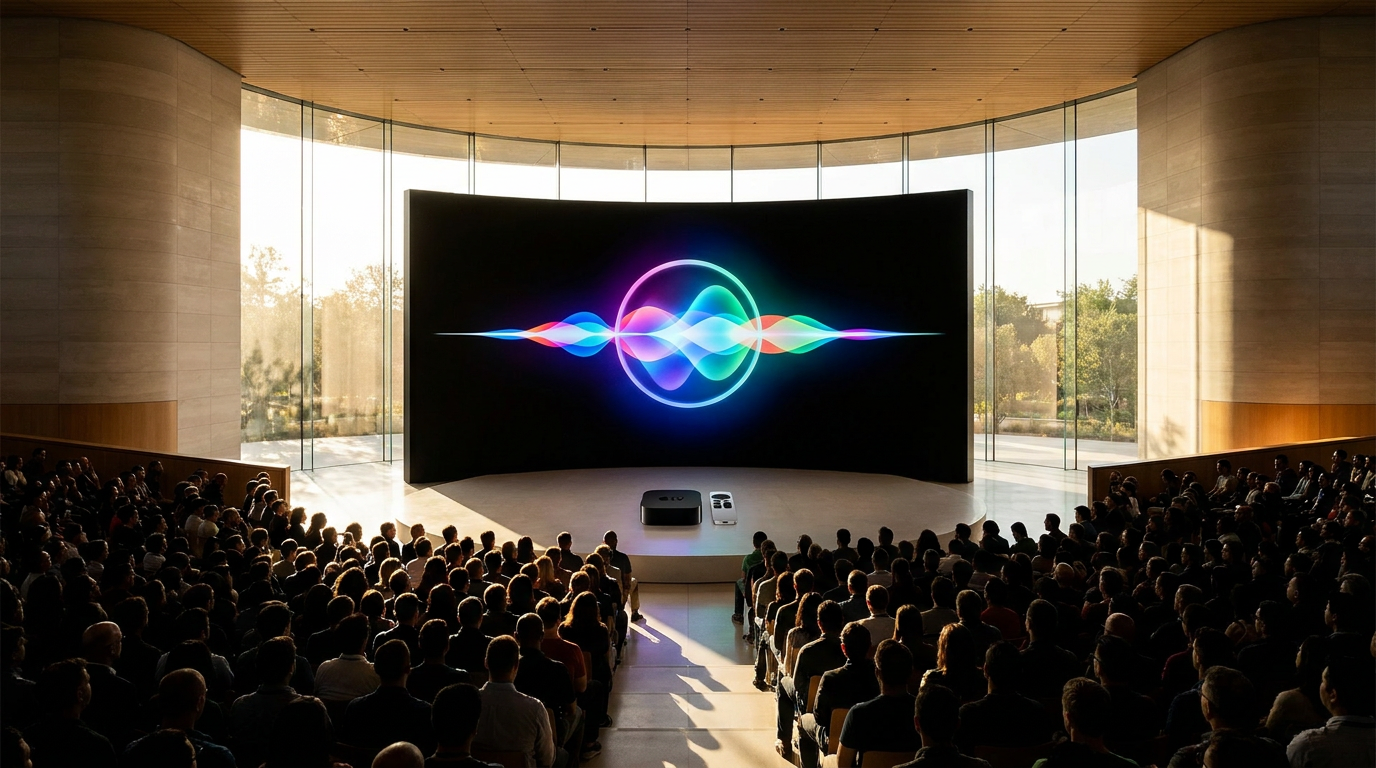
Apple has officially ushered in its next era of computing, unveiling a massive expansion of its "Apple Intelligence" suite at the Worldwide Developers Conference (WWDC) 2026. Held at Apple Park, the keynote served as a roadmap for how generative artificial intelligence will be woven into the fabric of the iPhone, Mac, iPad, and Vision Pro. Rather than treating AI as a separate destination or a standalone chatbot, Apple’s strategy focuses on embedding intelligent capabilities directly into native applications. The updates, which will roll out with iOS 27 and macOS 27 Golden Gate, aim to make devices more responsive and capable of handling complex, multi-step workflows.[1][3]
The centerpiece of the presentation was the debut of "Siri AI," a profound overhaul of the company's long-standing digital assistant. For years, Siri has been criticized for its rigid, single-turn command structure. The new iteration transforms the assistant into a conversational agent capable of maintaining context over extended exchanges. Siri AI can now understand what is currently active on a user's screen, pull from personal context located on the device, and execute actions across multiple third-party applications.[2][5]
To support this more conversational approach, Apple is giving Siri AI its own dedicated application. This new hub allows users to revisit past conversations across their devices, effectively creating a searchable history of AI interactions. The assistant's voice has also received a significant upgrade, with new customization options that allow users to adjust the expressiveness, tone, and speaking speed. Apple executives emphasized that the goal is to make the assistant feel less like a voice-command interface and more like a proactive digital partner.[1][3]
Under the hood, this leap in capability is powered by a hybrid infrastructure. Apple unveiled a new generation of its proprietary Apple Foundation Models, which handle the majority of tasks directly on the user's device. For more complex reasoning, image understanding, and generation capabilities, Apple has deepened its collaboration with Google, integrating Gemini technology into the backend. This dual approach allows the system to balance lightning-fast local processing with the expansive knowledge base of a frontier cloud model.[5][6]

Beyond Siri, Apple Intelligence is being threaded through almost every core application to reduce friction in daily tasks. In Safari, the browser will now automatically organize tabs by topic, monitor specific webpages for price drops or content updates, and allow users to generate custom extensions using natural language prompts. The Messages, Mail, and Calendar apps are receiving similar upgrades, featuring tools that can pop up relevant contextual information during phone calls or automatically draft nuanced responses based on a user's unique writing style and past correspondence.[1][3]
Beyond Siri, Apple Intelligence is being threaded through almost every core application to reduce friction in daily tasks.
On the visual front, Apple introduced a standout new feature called "Spatial Reframing." Born out of the spatial computing technology developed for the Vision Pro headset, this tool allows users to fundamentally alter the composition of standard 2D photographs. By leveraging on-device spatial models, users can drag their finger across an image to change the camera angle, shift the perspective, or adjust the zoom long after the photo was taken.[4]
What makes Spatial Reframing particularly unique is its non-destructive approach. When a user adjusts the perspective, the interface uses a subtle blurring effect to indicate exactly where the artificial intelligence will fill in the gaps to create the new composition. Once the user finds the perfect angle and taps "Reframe," the system seamlessly generates the missing pixels. Notably, this feature is not restricted to photos taken on the newest iPhones; it can be applied to any image in a user's library.[4]
Amidst the wave of new capabilities, Apple heavily emphasized its commitment to user privacy—a clear effort to distinguish itself from competitors who rely on harvesting vast amounts of user data to train their models. The company detailed its "Private Cloud Compute" infrastructure, a secure environment designed for heavy lifting. Apple guarantees that when a request is too complex for on-device processing and must be sent to the cloud, the data is cryptographically sealed, never stored, and fundamentally inaccessible to Apple or any third party.[2][5]

In tandem with the AI announcements, Apple rolled out significant enhancements to its child safety tools. Parents now have access to a "pause device" button for immediate shutdowns and can set strict time allowances for specific apps. The new operating system also introduces restrictions that require children under 13 to request permission before browsing certain websites or messaging new contacts, reflecting a growing industry focus on digital wellbeing for younger users.[1][5]
While the software updates are expansive, they come with strict hardware requirements. Apple Intelligence and Siri AI will only be available on the iPhone 16 lineup, the iPhone 15 Pro models, and iPads and Macs equipped with M1 chips or newer. Older devices, going back to the iPhone 11, will still receive the iOS 27 update with an optimized CPU scheduler to improve responsiveness, but they will miss out on the flagship generative AI features. Developer betas are available immediately, with a full public release scheduled for the fall.[1][3]
For the developer community attending WWDC, Apple introduced a suite of new APIs designed to let third-party applications tap into the Apple Intelligence framework. This means developers can integrate Siri AI’s conversational capabilities and the system's advanced image-generation tools directly into their own software without needing to build or host their own large language models. Early reactions from the developer community have been overwhelmingly positive, noting that this infrastructure dramatically lowers the barrier to entry for creating AI-enhanced applications on iOS and macOS.[2][3]

Ultimately, the WWDC 2026 keynote signals a maturation of the generative AI market. By moving away from standalone chatbot interfaces and embedding AI directly into the operating system's fabric, Apple is normalizing the technology for billions of everyday consumers. While competitors may have been first to market with raw frontier models, Apple’s focus on seamless ecosystem integration, strict privacy guardrails, and practical utility positions the company to define how the general public actually interacts with artificial intelligence in their daily lives.[1][2]
How we got here
June 2024
Apple announces its initial foray into AI with 'Apple Intelligence' at WWDC 2024.
Fall 2024
Initial rollout of basic Apple Intelligence features on iOS 18.
June 2026
Apple unveils 'Siri AI' and deep ecosystem integration at WWDC 2026, marking a massive leap in capability.
Fall 2026
Expected public release of iOS 27 and macOS 27 Golden Gate featuring the new AI tools.
Viewpoints in depth
Ecosystem Loyalists
Focuses on how deeply integrated AI improves daily workflows across Apple devices.
This camp praises Apple's strategy of embedding AI directly into native apps like Safari, Mail, and Messages rather than treating it as a separate chatbot destination. They argue that features like automatic tab organization and cross-app Siri actions make the technology invisible but highly practical, reinforcing the 'walled garden' appeal and proving that execution matters more than being first to market.
Privacy Advocates
Emphasizes the importance of on-device processing and secure cloud infrastructure.
Privacy-focused observers highlight Apple's 'Private Cloud Compute' as a critical differentiator in the AI race. By ensuring that user data is never stored or accessible to the company, even when processing complex requests, Apple is setting a new industry standard for data protection in an era where other tech giants aggressively harvest user information for model training.
AI Industry Watchers
Analyzes Apple's competitive positioning and its reliance on Google's Gemini.
Industry analysts note that while Apple's UI and integration are unmatched, the company still relies on Google's Gemini technology for heavy lifting. This camp views the partnership as a pragmatic move that allows Apple to catch up in the generative AI race without spending billions on frontier model training, though it raises questions about Apple's long-term independence in the AI sector.
What we don't know
- It remains unclear exactly how much of the processing load is handled by Google's Gemini versus Apple's proprietary on-device models.
- Apple has not detailed the specific financial terms or duration of its partnership with Google for the backend AI infrastructure.
Key terms
- Apple Intelligence
- Apple's overarching brand for its suite of generative AI tools integrated across its operating systems.
- Private Cloud Compute
- Apple's secure cloud infrastructure designed to process complex AI requests without storing or accessing user data.
- Spatial Reframing
- An AI-powered photo editing feature that allows users to alter the 3D perspective and angle of a standard 2D image.
- Agentic AI
- Artificial intelligence systems that can take multi-step actions across different applications on a user's behalf.
Frequently asked
Which iPhones will support Apple Intelligence?
The new AI features require an iPhone 16 model or an iPhone 15 Pro. Older models will receive standard iOS 27 updates but won't support the advanced AI tools.
Is Apple using its own AI models or Google's?
Apple is using a hybrid approach. It relies on its own Apple Foundation Models for on-device tasks and partners with Google's Gemini technology for more complex cloud-based reasoning.
What is Spatial Reframing?
It is a new photo editing tool that uses spatial AI to let users change the angle, perspective, or zoom of a 2D photo after it has been taken.
Sources
Source coverage
6 outlets
3 viewpoints surfaced






[1]Business InsiderAI Industry Watchers
8 Big Takeaways From Apple's WWDC 2026 Event
Read on Business Insider →[2]PCMagEcosystem Loyalists
WWDC 2026: Apple's 7 Biggest AI Upgrades, Ranked
Read on PCMag →[3]EngadgetEcosystem Loyalists
Everything Announced At Apple's WWDC 2026 Keynote
Read on Engadget →[4]MashableAI Industry Watchers
Apple Spatial Reframing is the most unique AI tool from WWDC
Read on Mashable →[5]Channel News AsiaPrivacy Advocates
Siri AI, Apple Intelligence, child safety tools: Key takeaways from Apple's WWDC 2026
Read on Channel News Asia →[6]AppleEcosystem Loyalists
Apple introduces Apple Intelligence and Siri AI at WWDC 2026
Read on Apple →

More in ai
See all 75 stories →AI Copyright
Supreme Court Rules AI Training is 'Fair Use' in Landmark Copyright Decision
8 sources

On-Device AI
The Year of Local AI: How Small Language Models Are Putting Privacy First
6 sources
On-Device AI
How Open-Weight Models Are Turning Everyday Laptops Into Private AI Assistants
7 sources

Local AI
The Era of Local AI: How Small Language Models Are Turning Phones and Laptops Into Private AI Hubs
7 sources
Every angle. Every day.
Get ai stories with full source coverage and perspective breakdowns delivered to your inbox.