
AI-Designed Universal Vaccine Passes First Human Trials, Marking Milestone in Generative Medicine
A 'future-proof' coronavirus vaccine featuring an AI-generated super-antigen has successfully completed Phase 1 trials, demonstrating safety and triggering immune responses against multiple virus strains.
By Harper Lane

Share this story
The first vaccine whose active component was designed entirely by artificial intelligence has successfully passed its initial human clinical trials, marking a watershed moment for both immunology and generative medicine. Developed by researchers at the University of Cambridge and the spin-out biotechnology company DIOSynVax, the experimental vaccine targets the Sarbecovirus family, a broad group of coronaviruses that includes SARS-CoV-2, the original SARS virus, and numerous bat-borne viruses with pandemic potential.
Unlike traditional vaccines that are developed reactively to target a specific, existing viral strain, this new prophylactic was engineered predictively. The Phase 1 trial results, published in the Journal of Infection, demonstrated that the AI-generated vaccine is safe, well-tolerated, and capable of triggering an immune response against multiple coronavirus variants simultaneously.
To create the vaccine, the research team deployed machine learning algorithms to analyze vast databases of genetic sequence data collected by global viral surveillance programs. The artificial intelligence was tasked with identifying structural commonalities across the entire Sarbecovirus family, searching for essential viral components that remain stable even as the pathogens mutate.
Based on these conserved regions, the AI designed a synthetic "super-antigen"—a molecular blueprint that trains the human immune system to recognize and neutralize not just current threats, but future variants and undiscovered zoonotic viruses that have not yet crossed the species barrier into humans.
The concept of a super-antigen relies heavily on the evolutionary constraints of viruses. While pathogens like SARS-CoV-2 frequently mutate their outer spike proteins to evade human antibodies—resulting in the endless parade of named variants—certain internal structures and receptor-binding mechanisms cannot change without destroying the virus's ability to infect host cells.
By analyzing thousands of viral genomes, the AI platform pinpointed these non-negotiable, highly conserved regions. The resulting synthetic antigen is essentially a composite sketch of the virus family's most vulnerable, unchanging traits, presenting the immune system with a target that the virus cannot easily hide or alter.
"We've converted vaccine development from being reactive to being future-proof," said Professor Jonathan Heeney, the research lead at Cambridge's Lab of Viral Zoonotics. Traditional vaccine development often resembles a high-stakes game of catch-up; by the time a new shot is manufactured, distributed, and administered, the target virus has frequently mutated, significantly reducing the vaccine's efficacy.
The super-antigen approach aims to sever this dependency on annual updates. If the immune system is trained to attack the foundational architecture of a virus family, it theoretically retains its defensive capabilities regardless of surface-level mutations.
The Phase 1 clinical trial involved 39 healthy volunteers aged 18 to 50 and was conducted at National Institute for Health and Care Research (NIHR) facilities in Southampton and Cambridge. Crucially, the trial focused primarily on safety and tolerability, which the vaccine achieved with no significant side effects reported.
The vaccine also utilized a novel delivery mechanism: rather than a traditional needle injection, it was administered as a DNA plasmid using a microfluidic jet system. This needle-free technology uses a high-pressure stream of liquid to deliver the vaccine material directly into skin cells, a method that researchers hope will increase public acceptability and ease global distribution logistics.[1][2]
While the safety profile is a major victory, independent virologists caution that the efficacy data is still in its infancy. The Phase 1 trial produced what researchers described as a "modest" immune response in human subjects, which was notably lower than the robust immunity observed in earlier animal models.
Dr. Alexander Boubnovski, an independent virologist, noted that while the trial successfully proved the safety of the AI-generated antigen, the real test will be whether it can trigger a lasting, highly protective immune response in a diverse human population. A larger Phase 2 trial involving more than 200 participants is currently being planned to assess the vaccine's broader immunological impact.
The Cambridge breakthrough is not an isolated event, but rather the leading edge of a broader shift toward AI-driven drug discovery. In a parallel development, scientists at the University of Oxford, in partnership with the biotechnology firm Basecamp Research, recently advanced their own AI-assisted vaccine into human trials.
That project targets Crimean-Congo haemorrhagic fever (CCHF), a tick-borne virus with a high fatality rate. While the Oxford team used AI primarily to identify promising biological targets rather than designing the entire antigen from scratch, both milestones underscore how machine learning is compressing traditional research timelines from years into months.
These milestones in preventative medicine arrive alongside rapid advancements in AI-driven therapeutics across the broader pharmaceutical sector. After years of high expectations and billions in investment, the deep learning revolution of the 2010s is finally yielding clinical-stage assets. Multiple AI-discovered and AI-designed drugs—ranging from novel anti-fibrotic therapies to precision oncology treatments—have recently entered Phase II and Phase III human trials. This transition signals that artificial intelligence has moved definitively out of the theoretical modeling phase and into late-stage human clinical application, fundamentally altering the economics of drug development.[3]
The implications for global public health are profound. If the super-antigen approach proves durable in late-stage trials, the technology could be rapidly adapted to other highly mutable pathogens. The Cambridge team and DIOSynVax are already exploring similar AI-designed vaccines for influenza, bird flu, and Ebola-like viral haemorrhagic fevers—diseases where current prophylactic options are either limited or require constant seasonal reformulation.
Public health officials view this capability as a cornerstone of future pandemic preparedness, allowing governments to stockpile universal vaccines for high-risk viral families before a localized outbreak can escalate into a global crisis.[1]
However, the integration of AI into vaccine design also introduces new challenges in public communication and trust. Following the widespread hesitancy and misinformation surrounding mRNA vaccines during the COVID-19 pandemic, public health experts are acutely aware of the optics of "AI-generated medicine."
Proponents argue that the needle-free delivery system and the promise of long-lasting, variant-proof protection may help overcome skepticism. Ultimately, the success of this new class of vaccines will depend not just on the brilliance of the algorithms that design them, but on the rigorous, transparent clinical trials required to prove they work safely in the real world.[2]
Key points
- An AI-designed universal coronavirus vaccine has successfully completed Phase 1 human clinical trials in the UK.
- The vaccine uses a synthetic 'super-antigen' designed by machine learning to target conserved regions across the Sarbecovirus family.
- Administered via a needle-free microfluidic jet, the vaccine proved safe and triggered immune responses against multiple viral strains.
- Researchers hope this predictive approach will replace reactive vaccine development, offering preemptive protection against future pandemics.
Unanswered questions
- Whether the 'modest' immune response observed in Phase 1 will translate to robust, real-world protection against infection.
- How long the immunity provided by the AI-designed super-antigen will last in human subjects.
- How the general public will respond to vaccines designed entirely by artificial intelligence, given recent trends in vaccine hesitancy.
How we got here
Early 2020
The rapid spread of SARS-CoV-2 highlights the limitations of reactive vaccine development, sparking interest in 'universal' vaccines.
2024
AI models successfully analyze global viral surveillance data to identify conserved regions across the Sarbecovirus family.
June 2025
Preclinical animal trials demonstrate that the AI-designed super-antigen triggers strong immune responses against multiple coronaviruses.
June 2026
The AI-designed vaccine successfully completes Phase 1 human clinical trials, proving its safety and tolerability.
Late 2026
Planned initiation of Phase 2 trials involving over 200 participants to assess the vaccine's real-world efficacy.
- Clinical Innovators
- Focus on the technological breakthrough of using AI to predictively design future-proof medicines.
- Global Health Optimists
- Emphasize the potential to prevent future pandemics and simplify global vaccine distribution.
- Cautious Virologists
- Highlight the need for extensive efficacy testing and warn against premature celebration.
Perspectives this story doesn't cover
- Regulatory bodies evaluating the unprecedented approval pathways for AI-generated biologics
- Vaccine-hesitant populations who may harbor skepticism toward AI-designed medical interventions
Sources
Source coverage
3 outlets
3 viewpoints surfaced



- [1]Anadolu AgencyGlobal Health Optimists
AI-designed 'universal vaccine' could help prevent future pandemics, researchers say
Read on Anadolu Agency → - [2]National Institute for Health and Care ResearchClinical Innovators
New 'universal vaccine' technology could protect from future virus outbreaks
Read on National Institute for Health and Care Research → - [3]National Institutes of HealthCautious Virologists
The State of AI in Drug Discovery and Development
Read on National Institutes of Health →

More in Artificial Intelligence
See all →Autonomous Aviation
U.S. Military Flies First AI-Piloted F-16 in Real-World Test, Marking Major Autonomous Combat Milestone
7 sources

AI Leadership
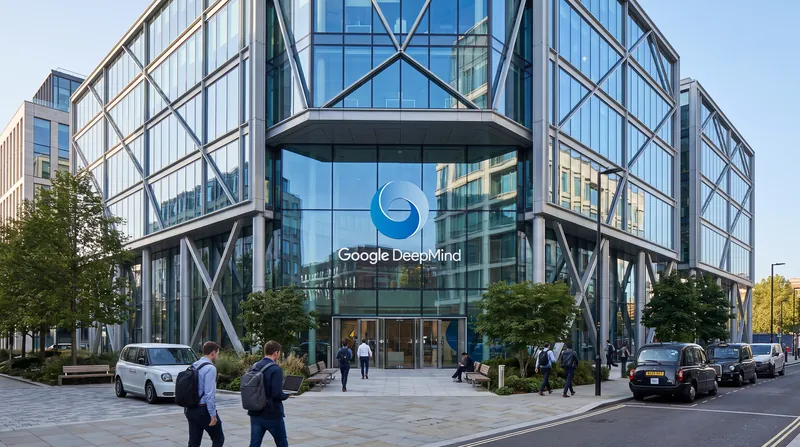
Google DeepMind CEO Demis Hassabis Steps Down as Jeff Dean Departs in Major AI Reshuffle
7 sources
AI Infrastructure
US National Security Officials Warn Against Frontier AI Compute Moving Overseas
4 sources

AI Leadership
DeepMind CEO Demis Hassabis Steps Down to Focus on 'Big Picture' AGI Strategy
3 sources

Comments
Every angle. Every day.
Get Artificial Intelligence stories with full source coverage and perspective breakdowns, free every day.