
AI Capabilities Accelerate as Frontier Models Conquer 'Humanity's Last Exam'
New data from Stanford's 2026 AI Index and mid-year benchmark updates reveal that artificial intelligence is advancing faster than anticipated, driving significant productivity gains and democratizing access through open-source platforms.
By Factlen Editorial Team
- Open-Source Advocates
- Champions the democratization of AI through open-weight models and accessible local deployment tools.
- Enterprise & Workforce Analysts
- Emphasizes the practical productivity gains, job satisfaction improvements, and economic shifts driven by AI adoption.
- AI Benchmarkers & Researchers
- Focuses on rigorously testing the absolute limits of AI capabilities to ensure safe and reliable development.
What's not represented
- · Educators adapting curricula to AI tools
- · Policymakers drafting open-source AI regulations
Why this matters
As AI systems evolve from passive chatbots to autonomous agents, they are saving workers an average of eight hours a week and fundamentally reshaping the global economy. Understanding this shift is crucial for professionals looking to upskill and leverage these tools for career growth.
Key points
- Frontier AI models have surged to a 64.5% success rate on the expert-level 'Humanity's Last Exam' benchmark.
- AI agents are now successfully completing 66% of complex operating system tasks autonomously.
- Regular AI users report saving an average of eight hours per week, leading to higher job satisfaction.
- Open-source platforms are rapidly democratizing AI, allowing local deployment without expensive cloud infrastructure.
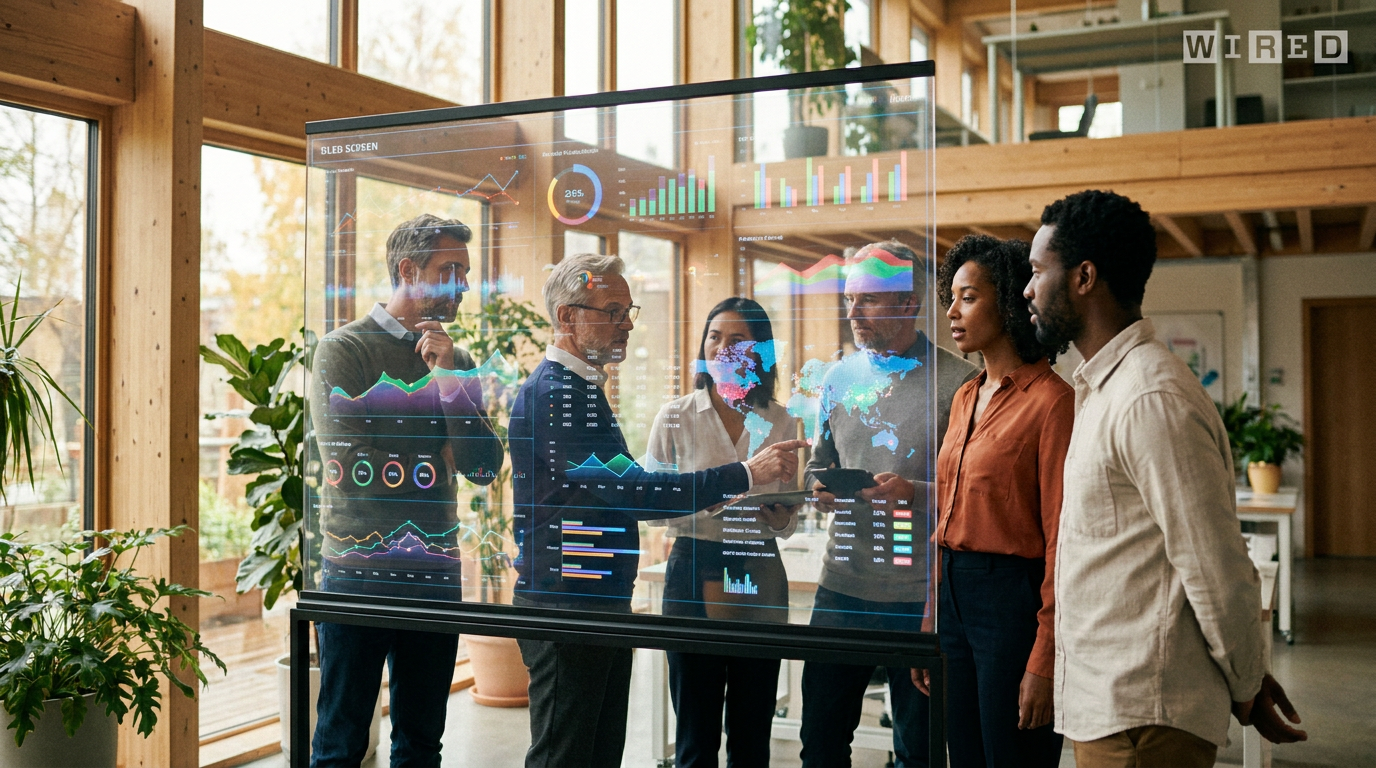
The narrative that artificial intelligence development might be hitting a plateau has been definitively overturned in the first half of 2026. According to the Stanford Institute for Human-Centered Artificial Intelligence (HAI), frontier models are accelerating at an unprecedented pace, fundamentally rewiring the global economy and the modern workplace. Rather than slowing down, the technology is scaling rapidly, transitioning from experimental research into a core infrastructure layer for industries worldwide. This rapid evolution is not just a technical milestone; it represents a profound shift in how humans interact with machines, moving from simple prompt-and-response interfaces to collaborative, autonomous problem-solving.[1][5]
The clearest evidence of this capability leap comes from "Humanity's Last Exam" (HLE), a grueling 2,500-question benchmark crowdsourced from over 1,000 domain experts across 50 countries. Published in the journal Nature earlier this year, the exam was specifically designed to be "Google-proof" and probe the absolute limits of human knowledge. It covers highly specialized subfields across mathematics, natural sciences, and ancient languages. The goal was to create a test so difficult that it would serve as a long-term benchmark for AI, exposing the gaps where human expertise remains uniquely necessary.[2][8]
When the exam was first introduced, top-tier AI models struggled to break a 10 percent success rate, seemingly validating the idea that deep, expert-level reasoning was still years away. However, the landscape shifted dramatically by mid-June 2026. According to the latest benchmark leaderboards, models like Anthropic's Claude Mythos 5 and Claude Fable 5 have surged to a 64.5 percent success rate, while OpenAI's GPT-5.4 Pro closely follows. This rapid conquest of a benchmark designed to stump specialists underscores a staggering acceleration in machine reasoning and comprehension.[3][5]

These capability leaps extend far beyond academic trivia and theoretical benchmarks. The Stanford AI Index reports that performance on SWE-bench—a rigorous test of an AI's ability to resolve real-world software bugs in GitHub repositories—jumped from 60 percent to nearly 100 percent in a single year. Similarly, the industry is witnessing the rise of "Agentic AI," systems capable of independently planning and executing multi-step tasks. Success rates for these autonomous agents on complex operating system tasks rose from 12 percent to roughly 66 percent, signaling a shift toward AI that can take action rather than just generate text.[1][5]
These capability leaps extend far beyond academic trivia and theoretical benchmarks.
Rather than causing widespread anxiety about job displacement, these highly capable tools are driving measurable improvements in daily work life. A June 2026 report from Consultancy.eu found that 67 percent of regular AI users report increased job satisfaction. By automating repetitive administrative work, drafting documents, and accelerating complex data analysis, AI is saving these employees an average of eight hours per week. For many professionals, this equates to reclaiming an entire working day, allowing them to focus on higher-level strategy, creativity, and human-centric collaboration.[4]
This tangible productivity boom has triggered unprecedented enterprise adoption and a massive restructuring of the labor market. Generative AI has reached a 53 percent population-level adoption rate in just three years, spreading significantly faster than the personal computer or the early internet. Consequently, employers are aggressively seeking talent capable of managing these new systems. Mentions of "Agentic AI" in United States job postings have skyrocketed by over 280 percent in the past year alone, highlighting a rapid transition from AI experimentation to real-world, large-scale deployment.[1]

Crucially, this wave of innovation is not locked behind the walled gardens of a few massive technology corporations. The open-source AI ecosystem has experienced explosive growth in 2026, democratizing access to state-of-the-art capabilities. Platforms like Ollama and inference engines like vLLM have made local deployment remarkably straightforward, removing the strict dependence on expensive cloud infrastructure. This accessibility allows developers, hobbyists, and resource-constrained businesses to run powerful models directly on personal computers, fostering a decentralized environment of continuous, community-driven improvement.[6][7]
The impact of this open-source momentum cannot be overstated. Open-weight models from developers like DeepSeek and the community-led OpenClaw project are now competing directly with, and sometimes outperforming, proprietary systems that cost billions to train. By providing free access and transparency into how these systems are built, the open-source community is enabling more people to learn by understanding AI, rather than just using it as a black box. This is creating new pathways for global upskilling and helping to narrow the widening AI skills gap.[6][7]

As artificial intelligence transitions from a passive conversational tool to an active, agentic collaborator, the global focus is shifting from raw capability metrics to practical, everyday application. With models now capable of expert-level reasoning and open-source communities driving worldwide accessibility, 2026 is cementing AI's role as a fundamental infrastructure for human progress. The technology is no longer just about passing exams; it is about empowering workers, accelerating scientific discovery, and expanding the boundaries of what collaborative human-machine teams can achieve.[1][4][6]
How we got here
Jan 2026
Researchers publish 'Humanity's Last Exam' in Nature to create a benchmark that current AI cannot easily pass.
April 2026
Stanford releases the 2026 AI Index, revealing massive jumps in AI capabilities and a 53% global adoption rate.
June 2026
Frontier models like Claude Mythos 5 achieve a 64.5% success rate on Humanity's Last Exam.
Viewpoints in depth
AI Benchmarkers & Researchers
Focuses on rigorously testing the absolute limits of AI capabilities to ensure safe and reliable development.
For the academic and research community, the rapid obsolescence of traditional benchmarks is a pressing concern. When AI models began easily passing standard tests like the bar exam or medical licensing boards, researchers realized they could no longer accurately measure the frontier of machine intelligence. This necessitated the creation of 'Humanity's Last Exam,' a test so difficult that it requires genuine, expert-level reasoning rather than simple pattern matching or internet retrieval. Benchmarkers argue that continuously pushing these boundaries is essential not just for tracking progress, but for identifying the specific areas where AI still hallucinates or fails, which is critical for deploying these systems safely in high-stakes environments.
Open-Source Advocates
Champions the democratization of AI through open-weight models and accessible local deployment tools.
The open-source community views the current AI landscape as a critical battleground for technological equity. Advocates argue that if advanced AI remains exclusively in the hands of a few massive corporations, it will stifle global innovation and create dangerous monopolies. By releasing highly capable open-weight models like DeepSeek and OpenClaw, and building efficient inference engines like vLLM, this camp is proving that state-of-the-art AI can be run locally and affordably. They emphasize that transparency in how models are built and trained is the only way to ensure the technology benefits a diverse global population rather than just corporate shareholders.
Enterprise & Workforce Analysts
Emphasizes the practical productivity gains, job satisfaction improvements, and economic shifts driven by AI adoption.
For enterprise leaders and labor economists, the focus has shifted entirely from theoretical capabilities to real-world return on investment. Analysts point to the staggering 280 percent increase in job postings demanding 'Agentic AI' skills as proof that companies are actively redesigning their workflows around autonomous systems. Rather than viewing AI as a tool for mass layoffs, this camp highlights the data showing increased job satisfaction and significant time savings for employees. Their primary concern is no longer whether AI works, but how quickly organizations can upskill their workforces to manage these new digital agents effectively.
What we don't know
- Whether AI models will hit a hard ceiling before achieving 100% on Humanity's Last Exam.
- How the rapid adoption of Agentic AI will impact entry-level knowledge worker roles in the long term.
- If open-source models can continue to match the performance of proprietary models as training costs scale into the tens of billions.
Key terms
- Humanity's Last Exam (HLE)
- A rigorous, expert-vetted benchmark designed to test AI models on questions that are difficult even for human specialists.
- Agentic AI
- Artificial intelligence systems that can autonomously plan, coordinate, and execute complex, multi-step tasks to achieve a specific goal.
- Open-Source AI
- AI models and tools whose underlying code and weights are made publicly available, allowing anyone to use, modify, and deploy them.
- SWE-bench
- A software engineering benchmark that evaluates an AI's ability to resolve real-world issues and bugs in GitHub repositories.
Frequently asked
What is Humanity's Last Exam?
It is a 2,500-question benchmark crowdsourced from over 1,000 global experts, designed to test the absolute frontier of AI capabilities across highly specialized fields.
Are AI models passing Humanity's Last Exam?
Yes, top models like Claude Mythos 5 have recently reached a 64.5% success rate, a massive jump from the single-digit scores seen in 2025.
How is AI affecting daily work?
According to recent surveys, 67% of regular AI users report increased job satisfaction, with the technology saving them an average of eight hours per week.
What is Agentic AI?
Agentic AI refers to systems capable of autonomously executing multi-step tasks—like navigating operating systems or resolving software bugs—rather than just passively answering questions.
Sources
Source coverage
8 outlets
3 viewpoints surfaced








[1]Stanford HAIEnterprise & Workforce Analysts
Stanford AI Index Report 2026
Read on Stanford HAI →[2]NatureAI Benchmarkers & Researchers
A benchmark of expert-level academic questions to assess AI capabilities
Read on Nature →[3]BenchLMAI Benchmarkers & Researchers
HLE Benchmark 2026: 39 LLM scores
Read on BenchLM →[4]Consultancy.euEnterprise & Workforce Analysts
AI is transforming jobs faster than companies are redesigning work
Read on Consultancy.eu →[5]Crescendo.aiEnterprise & Workforce Analysts
Latest AI News and Breakthroughs That Matter Most | June 2026
Read on Crescendo.ai →[6]IBMOpen-Source Advocates
Open-source AI: Expanding pathways to global upskilling
Read on IBM →[7]AI MagazineOpen-Source Advocates
Top 10: Open Source AI Platforms
Read on AI Magazine →[8]Texas A&M StoriesAI Benchmarkers & Researchers
Don't Panic: 'Humanity's Last Exam' has begun
Read on Texas A&M Stories →

More in ai
See all 7 stories →Edge AI
How On-Device AI and Quantization Are Moving LLMs Out of the Cloud
6 sources

Agentic AI
Agentic AI: How Large Action Models Are Automating Digital Chores
7 sources
Global AI Governance
EU Delays Key AI Act Enforcement as 'Brussels Effect' Fractures Under US Deregulation
8 sources
Drug Discovery
New AI Model Accelerates Molecular Simulations 10,000-Fold, Promising Faster Drug Discovery
6 sources
Every angle. Every day.
Get ai stories with full source coverage and perspective breakdowns delivered to your inbox.