
26-Year Mystery in Olympic National Park Solved as DNA Identifies Remains of Joseph Louis Serrao Jr.
Advanced forensic genetic genealogy has identified human remains discovered in a remote Washington tent in 2000 as a Hawaii native missing since 1998, bringing closure to a decades-old cold case.
By Factlen Editorial Team
- Forensic Genealogists
- Focus on the technological breakthrough of extracting usable DNA from degraded remains and building genomic profiles.
- Law Enforcement
- Focus on the persistence of the investigation, combining new tech with traditional legwork to close cold cases.
- Families of the Missing
- Focus on the emotional closure and the importance of resolving decades-old mysteries.
What's not represented
- · Privacy advocates concerned about law enforcement use of genetic databases
- · Backcountry hikers and wilderness safety experts
Why this matters
The resolution of this 26-year-old mystery demonstrates how advanced genomic sequencing is revolutionizing cold case investigations, offering hope that thousands of unidentified remains nationwide can finally be returned to their families.
Key points
- Skeletal remains found in a sleeping bag in Olympic National Park in 2000 have been identified as Joseph Louis Serrao Jr.
- Serrao, originally from Hawaii, was last in contact with his family in 1998 before disappearing in Washington state.
- Traditional forensic methods, including fingerprinting, failed to identify the remains at the time of discovery.
- In 2024, investigators submitted degraded DNA to Othram, which built a comprehensive genomic profile.
- Forensic genetic genealogy mapped the profile to distant relatives, leading investigators to Serrao's family.
- The exact cause and manner of Serrao's death remain unknown due to the condition of the remains.
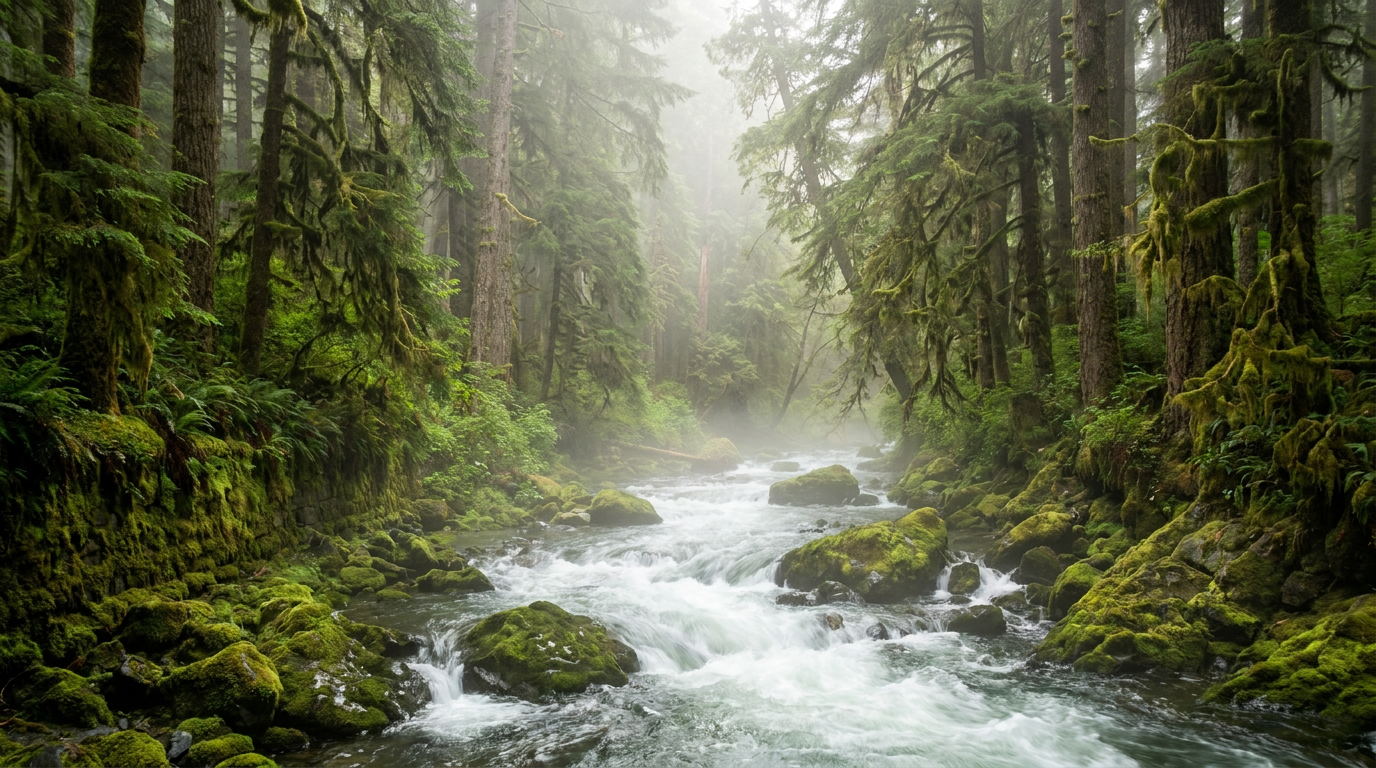
For more than a quarter of a century, the identity of a man found deceased in a remote stretch of Washington's Olympic National Park remained a profound mystery. Discovered in a sleeping bag within a bivy-style tent, the skeletal remains offered few clues to traditional investigators. But a decades-long collaborative effort, culminating in advanced genetic testing, has finally provided an answer. On June 10, 2026, the National Park Service announced that the remains belong to Joseph Louis Serrao Jr., a Hawaii native who had been missing since 1998. The resolution of this 26-year-old cold case highlights the transformative power of forensic genetic genealogy in identifying the nameless.[1][2][4]
The evidence trail began on July 11, 2000, when a researcher traversing an isolated area of the Sol Duc River drainage stumbled upon the campsite. Inside the green-and-black tent, alongside the remains, investigators cataloged a snapshot of a backcountry excursion: binoculars, a Jansport day hiker pack, a blue shoulder bag, a folding saw, a space blanket, and small-to-medium-sized winter wear. Despite the presence of these personal items, no identification cards or documents were recovered at the scene.[2][3][4]
The initial forensic assessment established the baseline claims of the investigation. The remains were transported to the King County Medical Examiner's Office, where a pathologist determined the decedent was likely a male between the ages of 30 and 50. Based on the condition of the skeleton, the medical examiner estimated that the man had been deceased for anywhere from six months to four years prior to the July 2000 discovery. However, the physical evidence quickly hit a dead end.[2][4][5]
Traditional forensic techniques proved insufficient to bridge the gap between the physical remains and an identity. Items recovered from the tent were processed by the Washington State Patrol Crime Laboratory in an attempt to pull latent fingerprints. Unfortunately, investigators were unable to develop any usable prints from the gear. With no fingerprints, no identification, and no matching dental records, the case went cold, and the individual was entered into the National Missing and Unidentified Persons System as UP11888.[2][3][4][5]

The breakthrough mechanism arrived nearly 25 years later, driven by the rapid evolution of DNA technology. In November 2024, a forensic anthropologist with the King County Medical Examiner's Office, working alongside the National Park Service Investigative Services Branch, submitted a DNA sample from the skeletal remains to Othram. Based in Texas, Othram is a laboratory that specializes in extracting usable genetic material from highly degraded or contaminated forensic evidence.[2][3][4]
The laboratory successfully developed a DNA extract from the skeletal evidence, overcoming the degradation caused by years of exposure in the damp Olympic Peninsula environment. Using a proprietary method known as Forensic-Grade Genome Sequencing, scientists built a comprehensive DNA profile for the unknown man. This technique analyzes hundreds of thousands of genetic markers, creating a profile far more detailed than the traditional STR markers used in standard law enforcement databases like CODIS.[3][4]
Using a proprietary method known as Forensic-Grade Genome Sequencing, scientists built a comprehensive DNA profile for the unknown man.
With the genomic profile established, Othram's in-house forensic genetic genealogy team initiated a search across consumer DNA databases. This process involves uploading the profile to platforms where users have opted in to allow law enforcement matching, searching for shared segments of DNA that indicate distant relatives. By 2025, the laboratory had successfully identified possible family connections, generating fresh investigative leads for a case that had been dormant for decades.[2][3][4][5]

The genetic leads shifted the investigation from the laboratory back to traditional detective work. Armed with the new family tree data, investigators from the National Park Service Investigative Services Branch began contacting potential relatives across several states, including Hawaii. They coordinated interviews to build out the family's history and requested reference DNA samples from living relatives to confirm the suspected relationship.[2][4][5]
The final confirmation relied on KinSNP Rapid Relationship Testing, which compared the reference samples directly against the profile extracted from the remains. The genetic data, combined with genealogical mapping and circumstantial evidence, provided conclusive proof: the remains belonged to Joseph Louis Serrao Jr., born December 3, 1960. At the time of his death, Serrao would have been in his late 30s, perfectly aligning with the original pathologist's estimate.[3][4]
Family members provided the missing context regarding Serrao's life before he vanished. Originally from Hawaii, Serrao had relocated to Washington state prior to his disappearance. According to his relatives, their last known contact with him occurred sometime in 1998, and they had not heard from him in the intervening years. This timeline suggests Serrao may have died up to two years before his remains were discovered by the researcher.[2][4][5][6]
Despite the definitive identification, significant transparent uncertainty remains regarding the circumstances of Serrao's death. The National Park Service has explicitly stated that the manner and cause of death remain unknown. The advanced state of decomposition and skeletonization at the time of discovery severely limits the ability of pathologists to determine whether he succumbed to exposure, a medical emergency, foul play, or another cause.[2][3][4]

The timeline of his disappearance also contains critical gaps. Because his family last heard from him in 1998, and his body was found in July 2000, investigators cannot pinpoint exactly when he entered Olympic National Park or how long he survived in the Sol Duc backcountry. The presence of winter wear and a space blanket suggests he may have been prepared for cold weather, but the exact sequence of events leading to his death remains a mystery.[2][3][6]
The resolution of the Serrao case underscores the growing reliance on public genetic databases to solve cold cases. Organizations like DNASolves encourage individuals who have taken consumer DNA tests to upload their data to aid ongoing forensic investigations. Expanding the pool of available DNA data exponentially increases the likelihood of successful identifications, helping to reunite families with missing loved ones.[3]
For the investigators who carried the case file for decades, the identification represents the fulfillment of a long-held promise. Debra Flowers, deputy chief of the National Park Service Investigative Services Branch, noted that investigators never lost sight of the goal of finding answers for the family. The persistence of the medical examiner's office, combined with the technological leaps in forensic genealogy, finally brought a measure of closure to a family that had spent 26 years wondering what happened to Joseph.[2][4][5]
How we got here
1998
Joseph Louis Serrao Jr.'s family has their last known contact with him.
July 11, 2000
A researcher discovers skeletal remains in a sleeping bag in the Sol Duc River drainage.
November 2024
Investigators submit a DNA sample from the remains to Othram for advanced genetic testing.
2025
Forensic genetic genealogy identifies possible family connections, generating new leads.
June 10, 2026
The National Park Service publicly announces the remains have been identified as Serrao.
Viewpoints in depth
Forensic Genealogists' View
Emphasizes the technological leaps that make identifying highly degraded remains possible.
For forensic scientists, the Serrao case represents a triumph of modern genomic sequencing over environmental degradation. Traditional DNA analysis relies on relatively intact samples to examine a small number of short tandem repeats (STRs). However, remains left in a damp, acidic environment like a temperate rainforest for years often yield DNA that is too fragmented for standard CODIS profiling. Laboratories like Othram argue that Forensic-Grade Genome Sequencing bypasses these limitations by analyzing hundreds of thousands of single nucleotide polymorphisms (SNPs). This approach not only reconstructs a usable profile from shattered genetic material but also provides enough data to map distant familial relationships, fundamentally changing how cold cases are approached.
Law Enforcement's View
Focuses on the integration of advanced science with persistent, traditional investigative legwork.
From the perspective of the National Park Service Investigative Services Branch and local medical examiners, technology is only half the equation. While genetic genealogy provides the crucial lead—a surname or a distant cousin—it does not instantly solve the case. Investigators emphasize the painstaking traditional detective work required to follow up on those leads: building out family trees, locating living relatives across multiple states, conducting sensitive interviews, and securing reference DNA samples. For law enforcement, the resolution of a 26-year-old case is a testament to institutional persistence, proving that a case file is never truly closed as long as new investigative tools are emerging.
Families of the Missing View
Centers on the profound emotional impact of receiving answers after decades of ambiguous loss.
For the families of missing persons, cases like this highlight the agony of ambiguous loss—the psychological trauma of not knowing whether a loved one is alive or dead. When a person vanishes without a trace, families are left in a state of suspended grief, unable to mourn properly or find closure. The identification of Joseph Louis Serrao Jr. after 26 years underscores the immense emotional value of forensic genealogy. Advocacy groups for the missing argue that funding these advanced DNA tests is not just a matter of closing police files, but a moral imperative to return names to the unidentified and provide grieving families with the finality they have been denied for decades.
What we don't know
- The exact cause and manner of Serrao's death in the backcountry.
- The specific timeline of his movements between his last family contact in 1998 and his death.
- Why he was camping in the remote Sol Duc River drainage area.
Key terms
- Forensic Genetic Genealogy
- The practice of using DNA profiling combined with traditional genealogical research to identify unknown individuals or suspects.
- Latent Fingerprints
- Invisible impressions left by the friction ridges of a human finger, which investigators attempt to develop and use for identification.
- Forensic-Grade Genome Sequencing
- An advanced DNA analysis technique that builds a comprehensive genetic profile from highly degraded or contaminated evidence.
- Bivy-style tent
- A small, lightweight, and low-profile shelter designed for a single person, often used by backpackers and mountaineers.
Frequently asked
Who was Joseph Louis Serrao Jr.?
He was a Hawaii native, born in 1960, who had relocated to Washington state before losing contact with his family in 1998.
Where were his remains discovered?
His skeletal remains were found in July 2000 inside a sleeping bag and tent in a remote area of the Sol Duc River drainage in Olympic National Park.
How was he finally identified?
Investigators used advanced DNA extraction and forensic genetic genealogy to build a profile, which was then matched to living relatives who provided reference DNA samples.
Do investigators know how he died?
No. The National Park Service has stated that due to the condition of the remains, the exact manner and cause of his death remain unknown.
Sources
Source coverage
6 outlets
3 viewpoints surfaced






[1]The New York TimesFamilies of the Missing
26-Year Mystery of a Skeleton in a Tent Ends With DNA Identification
Read on The New York Times →[2]National Park ServiceLaw Enforcement
Decades-Long Investigation Identifies Human Remains Found in Olympic National Park
Read on National Park Service →[3]DNASolvesForensic Genealogists
King County Medical Examiner's Office and National Park Service Team with Othram to Identify 2000 John Doe
Read on DNASolves →[4]CBS NewsFamilies of the Missing
Human remains found in sleeping bag in national park identified after 26 years
Read on CBS News →[5]WFAALaw Enforcement
Human remains found in Olympic National Park identified after nearly 30 years
Read on WFAA →[6]Hindustan TimesFamilies of the Missing
Who was Joseph Louis Serrao Jr? Human remains found in sleeping bag at Olympic National Park identified after 26 years
Read on Hindustan Times →

Every angle. Every day.
Get science stories with full source coverage and perspective breakdowns delivered to your inbox.