
World Rowing Cup Standings Tighten as Great Britain and Netherlands Set Up Lucerne Finale
Following a fiercely contested World Rowing Cup II in Plovdiv, Great Britain and the Netherlands are locked in a dead heat for the overall points lead. The stage is now set for a dramatic series decider at the Lucerne Regatta later this month.
By Factlen Editorial Team
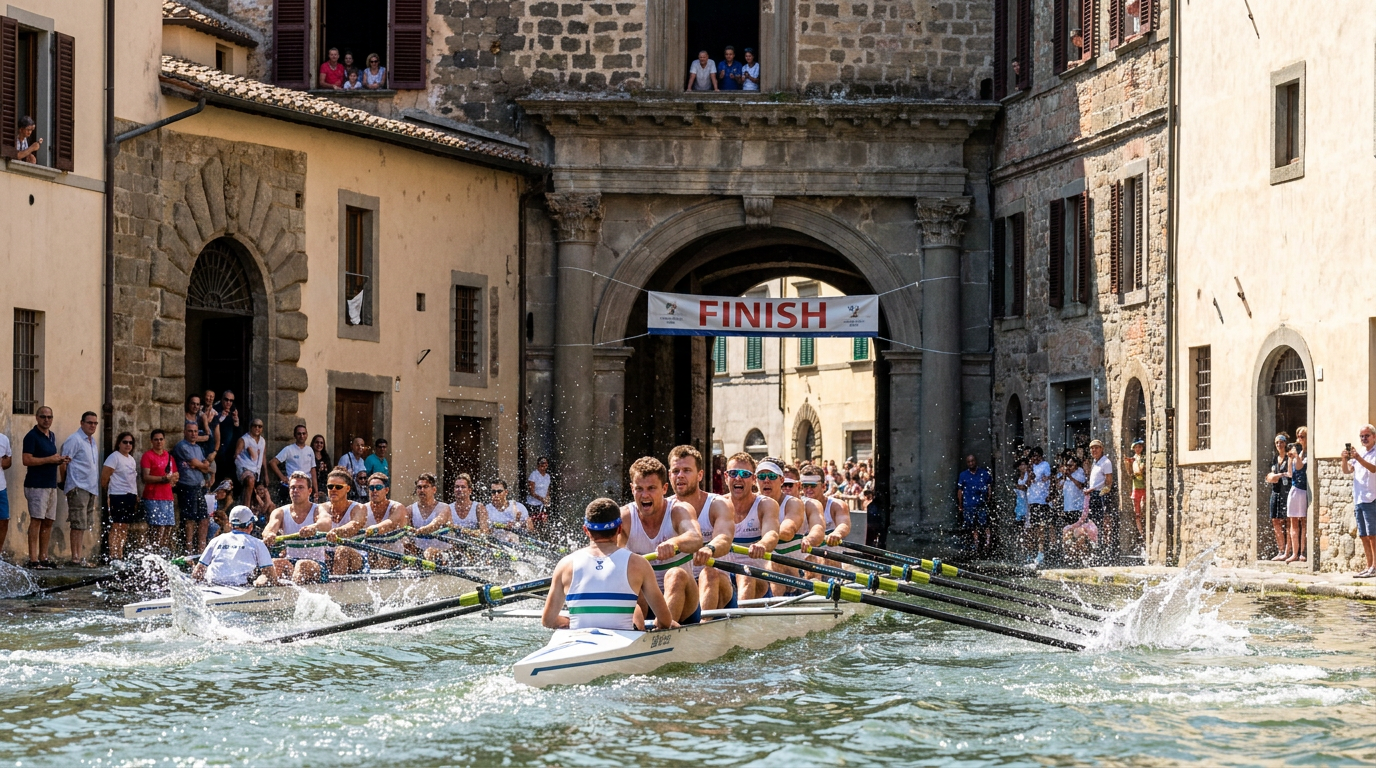
- European Powerhouses
- Focused on winning the overall World Cup points trophy through deep, consistent rosters.
- Targeted Contenders
- Focused on peaking specific priority boats for the World Championships rather than overall series points.
- Event Organizers
- Focused on delivering fair, world-class racing conditions for the series finale.
What's not represented
- · Athletes from developing rowing nations who struggle with the funding required to attend all three European-based World Cups.
- · Para-rowing squads, whose events are contested but often receive less broadcast focus than the Olympic boat classes.
Why this matters
The World Rowing Cup is the premier international racing series outside the Olympics and World Championships. Winning the overall title provides crucial psychological momentum and seeding advantages heading into the 2026 World Rowing Championships in Amsterdam this August.
Key points
- Great Britain leads the overall World Rowing Cup standings with 112 points after Cup II in Plovdiv.
- The Netherlands trails closely behind with 108 points, powered by dominant performances in women's sculling.
- Germany slipped to third place after struggling to match their early-season speed in the Balkan heat.
- The series winner will be decided at the prestigious Lucerne Regatta from June 26 to 28.
The waters of the Maritsa River in Plovdiv, Bulgaria, have just settled, but the race for the 2026 World Rowing Cup is only heating up. As World Rowing Cup II wrapped up on Sunday afternoon, the overall standings transformed into a thrilling two-horse race between European powerhouses Great Britain and the Netherlands. With the grueling mid-season regatta testing the endurance of the world's top crews under intense Balkan heat, the leaderboard saw significant shuffling. The stage is now perfectly set for a dramatic, winner-take-all series decider at the upcoming Lucerne Regatta later this month.[1][3]
Heading into the weekend, Germany held a narrow lead following a dominant, multi-medal performance at World Rowing Cup I in Seville last month. However, the German fleet struggled to maintain their early-season momentum against peaking rivals in Bulgaria. Several of their priority boats, including their traditionally strong sweep crews, found themselves relegated to the B-finals after grueling semi-final sprint finishes. Missing out on the top-tier points allocations caused Germany to slip to third in the overall standings, opening the door for the deeper, more consistent squads to capitalize and seize control of the narrative.[1][3]
It was the British and Dutch squads that fully capitalized on the opening. Great Britain's deep and highly funded roster delivered consistent podium finishes across both sweep and sculling events, proving the value of their centralized training program. By fielding highly competitive boats in nearly every Olympic class, the British squad amassed crucial points across the board, edging into the overall lead with a total of 112 points. Their strategy of depth—ensuring that even when a crew missed gold, they still secured top-four points—proved highly effective in the cumulative points format of the World Cup series.[2][6]

"The squad showed incredible resilience today across all boat classes," noted the British Rowing performance director during the post-regatta press conference on Sunday evening. "Plovdiv is always a challenging course with its unique wind profiles and intense summer heat, but executing our race plans here puts us exactly where we want to be heading into the final stretch. We knew we had to maximize every single entry to overtake the early leaders, and the athletes delivered when it mattered most, fighting for every inch in the final 250 meters."[2][6]
Breathing down their necks are the Netherlands, sitting just four points behind at 108. The Dutch contingent was absolutely lethal in the women's sculling events, taking commanding gold medals in both the Women's Double and Quadruple Sculls. Their crews showcased the explosive power, high stroke rates, and flawless technical synchronization that has become their trademark over the last Olympic cycle. By virtually guaranteeing maximum eight-point payouts in their specialty events, the Dutch remain in prime position to snatch the overall trophy, setting up a fascinating clash of styles against the broader British approach.[1][3]
While the European giants battle for the overall points trophy, Australia made significant waves in the priority big boats. The Australian Men's Eight delivered a blistering final 500 meters to upset the favored British crew, crossing the line first and signaling their intent to peak at exactly the right time. Because Southern Hemisphere teams often skip the first World Cup in May due to complex travel logistics and domestic season timing, they are rarely in contention for the overall series win. Instead, they use these European regattas as crucial speed-testing grounds, making their targeted, high-profile victories all the more impactful.[4]
While the European giants battle for the overall points trophy, Australia made significant waves in the priority big boats.
"That was a massive statement row from the boys," an Australian team coach told reporters on the Plovdiv docks as the crews cooled down. "We've been building our aerobic base back home all season, and to see the top-end speed come through against the world's best gives the whole shed a massive lift. We aren't here for the overall points tally; we are here to find our fastest combinations before the World Championships, and today proved we are on the right track to challenge for the podium in Amsterdam."[4]
The World Rowing Cup points system leaves absolutely no room for error for the nations chasing the overall title. In each of the 12 Olympic boat classes, a first-place finish awards eight points, scaling down incrementally to a single point for seventh place. Crucially, a member federation can only earn points from their highest-placing boat in each event. With double points not in play for the finale, every B-final finish and photo-finish sprint carries massive implications for the overall nation's trophy. A single technical error, a caught crab, or a missed stroke in the final meters can swing the standings by crucial margins.[1]

All eyes now turn to the "Lake of the Gods." The Rotsee in Lucerne, Switzerland, will host the decisive World Rowing Cup III from June 26 to 28. Known for its perfectly still waters, natural amphitheater setting, and famously fair racing conditions that eliminate lane advantages, Lucerne is the traditional proving ground for the sport's elite. Winning at the Rotsee carries a historical prestige second only to the World Championships and the Olympic Games, making it the perfect venue for this year's exceptionally tight points race.[5]
The Lucerne Regatta serves as the final international test before the 2026 World Rowing Championships in Amsterdam this August. For crews on the bubble, it is the absolute last chance to prove their speed to national selectors and secure their seat in the boat before rosters are locked. For the established heavyweights, it is about establishing psychological dominance over their rivals, refining their race plans, and laying down a marker before the ultimate showdown in the Netherlands. The pressure cooker environment of Lucerne often reveals which crews have genuine championship speed.[1][5]
"When the international rowing elite compete in Lucerne, the focus is purely on athletic quality and raw speed," organizers stated Sunday, anticipating record crowds for the series decider. "It is the last big test of form of the season before the World Championships. With the standings this close between Great Britain and the Netherlands, and with the Southern Hemisphere crews rapidly finding their rhythm, the racing on the Rotsee will be nothing short of spectacular. We are preparing for one of the most fiercely contested regattas in recent memory."[5]

Beyond the team trophies, individual boat classes are seeing fierce, unpredictable rivalries crystallize as the season matures. The Men's Single Sculls, often considered the blue-ribbon event of the regatta, remains wildly open, with three different nations taking gold across the first two World Cups and the recent European Championships. This unprecedented parity across the field ensures that no points are guaranteed for the powerhouse nations, forcing the leading federations to fight for every placement and adapt their strategies race by race.[1][3]
As the massive boat trailers are packed in Bulgaria and the fleets begin the long, multi-day drive across Europe to Switzerland, the math for the overall title is simple, but the execution will be agonizingly difficult. Whichever nation can best manage athlete recovery, adapt to the Rotsee's unique microclimate, and execute their race plans flawlessly under immense pressure will hoist the 2026 World Rowing Cup. With just four points separating the leaders, every single stroke in Lucerne will count, setting the stage for a classic, unforgettable showdown on the Lake of the Gods.[2][5]
How we got here
May 29-31, 2026
World Rowing Cup I in Seville, Spain, where Germany took an early points lead.
June 12-14, 2026
World Rowing Cup II in Plovdiv, Bulgaria, sees Great Britain and the Netherlands surge to the top of the standings.
June 26-28, 2026
Upcoming World Rowing Cup III in Lucerne, Switzerland, which will decide the overall series winner.
August 24-30, 2026
The 2026 World Rowing Championships in Amsterdam, the ultimate goal of the season.
Viewpoints in depth
British Rowing
Focused on depth across all boat classes to secure the overall points trophy.
Great Britain's strategy relies on fielding highly competitive crews in nearly every Olympic boat class, ensuring a steady accumulation of points even if they don't win gold in every race. Their sweep rowing programs (pairs, fours, eights) remain the bedrock of their points total, though their sculling squads have shown significant improvement this season. This depth-first approach minimizes the risk of a single bad race derailing their entire World Cup campaign.
Dutch Fleet
Relying on sheer dominance in targeted sculling events to maximize gold-medal points.
The Netherlands have adopted a more concentrated approach, heavily prioritizing their world-class sculling programs. By virtually guaranteeing eight points (first place) in events like the Women's Quadruple Sculls and Men's Double Sculls, they can challenge for the overall title without needing the same sheer volume of entries as the British team. Their strategy relies on explosive top-end speed rather than broad fleet depth.
Southern Hemisphere Challengers
Using the World Cup series to build peak speed for the World Championships.
Nations like Australia and New Zealand often skip the first World Cup due to travel logistics, meaning they cannot realistically win the overall series points trophy. Instead, they use Cups II and III purely as speed-testing grounds, focusing on peaking individual priority boats—like the Australian Men's Eight—for the World Championships in August. For these federations, a single gold medal in Lucerne is worth more than a high overall team ranking.
What we don't know
- Whether the Southern Hemisphere crews will peak in time to disrupt the European points race in Lucerne.
- How the unpredictable microclimate of the Rotsee will affect the tightly matched sculling finals.
- Which borderline athletes will secure their seats for the World Championships based on their Lucerne performance.
Key terms
- Sweep rowing
- A rowing style where each rower uses a single oar, requiring boats to have an even number of rowers (pairs, fours, eights) to balance the boat.
- Sculling
- A rowing style where each rower uses two oars (one in each hand), contested in singles, doubles, and quadruple sculls.
- Rotsee
- A natural lake in Lucerne, Switzerland, famous in the rowing world for its perfectly straight shape and calm waters, earning it the nickname 'Lake of the Gods.'
Frequently asked
How are points awarded in the World Rowing Cup?
In each of the 12 Olympic boat classes, the highest-placing boat from a country earns points: 8 for 1st, 6 for 2nd, 5 for 3rd, down to 1 point for 7th place.
Can a country enter multiple boats in one race?
Yes, a member federation can enter a maximum of two crews in each event, but only their highest-placing boat earns points toward the overall World Cup standings.
Why is the Lucerne Regatta so important?
Held on the Rotsee, it is considered the fairest rowing course in the world and serves as the final, most prestigious test of speed before the World Championships.
Sources
Source coverage
6 outlets
3 viewpoints surfaced






[1]World RowingEuropean Powerhouses
Great Britain and Netherlands neck-and-neck as World Cup II concludes in Plovdiv
Read on World Rowing →[2]BBC SportEuropean Powerhouses
GB Rowing Team secures vital points in Plovdiv to set up Lucerne showdown
Read on BBC Sport →[3]EurosportEuropean Powerhouses
Dutch fleet dominates Plovdiv waters, tightening the World Cup standings
Read on Eurosport →[4]The Sydney Morning HeraldTargeted Contenders
Aussies surge in Men's Eight, eyeing podium in Lucerne finale
Read on The Sydney Morning Herald →[5]Lucerne Regatta OfficialEvent Organizers
The Stage is Set: Rotsee prepares for ultimate World Cup decider
Read on Lucerne Regatta Official →[6]British RowingEuropean Powerhouses
Sunday Results: GB squad takes home crucial medals in Bulgaria
Read on British Rowing →

Every angle. Every day.
Get sports stories with full source coverage and perspective breakdowns delivered to your inbox.