
World Rowing Cup Standings Take Shape as Team USA Dominates Plovdiv Regatta
The United States topped the medal table at the second stage of the 2026 World Rowing Cup in Bulgaria, setting up a high-stakes finale in Lucerne later this month.
By Factlen Editorial Team
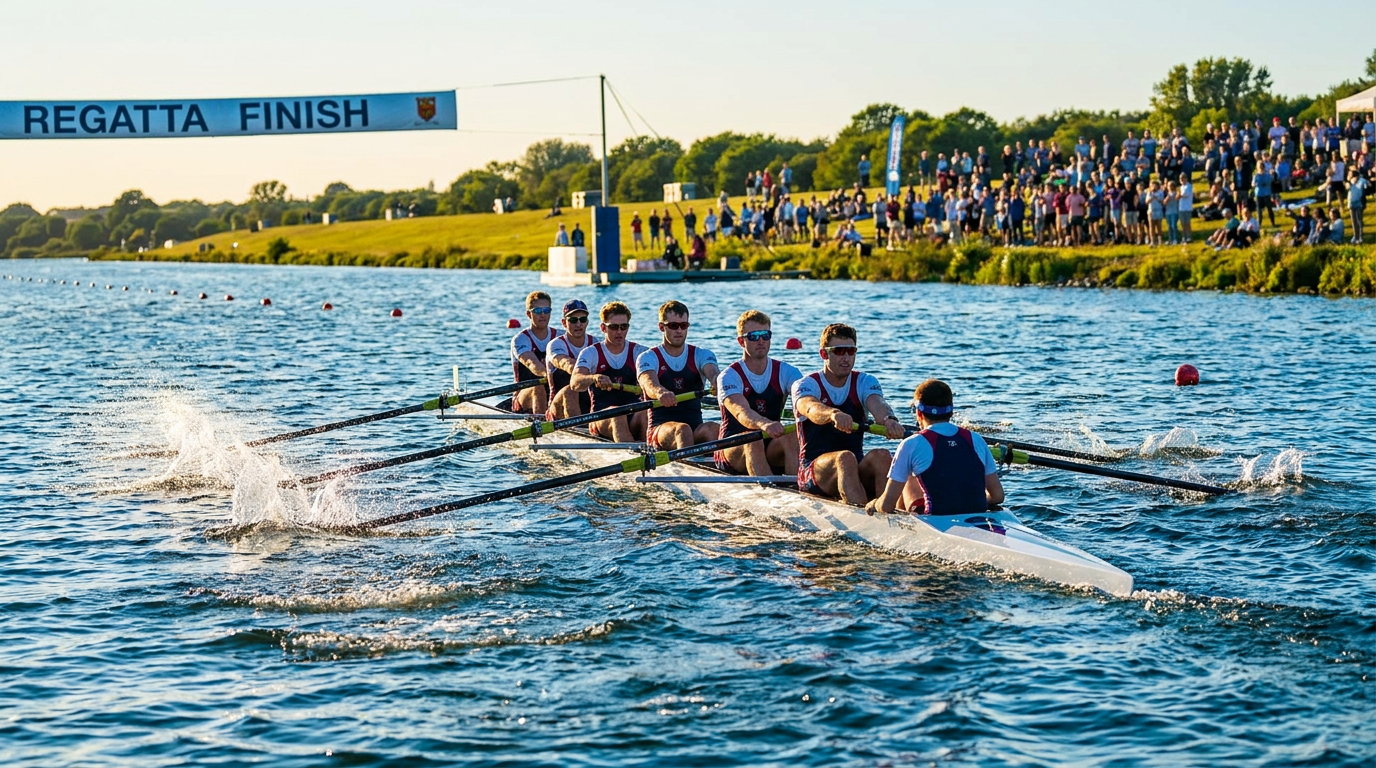
- High-Performance Powerhouses
- Focused on peaking for the World Championships and securing overall Cup points.
- Emerging Rowing Nations
- Celebrating historic milestones and breaking into the traditional European and North American dominance.
- Neutral Analysts
- Tracking the points standings, race times, and predicting the showdown at Lucerne.
- Equipment Manufacturers
- Focused on boat performance, hull design, and technical margins in fast conditions.
What's not represented
- · Host city organizers in Plovdiv
- · Athletes who missed the podium
Why this matters
The World Rowing Cup standings dictate the momentum and psychological edge heading into the World Championships. For emerging nations and established powerhouses alike, securing points now validates years of grueling training and sets the stage for the ultimate showdown in Lucerne.
Key points
- The United States topped the medal table at World Rowing Cup II in Plovdiv with six gold and five silver medals.
- Fast tailwind conditions led to four World Rowing Cup best times being set during the finals.
- New Zealand's men's pair mathematically secured the overall 2026 World Cup title in their boat class.
- Uzbekistan achieved a historic milestone by winning two gold medals on the opening day of finals.
- The overall World Cup standings will be decided at the final regatta in Lucerne, Switzerland, from June 26 to 28.
The dust has settled on the waters of Plovdiv, Bulgaria, and the 2026 World Rowing Cup standings are taking a definitive shape. Following a blistering weekend of racing at World Cup II, the United States has surged to the top of the leaderboard, while historic performances from emerging nations have shaken up the traditional European hierarchy.[1][3]
The regatta, held from June 12 to 14, served as the critical middle leg of the annual three-part World Rowing Cup series. With nations accumulating points across Olympic and international boat classes, the results in Plovdiv have dramatically altered the trajectory of the season heading into the finale.[1][7]
Team USA emerged as the undisputed powerhouse of the weekend, leaving Bulgaria with an impressive haul of six gold and five silver medals. The American squad showcased remarkable depth, securing victories across sweep and sculling events, including the women’s pair, women’s four, women’s quadruple sculls, and the women’s eight.[3][4]

The fast conditions in Plovdiv, aided by a brisk tailwind, pushed crews to their physical limits and resulted in four World Rowing Cup best times falling over the course of the finals. The American women’s four, featuring Azja Czajkowski, Etta Carpender, Mia Levy, and Alexandria Vallancey-Martinson, was utterly dominant, clocking a record-setting 6:15.75.[1][4]
In the women’s pair, the American duo of Teal Cohen and Kate Knifton—reigning world champions in the four—proved their versatility by dominating the field. They crossed the line in 6:50.82, comfortably holding off a surging Chilean crew that upgraded their bronze from the first World Cup in Seville to a silver in Plovdiv.[1][3]
While the United States dominated the overall medal table, New Zealand delivered the most decisive standings victory of the regatta. The Kiwi men’s pair of Oliver Welch and Benjamin Taylor secured their second consecutive gold medal of the season, mathematically guaranteeing themselves the overall 2026 World Rowing Cup title in their boat class.[1]
Welch and Taylor’s performance was nothing short of historic. They led by 1.5 seconds at the 500-meter mark and stretched their advantage down the course, finishing in 6:09.04. The blistering time was a World Cup best and sat just 0.54 seconds shy of the legendary world best time set by their compatriots Hamish Bond and Eric Murray at the 2012 London Olympics.[1]
Welch and Taylor’s performance was nothing short of historic.
The men’s double sculls provided one of the most heartwarming moments of the weekend, alongside a signal that rowing royalty has returned to form. The legendary Croatian duo of Martin and Valent Sinkovic captured gold in a sensational 6:00.97, proving they remain formidable contenders for the upcoming World Championships.[1][3]

In a display of ultimate sportsmanship, the Sinkovic brothers shared the podium with the silver-medalist New Zealand crew. The two teams celebrated together and even swapped partners for the row back to the pontoon, with one Kiwi and one Croatian in each boat—a moment that quickly went viral within the rowing community.[1]
Beyond the established powerhouses, World Cup II will be remembered as a breakthrough moment for emerging rowing nations. Uzbekistan delivered a masterclass on the opening day of finals, topping the early medal table with two golds and a silver.[2]
Uzbek athletes Mukhayyo Abdusattorova and Diyorbek Boybolsinov claimed their country's first gold in the PR2 mixed double sculls, while Shakhzo Nurmatov and Sobirjon Safaroliyev added a second victory in the lightweight men’s double sculls. The results mark a historic milestone for the Central Asian nation's high-performance rowing program.[2]
The technical arms race of international rowing was also on full display in Bulgaria. In a sport where margins are measured in fractions of a second, equipment choices proved critical in the fast tailwind conditions. Italian boat manufacturer Filippi reported that a staggering 92 percent of the medals awarded in Plovdiv were won by crews racing in their shells.[5]

The points system for the World Rowing Cup heavily rewards consistency. Each Olympic boat class earns points based on finishing order, with eight points awarded to the highest-placing boat from a country, cascading down to one point for seventh place. The nation with the highest cumulative score across all three regattas is crowned the overall World Cup winner.[7]
With the Seville and Plovdiv stages now complete, the international rowing community turns its collective attention to Switzerland. The 2026 World Rowing Cup III will take place from June 26 to 28 on the Rotsee in Lucerne, a venue affectionately known as the 'Lake of Gods' for its famously fair, natural six-lane course.[6]
Lucerne serves as the final, high-stakes test of the season. For crews leading the standings, it is a chance to hoist the overall World Cup trophy. For others, it represents the last opportunity to finalize lineups and test race pace before the World Rowing Championships convene in Amsterdam late this August.[1][6]
How we got here
May 29-31, 2026
World Rowing Cup I takes place in Seville, Spain, with Germany topping the initial medal table.
June 12-14, 2026
World Rowing Cup II in Plovdiv, Bulgaria, sees the United States dominate and four World Cup best times fall.
June 26-28, 2026
The upcoming World Rowing Cup III in Lucerne, Switzerland, will finalize the overall Cup standings.
August 2026
The international rowing season culminates at the World Rowing Championships in Amsterdam.
Viewpoints in depth
High-Performance Powerhouses
Focusing on executing race plans and locking in overall titles early.
For established powerhouses like the United States and New Zealand, the middle leg of the World Cup is about asserting dominance and securing mathematical guarantees ahead of the World Championships. By setting World Cup best times and sweeping multiple boat classes, these nations validate their grueling winter training blocks and send a psychological message to the rest of the field. Their primary objective now shifts to maintaining peak physical condition through the Lucerne finale and into the late-August championships.
Emerging Rowing Nations
Viewing this stage as a historic breakthrough that proves the value of their investments.
Nations like Uzbekistan and Chile view the results in Plovdiv as monumental milestones. Breaking into the traditional European and North American dominance—particularly in lightweight and para-rowing events—proves that their targeted investments in high-performance coaching are yielding global results. For these federations, every podium finish not only earns crucial World Cup points but also secures vital domestic funding and inspires the next generation of rowers back home.
Technical & Equipment Suppliers
Treating the regatta as a proving ground for hull shapes and carbon-fiber rigging.
In a sport where margins are measured in fractions of a second, equipment manufacturers view fast tailwind conditions as the ultimate test of their engineering. Suppliers like Filippi highlight their overwhelming presence on the medal podium as proof that their specific hull designs and rigging setups offer a tangible advantage. The technical arms race continues behind the scenes, with teams constantly tweaking their equipment to find any extra speed before the World Championships.
What we don't know
- Whether the United States can maintain its momentum against a potentially larger European field in Lucerne.
- Which nations will prioritize the overall World Cup title versus resting their top crews for the World Championships in August.
Key terms
- World Rowing Cup
- An annual series of three international regattas where nations accumulate points to crown an overall season champion.
- Double Sculls
- A rowing event where two athletes propel the boat using two oars each, one in each hand.
- Pair
- A sweep rowing event where two athletes propel the boat using one large oar each.
- Tailwind
- A wind blowing in the same direction the boats are racing, which generally leads to faster race times and potential records.
- Rotsee
- A natural lake in Lucerne, Switzerland, famous for its fair, six-lane rowing course, often referred to as the 'Lake of Gods'.
Frequently asked
What is the World Rowing Cup?
It is an annual series of three international regattas that act as a lead-up to the World Rowing Championships, where nations earn points based on their finishing order.
Who is leading the 2026 standings?
The United States surged to the top of the medal table after a dominant six-gold performance at World Cup II in Plovdiv, Bulgaria.
When is the final World Cup event?
The 2026 World Rowing Cup III will take place from June 26 to 28 in Lucerne, Switzerland, on the Rotsee.
Did any records break in Plovdiv?
Yes, aided by a fast tailwind, four World Rowing Cup best times were set during the finals, including a blistering run by the New Zealand men's pair.
Sources
Source coverage
7 outlets
4 viewpoints surfaced







[1]World RowingNeutral Analysts
Tailwind sends World Cup best times falling in Plovdiv
Read on World Rowing →[2]Row360Emerging Rowing Nations
Uzbekistan Strikes First in Plovdiv With Two Golds on Opening Finals Day
Read on Row360 →[3]Rowing NewsHigh-Performance Powerhouses
U.S. Wins Six Gold, Five Silver Medals At Plovdiv World Rowing Cup
Read on Rowing News →[4]USRowingHigh-Performance Powerhouses
Seven U.S. Crews Win Opening Races at World Rowing Cup II
Read on USRowing →[5]Filippi BoatsEquipment Manufacturers
2026 World Rowing Cup II: Filippi results
Read on Filippi Boats →[6]Lucerne RegattaNeutral Analysts
LUCERNE REGATTA | World Rowing Cup | Rotsee Rowing Event 2026
Read on Lucerne Regatta →[7]British RowingNeutral Analysts
World Rowing Cup I and III 2026
Read on British Rowing →

Every angle. Every day.
Get sports stories with full source coverage and perspective breakdowns delivered to your inbox.