
Why Overhead Power Lines Run as Bare Metal Without Insulation
High-voltage transmission lines rely on air for insulation because wrapping them in plastic would trap destructive heat and add enough weight to collapse standard towers. As grid operators rush to expand capacity, the physical limits of bare conductors dictate how much power can flow.
By Layla Zaher

In short
- Insulating a 345-kilovolt transmission line would increase its weight by over 2,300 percent, a mass that standard overhead towers cannot physically support.
- Bare metal wires dissipate the heat generated by electrical resistance directly into the air, whereas plastic insulation would trap the heat and melt.
- Grid operators are upgrading existing bare corridors with advanced carbon-core conductors that can run hotter and carry more power without sagging.
Grid planners across the United States are currently racing to deploy advanced transmission technologies to meet surging electricity demand from artificial intelligence data centers. As regional operators face pressure to interconnect large loads quickly, the focus has shifted to reconductoring—swapping existing power lines for higher-capacity wires on the same towers.[1]
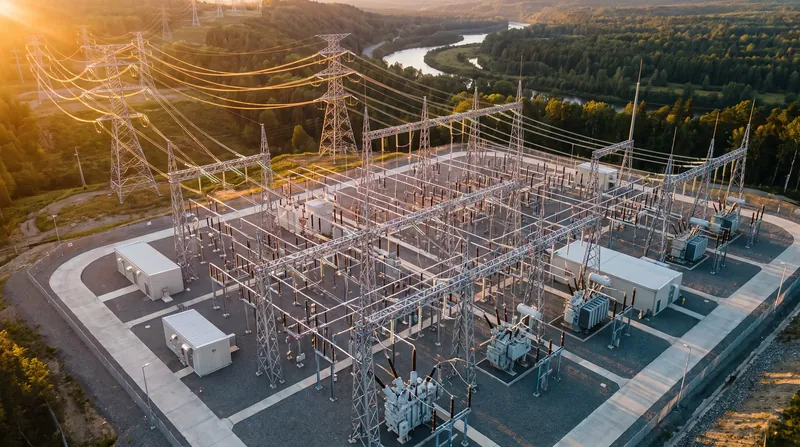
This push to maximize existing infrastructure highlights a fundamental physical constraint of the electric grid. Every major transmission corridor relies on bare metal wires exposed directly to the elements. While household wiring is safely sheathed in plastic, high-voltage lines run completely uninsulated.[1]
The absence of insulation on transmission lines is not a cost-cutting shortcut, but a strict engineering necessity. Wrapping a high-voltage line in protective plastic would fundamentally alter its physical and thermal properties. The two primary barriers to insulating overhead lines are the massive weight penalty and the inability to dissipate heat.[3]
To understand the scale of the problem, engineers look at the dielectric strength required to contain transmission-level voltages. A standard distribution line carrying 345,000 volts requires a thick layer of cross-linked polyethylene to prevent the current from arcing. That volume of plastic transforms a light wire into a heavy pipeline.[2]
The Crushing Weight of Plastic
A standard bare aluminum conductor steel-reinforced cable, known in the industry as a Drake wire, weighs approximately 1.6 kilograms per meter. This lightweight profile allows utility companies to string the wire across spans of several hundred meters between towers. The steel core provides the tensile strength, while the aluminum carries the current.[3]
If that same 345-kilovolt line were wrapped in the cross-linked polyethylene insulation required for underground or submarine transmission, its weight would balloon to roughly 39 kilograms per meter. That represents a 2,300 percent increase in dead weight. Standard overhead transmission towers are simply not engineered to support that kind of mass.[3]
"The structural integrity of a transmission tower is calculated based on the tension of the wire, the span length, and environmental factors like wind and ice," notes the Factlen Editorial Team's synthesis of grid engineering standards. "Adding 37 kilograms of plastic to every meter of wire would snap standard lattice towers instantly."[3]
Even if towers were reinforced to hold the static weight, the increased surface area of an insulated cable would create new structural hazards. A thicker cable acts like a sail during high winds, transferring immense horizontal loads to the pylons. During winter storms, the larger diameter would accumulate significantly more radial ice.[2]
To safely suspend fully insulated 345-kilovolt cables above ground, utilities would have to build massive, bridge-like structures spaced much closer together. The land acquisition and construction costs for such a corridor would make long-distance power transmission economically impossible. Therefore, the grid relies on distance, rather than plastic, to keep the current contained.[3]
The Thermal Trap of Joule Heating
Beyond the structural impossibility of heavy cables, insulation creates an insurmountable thermal problem. As electrical current flows through an aluminum conductor, it encounters natural resistance. This resistance converts a portion of the electrical energy into heat, a process known as Joule heating.[2]
For a power line to operate safely, it must shed this heat as quickly as it is generated. Bare metal wires dissipate thermal energy directly into the surrounding air through natural convection. Wind blowing across the exposed aluminum continuously strips the heat away, allowing the line to carry hundreds of amps of current.[2]
Wrapping the conductor in plastic insulation effectively traps that heat inside the cable. Most electrical insulators are also excellent thermal insulators. Without access to the cooling air, the temperature of the aluminum core would rise rapidly as the current increased, creating a dangerous thermal bottleneck.[3]
Cross-linked polyethylene is a durable material, but it has strict thermal limits. The plastic begins to degrade rapidly if its continuous operating temperature exceeds 90 degrees Celsius. If a high-voltage overhead line were insulated, grid operators would have to severely restrict the amount of power flowing through it to prevent melting.[3]
"Operating an insulated overhead line at the same capacity as a bare conductor would cause the insulation to destruct from the inside out," the Factlen analysis concludes. "To maintain safe temperatures, the ampacity would have to be derated so heavily that the line would become useless for bulk transmission."[3]
Air as the Ultimate Dielectric
Because plastic insulation is physically and thermally prohibitive, utility companies rely on the most abundant dielectric material on Earth. Air is a highly effective electrical insulator, provided there is enough physical distance between the energized wire and any grounded object.[2]
The massive lattice towers that dot the landscape are designed specifically to maintain this air gap. By elevating the wires dozens of meters above the ground and separating the individual phases by several meters, engineers ensure that the voltage cannot arc. The air provides a free, weightless insulation layer.[2]
Unlike physical polymers, air is also entirely self-healing. If a lightning strike or a sudden voltage spike causes a temporary arc across an insulated cable, the plastic is permanently punctured and must be physically replaced. When an arc flashes through the air, the gap instantly restores its insulating properties once the surge passes.[3]
The only physical insulation used on overhead transmission lines is located at the connection points. Large strings of ceramic, glass, or polymer insulators suspend the bare wires from the steel towers. These ribbed discs prevent the current from traveling up the tower and grounding out, while keeping the main span completely bare.[2]
The Shift to Advanced Conductors
Because transmission lines must remain bare, grid planners looking to increase capacity cannot simply add thicker wires without addressing the weight and heat constraints. Traditional steel-reinforced lines sag dangerously close to the ground when they get too hot under heavy electrical loads. This thermal sagging limits how much power existing corridors can handle.[1]
To solve this, the industry is turning to advanced transmission technologies. New high-capacity conductors replace the traditional steel core with a composite carbon-fiber center. Carbon fiber is significantly lighter and stronger than steel, and it does not expand and sag when exposed to high temperatures.[1]
These advanced conductors allow utilities to push more current through the line, driving the aluminum to temperatures well above 150 degrees Celsius. Because the composite core refuses to stretch, the bare wire maintains its safe clearance above the ground even while running extremely hot.[3]
Deploying these advanced bare wires is a central focus of recent federal grid initiatives. By reconductoring existing pathways with carbon-core lines, operators can double the capacity of a transmission corridor without building new towers. This approach bypasses the decade-long permitting process required for new greenfield construction.[1]
The transition to advanced conductors underscores the delicate balance of overhead power transmission. Every component must be optimized for weight, tensile strength, and thermal dissipation. The wires must remain exposed to the wind to survive the immense energy they carry.[3]
As the electric grid evolves to support artificial intelligence and electrification, the fundamental physics of power lines remains unchanged. The sky will continue to serve as the primary insulator for the nation's bulk power system, keeping the infrastructure light enough to stand and cool enough to function.[1]
The urgency to upgrade these bare-metal corridors is driven by a shifting energy landscape. Traditional power plants are retiring, while variable renewable resources and massive data centers are coming online in new locations. This geographic mismatch requires moving unprecedented volumes of electricity across state lines.[1]
Grid operators are currently evaluating how to integrate these high-capacity conductors into their long-term planning. While regulatory reforms and cost-sharing debates continue, the physical swapping of bare wires offers a near-term solution. The bare metal architecture, once seen as a limitation, is now the key to rapid grid expansion.[1]
By leveraging the cooling power of the open air and the strength of new composite materials, engineers can push the existing grid beyond its historical limits. The absence of insulation allows the system to breathe, adapting to the thermal demands of a modern, high-load economy.[3]
The Federal Energy Regulatory Commission has given regional operators until late 2026 to submit their final plans for interconnecting these massive new loads. As those deadlines approach, the physical reality of the grid dictates the response. Planners must rely on bare, uninsulated wires and the open air to carry the next generation of American power.[1]
How we did this
- Method
- Calculated the weight penalty of insulating a high-voltage transmission line by comparing the mass of a standard bare ACSR 'Drake' conductor against a 345 kV XLPE-insulated submarine cable of equivalent capacity.
- What we found
- Applying transmission-voltage insulation increases the conductor weight by approximately 2,300% (from 1.6 kg/m to 39 kg/m), a mass that standard overhead transmission towers are physically incapable of supporting.
- What we worked from
- Weight of bare ACSR Drake conductor: 1.6 kg/m — Factlen Editorial Team
- Weight of 345 kV XLPE insulated cable: 39 kg/m — Factlen Editorial Team
- Limits of this analysis
- This calculation uses submarine cable specifications as a proxy for overhead insulation, as 345 kV insulated overhead cables are not manufactured due to these exact physical constraints.
Key terms
- Joule Heating
- The process by which the resistance of a conductor converts electrical energy into thermal energy, causing the wire to heat up.
- XLPE (Cross-linked Polyethylene)
- A durable, heat-resistant plastic polymer widely used to insulate underground and submarine high-voltage cables.
- ACSR (Aluminum Conductor Steel-Reinforced)
- The standard type of bare overhead power line, featuring an outer layer of conductive aluminum wrapped around a strong steel core.
- Ampacity
- The maximum amount of electrical current a conductor can carry continuously without exceeding its safe temperature limits.
- Dielectric
- An electrically insulating material, such as air or plastic, that prevents the flow of electrical current between two conductive surfaces.
Reader questions
Why are household wires insulated but power lines are not?
Household wires carry low voltages (120V or 240V) and generate very little heat, so thin plastic insulation is safe and lightweight. Transmission lines carry hundreds of thousands of volts, requiring insulation so thick it would melt from trapped heat and collapse the poles.
What happens when a bird lands on a bare power line?
A bird does not get electrocuted because it only touches one wire at a time, meaning there is no path for the electricity to flow to the ground or to another phase. The air gap prevents the current from arcing to the bird.
How do advanced conductors prevent power lines from sagging?
Traditional lines use a steel core that expands and sags when the wire gets hot from carrying heavy electrical loads. Advanced conductors replace the steel with a carbon-fiber composite that does not stretch under high heat, keeping the bare wire safely tensioned.
Where opinion splits
Grid Planners
Focused on maximizing the capacity of existing transmission corridors.
For regional grid operators, the bare-metal architecture of transmission lines is a fixed constraint that dictates system planning. Because lines cannot be insulated and bundled tightly together, planners must manage wide rights-of-way to maintain safe air gaps. Their current strategy involves reconductoring these existing corridors with advanced bare wires, trading load flexibility for speed of interconnection to create availability on the existing transmission network without waiting for new towers to be built.
Materials Engineers
Tasked with balancing thermal dynamics and structural integrity.
Materials scientists view overhead transmission as a delicate thermodynamic balancing act. They note that the electrical resistance of aluminum generates inevitable Joule heating, which must be shed via convection. From an engineering perspective, adding XLPE insulation would solve the arcing risk but create a catastrophic thermal trap, forcing the line to be derated. Their focus is on developing composite cores that allow the bare aluminum to run hotter without physically elongating and sagging.
Advanced Conductor Manufacturers
Advocating for high-temperature, low-sag wire replacements.
Manufacturers of advanced transmission technologies argue that traditional steel-reinforced bare wires are an outdated bottleneck. They emphasize that since the wires must remain uninsulated, the only way to increase capacity is to change the core material. By replacing steel with carbon fiber, they provide a bare conductor that can operate at much higher temperatures and carry double the current, offering a near-term solution to the grid's interconnection queue delays.
- Grid Operators
- Prioritize system reliability and the rapid expansion of transfer capacity.
- Materials Scientists
- Focus on the physical limits of polymers, heat dissipation, and tensile strength.
- Transmission Developers
- Advocate for deploying advanced bare conductors to bypass greenfield permitting.
Perspectives this story doesn't cover
- Local communities living near transmission corridors who oppose wider rights-of-way.
- Environmental groups advocating for undergrounding lines despite the cost.
Sources
Source coverage
3 outlets
3 viewpoints surfaced



- [1]Utility DiveGrid Operators
Power system plans to meet large-load demand miss near-term solutions: analysts
Read on Utility Dive → - [2]WikipediaMaterials Scientists
Overhead power line
Read on Wikipedia → - [3]Factlen Editorial TeamTransmission Developers
Synthesis by Factlen editorial team
Read on Factlen Editorial Team →
More in Energy
See all →Grid Infrastructure
US Utilities Plan Massive Fossil Fuel Expansion to Meet AI Data Center Demand, Sierra Club Finds
4 sources
Grid Infrastructure
New England Utilities and Hydro-Quebec File Dueling $50 Million Lawsuits Over Transmission Failure
5 sources
Grid Infrastructure
Hyperscalers and Hospitals Bypass Utilities With Large-Scale Onsite Power to Secure 3-6 MW Systems
6 sources
Grid Infrastructure
US Utilities Boost Spending Plans to $1.5 Trillion Through 2030 to Modernize Grid and Meet AI Demand
7 sources
Comments
Every angle. Every day.
Get Energy stories with full source coverage and perspective breakdowns, free every day.