
SoftBank Seeks $100 Billion From Gulf Investors for AI Buyout Fund
Masayoshi Son is reportedly courting Middle Eastern capital for a new vehicle that would acquire established businesses and overhaul their operations using artificial intelligence. The preliminary talks come as the Japanese conglomerate faces investor scrutiny over its massive existing commitments to OpenAI.
By Logan Price
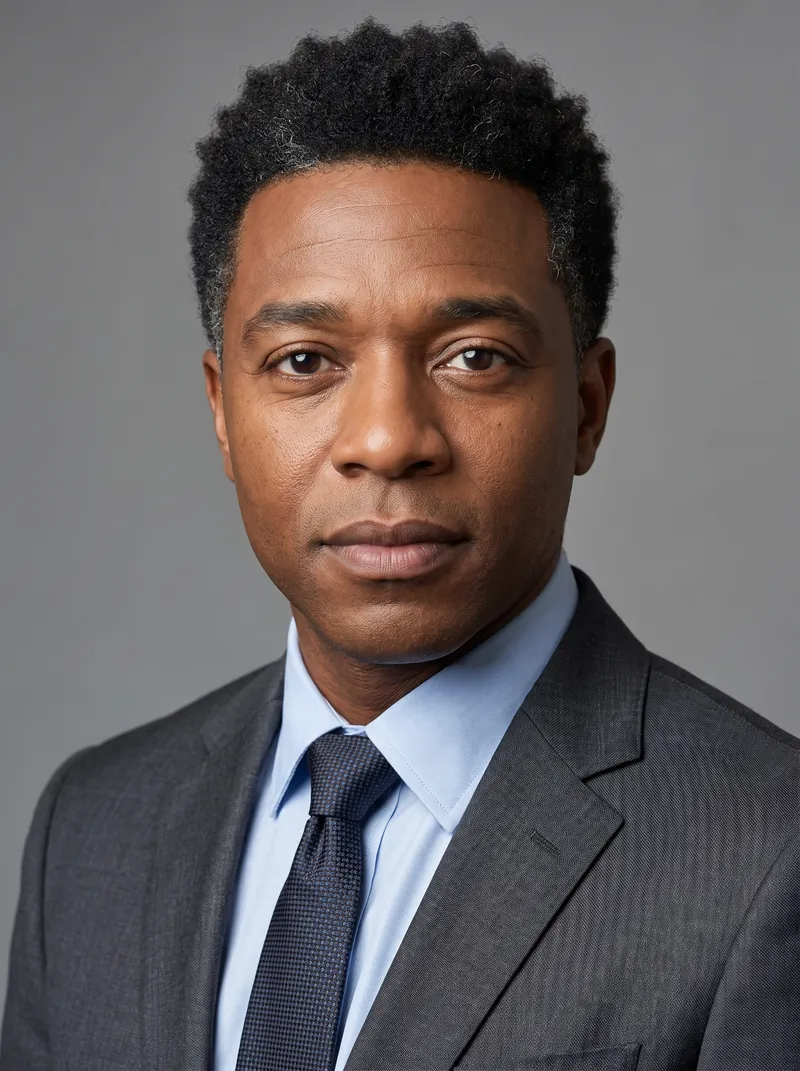
SoftBank Group shares dropped as much as 7.3% in Tokyo on Friday after reports emerged that founder Masayoshi Son is courting Gulf investors for a massive new capital injection. The Japanese conglomerate is seeking up to $100 billion to finance a novel artificial intelligence acquisition fund.[1][2]
Rather than backing startups or foundational model builders, the proposed vehicle would purchase established companies across traditional sectors. SoftBank would then deploy artificial intelligence and robotics to overhaul their operations, reduce inefficiencies, and ultimately boost their market valuations.[3][4]
Son has held preliminary discussions in recent weeks with senior figures in the United Arab Emirates and other Middle Eastern nations. The $100 billion figure remains a target, and no financing commitments have been secured from the sovereign wealth funds approached.[1][4]
A SoftBank representative declined to comment on the fundraising efforts. The Financial Times first reported the outreach on October 9, 2026, noting that the initiative represents a strategic shift toward monetizing businesses that already serve existing customer bases.[1][4]
A Shift Toward Physical AI
The acquisition strategy relies heavily on SoftBank's internal capabilities, particularly its physical artificial intelligence and robotics division, Roze. The unit is expected to play a central role in transforming the day-to-day operations of the acquired legacy businesses.[3][4]
Son reportedly intends to eventually take Roze public in the United States at a substantial valuation. However, it remains unclear whether the proposed Gulf fund would exclusively finance corporate buyouts or also fund Roze's internal hardware development.[3]
The pitch to Middle Eastern sovereign wealth funds echoes SoftBank's 2017 capital raise, when Son secured nearly $100 billion for the first Vision Fund. Saudi Arabia's Public Investment Fund and Abu Dhabi's Mubadala were the primary backers of that initial vehicle.[1][3]
That first Vision Fund has accumulated approximately $29 billion in cumulative investment gains since its inception. However, its mixed track record includes both lucrative stakes in companies like ByteDance and high-profile bankruptcies like the shared-workspace provider WeWork in 2023.[1][3]
Sovereign Wealth Diversification
SoftBank must also convince investors that it can deliver on its massive infrastructure promises. In 2025, the company announced a $500 billion data center project in the United States in partnership with OpenAI, Oracle, and Abu Dhabi's MGX, though that endeavor has yet to yield material progress.[1]
Gulf governments have increasingly directed sovereign wealth toward artificial intelligence as they attempt to diversify their economies beyond oil and gas. Abu Dhabi has expanded its footprint through state-backed entities like the AI investment fund MGX and technology holding company G42.[3]
Meanwhile, Vision Fund 2, which is primarily financed by SoftBank itself and holds the massive OpenAI investment, had generated $20.5 billion in gains as of June 2026. The new Gulf fund would represent a third distinct chapter in the company's capital allocation history.[3]
Mounting Debt and OpenAI Exposure
The ambitious fundraising push arrives as public market investors scrutinize SoftBank's heavily concentrated exposure to a single artificial intelligence developer. The company has committed approximately $65 billion to OpenAI, making the ChatGPT maker the crown jewel of its current portfolio.[3][4]
The scale of the proposed $100 billion vehicle alone explains the market's nerves. It arrives while investors are already debating whether artificial intelligence spending is becoming self-reinforcing or simply self-destructive, given the massive capital requirements of the current cycle.[4]
On October 1, 2026, SoftBank disclosed that it had finalized a $30 billion follow-on investment in OpenAI, securing a 13% ownership stake. The sheer size of the commitment has raised concerns about the conglomerate's balance sheet as OpenAI delays its initial public offering.[3][4]
To finance its artificial intelligence ambitions, SoftBank has aggressively tapped global debt markets. Last month, the company raised $11.1 billion through the largest high-yield corporate bond sale on record, issuing both dollar and euro notes to cover its obligations.[3][4]
The borrowing costs attached to that debt are steep, reflecting the elevated risk profile of the underlying investments. Yields on SoftBank's dollar-denominated bonds maturing in 2031 reached 9.75% in September, up significantly from 6.7% in January.[3][4]
"Unlike SoftBank's previous investment vehicles, which primarily financed technology companies, the proposed fund would purchase established businesses and introduce AI," noted Tom's Hardware in its analysis. The publication described the buyout strategy as "a relatively novel model to make money on AI."[3]
Testing Investor Appetite
The market reaction in Tokyo highlights growing anxiety over the capital-intensive nature of the current technology cycle. Investors are debating whether the massive sums required to sustain artificial intelligence development will translate into proportionate operating returns.[1][4]
Analysts warn that a substantial decline in OpenAI's valuation could ripple through SoftBank's entire portfolio. The conglomerate's financial health is now tightly coupled to the generative artificial intelligence sector's ability to generate sustainable, long-term enterprise revenue.[3][4]
The proposed buyout model also faces geopolitical hurdles regarding international technology transfers. The Middle East Institute has highlighted how United States export restrictions, advanced chip access, and data-center security regulations complicate artificial intelligence partnerships in the Gulf region.[4]
A joint vehicle between SoftBank and United Arab Emirates investors would need to navigate these export controls, particularly if the acquired companies operate in sensitive sectors. Securing advanced hardware for the overhauled businesses could require explicit regulatory approval from Washington.[4]
Key points
- Masayoshi Son is reportedly seeking up to $100 billion from Gulf investors for a new SoftBank fund.
- The vehicle would acquire established businesses and overhaul their operations using artificial intelligence and robotics.
- SoftBank's shares fell 7.3% in Tokyo as investors weighed the massive capital requirements and the company's existing $65 billion exposure to OpenAI.
- The strategy faces potential geopolitical hurdles, including United States export restrictions on advanced chips and data-center security.
What we don’t know
- Whether Gulf sovereign wealth funds will commit to the $100 billion target or negotiate a smaller initial vehicle.
- If the proposed fund will exclusively finance corporate buyouts or also fund the internal development of SoftBank's robotics arm, Roze.
- How United States regulators will treat technology transfers and advanced chip exports to Middle Eastern-backed acquisition targets.
- Corporate Strategy
- Argues that acquiring legacy companies and applying AI is the next logical step to generate value.
- Market Skeptics
- Expresses concern over massive capital requirements and concentrated exposure to OpenAI.
- Sovereign Diversification
- Views artificial intelligence investments as a critical path to economic diversification.
Perspectives this story doesn't cover
- Acquisition Target Executives
- US Export Control Regulators
Sources
Source coverage
4 outlets
3 viewpoints surfaced




- [1]The Japan TimesCorporate Strategy
SoftBank seeks $100 billion from Gulf states for AI, FT says
Read on The Japan Times → - [2]The Economic TimesSovereign Diversification
SoftBank seeks $100 billion from Gulf states for AI
Read on The Economic Times → - [3]Tom's HardwareSovereign Diversification
SoftBank seeks $100 billion for AI-refined projects from Middle Eastern investors
Read on Tom's Hardware → - [4]CryptopolitanMarket Skeptics
SoftBank seeks up to $100B from Gulf investors for AI buyout fund
Read on Cryptopolitan →
More in Artificial Intelligence
See all →AI Fairness
How the Four Main Types of AI Bias Actually Work—and How to Mitigate Them
5 sources

Local AI Agents
Perplexity Moves AI Agent Orchestration to Windows PCs with NVIDIA RTX Integration
7 sources
Time-Series AI
IBM Releases Granite PatchTST-FM-r2 Zero-Shot Time Series Model Under Commercial License
6 sources

Model Compression
How Unstructured Pruning Removes 90% of a Model's Weights Without Accuracy Loss
7 sources

Comments
Every angle. Every day.
Get Artificial Intelligence stories with full source coverage and perspective breakdowns, free every day.