
USL Super League Aligns Calendar with NWSL, Unifying U.S. Women's Soccer Schedule
The USL Super League will transition to a spring-to-fall calendar in 2027, abandoning its European-style schedule to align with the NWSL and the broader American soccer landscape.
By Factlen Editorial Team
- League Leadership
- Argues that aligning the calendar with the domestic game fosters collaboration and prepares the U.S. for the 2031 World Cup.
- Domestic Soccer Advocates
- Views the unified schedule as a massive win for American fans, simplifying the viewing experience and player movement.
- Club Management
- Focused on the immediate logistical challenge of preparing rosters for a highly compressed 14-match sprint season.
What's not represented
- · NWSL Executives
- · Current Players' Union
Why this matters
By aligning its schedule with the NWSL, the USL Super League is unifying the top tier of American women's soccer under a single calendar. This eliminates off-season overlap, simplifies the viewing experience for fans, and strengthens the domestic game ahead of the 2031 Women's World Cup.
Key points
- The USL Super League will adopt a spring-to-fall calendar starting in 2027, aligning with the NWSL.
- A standalone 14-match Fall Season will be played from August to December 2026 to bridge the gap.
- League executives cited the upcoming 2031 Women's World Cup as a major driver for domestic collaboration.
- The shift abandons the league's original European-style schedule in favor of a unified American soccer calendar.
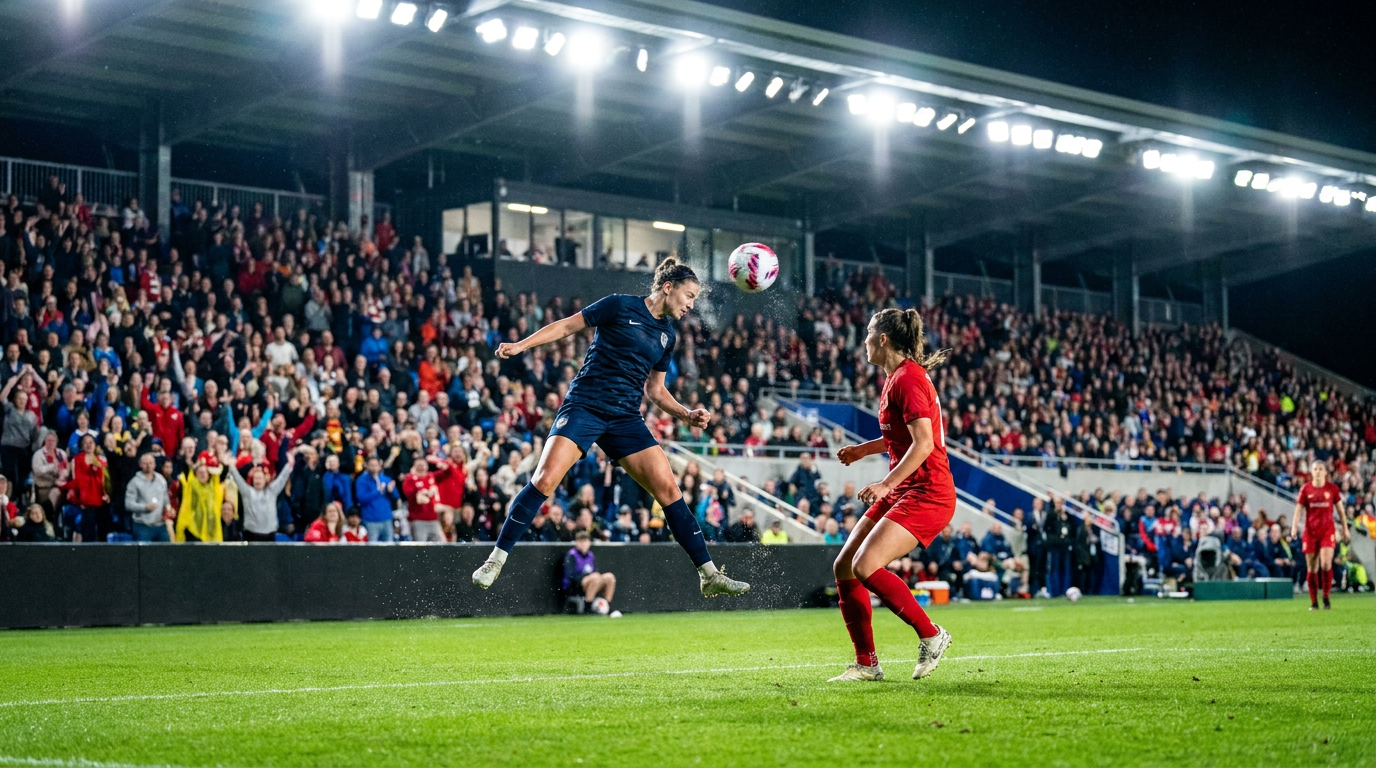
The landscape of professional women's soccer in the United States is undergoing a major structural alignment that promises to unify the sport's domestic calendar. The USL Super League, which operates as a Division 1 professional league alongside the NWSL, has officially announced a fundamental shift in its competitive schedule. After initially launching with a European-style fall-to-spring format, the league will transition to a spring-to-fall calendar beginning in the 2027 season. The strategic pivot represents a significant departure from the league's original blueprint, which had utilized the international calendar as a primary differentiator. Instead, the move directly aligns the Super League with the National Women's Soccer League, bringing the top tier of the American women's game under a single, cohesive timeline.[1][2][4]
To facilitate this massive logistical shift without losing a year of competition, the Super League will implement a transitional bridge campaign before the 2027 alignment takes full effect. The league announced it will play a standalone, highly compressed 14-match Fall 2026 season. Kicking off on August 15, this sprint season will feature the league's eight active clubs competing in a rapid-fire race for the Players' Shield. Each team will play seven home matches and seven away matches, creating a high-stakes environment where early momentum will be crucial. The top four clubs will advance to the postseason, with semifinal matchups scheduled for December 5 and the championship final set for December 12.[2][4][5][6]

For individual clubs, the sudden calendar shift compresses an already complicated offseason, forcing sporting directors and head coaches to finalize their rosters on a significantly accelerated timeline. Teams like Dallas Trinity FC and Brooklyn FC must now prepare for an August 15 kickoff, leaving them with a shortened window to integrate new signings and build tactical chemistry. The 14-match format leaves absolutely no margin for error or slow starts; a brief losing streak could easily eliminate a club from playoff contention. Last season's race for the Players' Shield went down to the final day before Lexington SC clinched the title, and league executives are clearly leaning into that kind of intense, wire-to-wire pressure as a selling point for the transitional fall campaign.[2][4][5]
The decision to abandon the global calendar in favor of domestic alignment was driven by a desire for broader collaboration across the North American soccer ecosystem. In an interview with ESPN, USL Super League President Amanda Vandervort explained that the transition is designed to support long-term growth, roster development, and seamless player movement within the United States. Vandervort emphasized that the change creates a competitive environment that resonates more clearly with American fans. USL CEO Paul McDonough echoed this sentiment, noting that the women's game in the United States is entering an exciting period that requires a shared commitment to advancing the sport collectively, rather than fracturing the market over structural differences.[1][3][5][6]
The decision to abandon the global calendar in favor of domestic alignment was driven by a desire for broader collaboration across the North American soccer ecosystem.
A major catalyst for the reversal is the looming 2031 FIFA Women's World Cup, which the United States is heavily favored to host. Aligning the Super League's calendar with the rest of the domestic game positions the organization as a much stronger partner in the buildup to that massive global tournament. By operating on the same schedule as the NWSL and the broader U.S. Soccer framework, the Super League ensures that American fans, broadcasters, and corporate sponsors can engage with professional women's soccer in a unified, year-round narrative. The alignment eliminates the confusion of overlapping offseasons and ensures that all Division 1 players are peaking physically at the same time ahead of major international windows.[1][2][5]

When the Super League was first conceptualized and launched, its fall-to-spring format was heavily touted as a visionary step that would connect American clubs directly to the global transfer market. By mirroring the schedules of European powerhouses like the English Women's Super League and Spain's Liga F, the USL hoped to seamlessly integrate into the international flow of player contracts and FIFA international breaks. It was framed as a way to offer players an alternative to the NWSL's summer-heavy schedule, potentially attracting international stars who preferred the traditional European rhythm.[2][3]
However, the practical realities of the American sports market—where summer soccer has long been the established norm—ultimately outweighed the theoretical benefits of European alignment. The shift acknowledges that domestic cohesion is paramount for growing a dedicated, local fan base. A unified spring-to-fall schedule simplifies the viewing experience for supporters, who are already accustomed to following Major League Soccer and the NWSL during the warmer months. Furthermore, it streamlines commercial partnerships and stadium logistics across the country, as many clubs share facilities with teams operating on the traditional American soccer calendar.[2][4][5][6]

Ultimately, the transition reflects a rapidly maturing women's soccer ecosystem in the United States. The fact that two Division 1 leagues are finding ways to coexist and elevate the sport collectively is a testament to the overall health of the women's game. While the immediate focus for the eight clubs is navigating the high-pressure crucible of the 14-match Fall 2026 sprint, the long-term vision is firmly fixed on 2027. When the first full spring-to-fall season commences next year, American women's soccer will present a united front, offering players more domestic opportunities on a standardized timeline. As the sport continues its exponential growth trajectory, this calendar alignment ensures the USL Super League will remain a central, synchronized pillar of the domestic game.[1][2][3][4][5][6]
How we got here
September 2021
The United Soccer League officially announces the creation of the USL Super League.
February 2024
U.S. Soccer grants the Super League Division 1 sanctioning, matching the NWSL's top-tier status.
August 2024
The league's inaugural season kicks off under a European-style fall-to-spring calendar.
June 2026
League executives announce the transition to a spring-to-fall schedule to align with the domestic game.
August 2026
The standalone 14-match Fall Season begins as a bridge campaign.
Spring 2027
The first full spring-to-fall Super League season will commence.
Viewpoints in depth
League Organizers' View
Prioritizing domestic cohesion and long-term commercial growth.
For USL leadership, the calendar shift is a pragmatic acknowledgment that the American soccer market operates on its own distinct rhythm. By abandoning the European fall-to-spring model, executives believe they can better capitalize on the momentum building toward the 2031 Women's World Cup. Operating concurrently with the NWSL allows the Super League to share in the broader summer soccer spotlight, making it easier to secure broadcast partnerships, sponsorships, and consistent stadium availability.
Global Alignment Advocates
The original vision of mirroring the European transfer market.
When the Super League launched, its fall-to-spring calendar was celebrated by those who wanted American soccer to integrate more smoothly with the global game. Mirroring leagues like the English WSL theoretically made it easier to sign international players without disrupting their standard offseason, and aligned the league with FIFA's primary international break structure. While this group acknowledges the commercial benefits of the new domestic alignment, they note that American clubs will now continue to face the challenge of out-of-sync transfer windows when dealing with European teams.
Club Sporting Directors
Navigating the immediate logistical hurdles of a compressed season.
For the sporting directors and head coaches on the ground, the long-term benefits of the 2027 alignment are overshadowed by the immediate reality of the 2026 Fall Season. The sudden shift forces clubs to build competitive rosters for a rapid-fire 14-match sprint, where a single injury or slow start could derail an entire campaign. The compressed offseason requires rapid scouting and contract negotiations, fundamentally altering how teams approach their squad building for the remainder of the year.
What we don't know
- Whether the NWSL and USL Super League will eventually establish an inter-league competition or cup tournament.
- How the compressed 14-match Fall 2026 season will impact player health and injury rates.
Key terms
- USL Super League
- A Division 1 professional women's soccer league in the United States that launched to expand the professional pathway for female players.
- NWSL
- The National Women's Soccer League, the longest-running Division 1 women's professional soccer league in the U.S., which operates on a spring-to-fall calendar.
- Division 1 Sanctioning
- The highest level of professional soccer classification granted by U.S. Soccer, currently held by both the NWSL and the USL Super League.
- Players' Shield
- The trophy awarded to the USL Super League team that finishes the regular season with the most points.
Frequently asked
Why is the USL Super League changing its schedule?
The league is transitioning to a spring-to-fall calendar to align with the NWSL and the broader American soccer landscape, fostering better domestic collaboration ahead of the 2031 Women's World Cup.
What happens to the 2026 season?
To bridge the gap before the 2027 shift, the league will play a standalone 14-match Fall Season from August 15 to November 28, 2026, followed by playoffs in December.
Are the USL Super League and NWSL merging?
No. Both remain independent Division 1 professional leagues, but the unified calendar allows them to coexist more seamlessly within the American sports market.
Why did the league originally play fall-to-spring?
The original calendar was designed to mirror the global soccer schedule and European leagues, theoretically making it easier to participate in the international transfer market.
Sources
Source coverage
6 outlets
3 viewpoints surfaced




[1]Equalizer SoccerDomestic Soccer Advocates
USL Super League switching to spring-fall calendar in 2027
Read on Equalizer Soccer →[2]3rd DegreeDomestic Soccer Advocates
USL Super League moving to Spring/Fall calendar, will play standalone season in Fall 2026
Read on 3rd Degree →[3]ESPNLeague Leadership
USL Super League to flip calendar to align with NWSL
Read on ESPN →[4]Brooklyn FCClub Management
Gainbridge Super League Announces 2026 Fall Season Format, Transition to Spring-to-Fall Calendar in 2027
Read on Brooklyn FC →[5]Lexington Sporting ClubLeague Leadership
Gainbridge Super League Announces 2026 Fall Season Format, Transition to Spring-to-Fall Calendar in 2027
Read on Lexington Sporting Club →[6]Carolina Ascent FCLeague Leadership
Gainbridge Super League Announces 2026 Fall Season Format
Read on Carolina Ascent FC →

Every angle. Every day.
Get sports stories with full source coverage and perspective breakdowns delivered to your inbox.