
UN Scientists Formally Define New Global Water Crisis as 'Era of Global Water Bankruptcy'
A landmark United Nations report declares that the world has entered an era of 'global water bankruptcy,' a permanent state where human extraction has irreversibly depleted the planet's natural water savings.

In short
- The UN has formally declared an era of 'global water bankruptcy,' signaling that many water systems can no longer return to historical baselines.
- Unlike a temporary 'water crisis,' bankruptcy involves the irreversible destruction of natural water storage, such as the collapse of underground aquifers.
- Nearly 70 percent of the world's major groundwater sources are showing long-term declining trends due to over-extraction.
In the heavily farmed Konya plain of central Turkey, more than 700 massive sinkholes now pepper the agricultural landscape. In Mexico City, the ground is sinking by roughly ten inches every year, fracturing infrastructure and altering drainage patterns. These are not the temporary scars of a seasonal drought, nor are they anomalies that will heal when the rains return. They are the physical symptoms of a global hydrological system that has systematically liquidated its natural capital, permanently altering the earth's crust and its capacity to store freshwater.[2][4]
For decades, the prevailing language of environmental policy has relied on terms like "water stress" or "water crisis." These frameworks inherently imply a temporary shock—a disruption caused by a severe weather event or an economic failure—followed by an eventual recovery to a historical baseline. But according to a landmark 2026 report published by the United Nations University Institute for Water, Environment and Health, that baseline no longer exists. The planet has formally entered an era of "global water bankruptcy."[1][2]
The term, formally defined by environmental scientist Kaveh Madani, uses a financial metaphor to explain a catastrophic ecological reality. In this framework, surface water from rain and rivers represents humanity's regular "income." Groundwater aquifers, glaciers, and ancient wetlands represent the planet's "savings accounts," accumulated over millennia. For generations, societies have withdrawn more water than the climate provides in annual income, making up the deficit by aggressively drawing down the savings.[1][4]
Bankruptcy occurs when those savings are exhausted and the underlying storage infrastructure is destroyed. When an underground aquifer is pumped dry, the porous geological structure that once held the water often collapses under the weight of the earth above it. Like a crushed sponge, the compacted rock and soil can never be refilled, even if surface water eventually returns. This marks the threshold of irreversibility, where the loss of water-related natural capital becomes permanent on any societally relevant timescale.[1][4]
The scale of this insolvency is vast. The United Nations investigation reveals that nearly three-quarters of the global population now lives in countries classified as water-insecure. Approximately 70 percent of the world's major groundwater sources are showing long-term declining trends, and land subsidence driven by aquifer depletion now affects roughly five percent of the global land area. Simultaneously, the planet has lost more than 30 percent of its glacier mass since 1970, permanently liquidating the "water towers" that provide seasonal flow to billions of people.[2][4]
Climate change acts as a severe multiplier in this equation, but it is not the sole driver. Altered precipitation patterns and shrinking snowpacks certainly reduce the annual income of freshwater, but the structural deficit is fundamentally driven by human demand and governance failures. Agricultural production, which accounts for roughly 70 percent of all global freshwater withdrawals, has expanded heavily into arid regions by relying on the unsustainable extraction of fossil groundwater.[3][4]
The downstream consequences of this hydrological overshoot extend far beyond local wells running dry. Because more than half of the world's food production is located in areas where total water storage is declining, water bankruptcy is fundamentally a crisis of global food security. When a regional agricultural hub exhausts its groundwater, crop yields fall, farming becomes prohibitively expensive, and the resulting food shortages ripple through international trade networks, driving up prices and testing geopolitical dependencies.[2][3]
Acknowledging this reality requires a profound psychological and institutional shift. The United Nations framework argues that the time for "crisis management"—which often involves waiting for rain or applying short-term technological fixes—has passed. Instead, governments must transition to "bankruptcy management." In the financial world, bankruptcy is not the end of a company; it is a structured, legal process for acknowledging insolvency, stopping the bleeding, and restructuring unsustainable debts to protect essential services.[2][4]
Applying this structured recovery to global hydrology means abandoning the illusion that historical conditions can be restored. It requires transparent water accounting, the establishment of enforceable limits on extraction, and the aggressive protection of whatever natural capital remains intact. Cities, food systems, and industrial supply chains must be fundamentally redesigned to operate within these new, permanently reduced limits before the ecological constraints tighten even further.[2][4]
This transition carries profound equity implications. The United Nations report emphasizes that the cost of hydrological overshoot falls disproportionately on those who can least afford it, including smallholder farmers, low-income urban residents, and Indigenous communities. Meanwhile, the short-term economic benefits of over-extraction have historically accrued to larger, more powerful agricultural and industrial actors. A managed bankruptcy process must explicitly prioritize the protection of vulnerable populations over the preservation of unsustainable industries.[2]
Despite the dire terminology, the formal declaration of global water bankruptcy is intended to serve as a catalyst rather than a concession of defeat. By stripping away the false hope of a return to normal, the framework forces policymakers to confront the physical limits of the planet's water systems. It reframes water not merely as a localized environmental risk, but as a systemic vulnerability that requires coordinated international intervention.[2][5]
The upcoming 2026 UN Water Conference in the United Arab Emirates is expected to center heavily on this new paradigm. Member states are being urged to formally recognize water bankruptcy and to establish global monitoring frameworks that track the depletion of natural capital just as rigorously as carbon emissions. The goal is to position water investments as the foundational prerequisite for achieving broader climate, biodiversity, and food security targets.[3]
Ultimately, the shift from crisis to bankruptcy is a demand for systemic honesty. The earth's hydrological checking and savings accounts have been overdrawn, and the infrastructure that held those savings is fracturing. The challenge for the coming decades is not how to refill a collapsed aquifer, but how to build resilient, equitable societies that can thrive on the income the water cycle actually provides.[1][5]
Key terms
- Water Bankruptcy
- A persistent post-crisis condition where long-term water withdrawals exceed renewable inflows, causing irreversible damage to natural water storage systems.
- Water Stress
- A high rate of water withdrawal relative to available supply, historically viewed as a reversible condition.
- Land Subsidence
- The sinking of the earth's surface, often caused by the over-extraction of groundwater and the subsequent collapse of underground aquifers.
- Natural Capital
- The planet's stock of natural assets, which in hydrology includes aquifers, glaciers, wetlands, and soils that store and filter freshwater.
- Hydrological Overshoot
- The practice of withdrawing more water from a system than the climate and natural water cycle can reliably replenish.
Reader questions
What is the difference between a water crisis and water bankruptcy?
A water crisis implies a temporary shortage caused by a shock, like a drought, from which a system can eventually recover. Water bankruptcy describes a permanent state where the natural infrastructure that stores water has been irreversibly damaged.
Can a bankrupt water system be fixed?
In many cases, no. When an underground aquifer is pumped dry, the geological structure often collapses and compacts. Even if heavy rains return, the compacted earth can no longer hold water.
How does water bankruptcy affect food prices?
Agriculture accounts for 70 percent of global freshwater use. As aquifers collapse in major farming regions, crop yields decline and farming costs rise, which ripples through global trade networks and increases food prices.
What does 'bankruptcy management' mean for water?
It means acknowledging that historical water levels are gone and restructuring societies to live within new, permanently reduced limits through transparent accounting, enforceable extraction limits, and the protection of remaining natural capital.
Where opinion splits
Hydrological Researchers
Scientists emphasize the physical limits of the planet's water systems and the irreversible nature of aquifer collapse.
Hydrological researchers argue that the global water cycle has moved beyond its safe planetary boundary. They point to the physical reality of land subsidence and compacted aquifers as proof that the damage is structural, not cyclical. For these scientists, the priority is establishing transparent water accounting and acknowledging that no amount of future rainfall can reinflate a crushed geological formation.
Agricultural Economists
Economists focus on the impact of water depletion on global food systems and the need to restructure water allocation.
Agricultural economists view water bankruptcy primarily as a threat to global food security. With 70 percent of freshwater withdrawals dedicated to agriculture, they argue that the current model of expanding farming into arid regions via fossil groundwater is mathematically doomed. They advocate for redesigning food systems, shifting crop production to regions with sustainable water income, and pricing water to reflect its true scarcity.
International Policymakers
Diplomats and policymakers focus on the need for global monitoring frameworks and cross-border cooperation.
For international policymakers, water bankruptcy is a driver of fragility, displacement, and geopolitical conflict. They argue that because water basins and agricultural supply chains are globally interconnected, localized water failures can quickly become international security crises. Their focus is on building multilateral governance structures that can manage the equitable distribution of unavoidable losses and prevent further depletion of shared natural capital.
- Hydrological Researchers
- Focus on the physical limits of the planet's water systems and the irreversible nature of aquifer collapse.
- Agricultural Economists
- Emphasize the impact of water depletion on global food systems and the need to restructure water allocation.
- International Policymakers
- Focus on the need for global monitoring frameworks, equitable resource distribution, and cross-border cooperation.
Perspectives this story doesn't cover
- Smallholder farmers facing immediate displacement
- Industrial water consumers
Sources
Source coverage
5 outlets
3 viewpoints surfaced





- [1]WikipediaHydrological Researchers
Water bankruptcy
Read on Wikipedia → - [2]United Nations UniversityHydrological Researchers
Global Water Bankruptcy: Living Beyond Our Hydrological Means in the Post-Crisis Era
Read on United Nations University → - [3]Council on Foreign RelationsAgricultural Economists
The Global Water Crisis: Stress, Scarcity, and Conflict
Read on Council on Foreign Relations → - [4]The Invading SeaHydrological Researchers
The world is in water bankruptcy, UN scientists report – here's what that means
Read on The Invading Sea → - [5]Factlen Editorial TeamInternational Policymakers
Synthesis by Factlen editorial team
Read on Factlen Editorial Team →
More in Environment
See all →Wastewater Engineering
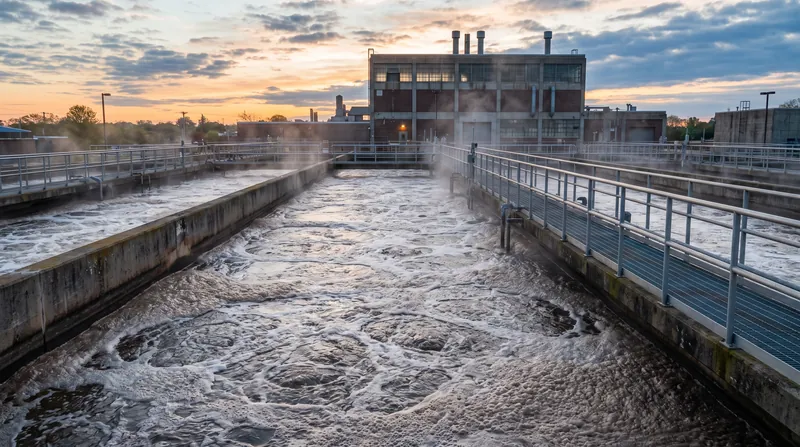
The Three Stages of the Activated Sludge Process: How Microorganisms Remove Organic Carbon and Nutrients from Wastewater
6 sources
Water Quality Standards
The 30 Percent Rule: How the Clean Water Act's Antidegradation Policy Protects High-Quality Waters from New Pollution
6 sources

Infrastructure Security
EPA Distributes $11.75 Million to Harden Water Infrastructure Against Cyber and Climate Threats
6 sources
Climate Systems
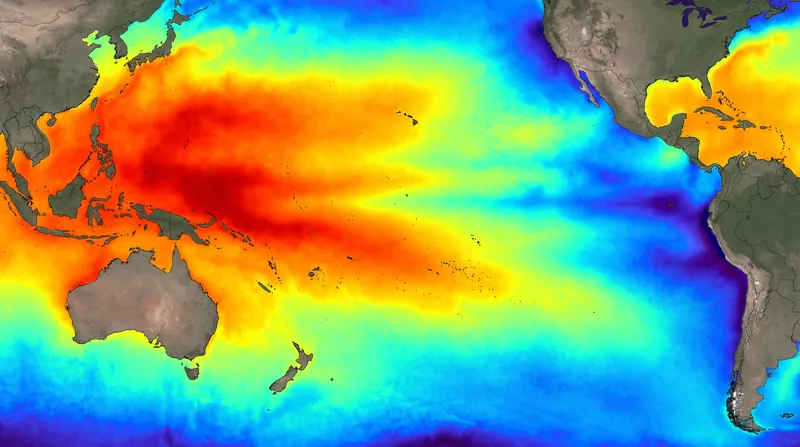
The Walker Circulation and Thermocline Tilt: How the El Niño-Southern Oscillation Controls Global Weather
4 sources
Comments
Every angle. Every day.
Get Environment stories with full source coverage and perspective breakdowns, free every day.