
WMO Report Confirms Decade-Long Decline in Global Freshwater Storage, Citing 2025 as One of Driest Years for River Flows
The World Meteorological Organization reports that 2025 was among the driest years for global river discharge in over three decades, continuing a ten-year decline in terrestrial water storage. The findings highlight an increasingly erratic hydrological cycle that is steadily depleting the planet's freshwater reserves.

- Climate Hydrologists
- Focus on the data showing a permanent destabilization of the historical water cycle.
- Resource Managers
- Highlight the infrastructural and economic risks of operating with depleted freshwater reserves.
- Vulnerable Communities
- Emphasize the immediate human cost of erratic water extremes in regions lacking monitoring infrastructure.
Perspectives this story doesn't cover
- Local Municipal Water Authorities
- Agricultural Sector Representatives
How we got here
2014
Global terrestrial water storage begins a persistent, decade-long decline.
1991–2020
The 30-year baseline period establishes historical norms for global river discharge.
2021–2025
The world experiences the fewest rivers maintaining normal flows since 1991.
2025
River discharge drops to one of its lowest levels in 35 years, with 36 percent of global basins below normal.
Why it matters
Freshwater reserves like groundwater and glaciers act as the planet's savings account, buffering communities against drought and heat. Their continued depletion means agricultural systems, energy grids, and municipal water supplies face higher risks of failure during extreme weather events.
In 2025, rivers worldwide experienced one of their driest years in more than three decades, marking a continuation of a decade-long decline in the Earth's terrestrial water storage. The World Meteorological Organization (WMO) confirmed the trend in its State of Global Water Resources 2025 report, revealing that 36 percent of the world's river basin areas saw below-normal discharge.[1][2]
Terrestrial water storage—which encompasses groundwater, soil moisture, lakes, rivers, and ice—has been steadily decreasing since 2014. WMO Secretary-General Celeste Saulo described these slow-responding reserves as the planet's "savings account," designed to absorb the shock of occasional dry seasons. "One of the central stories of the 2025 report is what is happening to that savings account. And the simple answer is that we are depleting it," Saulo stated during the report's launch in Geneva.[2]
The past seven years have seen the fewest rivers maintaining "normal" flows since 1991. According to the WMO, the number of river basins operating under normal conditions ranged between 34 percent and 38 percent in 2025, a stark contrast to the 46 percent average recorded between 1991 and 2020.[2]
The cryosphere is reflecting the same deficit. For the fourth consecutive year, every major glaciated region on Earth lost ice mass. Between 2023 and 2025, global glaciers shed approximately 1,400 gigatons of water. This volume is roughly equivalent to one-third of total annual freshwater withdrawals worldwide, or enough to fill 560 million Olympic-sized swimming pools.
For the fourth consecutive year, every major glaciated region on Earth lost ice mass.
Groundwater levels mirror the surface-level drying. In 2025, nearly two-thirds of monitored wells globally recorded conditions outside their historical norms. Rather than recovering, the balance of these subterranean reserves shifted further toward deficit compared to 2024. Persistent groundwater deficits were tracked across Central and Eastern Europe, the central United States, and parts of South America and Australia.
The WMO's findings were synthesized using data from 13 global hydrological models, including the Copernicus Emergency Management Service's Global Flood Awareness System (GloFAS). By integrating these models with satellite records and national observations, researchers mapped out regions where physical hydrological monitoring remains sparse or unavailable.
The data illustrates an increasingly erratic water cycle swinging between severe scarcity and extreme deluge. While regions like the Amazon basin and North America faced recurring deficits, parts of South and South-East Asia experienced above-normal river flows. The human cost of this volatility is heavily concentrated: over the past five years, Asia and Africa accounted for at least half of all recorded water-related extreme events and more than 80 percent of the associated fatalities.[3]
Moving forward, the strengthening of the El Niño weather pattern is expected to further amplify these extremes. Hydrologists and policymakers are now tasked with managing water systems that can no longer rely on the predictable, historical baselines of the past century, requiring a shift toward more resilient infrastructure and cross-border water management.[3]
What to know
- 2025 ranked among the driest years for global river discharge in over 35 years, with 36% of river basins seeing below-normal flows.
- Global terrestrial water storage, including groundwater and soil moisture, has been in a continuous decline since 2014.
- Glaciers worldwide lost approximately 1,400 gigatons of water between 2023 and 2025.
- Nearly two-thirds of monitored groundwater wells globally recorded conditions outside their historical norms in 2025.
- Asia and Africa accounted for over 80% of fatalities from water-related extreme events over the past five years.
Where opinion splits
Hydrological Researchers
Scientists emphasize the structural shift in the global water cycle away from historical predictability.
Researchers utilizing the 13 global hydrological models point out that the era of relying on the 1991–2020 baseline for water management is over. They argue that the erratic swings between drought and deluge represent a permanent destabilization of the water cycle, requiring new predictive models that account for depleted groundwater and retreating glaciers rather than assuming these "savings accounts" will replenish.
Transboundary Water Managers
Policy experts focus on the geopolitical and infrastructural challenges of managing shared, shrinking water basins.
For officials managing cross-border resources like the Danube or the Amazon, the WMO data underscores a looming governance crisis. They argue that as upstream reserves dwindle, international water-sharing agreements based on 20th-century flow rates will become mathematically impossible to honor, necessitating urgent renegotiations and investments in advanced monitoring systems to prevent regional conflicts over water access.
Sources
Source coverage
3 outlets
3 viewpoints surfaced



- [1]The GuardianVulnerable Communities
2025 was among driest years on record for world's rivers, study finds
Read on The Guardian → - [2]XinhuaVulnerable Communities
Global freshwater storage declines, glaciers continue to retreat: WMO
Read on Xinhua → - [3]Water News EuropeResource Managers
Global water trends are a cause for serious concern, WMO warns in recent report
Read on Water News Europe →
Comments
More in Environment
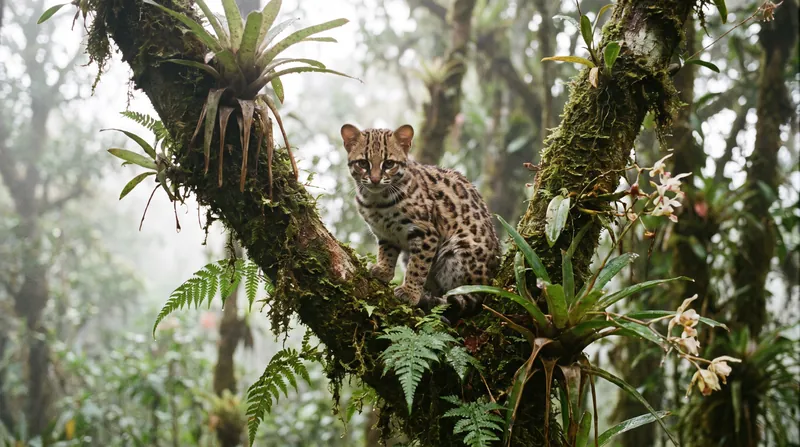
See all →Bolivian Wildlife
Scientists Name First New Wild Cat Species in Over a Century in Bolivia
5 sources
Soil Conservation
The R-Factor, K-Factor, and LS-Factor: How the Universal Soil Loss Equation Predicts Erosion Rates from Rainfall, Soil Type, and Topography
6 sources
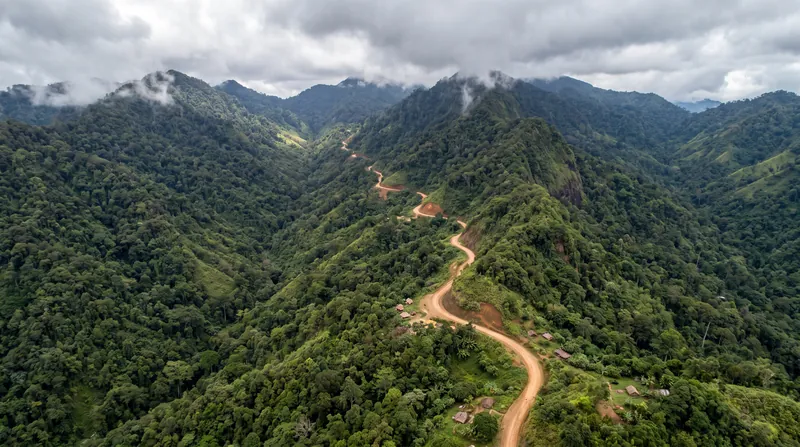
Seismic Event
Magnitude 6.4 Earthquake Strikes Papua New Guinea's Eastern Highlands
4 sources
Emissions Policy
EPA Rescinds Motor Vehicle Emissions Standards in Historic Deregulatory Shift
2 sources
Every angle. Every day.
Get Environment stories with full source coverage and perspective breakdowns delivered to your inbox.