
UFC Light Heavyweight Standings: Carlos Ulberg's Reign and the 205-Pound Race Under the Meta Rankings
The introduction of an AI-driven Elo ranking system has completely reshaped the UFC's 205-pound division, providing a transparent roadmap for contenders chasing newly crowned champion Carlos Ulberg.

The UFC's 205-pound division has undergone a radical transformation in the summer of 2026, marked by a new undisputed champion and a revolutionary approach to calculating the contenders chasing him. Carlos Ulberg sits atop the light heavyweight throne, having captured the belt in a stunning first-round knockout in April.[1][2]
But the race to challenge the New Zealand striker is now governed by cold, hard data. In June, the promotion rolled out the "Meta UFC Rankings," an Elo-based mathematical model designed to eliminate human bias from the standings.[1][4]
For years, the official rankings were dictated by a media voting panel, a system frequently criticized for subjectivity and stagnation. The new Meta algorithm evaluates fighters purely on performance metrics: opponent quality, activity rates, and a decay penalty for long layoffs.[4][7]
The system also places a premium on how a fight ends. Extra algorithmic weight is awarded for stoppage victories—knockouts and submissions—over decisions, incentivizing fighters to take risks rather than coasting to the final bell.[7]
The shift has provided immediate clarity to the light heavyweight title picture. Magomed Ankalaev officially holds the number two spot, mathematically rewarded for his consistent dominance and high-level strength of schedule.[4][5]
Right behind him is former champion Jiří Procházka at number three. Procházka is looking to rebuild his momentum after falling to Ulberg at UFC 327 in Miami, a bout that lasted just three minutes and 45 seconds before a perfect left hook ended the contest.[2][3]
Rounding out the top five are Paulo Costa and Jamahal Hill, both of whom remain in striking distance of a title eliminator bout under the new algorithmic criteria.[4][6]
However, the data-driven system has also produced a fascinating quirk at the very top of the list. Former champion Alex Pereira, who voluntarily vacated the 205-pound belt in March to pursue a historic run at heavyweight, is still mathematically ranked as the number one contender.[3][4]
Because the Meta algorithm strictly measures wins and losses within the weight class, Pereira’s flawless recent resume at light heavyweight keeps his Elo score artificially high, even though he is no longer actively competing in the division.[4][7]
This algorithmic ghost highlights the ongoing debate between data purists and traditional matchmakers. While the math provides an objective ladder, human context is still required to book the actual fights.[7][8]
The division currently finds itself in a holding pattern due to Ulberg's health. Just a week after winning the championship in front of a star-studded Miami crowd, the "Black Jag" suffered a torn ACL, sidelining him for the remainder of the year.[2][4]
Key points
- Carlos Ulberg captured the vacant light heavyweight title in April 2026 with a first-round knockout.
- The UFC introduced the data-driven Meta Rankings in June, replacing the human media voting panel.
- The Elo-based algorithm rewards strength of schedule and penalizes inactivity.
- Magomed Ankalaev and Jiří Procházka sit at the top of the active contender list.
- Ulberg is currently sidelined with an ACL injury, leaving the division to jockey for position.
How we got here
March 2026
Alex Pereira vacates the light heavyweight title to pursue a heavyweight championship.
April 11, 2026
Carlos Ulberg knocks out Jiří Procházka at UFC 327 to win the vacant 205-pound belt.
April 18, 2026
Ulberg suffers a torn ACL, temporarily pausing his title reign.
June 22, 2026
The UFC officially launches the data-driven Meta Rankings, reshaping the contender standings.
- Data-Driven Analysts
- Praise the Meta Rankings for removing human bias and rewarding objective strength of schedule.
- Traditionalists
- Argue that algorithms lack the nuanced context of weight-class changes and injuries.
- City Kickboxing Camp
- Focused on Ulberg's recovery and cementing his legacy as the undisputed champion.
Perspectives this story doesn't cover
- Fighters ranked outside the top 15 who feel the algorithm makes it harder to break into the standings without high-profile matchups
- Former media voting panel members who argue their qualitative analysis was valuable
Sources
Source coverage
8 outlets
3 viewpoints surfaced








- [1]UFCData-Driven Analysts
UFC Offers Innovative Approach To Athlete Rankings With New Meta UFC Rankings
Read on UFC → - [2]Al JazeeraCity Kickboxing Camp
UFC 327: Ulberg wins light-heavyweight belt with knockout
Read on Al Jazeera → - [3]SportsnetCity Kickboxing Camp
Jiri Prochazka, Carlos Ulberg to fight for lightweight title vacated by Alex Pereira
Read on Sportsnet → - [4]WikipediaData-Driven Analysts
UFC Rankings - Meta UFC Rankings
Read on Wikipedia → - [5]EventClockData-Driven Analysts
UFC Light Heavyweight Rankings 2026
Read on EventClock → - [6]FightSplitTraditionalists
Current UFC light heavyweight rankings: Champion: Carlos Ulberg
Read on FightSplit → - [7]Money MMATraditionalists
UFC Light Heavyweight Rankings - Performance Based
Read on Money MMA → - [8]FourOunceTraditionalists
Official UFC Light heavyweight rankings as published on March 24, 2026
Read on FourOunce →
More in Sports
See all →Trade
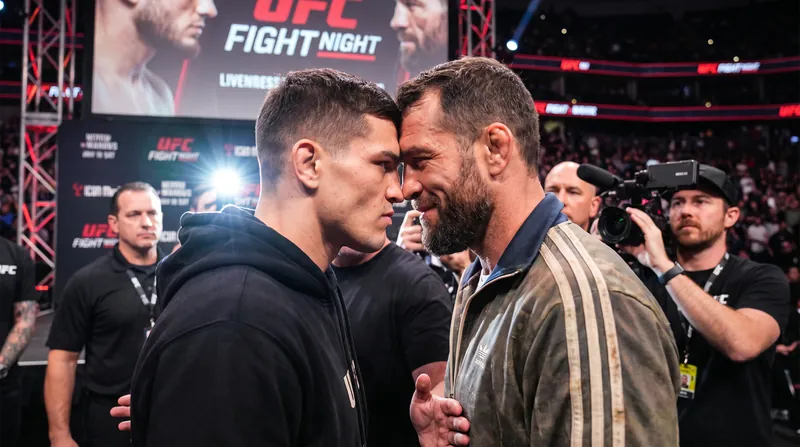
UFC Signs Former KSW Double Champion Roberto Soldic in Major Free Agency Move
7 sources
Recap
Salahdine Parnasse obliterates Dan Hooker in first round to cap historic UFC Paris
6 sources
Standings
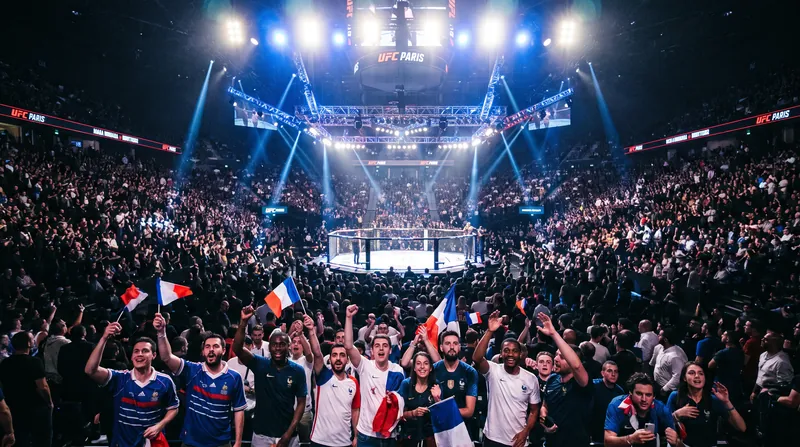
Song Yadong's Shanghai Knockout Upends UFC Bantamweight Title Race as Paris Looms
6 sources
Preview
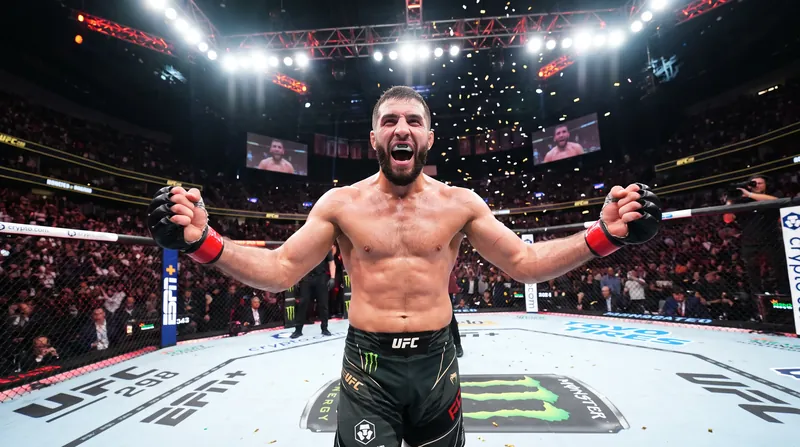
UFC Paris Preview: Dan Hooker Welcomes Salahdine Parnasse in High-Stakes Lightweight Main Event
5 sources
Comments
Every angle. Every day.
Get Sports stories with full source coverage and perspective breakdowns, free every day.