
UFC Injury Report: McGregor Begins ACL Rehab, Silva Survives Embolism, and Alvarez Steps Up for UFC 330
Conor McGregor has undergone surgery for a torn ACL as a wave of medical updates reshapes the UFC landscape, including Danny Silva's survival of a life-threatening blood clot and late replacements for UFC 330.

- Fighters & Camps
- Viewing injuries as an inevitable hurdle and an opportunity for short-notice advancement.
- Medical & Rehabilitation Experts
- Focusing on the severe physical toll of combat sports and the necessity of strict recovery timelines.
- Promotional Matchmakers
- Focused on the logistical challenges of keeping pay-per-view cards intact and the constant need for reliable backup fighters.
How we got here
July 11, 2026
Conor McGregor suffers a torn ACL and meniscus just 69 seconds into his UFC 329 main event against Max Holloway.
Late July 2026
Featherweight prospect Danny Silva is hospitalized with a life-threatening pulmonary embolism after collapsing during a run.
August 3, 2026
McGregor undergoes successful surgery to repair his knee, marking the fifth major operation of his career.
August 4, 2026
Joel Alvarez officially steps in to replace the injured Geoff Neal at UFC 330.
Why it matters
Injuries are reshaping the immediate future of the UFC, delaying the return of the sport's biggest star in Conor McGregor while simultaneously creating high-stakes opportunities for rising contenders to step up on short notice.
The physical toll of mixed martial arts is taking center stage this August, as a wave of medical updates reshapes the immediate future of the Ultimate Fighting Championship. From a former double-champion beginning a grueling road to recovery to a rising prospect surviving a life-threatening medical emergency, the latest injury reports highlight both the fragility and the extraordinary resilience of combat sports athletes. While injuries routinely derail highly anticipated matchups and alter divisional rankings, they also open the door for short-notice replacements to alter the trajectory of their careers. The current landscape is a testament to the sport's unpredictable nature, where survival and opportunity often go hand in hand.[7]
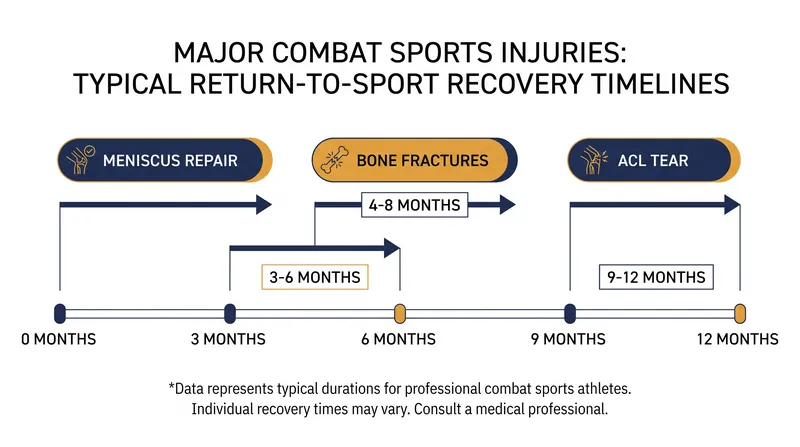
The most high-profile medical update surrounds former two-division champion Conor McGregor, who has officially begun his rehabilitation process. McGregor's highly anticipated return to the Octagon at UFC 329 ended in heartbreak on July 11, when his knee gave out just 69 seconds into his main event bout against Max Holloway. The official diagnosis revealed a torn anterior cruciate ligament (ACL) and meniscus, an injury that immediately halted his comeback and sent shockwaves through the mixed martial arts community. On August 3, McGregor confirmed that he had undergone surgery to repair the structural damage, marking the fifth major operation of his professional career.[1][2]
Despite the devastating setback, the Irish superstar has maintained a remarkably positive outlook regarding his recovery and eventual return to competition. In a video posted to his social media accounts on the day of his operation, McGregor appeared upbeat, telling his followers, "Off to get surgery today. Wish me well. I'm going to fuel up with a Mac Energy. Let's go. We got this." The surgery addresses the exact same combination of ACL and meniscus tears that McGregor suffered in his first encounter with Holloway over a decade ago, albeit on the opposite leg. Medical professionals anticipate a recovery timeline of approximately twelve months before he can resume full-contact training.[1][3]
The timeline for McGregor's return carries significant contractual implications, as the former champion currently has only one fight remaining on his UFC promotional agreement. McGregor has publicly pointed toward the summer of 2027 for a potential return, a timeline that aligns with the UFC's annual International Fight Week. He has already dubbed this prospective bout his "Last Dance," fueling widespread speculation that it could serve as his retirement fight or his transition into free agency. UFC President Dana White has firmly stated that the promotion will not engage in any matchmaking discussions until McGregor is fully cleared by his medical team, emphasizing that the immediate focus must remain entirely on physical therapy and rehabilitation.[1][4]
While McGregor faces a standard, albeit grueling, orthopedic recovery, UFC featherweight prospect Danny Silva is recovering from a harrowing and life-threatening medical emergency. The 28-year-old fighter, who holds a 3-1 record inside the Octagon, was recently hospitalized after suffering a sudden pulmonary embolism. According to reports, Silva had been training through what his team believed was a stubborn rib injury, utilizing traditional recovery methods like cupping and scraping to manage the localized discomfort and arm pain. However, the situation escalated dramatically during a routine three-mile run when his body began to shut down, prompting an immediate rush to the emergency room.[5]
The 28-year-old fighter, who holds a 3-1 record inside the Octagon, was recently hospitalized after suffering a sudden pulmonary embolism.
Medical scans at the hospital revealed a terrifying reality: a massive blood clot had formed in a neck vein, partially broken off, and traveled directly to Silva's lung. Doctors informed the featherweight that a pulmonary embolism of that magnitude carries a staggering 50 percent mortality rate. Remarkably, the medical staff credited Silva's elite cardiovascular conditioning and rigorous training regimen for his survival. "The fact that I was training, sparring, and pushing myself may have saved my life," Silva shared with his supporters after spending three nights under close medical observation. He is now undergoing a months-long medication protocol to dissolve the remaining clots, leaving his return to professional competition entirely uncertain.[5]
Beyond individual recoveries, the latest wave of injuries is actively forcing late reshuffles to upcoming pay-per-view events, creating high-stakes opportunities for fighters willing to step up on short notice. At UFC 330, scheduled for August 15 at the Xfinity Mobile Arena in Philadelphia, perennial welterweight contender Geoff Neal has been forced to withdraw from his scheduled clash against Chidi Njokuani due to an undisclosed injury. Neal's departure threatened to leave a significant hole in the event's main card, but the promotion quickly secured a replacement who was already in peak physical condition and ready to capitalize on the sudden vacancy.[6]
In a classic "next man up" scenario, Spanish standout Joel Alvarez has accepted the bout against Njokuani on roughly two weeks' notice. Alvarez, who boasts a formidable 23-4 professional record, was uniquely prepared for the opportunity. He had been specifically brought into lightweight champion Islam Makhachev's training camp to mimic the striking style of Ian Garry ahead of the UFC 330 main event. Having spent weeks training alongside the pound-for-pound great, Alvarez transitions directly from the practice room to the pay-per-view stage, looking to build upon his successful welterweight debut and secure a statement victory over the veteran Njokuani.[6]
The injury bug has also impacted the UFC's international schedule, specifically altering the marquee matchups for the promotion's return to the Middle East. Light heavyweight contender Khalil Rountree was forced to pull out of his highly anticipated main event clash against Magomed Ankalaev at UFC Abu Dhabi due to an undisclosed injury. The bout was widely viewed as a potential title eliminator in the 205-pound division, and Rountree's withdrawal temporarily pauses his momentum following a string of impressive knockout victories. For fans and matchmakers alike, these medical updates serve as a stark reminder of the sport's unpredictable nature, where the physical toll of training camps can alter the landscape just as quickly as a knockout punch.[7]
Ultimately, the reality of mixed martial arts dictates that the fight before the fight—surviving the grueling rigors of a professional training camp—remains the sport's most formidable opponent. The physical demands required to compete at the highest level of the Ultimate Fighting Championship leave virtually no athlete unscathed, forcing fighters to constantly navigate the delicate balance between peak performance and catastrophic injury. Whether it is a seasoned veteran like McGregor enduring his fifth surgical intervention, a young prospect like Silva surviving a near-fatal medical anomaly, or a hungry contender like Alvarez seizing a short-notice opportunity, the underlying narrative remains the same: the extraordinary endurance and unwavering resilience required to step inside the Octagon.[1][5][6]
What to know
- Conor McGregor underwent his fifth career surgery to repair a torn ACL and meniscus sustained at UFC 329.
- McGregor faces a 12-month recovery and is targeting a summer 2027 return for the final fight on his UFC contract.
- Featherweight Danny Silva survived a life-threatening pulmonary embolism, with doctors crediting his elite fitness for saving his life.
- Joel Alvarez stepped up on two weeks' notice to replace the injured Geoff Neal against Chidi Njokuani at UFC 330.
- Khalil Rountree was forced to withdraw from his UFC Abu Dhabi main event against Magomed Ankalaev due to an undisclosed injury.
Where opinion splits
Medical & Rehabilitation Experts
Focusing on the severe physical toll of combat sports and the necessity of strict recovery timelines.
Sports medicine professionals emphasize that the injuries sustained in mixed martial arts often require grueling, multi-tiered rehabilitation processes. In cases like Conor McGregor's ACL and meniscus tears, doctors stress that rushing back to full-contact sparring before the graft has fully integrated can lead to catastrophic re-injury. Furthermore, Danny Silva's pulmonary embolism highlights a hidden danger in combat sports: athletes frequently mask or misdiagnose severe internal issues as routine musculoskeletal pain, pushing their bodies to the brink of failure before seeking proper medical intervention.
Fighters & Camps
Viewing injuries as an inevitable hurdle and an opportunity for short-notice advancement.
For the athletes themselves, injuries are widely accepted as the cost of doing business in a high-impact profession. While long-term layoffs are devastating, the culture of the sport encourages extreme resilience and a 'next man up' mentality. Fighters like Joel Alvarez actively position themselves in elite training camps precisely to capitalize on the misfortune of others. By staying in peak physical condition year-round, these athletes view late-notice withdrawals not as logistical nightmares, but as the fastest route to securing high-profile matchups and climbing the divisional rankings.
Key terms
- Anterior Cruciate Ligament (ACL)
- A crucial ligament in the center of the knee that controls rotation and forward movement of the tibia, commonly torn in high-impact sports.
- Meniscus
- A piece of cartilage in the knee that acts as a shock absorber between the shinbone and thighbone.
- Pulmonary Embolism
- A sudden blockage in a lung artery, usually caused by a blood clot that travels to the lung from a vein in the leg or neck.
- Short-Notice Fight
- A bout accepted by a fighter with very little time to prepare, often stepping in to replace an injured athlete to keep an event intact.
Unanswered questions
- Whether Conor McGregor will actually return to the Octagon in 2027 or opt for retirement following his contract's expiration.
- If Danny Silva will ever be medically cleared to resume professional mixed martial arts after his pulmonary embolism.
- The exact nature of the undisclosed injuries that forced Geoff Neal and Khalil Rountree out of their respective bouts.
Reader questions
What injury did Conor McGregor suffer at UFC 329?
McGregor suffered a torn ACL and meniscus in his knee just 69 seconds into his bout against Max Holloway.
When is Conor McGregor expected to return to fighting?
Following his surgery in August 2026, McGregor is expected to face a 12-month recovery, with a potential return targeted for the summer of 2027.
What medical emergency did UFC fighter Danny Silva survive?
Silva was hospitalized with a sudden pulmonary embolism—a massive blood clot in his lung—after initially believing he was suffering from a rib injury.
Who is replacing Geoff Neal at UFC 330?
Joel Alvarez is stepping in on roughly two weeks' notice to replace the injured Geoff Neal against Chidi Njokuani.
Sources
Source coverage
7 outlets
3 viewpoints surfaced







[1]MiddleEasyFighters & Camps
Conor McGregor Heads Into Fifth Career Surgery After UFC 329 ACL And Meniscus Tear
Read on MiddleEasy →[2]India TimesFighters & Camps
Conor McGregor has confirmed that he underwent knee surgery
Read on India Times →[3]MMA WeeklyMedical & Rehabilitation Experts
Sport doctor provides shocking insight into Conor McGregor's injury
Read on MMA Weekly →[4]UFCPromotional Matchmakers
Dana White On Dricus Du Plessis, Kamaru Usman, Conor McGregor's Injury & More
Read on UFC →[5]Boxing NewsMedical & Rehabilitation Experts
Danny Silva Hospitalized After Pulmonary Embolism
Read on Boxing News →[6]SherdogFighters & Camps
Joel Alvarez replaces Geoff Neal and joins Islam Makhachev vs. Ian Garry card at UFC 330
Read on Sherdog →[7]RotoWirePromotional Matchmakers
MMA Injury News
Read on RotoWire →
Comments
Every angle. Every day.
Get sports stories with full source coverage and perspective breakdowns delivered to your inbox.