
Albuquerque City Council Puts Charter Amendment Limiting Mayor's Power Over City Attorney, Clerk on November Ballot
Albuquerque voters will decide in November whether to establish a joint selection committee for the city attorney and city clerk, diluting the mayor's unilateral appointment authority. The proposed charter amendment requires a two-thirds council supermajority for confirmation and strictly limits interim appointments.
By Nabil Faris

- Legislative Reformers
- Argues that key legal and record-keeping roles must be independent of executive control to ensure neutral governance.
- Executive Defenders
- Contends that the amendment is an inefficient expansion of government bureaucracy that complicates city management.
- Civic Observers
- Views the measure as part of a broader national trend toward distributed local power and legislative checks on mayors.
Perspectives this story doesn't cover
- Albuquerque Voters
- Current City Employees
- Good Government Advocacy Groups
At a glance
- Albuquerque voters will decide on a charter amendment limiting the mayor's appointment powers on November 3, 2026.
- The measure creates a four-member joint selection committee for the city attorney and city clerk.
- Confirmation of these roles would require a two-thirds supermajority vote from the city council.
- Interim appointments for these positions would be strictly capped at 270 days.
- Proponents argue it ensures political independence, while the mayor's office warns of increased bureaucracy.
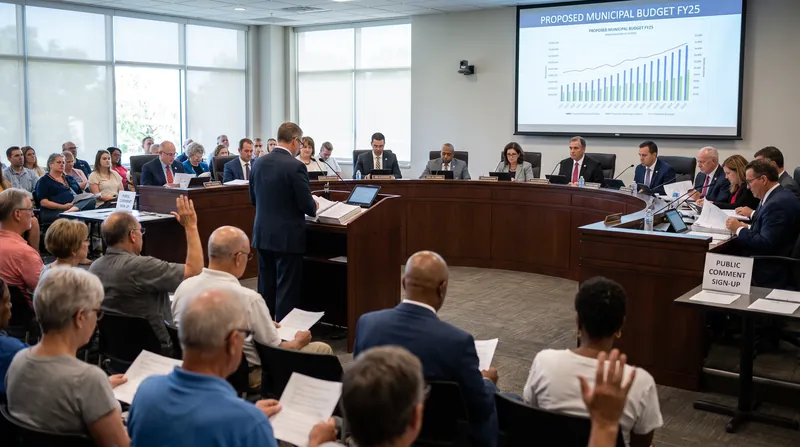
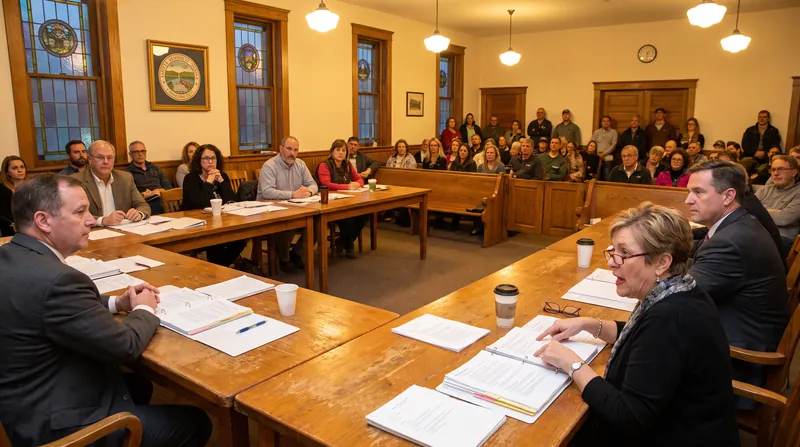
Albuquerque voters will head to the polls this November to decide whether to fundamentally restructure how the city appoints its top legal and record-keeping officials. On August 3, 2026, the Albuquerque City Council voted to place a significant charter amendment on the general election ballot, a move that would dilute the mayor's unilateral authority to hire the city attorney and city clerk. The decision marks a critical juncture in the city's ongoing debate over the balance of power between the executive and legislative branches, setting the stage for a high-stakes referendum on municipal governance.[1][2]
The actionable takeaway for residents is a proposed shift in the mechanics of municipal power. If passed, the measure establishes a joint selection process that requires equal input from both the executive and legislative branches before key positions can be filled. It tests whether voters prefer the traditional model of centralized executive authority or a more distributed, consensus-driven approach to local governance. For a city managing complex legal and administrative challenges, the outcome will dictate how insulated these critical roles are from the daily political priorities of the mayor's office.[2][6]
Currently, the mayor holds the primary power to appoint these key officials, a standard feature of many strong-mayor systems across the country. The new proposal, advanced through Proposition P-26-2 and Resolution R-26-30, replaces this unilateral authority with a four-member selection committee. This structural change is designed to force collaboration between the branches from the very beginning of the hiring process, rather than leaving the council to simply vote up or down on a candidate selected entirely by the executive.[1][2]
This proposed selection committee would be split evenly, with two members appointed directly by the mayor and two chosen by the city council. Their mandate is to conduct an open, competitive hiring process to recruit qualified candidates for both the city attorney and city clerk positions. By mandating equal representation on the search committee, the amendment ensures that neither branch can push forward a candidate without at least some level of buy-in from the other side of the municipal government.[1][2]
Once the committee selects a candidate, the confirmation process requires a significantly higher threshold than the current system. The city council must reach a two-thirds supermajority vote to confirm the appointments, a steep requirement intended to ensure that any successful candidate has broad, bipartisan legislative support. This supermajority rule effectively gives a minority bloc on the council the power to veto an appointment, forcing the selection committee to prioritize consensus candidates who can appeal to a wide spectrum of civic leaders.[1][2]
The amendment also addresses the tenure of interim appointments, a mechanism that frequently causes friction in municipal governments when permanent confirmations stall. Under the new rules, interim appointments for the city attorney and city clerk are strictly capped at 270 days. This hard limit is designed to prevent administrations from bypassing the formal confirmation process through indefinite temporary assignments, ensuring that acting officials do not become permanent fixtures without the required legislative oversight and supermajority approval.[1]
Removal powers are also adjusted under the proposed charter amendment, creating a more complex dynamic for dismissing top officials. The mayor retains the ability to remove either the city attorney or the city clerk at any time simply by formally notifying the council. However, the city council gains the independent authority to remove an interim city attorney if they can muster seven votes, providing the legislative branch with a direct mechanism to oust temporary appointees they deem unsuitable.[1]
Removal powers are also adjusted under the proposed charter amendment, creating a more complex dynamic for dismissing top officials.
The legislation was sponsored by City Council Vice President Dan Champine, who first introduced the concept of reforming the appointment process in May 2026. He argues that the city attorney and city clerk serve the entire municipal government and the public at large, not just the executive branch that appointed them. Champine maintains that these roles are fundamentally different from standard cabinet positions and require a higher degree of independence to function effectively and maintain public trust.[1][2]
Champine's stated goal is to insulate these specific roles from political pressure and partisan disputes that often characterize local government. By formally designating the offices as independent entities, proponents believe the city can better protect the integrity of its legal advice and the administration of its public records and elections. They argue that a city attorney accountable to both branches is more likely to provide objective legal counsel, rather than simply justifying the policy preferences of the current mayor.[1][2]
The proposal faces strong resistance from the current mayoral administration, which views the amendment as an unnecessary infringement on executive operations. A spokesperson for the mayor's office criticized the amendment as "ill-conceived," arguing that it would unnecessarily expand the size of the government bureaucracy and ultimately increase costs for taxpayers. The administration contends that the mayor needs the flexibility to build a cohesive team to execute the agenda voters elected them to implement, without navigating a cumbersome joint committee.[1]
The legislative debate over the measure reflects these sharply divided perspectives on municipal efficiency versus legislative oversight. The city council ultimately passed the proposition on a 6-3 vote, highlighting a significant but not unanimous appetite for structural reform among the city's elected representatives. Councilors Brook Bassan, Nichole Rogers, and Council President Klarissa Peña voted against the measure, aligning with the administration's concerns about the practical implications of diluting the mayor's hiring authority and complicating the city's administrative framework with new procedural hurdles.[1]
The push for structural reform follows recent tensions between the council and the executive branch over the handling of interim appointments. In early August, the council reviewed a report from the Office of the Inspector General regarding the interim city attorney, a document that Champine cited as evidence that the current system fails to provide clear, non-partisan legal guidance. This specific administrative friction served as a catalyst for the broader legislative effort to permanently alter the city's charter and redefine the boundaries of executive power.[3]
This ballot measure is part of a broader historical context of Albuquerque voters actively shaping their city charter to adjust the balance of power. In 2009, for example, voters approved an amendment that aligned the city attorney's term with the mayor's and required six council votes for approval or removal. The current proposal represents the next evolution in this ongoing civic dialogue, asking voters to decide if the reforms instituted nearly two decades ago are still sufficient for the city's modern governance needs.[4]
The November 3, 2026, election serves as a direct referendum on municipal power dynamics, placing the final decision squarely in the hands of the electorate. As cities across the United States grapple with the ongoing tension between executive efficiency and legislative oversight, Albuquerque's approach offers a real-world test case for establishing genuinely independent municipal offices. The outcome at the ballot box will likely be closely watched by governance analysts and other municipalities considering similar structural reforms to their own city charters in the coming years.[2][6]
Ultimately, the decision rests with the voters who will weigh the competing arguments of political independence versus administrative efficiency. The charter amendment process in New Mexico allows local governments to adapt their structures to evolving civic needs, provided the residents explicitly consent to the changes at the ballot box. Whether Albuquerque chooses to maintain its current strong-mayor framework or pivot toward a more collaborative, committee-driven appointment process will fundamentally shape the city's political landscape and the administration of its laws for the foreseeable future.[5][6]
Terms to know
- Charter Amendment
- A formal change to a city's foundational governing document, similar to a constitution, which typically requires voter approval.
- Supermajority
- A requirement for a proposal to gain a specified level of support greater than a simple majority, such as the two-thirds vote proposed for confirming appointments.
- Interim Appointment
- A temporary assignment to fill a vacant position until a permanent candidate is officially hired and confirmed.
- Separation of Powers
- The division of government responsibilities into distinct branches to limit any one branch from exercising the core functions of another.
Sources
Source coverage
6 outlets
3 viewpoints surfaced





- [1]City Desk ABQExecutive Defenders
Council to send charter change to Nov. ballot but the mayor's office warns of bigger government, higher costs
Read on City Desk ABQ → - [2]City of AlbuquerqueLegislative Reformers
City Council to Send Proposal to Voters to Ensure Independence of City Attorney and City Clerk
Read on City of Albuquerque → - [3]City of Albuquerque City CouncilLegislative Reformers
Council Vice President Dan Champine issues call for Mayor to submit Interim City Attorney for Council confirmation
Read on City of Albuquerque City Council → - [4]BallotpediaCivic Observers
Albuquerque City Charter Amendments (October 2009)
Read on Ballotpedia → - [5]Taos Municipal CodeCivic Observers
New Mexico Municipal Charter Amendment Procedures
Read on Taos Municipal Code → - [6]Factlen Editorial TeamCivic Observers
Synthesis by Factlen editorial team
Read on Factlen Editorial Team →
Comments

More in Community
See all →Urban Poverty
The Five Deprivations That Define a Slum Household in Global Monitoring
8 sources

Municipal Finance
The Three Revenue Pillars That Dictate Municipal Independence
9 sources
Governance Structures
The Distribution of Authority to the Lowest Competent Level of Governance
4 sources
Social Dynamics
The 25% Critical Mass That Causes a Minority Opinion to Overturn a Social Norm
7 sources

Every angle. Every day.
Get Community stories with full source coverage and perspective breakdowns delivered to your inbox.