
U.S. and Iranian Delegations Arrive in Switzerland to Negotiate Final Peace Deal
Vice President JD Vance and Iranian officials have converged in Switzerland to begin technical negotiations aimed at implementing a fragile 14-point preliminary ceasefire.
By Factlen Editorial Team
- U.S. Administration
- Focused on securing the Strait of Hormuz, stabilizing global energy markets, and curbing Iran's nuclear ambitions.
- Iranian Government
- Demanding immediate sanctions relief and a complete halt to Israeli military operations as prerequisites for a final deal.
- Israeli Leadership
- Furious at the U.S.-Iran deal, refusing to be bound by it, and vowing to maintain military operations in Lebanon.
- International Mediators
- Focused on keeping both sides at the negotiating table to prevent a regional economic and security collapse.
What's not represented
- · Lebanese Civilians
- · Gulf State Energy Exporters
- · European Union Diplomats
Why this matters
The technical negotiations in Switzerland will determine whether the fragile ceasefire between the U.S. and Iran holds, directly impacting global energy prices, the security of the Middle East, and the trajectory of Israel's ongoing military operations in Lebanon.
Key points
- U.S. and Iranian delegations have arrived in Switzerland for technical negotiations on a final peace agreement.
- The talks aim to implement a 14-point preliminary ceasefire signed by Presidents Trump and Pezeshkian.
- Negotiators have a 60-day window to resolve disputes over sanctions relief, nuclear limits, and the Strait of Hormuz.
- Israel has rejected the U.S.-brokered deal and vowed to continue its military operations in southern Lebanon.
- Pakistan, Qatar, and Switzerland are acting as key mediators to prevent the fragile agreement from collapsing.
U.S. Vice President JD Vance and a high-level Iranian delegation have arrived in Switzerland to launch critical technical negotiations aimed at implementing a fragile preliminary agreement to end the months-long war between the United States, Israel, and Iran.[1][2]
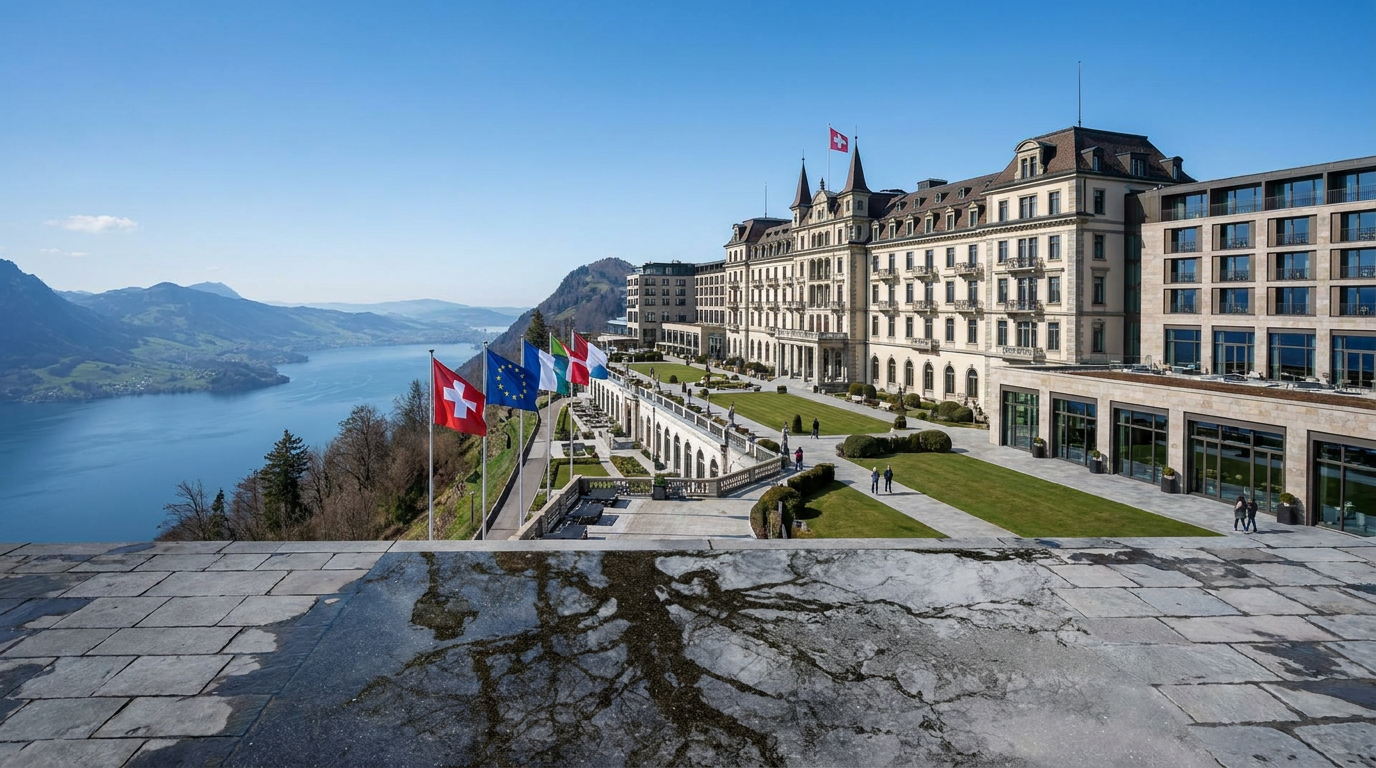
The talks, hosted at the heavily guarded Bürgenstock resort near Lucerne, mark the beginning of a tense 60-day sprint. Negotiators are tasked with translating a broad 14-point Memorandum of Understanding (MOU)—digitally signed last week by U.S. President Donald Trump and Iranian President Masoud Pezeshkian—into a durable geopolitical settlement.[2][4]
Vance, who told reporters he hopes to make immediate progress on both Iran's nuclear program and the Lebanon ceasefire, is joined by special envoy Steve Witkoff and presidential adviser Jared Kushner. The Iranian delegation is led by Parliament Speaker Mohammad Bagher Ghalibaf and Foreign Minister Abbas Araghchi, accompanied by senior banking and oil officials focused on securing sanctions relief.[3][4][5][8]
The preliminary agreement was brokered after 110 days of intense conflict that began with coordinated U.S. and Israeli strikes on Iranian facilities in February. In retaliation, Tehran effectively blockaded the Strait of Hormuz, a vital maritime chokepoint, sending shockwaves through global energy markets and prompting frantic diplomatic intervention by regional powers.[2][6][8]

The 14-point framework mandates an immediate and permanent halt to military operations on all fronts, the lifting of the U.S. naval blockade, and the reopening of the Strait of Hormuz to commercial vessels. It also establishes a 60-day window for the two nations to negotiate the future of Iran's enriched uranium stockpile and the phased removal of crippling U.S. sanctions.[2][3][4]
However, the ink on the digital MOU was barely dry before the agreement faced severe stress tests. Over the weekend, Iran's central military command threatened to close the Strait of Hormuz once again, citing continuous Israeli ceasefire violations in southern Lebanon.[3][4]
U.S. Central Command quickly disputed Tehran's claim, stating that Iran does not exercise control over the international waterway and that commercial traffic continues to flow safely under the watch of vigilant U.S. naval forces.[2][3]
The most volatile friction point remains Lebanon. While the U.S.-Iran memorandum explicitly calls for an end to hostilities on all fronts, including the Lebanese border, Israel was not a direct party to the negotiations and has fiercely rejected the framework.[6][7]

Israeli Prime Minister Benjamin Netanyahu and his hardline cabinet ministers have denounced the deal as a strategic disaster that leaves Iran's nuclear infrastructure intact while potentially funneling billions of dollars into Tehran's economy. National Security Minister Itamar Ben Gvir stated bluntly that the agreement does not bind Israel and fails to safeguard its security.[6][7]
National Security Minister Itamar Ben Gvir stated bluntly that the agreement does not bind Israel and fails to safeguard its security.
Defying Washington's push for a comprehensive regional truce, Israeli leadership has vowed to maintain its military presence in southern Lebanon indefinitely, insisting that the campaign to dismantle Hezbollah will continue regardless of the diplomatic proceedings in Switzerland.[3][6]
The rift has exposed deep domestic fractures within Israel. Netanyahu is facing intense criticism from political rivals who accuse him of leading the country into a devastating war alongside the Trump administration, only to be sidelined and outmaneuvered when Washington abruptly pivoted toward a diplomatic exit.[6][7]
In Switzerland, the Iranian delegation is expected to take a hard line on economic deliverables. Foreign Ministry spokesman Esmaeil Baghaei warned that Tehran is pressing for the immediate implementation of U.S. commitments, stating that if Washington fails to deliver on sanctions relief, the entire understanding will collapse.[4]

A particularly contentious element of the draft agreement is a proposed $300 billion regional reconstruction package for Iran, intended to be financed by neighboring Gulf states. The provision has sparked intense domestic blowback in the United States, forcing the Trump administration to navigate a political minefield while trying to keep Tehran at the negotiating table.[2][6]
To bridge the vast divide, international mediators are playing a central role at the Bürgenstock resort. Pakistani Prime Minister Shehbaz Sharif and Army Chief Asim Munir, who were instrumental in brokering the initial ceasefire, have arrived to facilitate the technical discussions alongside Qatari and Swiss diplomats.[2][8]
For the global economy, the stakes could not be higher. The resumption of toll-free oil shipments through the Strait of Hormuz has already provided massive relief to international markets, but analysts warn that the current arrangement is highly fragile and heavily dependent on the outcome of the 60-day negotiation window.[2][8]
As Vance and his Iranian counterparts sit down behind closed doors, they face the monumental task of untangling decades of hostility. The coming days will determine whether the 14-point memorandum serves as the foundation for a new Middle Eastern security architecture, or merely a temporary pause before the region plunges back into open warfare.[1][8]
How we got here
February 2026
The U.S. and Israel launch coordinated military strikes against Iranian nuclear and military facilities.
March 2026
Iran effectively blockades the Strait of Hormuz, sending global energy markets into turmoil.
Mid-June 2026
U.S. President Donald Trump and Iranian President Masoud Pezeshkian digitally sign a 14-point preliminary ceasefire agreement.
June 20, 2026
Delegations from the U.S., Iran, and mediating nations arrive in Switzerland to begin technical implementation talks.
Viewpoints in depth
U.S. Administration's View
Securing the Strait of Hormuz and curbing Iran's nuclear ambitions are the immediate priorities.
For the U.S. delegation, the primary objective is stabilizing global energy markets by ensuring the Strait of Hormuz remains open and toll-free. Vice President JD Vance has emphasized that the 60-day negotiation window must yield concrete, verifiable limits on Iran's nuclear program. The administration views the preliminary deal as a necessary pragmatic step to untangle the U.S. from a costly regional war, even if it requires navigating intense pushback from domestic critics and Israeli allies.
Iranian Government's View
Sanctions relief and a complete halt to Israeli military operations are non-negotiable requirements for a final deal.
Tehran approaches the Switzerland talks with a focus on economic survival, demanding the immediate lifting of U.S. sanctions and the unfreezing of foreign assets as stipulated in the 14-point memorandum. Iranian officials have warned that the entire agreement is at risk if the U.S. fails to rein in Israeli strikes in Lebanon. For Iran, the preliminary deal is a transactional pause, and they maintain that any permanent peace hinges on a strict 'commitment for commitment' approach from Washington.
Israeli Leadership's View
The U.S.-Iran deal is a dangerous capitulation that leaves Israel's security threats intact.
Israeli officials across the political spectrum view the preliminary agreement as a strategic disaster. Prime Minister Benjamin Netanyahu and his hardline cabinet members argue that the deal funnels billions to Tehran while leaving its nuclear infrastructure and proxy networks largely untouched. Furious at being sidelined in the negotiations, Israel has explicitly stated it is not bound by the U.S.-brokered ceasefire and intends to maintain its military campaign against Hezbollah in southern Lebanon indefinitely.
What we don't know
- Whether the U.S. and Iran can reach a final agreement on nuclear limits within the 60-day window.
- How the proposed $300 billion reconstruction fund for Iran will be financed or managed.
- If Israel's continued military operations in Lebanon will ultimately cause Iran to abandon the peace talks.
Key terms
- Strait of Hormuz
- A critical maritime chokepoint between the Persian Gulf and the Gulf of Oman, through which roughly 20% of the world's global oil supply passes.
- Memorandum of Understanding (MOU)
- A preliminary, non-binding agreement outlining the broad terms of a ceasefire and a framework for future negotiations.
- Bürgenstock Resort
- A luxury alpine resort in Switzerland frequently used for high-level international diplomatic summits.
Frequently asked
What is the 14-point memorandum of understanding?
It is a preliminary framework signed by the U.S. and Iran to halt military operations, reopen the Strait of Hormuz, and establish a 60-day window to negotiate a final peace agreement.
Who is representing the United States in Switzerland?
Vice President JD Vance is leading the U.S. delegation, joined by special envoy Steve Witkoff and presidential adviser Jared Kushner.
How has Israel reacted to the U.S.-Iran deal?
Israeli leadership, including Prime Minister Benjamin Netanyahu, has fiercely criticized the agreement, stating Israel is not bound by it and will continue its military operations in Lebanon.
Is the Strait of Hormuz currently open?
While Iran recently threatened to close the strait again over Israeli strikes in Lebanon, U.S. Central Command maintains that the waterway remains open to commercial traffic.
Sources
Source coverage
8 outlets
4 viewpoints surfaced








[1]The New York TimesU.S. Administration
Mideast Live Updates: New Round of U.S.-Iran Talks Set to Start in Switzerland
Read on The New York Times →[2]The Washington PostU.S. Administration
U.S. Vice President JD Vance landed Sunday in Switzerland
Read on The Washington Post →[3]The Times of IsraelIsraeli Leadership
Vance heads to Switzerland, says hoping for progress on Lebanon truce and nuclear issue
Read on The Times of Israel →[4]Anadolu AgencyIranian Government
Iran to send delegation to Switzerland to press 'implementation' of US commitments on war-ending deal
Read on Anadolu Agency →[5]Fox NewsU.S. Administration
Vance departs for Switzerland as Iran negotiations continue
Read on Fox News →[6]PBS NewsHourIsraeli Leadership
Israelis angry over U.S.-Iran peace deal lash out at Netanyahu
Read on PBS NewsHour →[7]The GuardianIsraeli Leadership
Trump may survive the humiliation of the Iran deal. Netanyahu will not
Read on The Guardian →[8]Radio Free Europe / Radio LibertyInternational Mediators
US-Iran Talks Revived As Vance Heads To Switzerland For High-Stakes Push
Read on Radio Free Europe / Radio Liberty →
More in news politics
See all 7 stories →Peace Negotiations
US and Iranian Delegations Open High-Stakes Peace Talks in Switzerland
8 sources
Labour Leadership
Keir Starmer Expected to Resign as UK Prime Minister Amid Labour Mutiny
6 sources
Misinformation Defense
Fact-Checking the 'Cognitive Vaccine': Does Prebunking Actually Stop Misinformation?
6 sources

Border Policy
Human Rights Groups Sue Canada Over Deportation of Asylum Seekers to U.S.
6 sources
Every angle. Every day.
Get news politics stories with full source coverage and perspective breakdowns delivered to your inbox.