
The Subscription Trade-Off: How Appliance Manufacturers Are Shifting From Product Sales to 'Home as a Service' Models
Major appliance brands are transitioning from one-time hardware sales to monthly subscriptions that bundle the machine, maintenance, and consumables. This 'Home as a Service' model promises zero repair bills and automatic upgrades, fundamentally changing how consumers outfit their kitchens and laundry rooms.
By Tiago Sousa

Share this story
In short
- Major appliance brands are shifting from one-time sales to monthly 'Home as a Service' subscriptions.
- Subscriptions cover the hardware, predictive maintenance, and automatic consumable delivery.
- The model incentivizes manufacturers to build more durable, easily repairable machines, reducing e-waste.
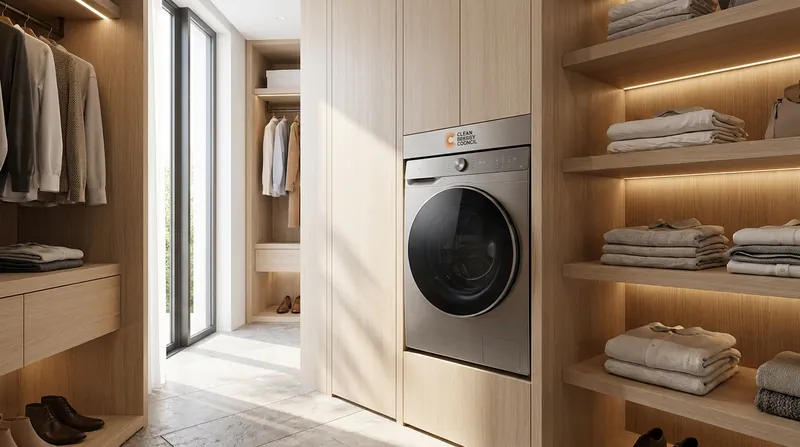
For decades, outfitting a home meant a heavy capital expenditure: a lump sum dropped at a big-box retailer for a metal box that would slowly degrade over ten years. Today, the appliance industry is fundamentally restructuring that relationship. Major manufacturers are aggressively pivoting away from one-time hardware sales toward a model known as 'Home as a Service' (HaaS). Instead of buying a washing machine or refrigerator outright, consumers pay a monthly subscription fee that covers the hardware, predictive maintenance, automatic consumable delivery, and eventual hardware upgrades.[1][2]
This shift mirrors the software industry's transition from boxed CD-ROMs to cloud subscriptions, but applied to 200-pound kitchen appliances. The HaaS model is designed to transform unpredictable consumer behavior into a steady, predictable stream of recurring revenue. For a flat fee—typically ranging from $25 to $55 a month depending on the appliance tier—the manufacturer retains ownership of the machine while the consumer purchases the utility of clean clothes or cold food.[4]
In practice, the mechanism relies heavily on the internet of things (IoT). Modern appliances are packed with sensors that monitor cycle efficiency, motor vibration, and component wear. Under a subscription model, this telemetry is beamed directly back to the manufacturer. If a water pump begins to draw excess current, the system flags the anomaly and automatically dispatches a technician with the correct replacement part before the machine actually fails.[2][5]
From a business perspective, the motivation is clear. Hardware margins in the white-goods sector have been squeezed by global supply chain pressures and intense competition. By shifting to a subscription model, manufacturers can increase their profit margins by an estimated 15 to 20 percent over a five-year lifecycle. They are no longer fighting for a single point-of-sale transaction; they are securing a multi-year relationship that effectively locks the consumer into their ecosystem.[1][4]
This servitization model also fundamentally changes how companies design their products. When a manufacturer sells a washing machine outright, their financial incentive is to build it as cheaply as possible while surviving the warranty period. When the manufacturer owns the machine and is responsible for all maintenance costs, the math flips. It becomes highly profitable to build incredibly durable, modular machines where individual components can be swapped out in minutes.[3]
For consumers, the immediate appeal is the elimination of financial anxiety. A sudden $400 repair bill for a blown compressor or a fried control board is a significant burden for most households. Under the HaaS model, maintenance is entirely the manufacturer's problem. If the machine breaks, it is fixed or replaced at no additional cost. This predictable operational expenditure is highly attractive to younger demographics and renters who value flexibility over asset ownership.[3]
Furthermore, the subscription model often includes the automated delivery of consumables. Smart washing machines detect when detergent is running low and automatically trigger a shipment, perfectly calibrated to the machine's specific dispensing system. While this offers undeniable convenience, it also creates a closed-loop ecosystem that prevents consumers from shopping around for cheaper third-party detergents, further padding the manufacturer's bottom line.[2][5]
Environmental economists have largely praised the shift, pointing to its potential to supercharge the circular economy. Currently, millions of appliances end up in landfills because the cost of a single repair exceeds the depreciated value of the machine. Under a leasing model, the manufacturer has a strong financial incentive to retrieve the hardware at the end of a subscription, refurbish it, and redeploy it to a secondary market.
This closed-loop system could reduce appliance e-waste by up to 40 percent. By retaining ownership of the raw materials—steel, copper, and rare-earth magnets—manufacturers insulate themselves against commodity price shocks while dramatically lowering the carbon footprint associated with producing net-new machines. The appliance becomes a temporary vessel for materials that the company will eventually reclaim.[3]
However, the financial trade-off for the consumer becomes apparent over a longer time horizon. Consumer advocacy groups have run the numbers, revealing that over a standard seven-year lifecycle, a subscriber will pay significantly more than the outright purchase price of the machine, even when factoring in an average repair cost. The convenience and peace of mind come with a steep premium.
The most significant drawback is the lack of equity. After paying $40 a month for five years—totaling $2,400—the consumer owns nothing. If they face financial hardship and cancel the subscription, the manufacturer reclaims the appliance, leaving the household without essential infrastructure. This dynamic shifts power away from the homeowner and centralizes it with corporate entities.[5]
There are also growing concerns about software lock-in and feature paywalls. Because the hardware is controlled via the cloud, manufacturers can theoretically alter the terms of service, throttle performance, or charge premium tiers for specific wash cycles or rapid-cooling features. The appliance in your kitchen is no longer a static object; it is a dynamic service surface that can be monetized in real-time.[5]
Accessibility remains a critical question. Subscription models require credit checks and a reliable banking history. Low-income households, which would benefit most from avoiding sudden repair bills, are often the ones excluded from these leasing programs due to credit requirements. This threatens to create a two-tiered system where affluent consumers enjoy seamless, upgraded smart homes while others are relegated to a deteriorating secondary market of legacy hardware.[3]
Deciding whether to subscribe or buy requires a careful break-even analysis. Consumers must weigh their desire for the latest technology and hassle-free maintenance against the long-term cost of a perpetual lease. For those who move frequently or want to preserve capital, the subscription is a rational choice. For those who plan to stay in their homes for a decade, traditional ownership remains the most cost-effective path.[3]
Looking ahead, the industry is moving toward bundled 'kitchen tier' subscriptions. Instead of leasing a single refrigerator, consumers will subscribe to a comprehensive package that outfits the entire kitchen and laundry room for a single monthly fee, complete with synchronized smart-home integration and unified maintenance schedules.[1]
The transition from product to service is reshaping the American home. Just as consumers adapted to leasing smartphones and subscribing to software, the normalization of appliance subscriptions appears inevitable. The challenge for the next decade will be ensuring that this shift toward convenience and sustainability does not come at the cost of consumer autonomy and financial fairness.[4]
Jargon, explained
- Home as a Service (HaaS)
- A business model where consumers pay a recurring fee for the use and maintenance of home infrastructure rather than purchasing the hardware outright.
- Servitization
- The transition of a company from selling physical products to selling the services and outcomes those products provide.
- Predictive Maintenance
- The use of sensors and data analysis to detect potential equipment failures and schedule repairs before a breakdown actually occurs.
- Circular Economy
- An economic system aimed at eliminating waste and the continual use of resources by keeping products, equipment, and infrastructure in use for longer.
Common questions
Can I still buy an appliance outright?
Yes, traditional purchasing remains available. However, manufacturers are increasingly reserving their most advanced smart features and longest warranties for their subscription tiers.
What happens if the subscribed appliance breaks?
Under the HaaS model, the manufacturer is responsible for all maintenance. They will dispatch a technician to repair or replace the unit at no additional cost to the consumer.
Do I need good credit to get an appliance subscription?
Generally, yes. Because the manufacturer is leasing thousands of dollars worth of hardware, most programs require a credit check, which can exclude lower-income households.
Competing readings
Industry Proponents
Argue that servitization provides predictable revenue, incentivizes durable manufacturing, and offers consumers a hassle-free experience.
For manufacturers and business analysts, the shift to subscriptions is a necessary evolution to escape the low-margin trap of hardware sales. By securing recurring revenue, companies can better forecast supply chain needs and invest in higher-quality components. Proponents argue that consumers ultimately benefit because the manufacturer's financial incentive is finally aligned with the machine's longevity; it is cheaper for the company to build a washing machine that lasts ten years than to replace a cheap one every three years.
Consumer Protection Advocates
Warn that subscriptions cost more long-term, strip consumers of equity, and create risks of software lock-in and feature paywalls.
Consumer watchdogs caution that 'Home as a Service' is fundamentally a financialization of basic domestic needs. While the elimination of upfront costs is attractive, the cumulative cost of a subscription quickly outpaces the retail price of the appliance. Furthermore, advocates warn about the loss of the 'right to repair' and the danger of software lock-in, where manufacturers could arbitrarily raise monthly fees or put basic features—like a heavy-duty wash cycle—behind premium paywalls, leaving the consumer with no alternative but to comply or lose their appliance.
Sustainability Advocates
Support the shift as a necessary step toward a circular economy that reduces e-waste and raw material extraction.
Environmental economists view the leasing model as one of the most viable paths to a circular economy. When consumers own appliances, broken machines are frequently sent to landfills because labor costs make repairs uneconomical. When manufacturers retain ownership, the appliance becomes a temporary vessel for valuable raw materials. Companies are incentivized to retrieve the hardware, harvest the steel, copper, and microchips, and redeploy them, drastically reducing the carbon footprint associated with mining and manufacturing net-new goods.
- Industry Proponents
- Argue that servitization provides predictable revenue, incentivizes durable manufacturing, and offers consumers a hassle-free experience.
- Consumer Protection Advocates
- Warn that subscriptions cost more long-term, strip consumers of equity, and create risks of software lock-in and feature paywalls.
- Sustainability Advocates
- Support the shift as a necessary step toward a circular economy that reduces e-waste and raw material extraction.
Perspectives this story doesn't cover
- Independent appliance repair technicians
Sources
Source coverage
5 outlets
3 viewpoints surfaced





- [1]BloombergIndustry Proponents
Whirlpool and Bosch Accelerate Shift to Appliance Subscriptions
Read on Bloomberg → - [2]The VergeConsumer Protection Advocates
Valve will finally let you build your own Steam Machine with SteamOS for desktop
Read on The Verge → - [3]Factlen Editorial Team
Synthesis by Factlen editorial team
Read on Factlen Editorial Team → - [4]Financial TimesIndustry Proponents
Appliance makers seek recurring revenue as hardware margins shrink
Read on Financial Times → - [5]WiredConsumer Protection Advocates
Meta Is Charging a Subscription for Smart Glasses Features. Welcome to the New Era of Consumer Tech
Read on Wired →
More in Shopping & Reviews
See all →Appliance Recalls
The $500 Refund: How to Claim Your Cuisinart Grill Recall Payout After Shattering Glass Reports
3 sources
Appliance Market
The Repair Trade-Off: How California's Right-to-Repair Law Reshapes Appliance Shopping
1 sources
Kitchen Tech
How 120-Volt Battery Stoves Are Finally Making Induction Cooking Accessible
5 sources
Appliance Tech
How 120V Heat Pump Washer-Dryer Combos Are Rewriting the Rules of Laundry
3 sources
Comments
Every angle. Every day.
Get Shopping & Reviews stories with full source coverage and perspective breakdowns, free every day.