
The Space Economy Hits Mainstream Markets as SpaceX Goes Public and Rocket Lab Joins Nasdaq-100
The commercial space sector is officially entering mainstream retail portfolios this month, driven by SpaceX's historic $1.75 trillion IPO and Rocket Lab's inclusion in the Nasdaq-100 index.
By Factlen Editorial Team
- Commercial Space Operators
- Focusing on rapid iteration and massive scale to capture the trillion-dollar orbital market.
- Institutional Investors
- Evaluating the space sector as a high-growth but highly capital-intensive addition to mainstream portfolios.
- Regulatory & Defense Agencies
- Monitoring the geopolitical and security implications of private control over orbital infrastructure.
What's not represented
- · Retail Investors
- · Legacy Aerospace Contractors
Why this matters
For decades, investing in space exploration was restricted to venture capitalists and government budgets. The events of June 2026 mean that the trillion-dollar orbital economy is now directly accessible to everyday retail investors and embedded into standard retirement accounts.
Key points
- SpaceX is executing the largest IPO in history, raising $75 billion at a $1.75 trillion valuation.
- Rocket Lab will join the Nasdaq-100 index on June 22, forcing passive funds to buy its shares.
- The global space economy is projected to grow from roughly $630 billion today to $1.8 trillion by 2035.
- Commercial activities now account for 78% of all space sector revenue, replacing government contracts.
- Satellite broadband and Earth observation data are the primary revenue drivers, not just rocket launches.
- The sector remains highly capital intensive, requiring massive upfront investments to build orbital infrastructure.
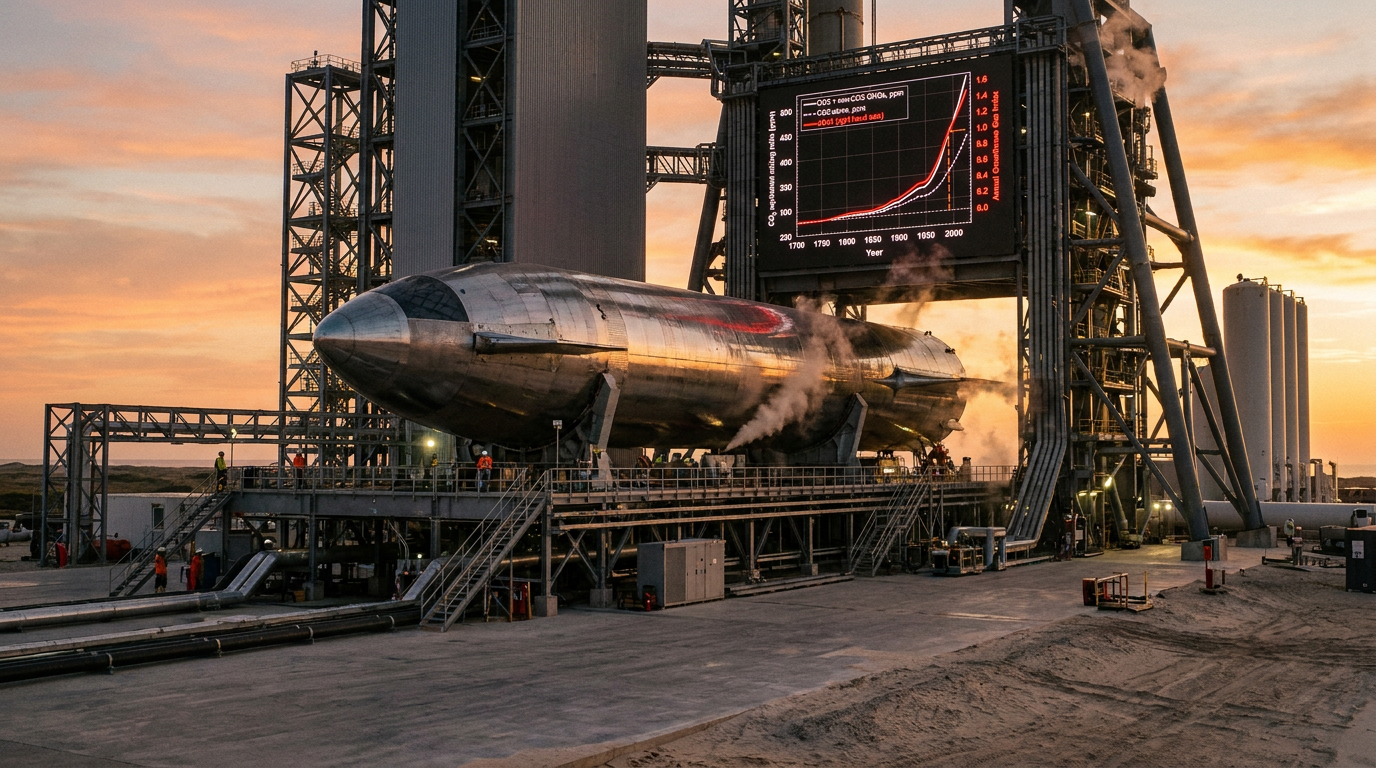
June 2026 marks the definitive moment the space economy crosses the threshold from venture-capital frontier to mainstream retail investment. For decades, the cosmos was the exclusive domain of government agencies and billionaire passion projects, operating far outside the reach of standard portfolios. Now, the infrastructure of low-Earth orbit is being packaged, priced, and integrated into the core holdings of everyday investors.[6]
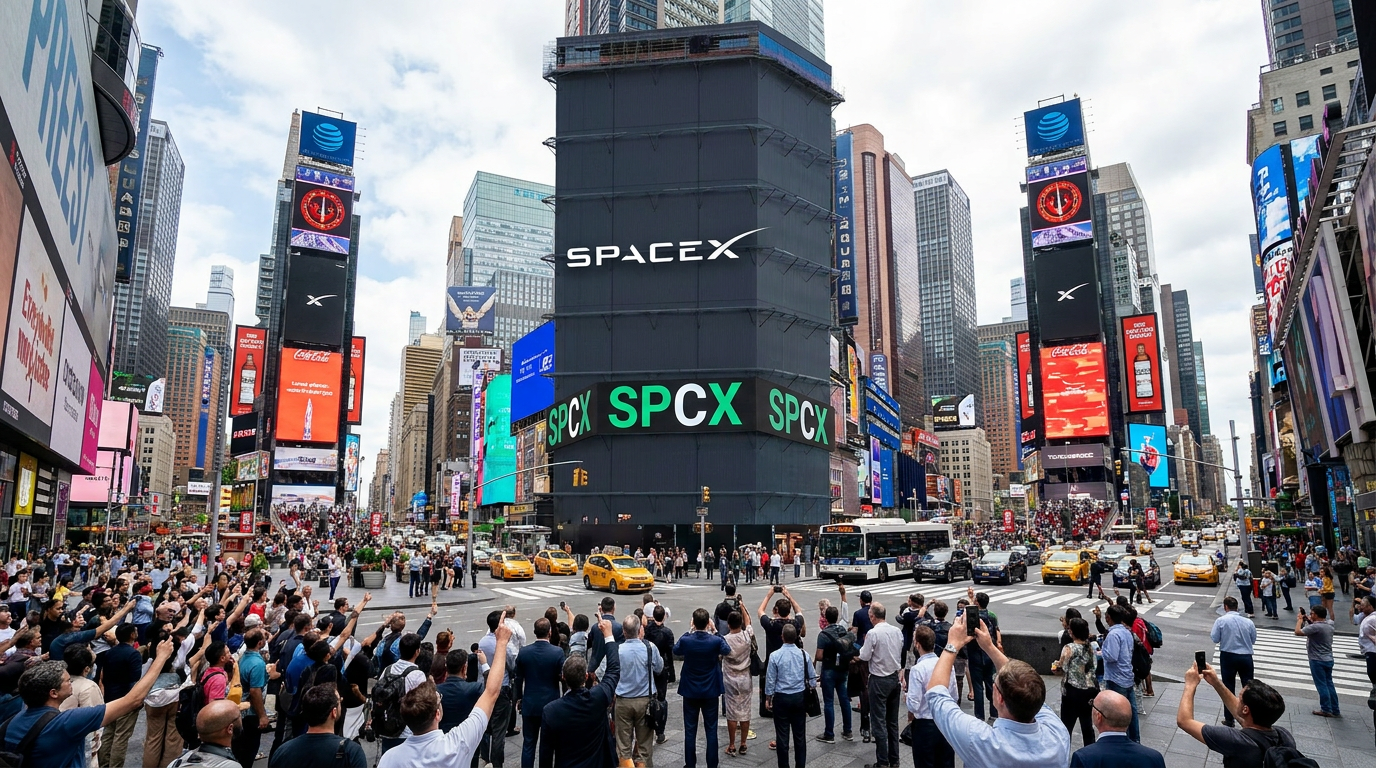
The primary catalyst for this shift is the historic initial public offering of Space Exploration Technologies Corp., universally known as SpaceX. Pricing its shares at $135, the company is executing a public debut that radically reshapes the aerospace sector and the broader financial markets.[2][4]
By seeking to raise $75 billion, SpaceX is orchestrating the largest IPO in stock market history, comfortably eclipsing the $29.4 billion record set by Saudi Aramco in 2019. At this pricing, the company commands a valuation of approximately $1.75 trillion, instantly making it one of the most valuable publicly traded entities on Earth and providing unprecedented liquidity to its early backers.[2][4]

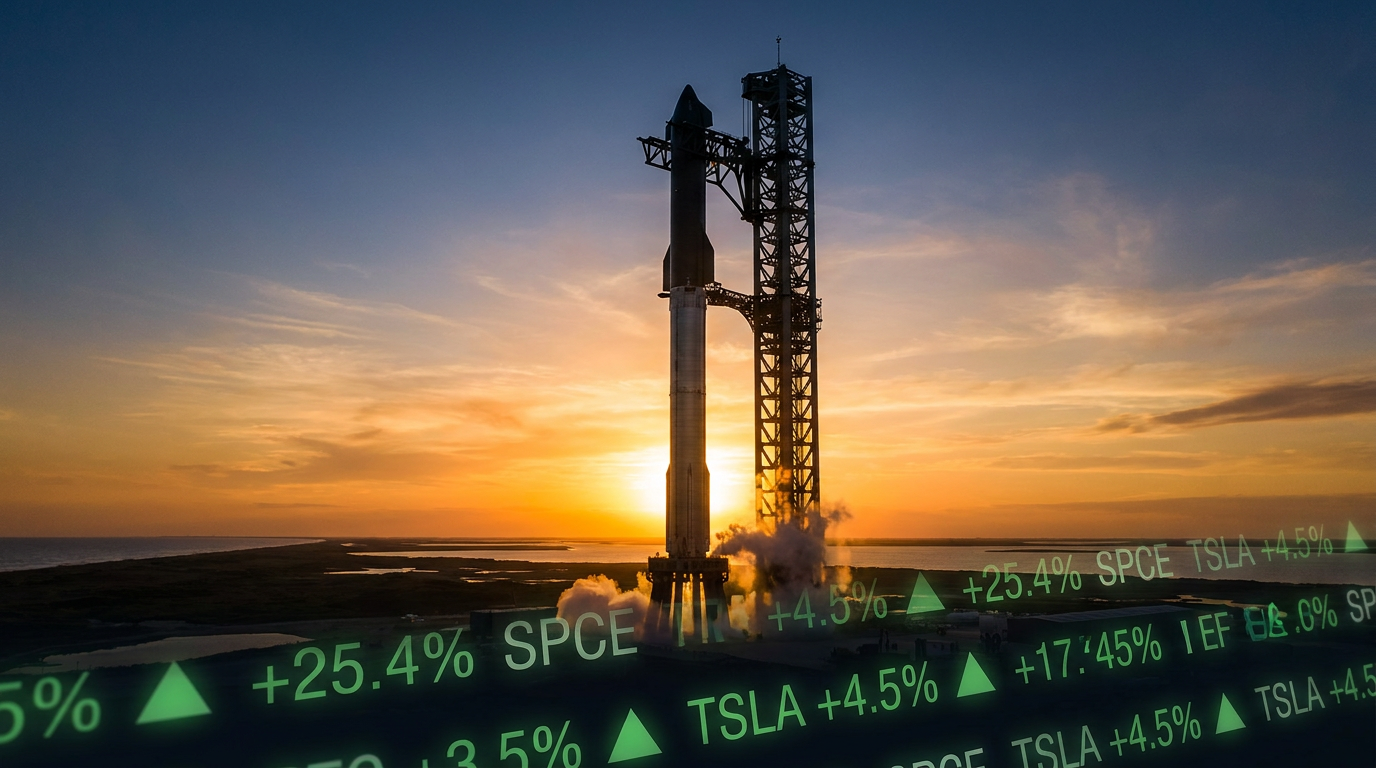
But SpaceX is not acting alone in this market maturation. In a parallel milestone, Rocket Lab—a pioneer in small-satellite launch services—is scheduled to join the Nasdaq-100 index prior to the market open on June 22, cementing its status as a foundational technology stock.[1]
Inclusion in the Nasdaq-100 is far more than a symbolic victory. The index tracks the 100 largest non-financial companies listed on the exchange and serves as the benchmark for over $800 billion in passive investment products. When Rocket Lab enters the index, countless mutual funds and exchange-traded funds will be mandated to purchase its shares, embedding commercial space exposure into millions of retirement accounts automatically.[1][6]
These dual milestones reflect a profound structural shift in how the space sector generates wealth. The global space economy, currently valued between $470 billion and $630 billion, is projected to reach $1.8 trillion by 2035, driven by an insatiable demand for orbital data and connectivity.[3][5]

Crucially, the fundamental economic engine of space has inverted. During the Apollo and Space Shuttle eras, cost-plus government contracts accounted for nearly all aerospace spending. Today, commercial activities drive 78% of total space revenue, with private enterprise dictating the pace of innovation and absorbing the initial financial risks.[5]
Crucially, the fundamental economic engine of space has inverted.
This commercial dominance was unlocked by a single technological breakthrough: reusability. By landing and refurbishing orbital boosters, companies transformed rockets from bespoke, single-use monuments into operational freight vehicles. This aircraft-like cadence has slashed the cost of reaching low-Earth orbit by more than 90% over the past decade, making entirely new business models viable.[4][6]

However, while rockets capture the public imagination, they are merely the delivery trucks for the true economic engines of the space economy. The vast majority of sector revenue flows from the payloads those rockets carry—specifically, the rapidly expanding market for satellite services.[5]
Satellite broadband is currently the fastest-growing segment of the industry. SpaceX's Starlink constellation, which now boasts over 7,000 active satellites, has proven that space-based internet can reliably serve remote populations, maritime fleets, and commercial aviation, generating billions in recurring subscription revenue that terrestrial telecoms struggle to match.[4][5]

Beyond communications, the Earth observation market is expanding at a 15% compound annual growth rate. Constellations of imaging and radar satellites now provide real-time data that underpins global agriculture, supply chain logistics, climate monitoring, and defense intelligence, creating a downstream data market worth over $150 billion.[5]
Despite these massive revenue streams, the financial realities of the space economy remain brutally capital intensive. The prospectus filed with the Securities and Exchange Commission reveals the staggering costs required to maintain orbital dominance and build next-generation hardware.[4]
SpaceX, for instance, reported a $4.28 billion net loss in the first quarter of 2026 alone. Building next-generation heavy-lift vehicles and deploying tens of thousands of broadband satellites requires a cash burn rate that few companies can survive. The $75 billion raised in the IPO is not a victory lap; it is the necessary fuel for the next decade of infrastructure development.[4][6]
Furthermore, as these companies transition to public markets, they face unprecedented regulatory scrutiny. Quarterly earnings pressures may conflict with the decades-long timelines required for deep-space exploration or Mars colonization. Additionally, the geopolitical implications of private corporations controlling critical orbital infrastructure are prompting new oversight from global defense agencies.[2][6]
Ultimately, the events of June 2026 signal that the space economy has matured beyond its pioneering phase. The infrastructure is built, the launch costs are manageable, and the financial markets have opened their doors. The race is no longer simply about reaching orbit; it is about building a sustainable, trillion-dollar economy above the atmosphere.[3][6]
How we got here
August 2021
Rocket Lab goes public on the Nasdaq via a SPAC merger, securing capital to expand its small-satellite launch operations.
2024–2025
Satellite broadband constellations, led by SpaceX's Starlink, achieve commercial viability and experience massive global subscriber growth.
April 2026
SpaceX confidentially submits its draft registration statement to the SEC, beginning the formal IPO process.
June 12, 2026
SpaceX prices its historic IPO at $135 per share, targeting a record-breaking $1.75 trillion valuation.
June 22, 2026
Rocket Lab officially joins the Nasdaq-100 index, cementing the space sector's presence in mainstream institutional portfolios.
Viewpoints in depth
Commercial Space Operators
Focusing on rapid iteration and massive scale to capture the trillion-dollar orbital market.
For the companies actually building the hardware, the public markets represent a necessary evolution rather than a final destination. Operators argue that the capital required to build next-generation heavy-lift rockets and deploy tens of thousands of broadband satellites simply cannot be sustained by private venture capital alone. By tapping into public markets, they secure the war chests needed to transition from launch providers to comprehensive space infrastructure monopolies, capturing recurring revenue from global communications and Earth observation data.
Institutional Investors
Evaluating the space sector as a high-growth but highly capital-intensive addition to mainstream portfolios.
Wall Street views the events of June 2026 as the moment space became an investable asset class for the masses. Analysts emphasize that while the top-line growth projections are staggering—reaching $1.8 trillion by 2035—the path to profitability remains fraught. Institutional investors are particularly focused on the tension between the massive capital expenditures required for orbital infrastructure and the quarterly earnings expectations of public markets. Index inclusion for companies like Rocket Lab provides a baseline of passive support, but active managers remain cautious about the sector's cash burn rates.
Regulatory & Defense Agencies
Monitoring the geopolitical and security implications of private control over orbital infrastructure.
As commercial entities scale their operations and enter the public markets, global regulators and defense agencies are increasing their scrutiny. The reliance of modern militaries and global supply chains on privately owned satellite networks has transformed these companies into geopolitical actors. Regulators are grappling with how to oversee public corporations that control critical national security infrastructure, balancing the need for commercial innovation with the imperative to protect sovereign interests in low-Earth orbit.
What we don't know
- How public market quarterly earnings pressures will affect the long-term, capital-intensive research and development required for deep space exploration.
- Whether the projected $1.8 trillion space economy by 2035 will materialize if launch costs plateau or if satellite broadband adoption slows.
- How global regulators will handle the geopolitical complexities of private corporations controlling the majority of the world's orbital communications infrastructure.
Key terms
- Low-Earth Orbit (LEO)
- An Earth-centered orbit with an altitude of 2,000 kilometers or less, favored for broadband constellations and Earth observation satellites due to its proximity to the surface.
- Nasdaq-100
- A major stock market index made up of 100 of the largest non-financial companies listed on the Nasdaq exchange, heavily tracked by passive investment funds.
- Earth Observation
- The gathering of information about the physical, chemical, and biological systems of the planet via remote-sensing technologies, usually satellites.
- Capital Intensity
- A financial metric indicating how much capital is required to generate revenue; the space industry requires massive upfront investment in infrastructure before generating returns.
Frequently asked
Why is SpaceX going public now?
SpaceX requires massive capital to fund the deployment of its next-generation Starlink satellites and to develop its Starship heavy-lift rocket, which are critical for its long-term growth and Mars colonization goals.
What does Rocket Lab joining the Nasdaq-100 mean?
It signifies that Rocket Lab is now one of the 100 largest non-financial companies on the Nasdaq. This forces passive index funds and ETFs that track the index to automatically purchase its shares, increasing institutional ownership.
How do commercial space companies generate revenue?
While rocket launches generate significant income, the vast majority of the industry's revenue comes from satellite services, including broadband internet subscriptions, GPS navigation, and Earth observation data.
Sources
Source coverage
6 outlets
3 viewpoints surfaced






[1]MarketWatchInstitutional Investors
Rocket Lab and these four stocks are joining the Nasdaq 100, with SpaceX waiting in the wings
Read on MarketWatch →[2]BNN BloombergInstitutional Investors
Elon Musk's SpaceX is about to make its debut on Wall Street. What to know.
Read on BNN Bloomberg →[3]World Economic ForumRegulatory & Defense Agencies
The Global Space Economy: Projections to 2035
Read on World Economic Forum →[4]U.S. Securities and Exchange CommissionCommercial Space Operators
Space Exploration Technologies Corp. Form S-1 Registration Statement
Read on U.S. Securities and Exchange Commission →[5]SpaceNexus Market IntelligenceCommercial Space Operators
Global Space Economy Segment Breakdown 2026
Read on SpaceNexus Market Intelligence →[6]Factlen Editorial TeamInstitutional Investors
Synthesis by Factlen editorial team
Read on Factlen Editorial Team →
Every angle. Every day.
Get finance stories with full source coverage and perspective breakdowns delivered to your inbox.