
The Solid-State Era Begins: How the 'Holy Grail' of EV Batteries is Finally Leaving the Lab
After a decade of bold promises, 2026 marks the year solid-state batteries transition from theoretical chemistry to physical manufacturing. With pilot lines now active, the technology promises to double EV range and cut charging times to just 10 minutes.
By Factlen Editorial Team
- Battery Innovators & Startups
- Focused on rapid commercialization and the immediate performance benefits of next-generation cell chemistry.
- Legacy Automakers
- Prioritizing supply chain integration, rigorous safety validation, and a measured rollout strategy.
- Industry Skeptics & Analysts
- Highlighting the massive cost disparities and the immense difficulty of defect-free manufacturing at scale.
What's not represented
- · Raw material mining communities
- · Independent EV repair technicians
Why this matters
Solid-state batteries promise to eliminate EV range anxiety and fire risks while cutting charge times to just 10 minutes. As pilot production lines finally open in 2026, this technology is poised to fundamentally reshape the automotive industry and accelerate the global transition away from fossil fuels.
Key points
- 2026 is widely considered 'year one' for solid-state battery pilot production.
- Replacing liquid electrolytes with solid ceramics drastically improves safety and energy density.
- New cells are targeting 400-500 Wh/kg, enabling over 1,000 km of range.
- Charging times could drop to just 10-15 minutes for a near-full charge.
- Major players like QuantumScape and Toyota are currently spinning up automated pilot lines.
- High manufacturing costs mean mass-market adoption is likely delayed until 2030.
For the electric vehicle industry, 2026 is rapidly becoming known as "year one" for the technology that will define the next generation of transportation. After a decade of bold promises, missed deadlines, and incremental lab breakthroughs, the elusive solid-state battery is finally making the leap into the physical world.[2]
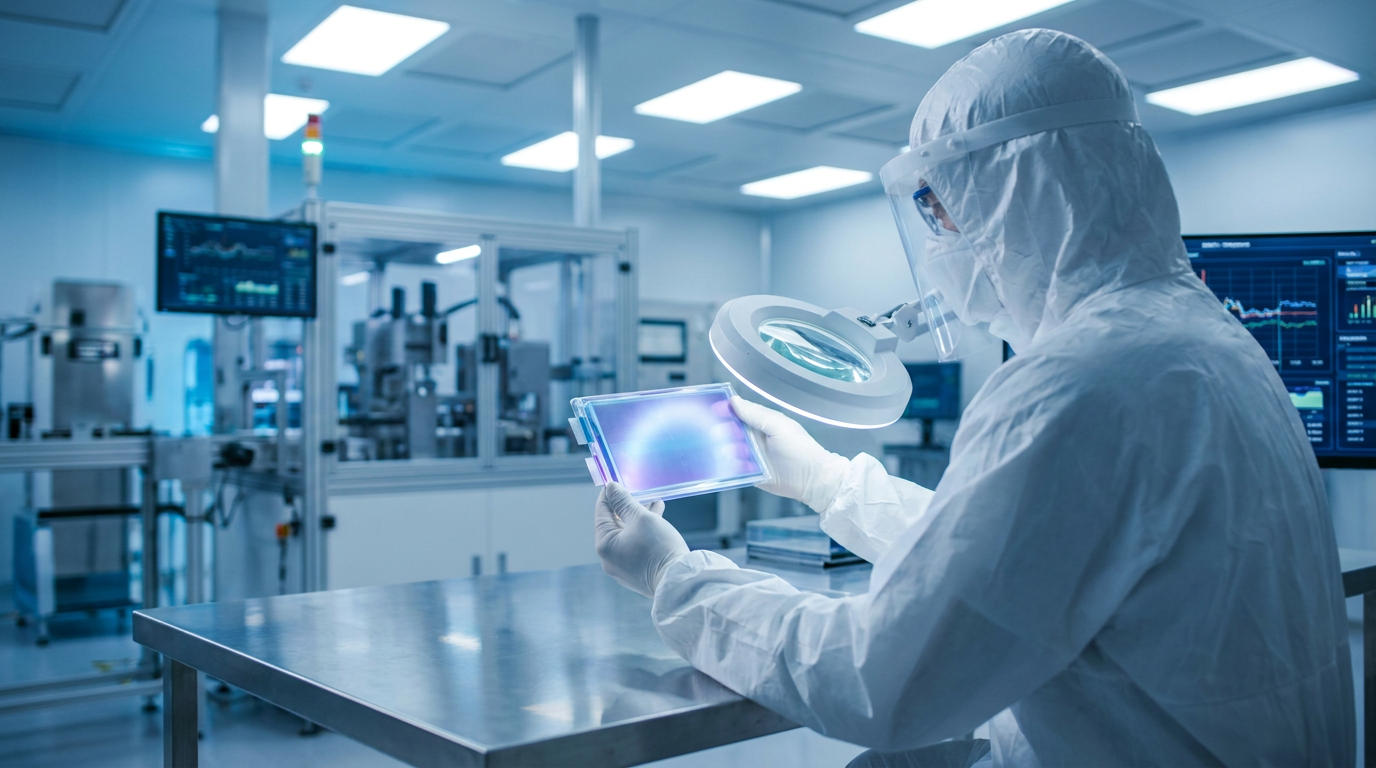
In the first half of this year, the landscape has shifted definitively from theoretical chemistry to physical manufacturing. Companies across the globe are turning on multi-million-dollar pilot lines, securing massive supply chain partnerships, and installing early cells into test vehicles that are hitting the test tracks today.[1][3]
To understand why this breakthrough matters, you have to look inside a conventional lithium-ion cell. Today's batteries rely on a liquid electrolyte—a chemical "soup" that allows lithium ions to flow back and forth between the anode and cathode during charging and discharging.
That liquid is the Achilles' heel of modern EVs. It is highly flammable, prone to degrading over time, and severely limits how fast the battery can accept a charge without overheating or forming dangerous, needle-like metal spikes called dendrites.

Solid-state technology solves this by replacing that liquid with a solid material—typically a specialized ceramic, polymer, or sulfide glass. This simple structural swap fundamentally changes the physics and safety profile of the battery.[5]
Because the solid electrolyte is non-flammable and physically blocks dendrites from growing, engineers can safely swap the traditional graphite anode for one made of pure lithium metal. This single design change dramatically increases the amount of energy the cell can store.
The performance numbers are striking. While today's best lithium-ion cells hover around 200 to 300 watt-hours per kilogram (Wh/kg), the solid-state cells rolling off 2026 pilot lines are consistently targeting 400 to 500 Wh/kg.[2][7]

For the driver, this translates to a massive leap in daily capability. A vehicle equipped with a first-generation solid-state pack could achieve 600 to 750 miles (1,000 to 1,200 kilometers) of range on a single charge, all while weighing significantly less than current EVs.[3]
For the driver, this translates to a massive leap in daily capability.
Charging speeds also see a paradigm shift. Because solid electrolytes handle heat far better than liquids, these batteries can safely absorb massive amounts of power. Leading developers are currently demonstrating 10-to-15-minute charge times to go from 10% to 80% capacity—bringing the EV charging experience remarkably close to a traditional gas station visit.[1][3]
The manufacturing race to commercialize these benefits is now fully underway. In February 2026, California-based QuantumScape inaugurated its "Eagle Line" in San Jose, a highly automated facility designed to serve as the blueprint for gigawatt-hour scale manufacturing.[1][8]
A key feature of the Eagle Line is QuantumScape's proprietary "Cobra" process, which manufactures the critical ceramic separators up to 25 times faster than previous methods. The facility is deliberately designed not just to produce test cells, but to prove to automotive partners that the technology can be scaled reliably.[5][8]

Meanwhile, Toyota—the global leader in solid-state patents—has partnered with Japanese oil refiner Idemitsu Kosan to build a large-scale solid electrolyte pilot plant. Slated for completion in 2027, the facility aims to produce hundreds of tons of sulfide-based electrolytes annually, securing the supply chain for Toyota's upcoming vehicle launches.[3]
Chinese manufacturers are pushing equally aggressive timelines. Companies like Greater Bay Technology (GBT) and Gotion have announced that their "A-sample" solid-state cells have successfully passed rigorous safety tests, with targets set for gigawatt-hour scale manufacturing by the end of the decade.[2]
We are also seeing the first commercial applications hit the streets in smaller packages. At CES 2026, Estonian startup Donut Lab showcased an electric motorcycle from Verge equipped with a solid-state pack, promising a full charge in under ten minutes—though the claims have been met with some industry skepticism pending independent verification.[7]
Indeed, the transition to solid-state is not without significant hurdles, the largest of which is cost. Currently, all-solid-state cells cost between 1.6 and 2.2 yuan per Wh—roughly three to five times the price of mainstream liquid batteries.[2]

Scaling up the manufacturing of microscopic ceramic layers without introducing defects is notoriously difficult. A single microscopic crack or impurity in the solid electrolyte during high-speed production can ruin the entire cell, making quality control a massive engineering challenge.[5][6]
Because of these manufacturing complexities, industry veterans are urging caution regarding immediate mass-market adoption. Experts from Tsinghua University and General Motors have noted that while pilot lines are active today, true mass-market penetration will likely cluster around 2030.[4][6]
In the near term, solid-state batteries are finding homes in sectors where weight and safety are paramount. Defense contractors, drone manufacturers, and even AI data centers are actively testing solid-state cells, providing crucial early revenue streams as automakers prepare for vehicle integration.[8]
Ultimately, 2026 will be remembered as the inflection point for energy storage. The fundamental chemistry has proven it works; the remaining challenge for the industry is proving it can be built cheaply and reliably by the millions.[6]
How we got here
2020-2024
Heavy R&D phase; automakers and startups file thousands of patents for solid-state chemistry.
2025
Early semi-solid batteries begin appearing in niche vehicles and consumer electronics.
Early 2026
QuantumScape inaugurates its 'Eagle Line' pilot facility; Chinese manufacturers announce A-sample cells.
2027-2028
Projected window for the first limited-production passenger EVs equipped with all-solid-state batteries.
2030
Industry consensus target for widespread mass-market commercialization and cost parity.
Viewpoints in depth
Battery Innovators & Startups
Focused on rapid commercialization and the immediate performance benefits of next-generation cell chemistry.
Companies like QuantumScape and Greater Bay Technology argue that the fundamental science of solid-state batteries is now solved. Their focus has shifted entirely to manufacturing execution. By utilizing proprietary manufacturing techniques—such as QuantumScape's 'Cobra' process for ceramic separators—these innovators believe they can rapidly scale production to gigawatt-hour levels. They view the immediate deployment of pilot lines as proof that the era of the liquid lithium-ion battery is coming to an end, unlocking unprecedented range and 10-minute charging times.
Legacy Automakers
Prioritizing supply chain integration, rigorous safety validation, and a measured rollout strategy.
Automotive giants like Toyota are taking a highly systematic approach to the solid-state transition. Rather than rushing unproven cells to the mass market, they are investing heavily in the underlying supply chain, partnering with materials giants like Idemitsu Kosan to ensure a steady supply of sulfide-based solid electrolytes. Legacy automakers view 2026 as a critical testing phase, targeting 2027 or 2028 for limited-batch premium vehicles. Their ultimate goal is absolute reliability and safety before scaling the technology to their millions of mainstream consumers by 2030.
Industry Skeptics & Analysts
Highlighting the massive cost disparities and the immense difficulty of defect-free manufacturing at scale.
Battery analysts and academic experts, including researchers at Tsinghua University, caution against the hype surrounding early pilot lines. They point out that current solid-state cells cost three to five times more than traditional lithium-ion batteries. Furthermore, manufacturing microscopic ceramic layers without introducing a single defect is notoriously difficult at high speeds. These skeptics argue that while the technology works perfectly in a lab or a low-volume pilot facility, achieving the economies of scale necessary to reach the 'one-yuan per watt-hour' threshold will take at least another four to five years.
What we don't know
- Exactly how quickly the manufacturing defect rate can be reduced to make the cells profitable.
- Which specific solid electrolyte material (sulfide, polymer, or oxide) will ultimately dominate the global market.
- How well these first-generation solid-state cells will hold up after 10+ years of real-world driving and fast-charging.
Key terms
- Solid Electrolyte
- A solid material (often ceramic or sulfide-based) that conducts ions between the battery's anode and cathode, replacing flammable liquids.
- Energy Density
- The amount of energy a battery can store relative to its weight, typically measured in watt-hours per kilogram (Wh/kg).
- Dendrites
- Microscopic, needle-like metal structures that can grow inside a liquid battery during charging, potentially causing short circuits and fires.
- Lithium-Metal Anode
- A battery component made of pure lithium that stores significantly more energy than the traditional graphite anodes used in today's EVs.
Frequently asked
What makes a solid-state battery different?
It replaces the flammable liquid electrolyte found in standard lithium-ion batteries with a solid material, like a ceramic or polymer. This makes the battery significantly safer and allows it to store much more energy.
When can I buy a car with a solid-state battery?
While pilot production began in 2026, the technology will likely debut in premium, high-end vehicles between 2027 and 2028. Widespread mass-market availability is expected around 2030.
Why are they so expensive right now?
Manufacturing microscopic solid electrolytes at high speeds without introducing any defects is highly complex. This engineering challenge keeps current production costs three to five times higher than traditional batteries.
Sources
Source coverage
8 outlets
3 viewpoints surfaced








[1]ElectrekBattery Innovators & Startups
QuantumScape inaugurates Eagle Line pilot for solid-state battery production
Read on Electrek →[2]GasgooIndustry Skeptics & Analysts
Solid-state batteries enter 'year one' of mass production in 2026
Read on Gasgoo →[3]Driven Car GuideLegacy Automakers
Toyota, Idemitsu move solid-state battery tech from lab to production scale
Read on Driven Car Guide →[4]CarsGuideIndustry Skeptics & Analysts
Breakthrough battery tech 'years away': GM and Tsinghua experts urge caution
Read on CarsGuide →[5]Battery-News.deIndustry Skeptics & Analysts
QuantumScape advances industrialization with Eagle Line
Read on Battery-News.de →[6]BatteryTechOnlineLegacy Automakers
Examining the production timelines of 14 solid-state battery projects
Read on BatteryTechOnline →[7]The American Ceramic SocietyBattery Innovators & Startups
Fast-charging electric motorcycle sparks excitement—but also skepticism
Read on The American Ceramic Society →[8]QuantumScapeBattery Innovators & Startups
QuantumScape Inaugurates Eagle Line for Solid-State Battery Pilot Production
Read on QuantumScape →
Every angle. Every day.
Get automotive stories with full source coverage and perspective breakdowns delivered to your inbox.