
The Solid-State Battery Breakthrough: How EVs Are Finally Solving Range and Charging in 2026
After years of laboratory development, solid-state batteries are entering real-world production lines in 2026. The technology promises to double electric vehicle range, slash charging times to under 15 minutes, and eliminate fire risks, fundamentally changing the economics of driving.
By Factlen Editorial Team
- Legacy Automakers
- Established brands are focusing on proprietary sulfide-based electrolytes and targeting luxury rollouts by 2027.
- Chinese Battery Giants
- Dominant battery manufacturers are leveraging massive investment to accelerate mass production timelines.
- Cost-Conscious Skeptics
- Pragmatists argue that traditional lithium-ion and LFP batteries will remain the mass-market standard due to unbeatable economics.
What's not represented
- · Lithium Mining Industry
- · Independent Repair Shops
Why this matters
Solid-state batteries remove the final barriers to mass EV adoption—range anxiety, slow charging, and battery degradation. By doubling energy density and eliminating flammable liquids, this technology paves the way for lighter, safer, and more capable vehicles that can charge as quickly as filling a gas tank.
Key points
- Solid-state batteries replace flammable liquid electrolytes with stable solid materials, drastically improving safety.
- The technology promises to double energy density, enabling EV ranges of up to 600 miles on a single charge.
- Because solid materials handle heat better, these batteries can safely charge from 0 to 80% in under 15 minutes.
- While pilot production is beginning in 2026, mass-market availability in affordable vehicles is not expected until 2030.
For years, the solid-state battery has been the electric vehicle industry's holy grail—a technology perpetually five years away. But in 2026, the narrative is definitively shifting from laboratory hype to factory reality. Major manufacturers and battery startups are finally moving next-generation cells off pilot lines and into real-world testing, signaling a turning point for global transportation.[1][4]
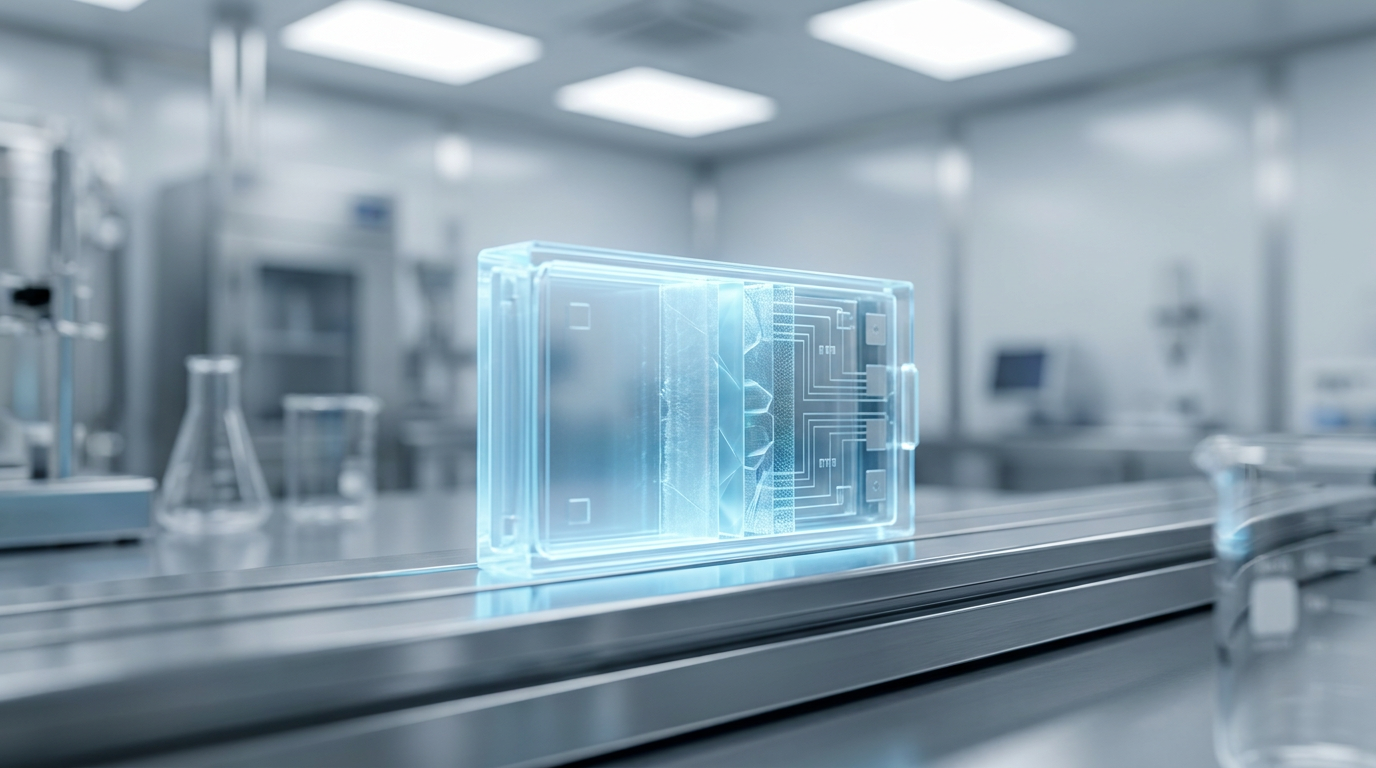
The breakthrough centers on a fundamental change in battery chemistry: replacing the liquid electrolyte found in traditional lithium-ion cells with a solid material, such as a polymer, oxide, or sulfide. This single swap addresses the most stubborn limitations of current EVs, promising to double driving range, slash charging times to under 15 minutes, and virtually eliminate the risk of battery fires.[3][4][7]
To understand the leap, one must look at the limitations of today's lithium-ion technology. Current batteries use a liquid electrolyte to shuttle ions between the cathode and anode. Under extreme stress, overcharging, or physical damage, this liquid can ignite, triggering a dangerous chain reaction known as thermal runaway.[4][7]
Solid-state batteries replace this flammable liquid with a stable, non-flammable solid separator. Recent A-sample cells produced by Chinese manufacturer Greater Bay Technology (GBT) successfully passed rigorous needle penetration and thermal shock tests without catching fire or exploding. For consumers hesitant about EV safety, this intrinsic stability represents a massive psychological and practical advancement.[4][5]

Beyond safety, the most highly anticipated benefit is a dramatic increase in energy density—the amount of power a battery can store relative to its weight. Today's best lithium-ion batteries max out around 200 to 300 watt-hours per kilogram (Wh/kg).[2][4]
In contrast, the solid-state cells entering pilot production in 2026 are targeting 400 to 500 Wh/kg. This leap allows automakers to either pack twice as much energy into the same physical space—enabling ranges of 600 to 1,000 kilometers (up to 620 miles) on a single charge—or cut the battery weight in half for smaller, more efficient vehicles.[2][4][5]
This density is achieved by using lithium metal anodes instead of traditional graphite. Historically, lithium metal anodes in liquid batteries were prone to forming "dendrites"—microscopic, needle-like metallic whiskers that grow during charging and eventually pierce the separator, causing short circuits. Solid electrolytes act as a physical barrier, suppressing dendrite growth while maintaining high ionic conductivity.[3][4]

This density is achieved by using lithium metal anodes instead of traditional graphite.
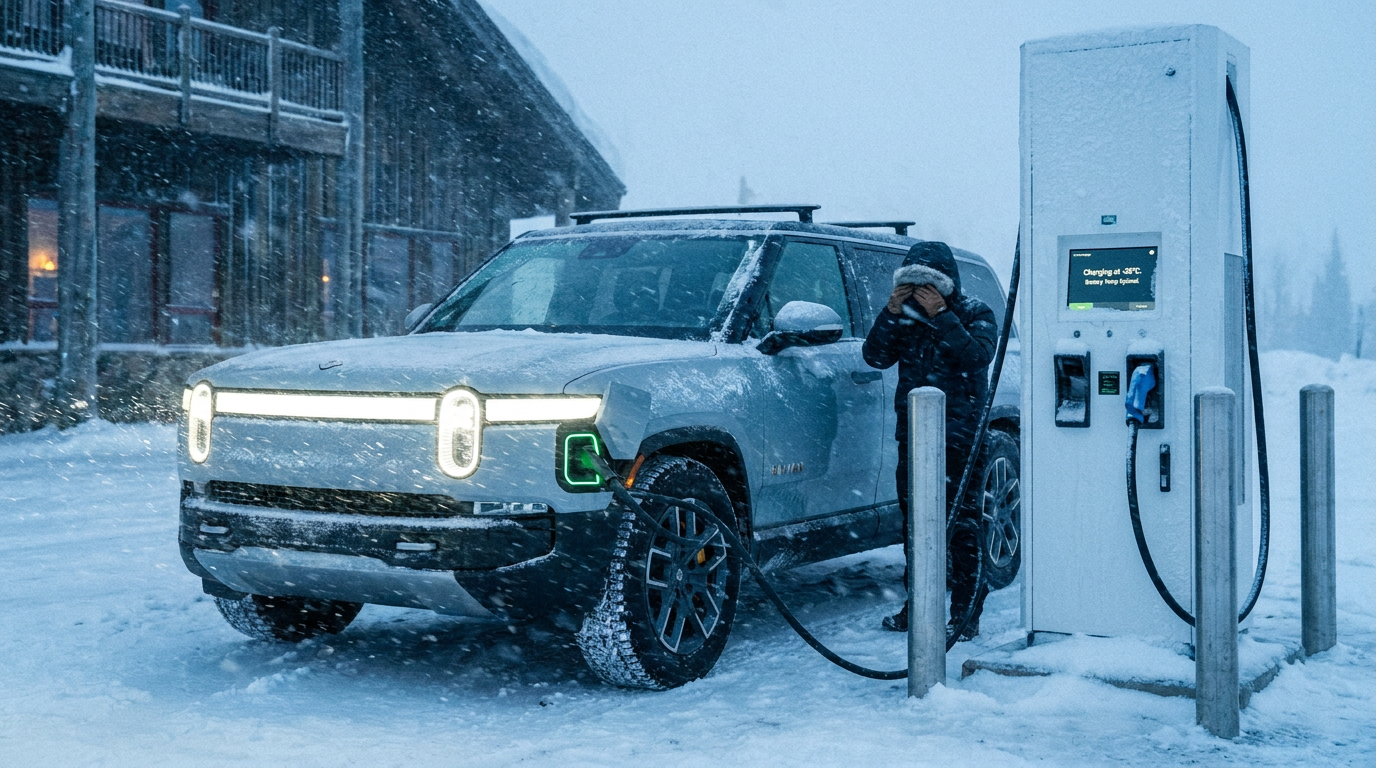
Charging speeds are also poised for a revolution. Because solid electrolytes can handle higher temperatures and faster ion flow without degrading, manufacturers are targeting 0-to-80% charge times of just 10 to 15 minutes. This brings the EV charging experience remarkably close to the time it takes to fill a traditional gas tank, effectively neutralizing range anxiety for long road trips.[3][4][7]
The transition is already underway via a bridge technology: semi-solid batteries. Automakers like NIO have successfully deployed 150-kilowatt-hour semi-solid packs in commercial vehicles, delivering real-world ranges approaching 577 miles. These hybrid designs, which use a minimal amount of liquid alongside solid components, are proving that the underlying chemistry is viable at scale.[2]
The race to full commercialization is fiercely competitive. Toyota, which holds thousands of patents in sulfide-based solid electrolytes, has locked in a commercial release target between 2027 and 2028. The Japanese automaker plans to debut the technology in high-performance and luxury models first, leveraging the premium price tags to offset initial manufacturing costs.[1][7]
Meanwhile, Western startups backed by legacy automakers are making significant strides. QuantumScape, partnered with Volkswagen, has demonstrated single-layer cells that prevent dendrite penetration and is currently working to scale up to multi-layer automotive formats. Similarly, Solid Power is advancing its technology in collaboration with BMW.[3][7]

However, the most aggressive timelines are emerging from China. Companies like GBT aim to achieve gigawatt-hour-level mass production by the end of 2026, supported by the Chinese government's push for battery supremacy. Giants like CATL and BYD are also targeting 2027 for their initial solid-state rollouts, with plans to scale to the mass market by 2030.[1][2][5]
Despite the technological triumphs, significant hurdles remain. Manufacturing solid-state batteries requires entirely new assembly techniques. Maintaining a perfect, continuous physical connection between the solid electrolyte and the electrodes as they expand and contract during charging is incredibly difficult to achieve on a high-speed conveyor belt.[1]
Cost is the ultimate barrier. Early solid-state packs will be expensive, niche products. Skeptics point out that traditional lithium-ion batteries—particularly cheap and durable lithium iron phosphate (LFP) cells—are operating on a massive, highly optimized production curve that solid-state systems will take years to match.[2][6]
For vehicles competing in the $30,000 range, battery cost remains the dominant factor. As a result, companies like Tesla are continuing to double down on scaling their existing 4680 lithium-ion cells, betting that incremental improvements in traditional chemistry will win the mass market while solid-state remains a luxury feature.[6]

Yet, the long-term economics of solid-state batteries could reshape vehicle ownership. With expected lifespans of 20 to 40 years and minimal degradation over thousands of cycles, a solid-state EV could outlast its own chassis. This longevity would drastically improve resale values and reduce the environmental impact of battery recycling.[3][4]
As 2026 unfolds, the industry is watching closely as the first true solid-state vehicles prepare to hit the roads. While it may take until the end of the decade for the technology to trickle down to everyday commuter cars, the fundamental science has been proven. The era of the heavy, slow-charging, range-limited electric vehicle is finally drawing to a close.[1][4][7]
How we got here
2020
QuantumScape goes public, raising massive capital to fund solid-state R&D.
2024
NIO introduces a 150 kWh semi-solid battery pack, bridging the gap to full solid-state.
2026
Chinese manufacturers like GBT roll first A-sample all-solid-state cells off production lines.
2027-2028
Toyota and Samsung SDI target the launch of the first commercial solid-state EVs in the luxury segment.
2030
Industry consensus points to solid-state manufacturing costs reaching parity with traditional lithium-ion.
Viewpoints in depth
Legacy Automakers
Established brands are focusing on proprietary sulfide-based electrolytes and targeting luxury rollouts by 2027.
Companies like Toyota and BMW view solid-state technology as the key to leapfrogging current EV leaders. By heavily patenting sulfide-based solid electrolytes, they aim to introduce the technology in high-margin luxury and performance vehicles first. They argue that rushing the technology to the mass market before manufacturing yields improve would be financially disastrous, preferring a measured, top-down rollout.
Chinese Battery Giants
Dominant battery manufacturers are leveraging massive state and corporate investment to accelerate mass production.
Firms like CATL, BYD, and GBT are pushing highly aggressive timelines, aiming for gigawatt-hour-level production as early as 2026. Backed by robust domestic supply chains and government support, these companies argue that sheer manufacturing scale will solve the cost and interface challenges faster than Western competitors anticipate, allowing them to dominate the next generation of global EV platforms.
Cost-Conscious Skeptics
Pragmatists argue that traditional lithium-ion and LFP batteries will remain the mass-market standard due to unbeatable economics.
Skeptics, including Tesla's manufacturing strategists, point out that solid-state batteries are currently too expensive and difficult to produce at scale to impact the average consumer. They argue that lithium iron phosphate (LFP) batteries are already cheap, safe, and "good enough" for 90% of drivers. In their view, the EV revolution will be won by driving down the cost of existing chemistries, not by waiting for a premium solid-state breakthrough.
What we don't know
- Whether the complex manufacturing processes can be scaled up quickly enough to meet the 2027–2028 luxury rollout targets.
- How solid-state batteries will perform in real-world, decade-long aging tests outside of controlled laboratory environments.
- If the massive investments in traditional lithium-ion gigafactories will slow the industry's willingness to transition to the new technology.
Key terms
- Solid-state electrolyte
- A stable, non-flammable solid material (like polymer, oxide, or sulfide) that replaces the liquid in traditional batteries to conduct ions.
- Energy density
- The amount of energy a battery can store relative to its weight, typically measured in watt-hours per kilogram (Wh/kg).
- Dendrites
- Microscopic, needle-like metallic whiskers that can grow inside a battery during charging, potentially causing short circuits.
- Thermal runaway
- A dangerous chain reaction in liquid-based batteries where excess heat causes the battery to catch fire or explode.
- Semi-solid battery
- A transitional battery technology that uses a combination of solid materials and a minimal amount of liquid electrolyte.
Frequently asked
Will solid-state batteries make EVs more expensive?
Initially, yes. The first solid-state batteries will debut in luxury vehicles and hypercars around 2027 due to high manufacturing costs. Prices are expected to drop to mass-market levels by 2030.
Can I upgrade my current EV with a solid-state battery?
No. Solid-state batteries require entirely different thermal management and power delivery systems, meaning they will only be available in newly designed vehicles.
Are solid-state batteries completely fireproof?
While no energy storage device is 100% invincible, solid-state batteries eliminate the flammable liquid electrolyte, making them vastly safer and highly resistant to thermal runaway even when punctured.
How long will a solid-state battery last?
Industry projections suggest solid-state cells could last 20 to 40 years with minimal degradation, potentially outlasting the vehicle itself.
Sources
Source coverage
7 outlets
3 viewpoints surfaced







[1]The Energy BriefLegacy Automakers
Solid-State EV Battery Release Dates & Timeline (2026)
Read on The Energy Brief →[2]TrendForceChinese Battery Giants
Solid-State Batteries 2026: Advances, Challenges & Future Use Cases
Read on TrendForce →[3]Battery Tech InsiderCost-Conscious Skeptics
Inside the Race to Build the World's First Commercial Solid-State Battery in 2026
Read on Battery Tech Insider →[4]EV Charge ShowChinese Battery Giants
Solid-State Batteries: The Future of Electric Vehicles
Read on EV Charge Show →[5]ElectrekChinese Battery Giants
Solid-state EV batteries are coming sooner than expected after another breakthrough
Read on Electrek →[6]AutoGearShiftCost-Conscious Skeptics
Tesla Solid-State Battery 2026 MIX: Timeline, Production Reality, and Cost Signals
Read on AutoGearShift →[7]Financial TimesLegacy Automakers
Toyota says 'breakthrough' in solid-state EV batteries could significantly drop costs
Read on Financial Times →
Every angle. Every day.
Get automotive stories with full source coverage and perspective breakdowns delivered to your inbox.