
The Season of the Return: How Triumphant Comebacks and 'Project ACL' Are Reshaping the NWSL
As the NWSL battles an epidemic of knee injuries, the triumphant returns of superstars like Temwa Chawinga and Barbra Banda are reshaping the standings, while a groundbreaking global research initiative promises to address the root causes of the crisis.

- Players & Union
- Advocates for examining workload, travel, and environmental conditions to protect athletes.
- Sports Scientists
- Focuses on closing the gender data gap in sports medicine through rigorous biomechanical and scheduling research.
- Club Management
- Balances the urgency of winning matches with the careful, phased reintegration of returning superstars.
Perspectives this story doesn't cover
- Grassroots and youth soccer coaches managing ACL risks before players reach the professional level.
- Sports equipment manufacturers designing female-specific cleats to prevent non-contact injuries.
How we got here
August 2025
Barbra Banda suffers a season-ending hip injury.
October 2025
Temwa Chawinga sustains a severe adductor injury, missing the playoffs.
April 2026
The NWSL and NWSLPA officially join Project ACL to study injury causes.
April 2026
Chawinga returns to the pitch, sparking a massive turnaround for Kansas City.
June 2026
Banda leads the league in scoring as the NWSL enters its summer break.
The roar at CPKC Stadium in Kansas City wasn't just for a goal; it was for a substitution. When reigning NWSL MVP Temwa Chawinga stepped onto the pitch after a 168-day absence, it marked a turning point for her club and the league.
Chawinga had been sidelined since October 2025 with a severe adductor injury that forced her to miss the playoffs. Her return against Gotham FC was electric: within 40 minutes, she delivered a game-tying assist, sparking a 2-1 victory.[1]
Before her return, the Kansas City Current were floundering, winning just one of their first four matches. Since Chawinga's activation, the Current have won five of their last seven, proving the transformative power of a single healthy superstar.
Chawinga's triumphant return is emblematic of a broader trend across the National Women's Soccer League in 2026. After a brutal 2025 season marred by high-profile absences, the current campaign is being defined by the resilience of players reclaiming their elite form.
In Orlando, Barbra Banda is authoring a spectacular comeback of her own. The Zambian international suffered a devastating full-thickness avulsion of her right adductor longus tendon in August 2025, ending her season prematurely.
Upon her return this spring, Banda didn't just recover; she accelerated. She has netted an astonishing 11 goals in 12 matches for the Orlando Pride, establishing herself as the runaway leader for the 2026 Golden Boot.
The comeback narrative extends to the defensive side of the ball. Gotham FC's Tierna Davidson, who spent nearly a year recovering from a torn anterior cruciate ligament (ACL), has returned to anchor the league's most formidable backline.
With Davidson marshaling the defense alongside Jess Carter and Jaelin Howell, Gotham has recorded a league-leading eight shutouts, allowing the fewest goals in the NWSL and proving that a reconstructed knee does not have to end a world-class career.
Perhaps the most emotional return belonged to Angel City FC defender Savy King. After collapsing on the pitch from a cardiac event last season, King made her triumphant return to BMO Stadium, subbing on to a roaring home crowd chanting her name.
Perhaps the most emotional return belonged to Angel City FC defender Savy King.
Yet, for every triumphant return, the NWSL is still grappling with the devastating reality of the sport's most persistent medical crisis. The ACL epidemic continues to cast a long shadow over the women's game.
In the 2026 season alone, nine NWSL players have already suffered torn ACLs. The North Carolina Courage lost dynamic forward Payton Crawford to a tear during a May training session, while Gotham FC lost defender Kayla Duran in April.[2]
The statistics remain grim: female soccer players are between two and six times more likely to suffer an ACL tear than their male counterparts. Historically, this disparity was vaguely attributed to biological differences, such as wider hips or narrower knee structures.
But the NWSL is no longer accepting these injuries as inevitable bad luck. In a landmark move this spring, the league and the NWSL Players Association (NWSLPA) officially joined "Project ACL," a massive global research initiative.
Originally launched in England's Women's Super League (WSL), the project unites the world's top two women's leagues with FIFPRO, Nike, and Leeds Beckett University. It represents the most coordinated, well-funded attempt in history to solve the women's soccer injury crisis.
Project ACL shifts the focus from inherent biological flaws to environmental and systemic factors. Researchers are tracking players' travel schedules, overall workload, and "critical zone" appearances—matches played with fewer than five days of recovery time.
The initiative addresses a glaring blind spot in sports medicine: currently, as little as 8 percent of sports science research focuses specifically on female athletes, and much of that studies amateurs rather than professionals.
Tori Huster, deputy executive director of the NWSLPA, emphasized that understanding the epidemic requires "looking beyond the individual and examining the conditions players compete and train in every day."
The three-year study aims to translate high-quality research into real-world, pitch-level changes. Whether that means altering boot cleat patterns, adjusting stadium pitch standards, or mandating longer recovery windows, the league is committed to structural reform.
As the NWSL heads into its summer break, the league exists in a dual reality. It is a landscape still scarred by the sudden, season-ending pops of knee ligaments, but it is also a league actively engineering a safer future.
For now, the enduring image of the 2026 season isn't the stretcher; it's Temwa Chawinga sprinting down the flank, Barbra Banda finding the back of the net, and a league finally investing the resources required to keep its brightest stars on the pitch.
Key points
- Temwa Chawinga returned from a 168-day injury absence to spark a massive turnaround for the Kansas City Current.
- Barbra Banda has scored 11 goals in 12 matches for the Orlando Pride following a season-ending hip injury in 2025.
- Despite these comebacks, the NWSL continues to face an ACL crisis, with nine players suffering tears in the 2026 season.
- The NWSL and NWSLPA have joined Project ACL, a three-year global study to identify environmental causes of knee injuries.
- The initiative aims to close the gender data gap, as currently only 8 percent of sports science research focuses on female athletes.
Viewpoints in depth
Players & Union
Advocates for examining workload, travel, and environmental conditions to protect athletes.
For years, female players have expressed frustration that the high rate of ACL tears was dismissed as an unavoidable biological reality. The NWSL Players Association views Project ACL as a vital pivot toward accountability. By tracking 'critical zone' appearances and travel fatigue, the union aims to prove that congested schedules and inadequate recovery resources are the true culprits. Their ultimate goal is to use this data to force systemic changes in how leagues build their calendars and manage player workloads.
Sports Scientists
Focuses on closing the gender data gap in sports medicine through rigorous biomechanical and scheduling research.
Medical professionals and researchers at institutions like Leeds Beckett University point to a glaring disparity: only 8 percent of sports science research focuses specifically on women. This massive data gap means that female athletes have historically been treated using protocols designed for men. Sports scientists argue that by building a robust, female-specific database that tracks everything from menstrual cycles to cleat traction on various pitch surfaces, they can finally develop targeted, evidence-based prevention strategies.
Club Management
Balances the urgency of winning matches with the careful, phased reintegration of returning superstars.
For head coaches and sporting directors, managing injuries is a high-stakes balancing act. Managers like Kansas City's Chris Armas face immense pressure to field their best players to secure playoff positioning, yet they must strictly adhere to medical minutes-restrictions to prevent re-injury. Club management relies heavily on performance staffs to dictate exactly when a player like Temwa Chawinga or Barbra Banda is ready to return, knowing that rushing the process could jeopardize both the player's career and the franchise's long-term success.
- 11
- Goals for Barbra Banda in 12 matches since return
- 168 days
- Temwa Chawinga's injury absence
- 8%
- Share of sports science research focused on women
- 2 to 6x
- Higher likelihood of ACL tears in women vs. men
Sources
Source coverage
2 outlets
3 viewpoints surfaced


- [1]Equalizer SoccerClub Management
Temwa Chawinga to return from injury
Read on Equalizer Soccer → - [2]NC Courage OfficialClub Management
NC Courage Place Payton Crawford On Season-Ending Injury List
Read on NC Courage Official →
Comments

More in Sports
See all →Managerial Shift
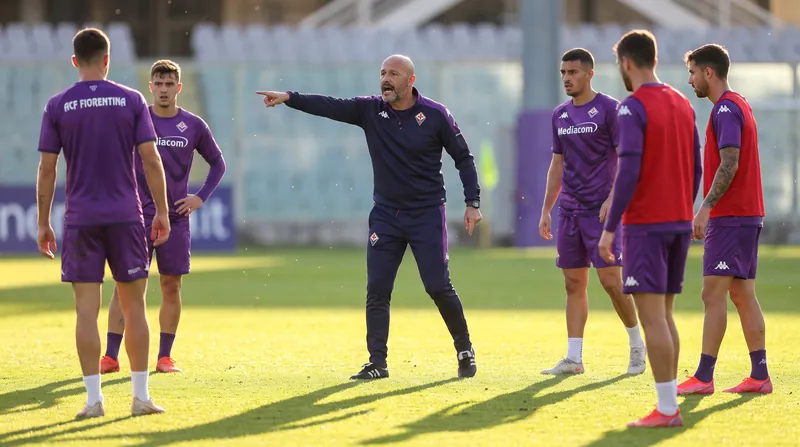
Fiorentina Re-Hire Paolo Vanoli as Head Coach After Sacking Fabio Grosso Three Matches Into Season
6 sources
Revenue Distribution
The €853 Million 'Value Pillar': How UEFA's New Champions League Revenue Engine Actually Works
7 sources

Mount Mizhirgi
Avalanche Kills 11 Climbers and Leaves Six Missing on Russia's Mount Mizhirgi
6 sources

WSL Rules
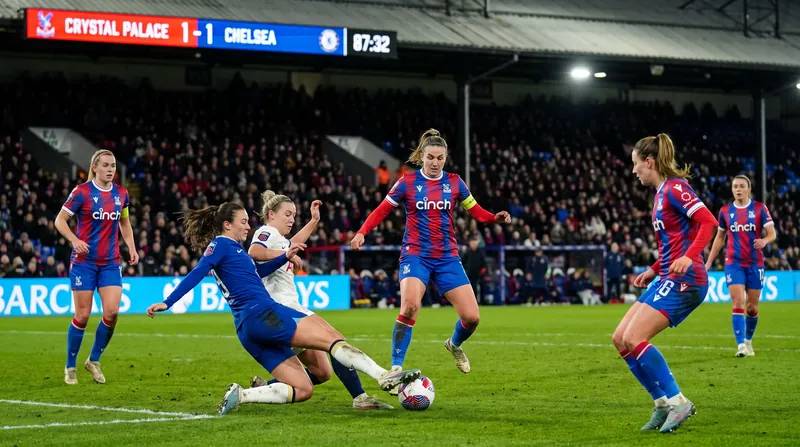
Crystal Palace Faces Points Deduction After Using Four Substitution Windows in WSL Opener Win
6 sources
Every angle. Every day.
Get Sports stories with full source coverage and perspective breakdowns delivered to your inbox.