
Why Time-Crunched Amateurs Still Need High-Intensity Workouts Over Zone 2 Cardio
Zone 2 cardio has become the fitness world's favorite longevity tool, but new exercise physiology research suggests time-crunched amateurs may still need high-intensity workouts to maximize their health.
By Ryder James

Share this story
Over the past few years, a specific heart-rate zone has evolved from a niche endurance metric into a mainstream longevity obsession. "Zone 2" training—a low-intensity, steady-state effort—has been heavily promoted on health podcasts, social media, and by prominent longevity physicians as the ultimate physiological hack. Proponents argue that spending hours in this specific metabolic window is the optimal way to build mitochondrial density, improve fat oxidation, and extend human lifespan.
For the general public, the promise is highly appealing: you can achieve world-class cardiovascular health benefits without the lung-burning agony traditionally associated with exercise. Fitness enthusiasts who once prioritized grueling boot camps and high-intensity spin classes are now strapping on heart-rate monitors and intentionally slowing down, aiming to stay within a strict, conversational effort level to unlock these promised cellular rewards.[4]
The trend draws heavily from the training logs of elite endurance athletes, who have utilized strict intensity control for decades. From Norwegian Olympic triathletes to Tour de France cyclists and elite marathoners, the world's best endurance competitors spend up to 80 percent of their massive training volume in this low-intensity domain. This polarized approach, often referred to as the 80/20 rule, allows professionals to accumulate staggering amounts of weekly mileage without breaking down their bodies.
By keeping the vast majority of their work easy, they preserve their central nervous systems and muscular glycogen stores for the 20 percent of their training that is agonizingly hard. The sheer dominance of athletes utilizing these lactate-controlled methods has convinced many recreational runners and cyclists that mimicking this exact intensity distribution is the secret to unlocking their own athletic potential.[2][4]
However, a growing body of exercise physiologists is pushing back against the idea that Zone 2 is a universal magic bullet, particularly for the general public. A comprehensive 2025 review published in the journal Sports Medicine, titled "Much Ado About Zone 2," evaluated decades of physiological data and concluded that the broad public endorsement of low-intensity training often ignores a crucial variable: total training volume.
The researchers, hailing from Queen's University and McMaster University, found that while elite athletes reap massive benefits from low-intensity work, translating their protocols directly to time-crunched amateurs is fundamentally flawed. The review forcefully argues that for individuals exercising fewer than five hours a week, relying solely on Zone 2 leaves significant cardiovascular and metabolic gains on the table, challenging the popular narrative that higher intensities somehow negate aerobic base-building.[1][3]
To understand the scientific debate, one must first understand what Zone 2 actually represents inside the human body. Physiologically, it is defined as the exercise intensity just below the first lactate threshold (LT1), a state where blood lactate levels typically hover between 1.5 and 2.0 mmol/L. At this highly controlled pace, the body relies almost entirely on aerobic metabolism, breaking down stored fat for fuel rather than rapidly depleting finite carbohydrate stores.
Because the effort remains strictly sub-threshold, the body is able to clear blood lactate at the exact same rate it is produced. This metabolic equilibrium prevents the rapid accumulation of hydrogen ions, which means the athlete never experiences the muscular "burn" or systemic fatigue associated with high-intensity intervals. In practical terms, it is an effort level where an individual can comfortably maintain a conversation without gasping for breath.[2]
The cellular adaptations triggered by this specific metabolic stressor are profound, provided the exposure is long enough. Prolonged Zone 2 training heavily stimulates Type I, or slow-twitch, muscle fibers, which are highly resistant to fatigue and heavily reliant on oxygen. The accumulation of time at this intensity triggers a process known as mitochondrial biogenesis—the creation of new, highly efficient mitochondria within the muscle cells.
These cellular powerhouses become larger and more numerous, drastically improving the body's ability to convert fat into usable energy. This enhanced fat oxidation not only preserves glycogen for late-race surges in endurance events but also plays a critical role in metabolic health, helping to clear circulating lipids and maintain stable energy levels throughout the day.
Beyond the mitochondria, low-intensity endurance work promotes another vital physiological change: angiogenesis. This is the growth of new capillary networks that weave through the muscle tissue, creating a denser infrastructure for blood flow. This increased capillary density is an often-overlooked mechanism that drastically improves oxygen delivery and nutrient transport to working muscles.
More importantly for the general population, a denser capillary network significantly boosts overall insulin sensitivity. By increasing the surface area for glucose disposal, the body becomes far more efficient at managing blood sugar levels, making Zone 2 training a powerful, evidence-based tool for the prevention and management of metabolic conditions like type 2 diabetes.
But the authors of the 2025 Sports Medicine review highlight a critical caveat that is often lost in popular fitness media: these cellular adaptations are highly dose-dependent. Elite athletes achieve massive mitochondrial growth and capillary density from Zone 2 training because they accumulate 15 to 25 hours of it every single week, creating a massive aggregate stimulus over months and years.
For the average recreational athlete exercising three to four hours a week, the physiological math changes entirely. The review analyzed data from 56 training studies and found that exercise performed below 60 percent of a person's maximum work rate is often insufficient to maximize mitochondrial respiratory capacity when total volume is low. Without the sheer hours to force adaptation, the low-intensity stimulus simply isn't strong enough to trigger the same cellular remodeling seen in professionals.[1][3]
Instead, the researchers argue that time-crunched amateurs must prioritize higher intensities to trigger the same cardiometabolic adaptations in a fraction of the time. Protocols like High-Intensity Interval Training (HIIT) or Sprint Interval Training (SIT), which push the body well above the second lactate threshold, have been consistently shown to yield superior improvements in VO2 max and mitochondrial function when total training volume is restricted.
Pushing the heart rate into Zone 4 or Zone 5 creates a potent mechanical and metabolic stress that forces the body to adapt rapidly. While these sessions require more recovery time and generate significantly more systemic fatigue, they are highly efficient. For a professional athlete training twice a day, too much high intensity leads to overtraining and burnout; for an amateur training three days a week, it is often the necessary catalyst for progress.[1][2][3]
This nuanced understanding creates a paradigm shift for recreational athletes trying to optimize their routines. The consensus emerging among sports scientists is not that Zone 2 is ineffective, but that the "optimal" intensity is entirely relative to an individual's available schedule. If an athlete has ten hours a week to train, a polarized model dominated by Zone 2 is highly effective, sustainable, and builds a massive aerobic engine without risking injury.
However, if an individual only has three hours a week to dedicate to exercise, spending all of it at a conversational pace is suboptimal. Ultimately, while Zone 2 remains an excellent foundational tool for building endurance and burning fat, it cannot entirely replace the potent physiological stimulus of high heart-rate work for those racing against the clock.[1][2][4]
Key points
- Zone 2 training is a low-intensity exercise state that relies primarily on fat oxidation and keeps blood lactate levels stable.
- The method has gained massive popularity for its ability to increase mitochondrial density and improve overall metabolic health.
- Elite endurance athletes spend up to 80 percent of their training time in Zone 2, allowing them to accumulate massive volume without overtraining.
- A 2025 review in Sports Medicine challenges the idea that Zone 2 is optimal for the general public, citing the importance of total training volume.
- For individuals exercising fewer than five hours a week, researchers argue that higher-intensity sessions are necessary to maximize cardiovascular benefits.
How we got here
Early 2010s
High-Intensity Interval Training (HIIT) dominates fitness trends, promising maximum metabolic benefits in minimal time.
2021
Norwegian athletes using strict lactate-controlled training win multiple Olympic gold medals, bringing global attention to low-intensity volume.
2022–2024
Zone 2 training becomes a mainstream longevity trend, heavily promoted by health podcasters and longevity physicians.
June 2025
A major review in Sports Medicine challenges the universal application of Zone 2, arguing that low-volume exercisers still need high intensity.
- Volume-First Advocates
- Argue that low-intensity Zone 2 training is the safest and most effective way to build mitochondrial density and fat oxidation.
- Time-Crunched Physiologists
- Emphasize that for non-elite individuals with limited training time, higher-intensity exercise is necessary to trigger significant adaptations.
- Evidence Synthesis
- Contextualizes the debate by showing that the optimal intensity depends entirely on the individual's available training volume.
Perspectives this story doesn't cover
- Recreational athletes who train exclusively for mental health rather than physiological optimization.
Sources
Source coverage
4 outlets
3 viewpoints surfaced




- [1]Sports MedicineTime-Crunched Physiologists
Much Ado About Zone 2: A Narrative Review Assessing the Efficacy of Zone 2 Training
Read on Sports Medicine → - [2]TrainingPeaksVolume-First Advocates
The Science and Benefits of Zone 2 Training
Read on TrainingPeaks → - [3]Midpack RunnerTime-Crunched Physiologists
Is Zone 2 Training Really the Optimal Intensity?
Read on Midpack Runner → - [4]Factlen Editorial TeamEvidence Synthesis
Synthesis by Factlen editorial team
Read on Factlen Editorial Team →

More in Sports
See all →Quantum Tech
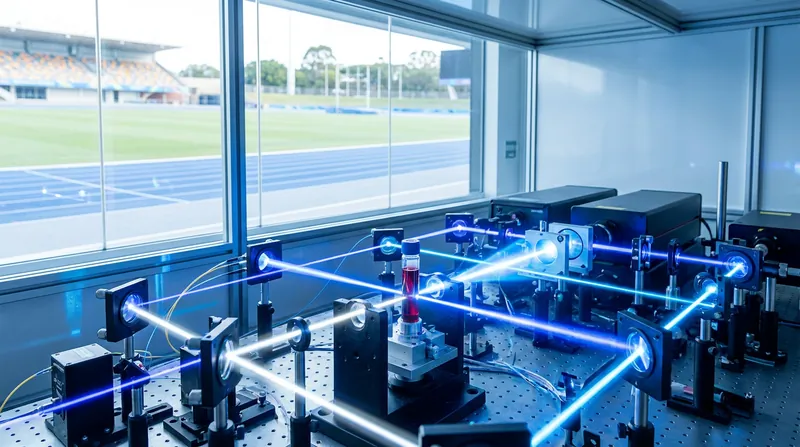
Quantum Sensors Poised to Revolutionize Anti-Doping by Distinguishing Synthetic EPO for 2032 Games
3 sources
Athlete Engineering
TCU Launches $10M 'Athlete Engineering' Institute to Redefine Human Performance Research
6 sources

Performance Science
Swimmer Shatters World Record at Inaugural Enhanced Games, Igniting Scientific Debate on Human Limits
4 sources
Cartilage Regeneration
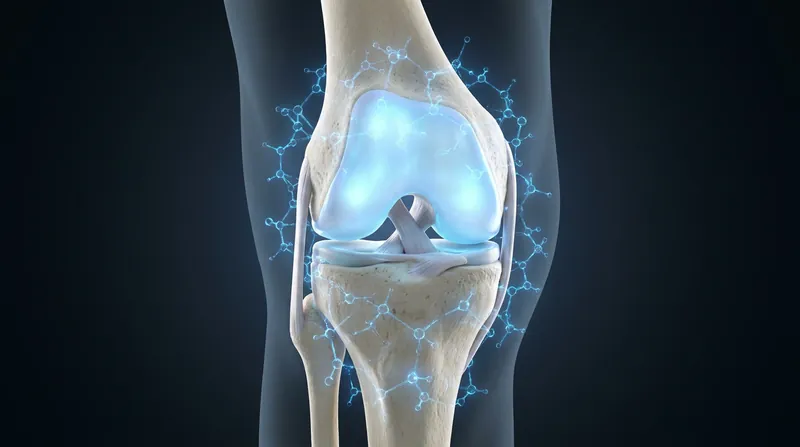
Scientists Successfully Block Aging Protein to Regrow Cartilage, Opening New Era for Sports Medicine
4 sources
Comments
Every angle. Every day.
Get Sports stories with full source coverage and perspective breakdowns, free every day.