
The Science of Synthetic Fuel: How E-Fuels Are Saving the V12 Supercar
As global bans on internal combustion engines loom, elite automakers like Porsche, Ferrari, and Lamborghini are investing heavily in synthetic fuels to keep their iconic, high-revving engines alive without compromising net-zero climate goals.
By Factlen Editorial Team
- Heritage Automakers
- Argue that the emotional experience of combustion engines is essential and worth preserving through synthetic fuels.
- Efficiency Advocates
- Point out that the energy required to synthesize liquid fuel is massive, favoring direct battery electrification.
- Motorsport Governing Bodies
- View e-fuels as the only viable way to maintain the spectacle of racing while meeting sustainability targets.
What's not represented
- · Fossil Fuel Companies
- · Everyday Consumers
Why this matters
While everyday commuting is rapidly shifting to battery-electric vehicles, the survival of the internal combustion engine via e-fuels preserves a century of automotive heritage and emotional engineering, proving that decarbonization doesn't have to mean the death of the sports car.
Key points
- The EU's 2035 ban on fossil-fuel cars includes a crucial exemption for vehicles running exclusively on carbon-neutral synthetic fuels.
- E-fuels are created by combining green hydrogen from electrolyzed water with carbon dioxide captured directly from the atmosphere.
- Porsche is actively producing e-fuel at its wind-powered Haru Oni plant in Chile, targeting 55 million liters annually by 2027.
- Ferrari and Lamborghini plan to use e-fuels to keep their emotional V8 and V12 engines alive alongside new electric models.
- Formula 1 will switch to 100% sustainable synthetic fuels in 2026, accelerating research and development for consumer applications.
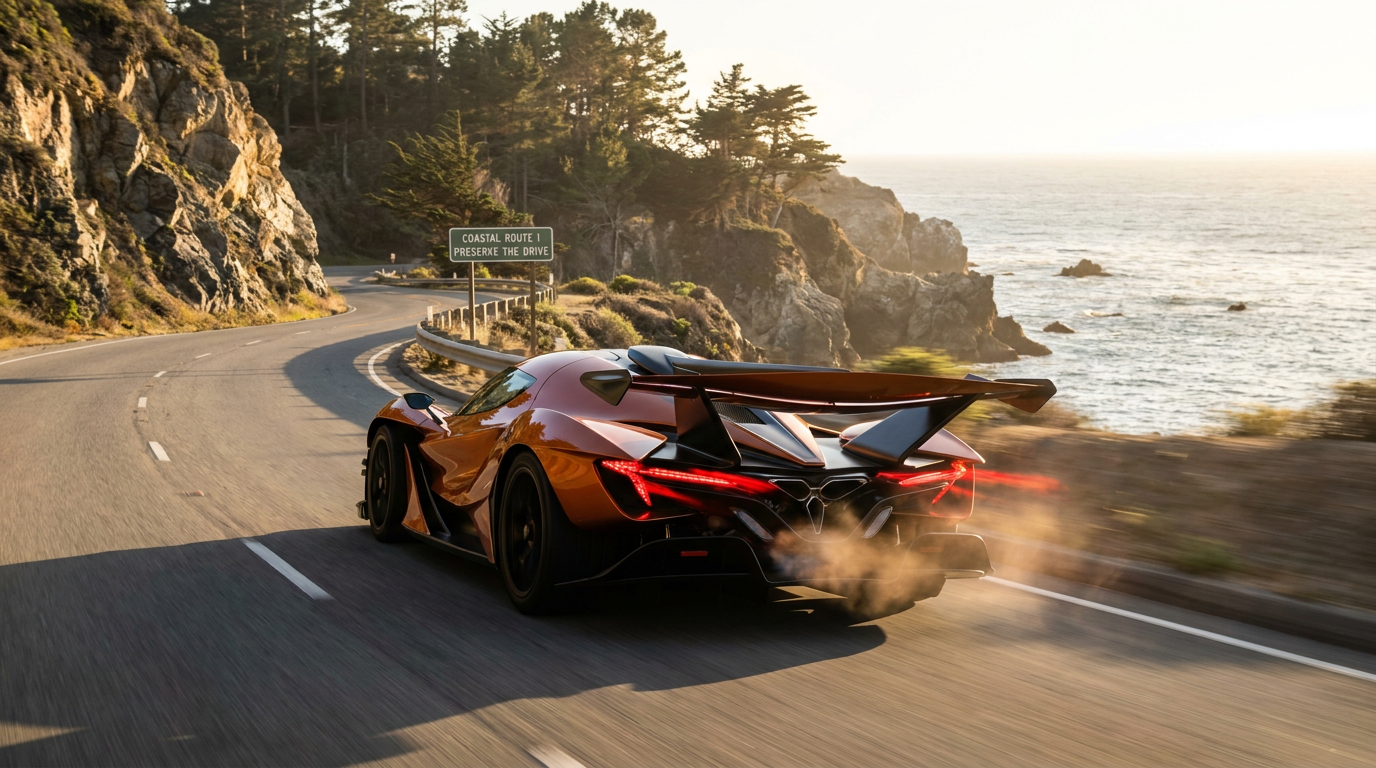
The roar of a high-revving V12 engine bouncing off a canyon wall is a sound that has defined automotive passion for over a century. For purists, the mechanical symphony of pistons, valves, and exhaust is the soul of the supercar. But as global legislation tightens the noose on greenhouse gas emissions, that sound has faced an existential threat. The European Union’s mandate to ban the sale of new fossil-fuel-powered cars by 2035 seemed to signal the definitive end of the internal combustion engine.[1][6]
Yet, behind the scenes in Maranello, Sant'Agata, and Stuttgart, engineers have been quietly working on a lifeline. The solution isn't to abandon the engine, but to reinvent the fuel that burns inside it. Enter synthetic fuels, or "e-fuels"—a technological loophole that promises to keep the combustion engine alive without compromising the planet's climate goals.[3][4]
The concept of synthetic fuel is not entirely new, but its application as a climate savior is a modern engineering marvel. Unlike traditional gasoline, which is refined from crude oil pulled from the earth, e-fuels are manufactured from scratch using renewable energy. The process is essentially a closed carbon loop, designed to ensure that the fuel adds zero net carbon dioxide to the atmosphere.[4]
The recipe for e-fuel requires two primary ingredients: hydrogen and carbon dioxide. First, renewable energy—such as wind or solar power—is used to run an electrolysis plant, which splits ordinary water into oxygen and green hydrogen. Simultaneously, massive Direct Air Capture facilities act like giant atmospheric vacuums, sucking ambient carbon dioxide directly out of the air.[5]

These two elements are then combined in a chemical synthesis process to create synthetic methanol, which is further refined into synthetic gasoline. When this e-fuel is burned in a car's engine, it still emits carbon dioxide from the tailpipe. However, because that exact same amount of carbon was previously extracted from the atmosphere to create the fuel, the net environmental impact is virtually zero.[2][4]
Porsche has been the automotive industry's most aggressive pioneer in this space. Unwilling to let the iconic flat-six engine of the 911 fade into history, the German automaker partnered with HIF Global to build the Haru Oni pilot plant in Punta Arenas, Chile. Situated in Patagonia, the facility capitalizes on some of the most consistent and powerful winds on Earth to generate the renewable electricity required for the energy-intensive electrolysis process.[5]
The Haru Oni plant is no longer just a theoretical concept; it is actively producing fuel. Porsche has already begun using this synthetic gasoline to power its Mobil 1 Supercup racing series and fill the tanks of cars at its global Porsche Experience Centers. The company has set an ambitious target to scale production, aiming to churn out 55 million liters of e-fuel annually by 2027.[5]

In Italy, the sentiment is equally defiant. Ferrari, a brand whose very identity is inextricably linked to the visceral thrill of its engines, views e-fuels as a critical pillar of its future. While Ferrari is preparing to unveil its first fully electric vehicle in 2026, CEO Benedetto Vigna has made it clear that electrification is an "addition," not a wholesale replacement.[1][2]
Ferrari, a brand whose very identity is inextricably linked to the visceral thrill of its engines, views e-fuels as a critical pillar of its future.
Vigna has publicly championed the European Union's decision to include an exemption for e-fuels in its 2035 combustion ban. For Ferrari, this regulatory carve-out means they can continue to develop and sell their legendary V8 and V12 supercars indefinitely, provided those vehicles run exclusively on carbon-neutral synthetic fuels. It allows the brand to meet its 2030 carbon-neutrality targets without silencing its signature exhaust notes.[1][2]
Lamborghini shares a similar philosophy. The company's Chief Technical Officer, Rouven Mohr, has openly referred to synthetic fuels as a potential "savior of the combustion engine." Lamborghini argues that the emotional appeal of a supercar—the vibration, the sound, the mechanical engagement—cannot be fully replicated by the silent, seamless acceleration of a battery-electric powertrain.[3][6]
To bridge the gap, Lamborghini is embracing hybridization while keeping the door open for e-fuels. The company's new Temerario, the successor to the long-running Huracan, features a sophisticated twin-turbo V8 paired with three electric motors. Crucially, Lamborghini designed this new combustion engine to be fully compatible with synthetic fuels, ensuring the car remains viable in a post-fossil-fuel world.[3][6]
The ultimate proving ground for this technology will be the racetrack. Formula 1, the pinnacle of global motorsport, is set to undergo a massive regulatory shift in 2026. As part of its commitment to sustainability, the sport will mandate the use of 100% sustainable synthetic fuels for all competing teams.[1][5]
This motorsport mandate is expected to act as a massive catalyst for e-fuel development. With automotive giants pouring hundreds of millions of dollars into F1 engine development, the efficiency and performance of synthetic fuels will be pushed to the absolute limit. Historically, technologies perfected on the F1 grid eventually trickle down to consumer road cars.[1]
Despite the romantic appeal of saving the combustion engine, e-fuels face severe pragmatic hurdles. The most glaring issue is energy efficiency. The multi-step process of generating renewable electricity, electrolyzing water, capturing carbon, synthesizing fuel, and then burning it in an engine is incredibly lossy.[4]

According to energy analysts, using renewable electricity to charge a battery-electric vehicle directly is roughly four to five times more efficient than using that same electricity to manufacture e-fuel. For everyday passenger cars, commuting, and mass transit, battery-electric vehicles remain the undisputed, logical choice for decarbonization.[4]
Cost is another massive barrier. Currently, synthetic fuel is produced in such small, boutique quantities that its price per liter is astronomical compared to conventional gasoline. While scaling up production at plants like Haru Oni will eventually drive costs down, e-fuel is unlikely to ever reach price parity with the cheap fossil fuels that built the modern world.[3][5]
This economic reality dictates the true future of synthetic fuels: they will not replace EVs for the masses, but they will serve as a vital, premium solution for the automotive elite. E-fuels will be the champagne of the automotive world—an expensive, specialized liquid reserved for weekend track days, classic car rallies, and the preservation of historic hypercars.[3][4]

For the automotive enthusiast, this is a profound victory. It means that decades from now, the 1.4 billion internal combustion vehicles currently on the road won't necessarily become obsolete museum pieces. A vintage Ferrari F40 or a modern Porsche 911 GT3 will still be able to turn a wheel in anger, powered by the wind and the air, leaving nothing but a thrilling sound in its wake.[5][6]
How we got here
2022
Porsche and HIF Global open the Haru Oni synthetic fuel pilot plant in Chile.
March 2023
The European Union agrees to exempt vehicles running exclusively on e-fuels from its 2035 combustion engine ban.
2026
Formula 1 will mandate the use of 100% sustainable synthetic fuels for all competing teams.
2027
Porsche aims to scale its e-fuel production to 55 million liters annually.
2035
The EU's ban on the sale of new traditional fossil-fuel vehicles takes effect.
Viewpoints in depth
Heritage Automakers
Automakers like Ferrari and Porsche argue that combustion engines are essential to their brand DNA and can be preserved sustainably.
For legacy supercar brands, the transition to electric vehicles threatens to erase the mechanical characteristics that define their products. Executives argue that the visceral sound, vibration, and lightweight dynamics of a combustion engine are irreplaceable emotional components of the driving experience. By investing in e-fuels, these manufacturers believe they can achieve carbon neutrality without sacrificing the mechanical soul that their customers demand, viewing synthetic fuels as a necessary parallel technology to battery electrification.
Efficiency Advocates
Energy analysts and environmentalists argue that manufacturing synthetic fuels is a highly inefficient use of renewable energy.
Critics of the e-fuel movement point to the laws of thermodynamics. The process of generating renewable electricity, using it to electrolyze water, capturing atmospheric carbon, synthesizing a liquid fuel, and then burning it in an engine loses the vast majority of the original energy. Efficiency advocates argue that routing that same renewable electricity directly into a battery-electric vehicle is up to five times more efficient, making e-fuels an impractical distraction for anything outside of niche luxury applications.
Motorsport Governing Bodies
Racing organizations view e-fuels as the key to maintaining the spectacle of motorsport while meeting climate targets.
For premier racing series like Formula 1, the sound and fury of combustion engines are central to the sport's global appeal. Governing bodies have embraced 100% sustainable synthetic fuels for upcoming regulatory cycles, such as F1's 2026 engine rules. They view motorsport as the ultimate high-speed laboratory, believing that the extreme demands of racing will accelerate the development and efficiency of e-fuels, eventually trickling down to benefit the broader automotive industry.
What we don't know
- Exactly how much the price per liter of synthetic fuel will drop once production scales globally.
- Whether smaller, independent supercar manufacturers will be able to afford the transition to e-fuel compatibility.
- How strictly regulators will enforce the requirement that e-fuel vehicles cannot be filled with traditional fossil fuels.
Key terms
- E-fuel
- A synthetic hydrocarbon fuel made by combining green hydrogen with captured atmospheric carbon dioxide.
- Electrolysis
- The process of using electricity to split water into hydrogen and oxygen.
- Direct Air Capture (DAC)
- Technology that extracts carbon dioxide directly from the atmosphere.
- Net-zero emissions
- A state where the greenhouse gases emitted into the atmosphere are balanced by the amount removed.
Frequently asked
Can e-fuels be used in normal cars?
Yes, synthetic fuels are chemically identical to standard gasoline and can be pumped into any existing internal combustion engine without modifications.
Why aren't we using e-fuels for all cars?
Producing e-fuels is highly energy-intensive and expensive; using renewable electricity to charge an EV battery directly is vastly more efficient for mass transit.
Do e-fuels still produce exhaust?
Yes, burning e-fuels emits carbon dioxide from the tailpipe, but because that exact amount of carbon was captured from the air to make the fuel, the net climate impact is zero.
Sources
Source coverage
6 outlets
3 viewpoints surfaced






[1]AutocarHeritage Automakers
Ferrari boss: E-fuels will support future combustion supercars
Read on Autocar →[2]ReutersHeritage Automakers
Ferrari CEO says e-fuel cars do not compromise carbon goals
Read on Reuters →[3]TopSpeedMotorsport Governing Bodies
Lamborghini Sees E-Fuels As The Savior Of The Combustion Engine
Read on TopSpeed →[4]CarBuzzEfficiency Advocates
Can Synthetic Fuels Save The Combustion Engine?
Read on CarBuzz →[5]BloombergMotorsport Governing Bodies
Porsche, Ferrari E-Fuels Push Changes EU Combustion Engine Debate
Read on Bloomberg →[6]Motor1Heritage Automakers
Lamborghini Hopes Synthetic Fuels Can Save The Combustion Engine
Read on Motor1 →
Every angle. Every day.
Get automotive stories with full source coverage and perspective breakdowns delivered to your inbox.