
The Science of Space: How Neuroaesthetics and Biophilic Design Shape Brain Health
Emerging research at the intersection of neuroscience and architecture reveals that interior design is not just about aesthetics—it actively alters our heart rate, stress hormones, and cognitive function.
By Factlen Editorial Team
- Neuroscientists & Researchers
- Focus on measurable biological markers, such as fMRI data and cortisol levels, to quantify how environments impact the human nervous system.
- Architectural Designers
- Translate scientific data into practical, aesthetically pleasing spaces that serve human needs and improve daily well-being.
- Public Health & Wellness Advocates
- Emphasize the necessity of biophilic spaces for collective mental health, viewing interior design as a form of preventive healthcare.
What's not represented
- · Real estate developers balancing the upfront costs of biophilic architecture with standard construction budgets.
- · Neurodivergent individuals who may process sensory inputs, light, and spatial patterns differently than neurotypical baselines.
Why this matters
Because modern humans spend the vast majority of their lives indoors, the spaces we inhabit act as constant biological stimuli. Understanding how light, texture, and geometry affect the nervous system empowers people to design homes and workplaces that actively reduce stress and improve mental resilience.
Key points
- Neuroaesthetics proves that interior design triggers measurable biological responses, including changes in heart rate and cortisol levels.
- Biophilic design integrates natural elements, light, and spatial patterns to reduce cognitive fatigue.
- The human brain easily processes natural fractal patterns, while artificial, boxy environments cause subconscious stress.
- Visual exposure to organic textures like wood grain can actively lower blood pressure.
- Hospitals utilizing neuroarchitectural principles see faster patient recovery times and reduced reliance on pain medication.
Everyone has experienced the phenomenon: stepping into a room and feeling an immediate, inexplicable sense of calm, or conversely, an instant spike in anxiety. For decades, interior designers attributed this to subjective taste or an intuitive "feel" for a space. However, modern science is proving that this reaction is neither subjective nor purely aesthetic—it is a measurable, hardwired biological response.[1]
Welcome to the emerging field of neuroaesthetics, a discipline at the intersection of neuroscience and design. First conceptualized in the 1990s when brain-scanning technology advanced enough to measure real-time responses to beauty, neuroaesthetics studies how our brains and bodies react to spatial qualities like light, scale, and color. It reveals that our built environment acts as a constant, silent dialogue with our nervous system.[1][4]
The physiological changes triggered by our surroundings are profound and immediate. When a person enters a thoughtfully designed, aesthetically pleasing space, the brain's orbitofrontal cortex—the region linked to emotional regulation and decision-making—lights up. Simultaneously, the body experiences a drop in cortisol, a decrease in blood pressure, and a surge in serotonin and dopamine.[2][8]

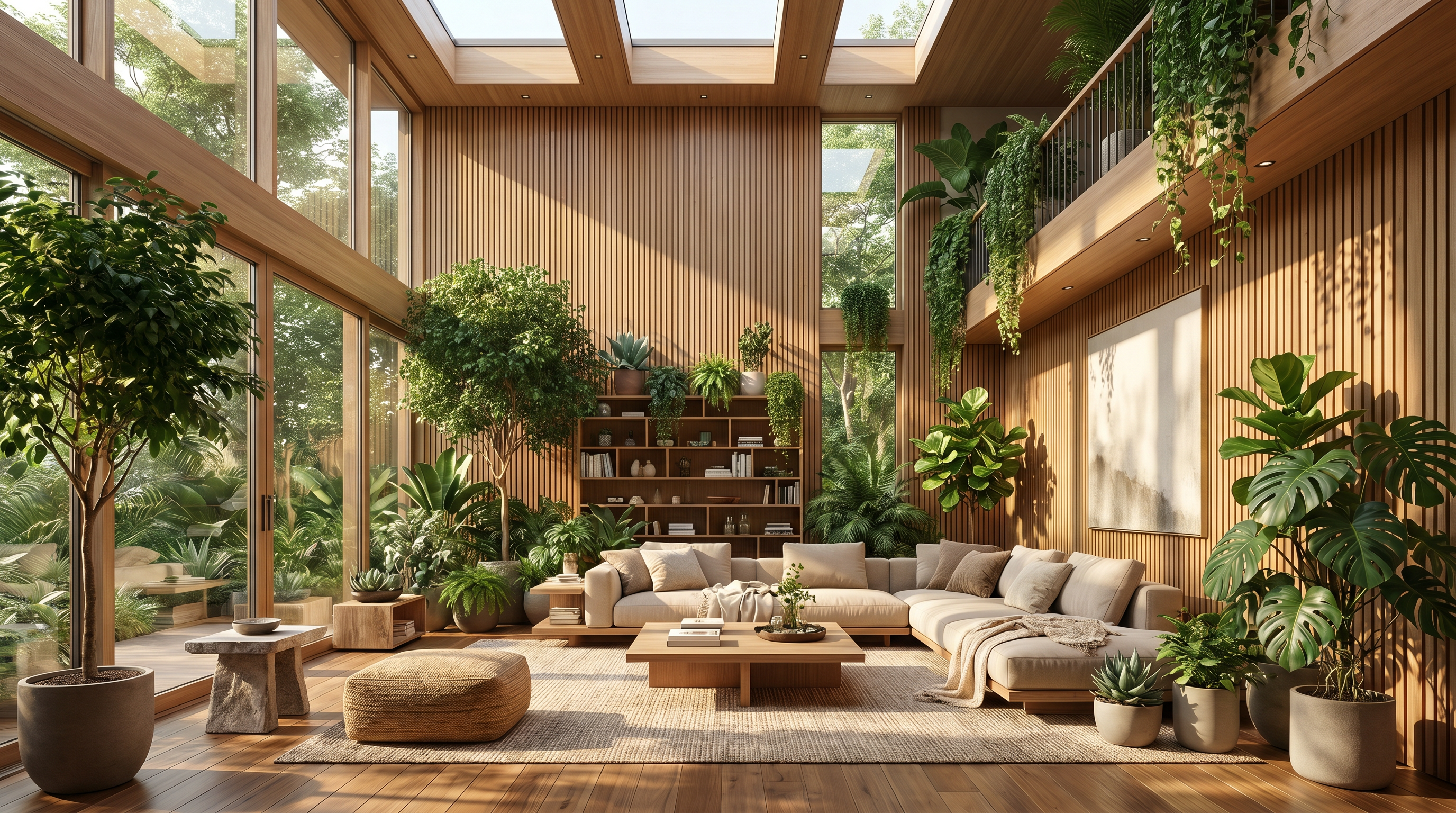
The most powerful tool in the neuroaesthetic arsenal is biophilic design. Rooted in the "biophilia hypothesis" popularized by biologist Edward O. Wilson in the 1980s, it posits that humans possess an innate, evolutionary need to connect with nature. Biophilic design is not merely the act of placing a potted plant in a corner; it is a comprehensive architectural framework that integrates natural systems, organic materials, and spatial patterns into the built environment.[3][4]
One of the most fascinating discoveries in this field involves fractals—complex, repeating geometric patterns found abundantly in nature, such as in the branching of trees, the veins of leaves, or the crests of waves. Research indicates that human brains are hardwired to process these natural geometries effortlessly. When we navigate artificial, boxy environments devoid of fractals, our brains work harder to process the visual data, leading to subtle but chronic cognitive fatigue.[1][8]
The materials used in a space also speak directly to our biology. Studies have shown that the mere visual presence of wood grain, whether real or accurately mimicked, can reduce a person's heart rate by an average of five beats per minute. Natural textures like wood, stone, and woven fabrics stimulate the somatosensory cortex, fostering a subconscious sense of safety and belonging that synthetic materials often fail to provide.[2][7]

Lighting is another critical pillar of neuro-centric design. Natural daylight regulates our circadian rhythms and triggers serotonin production, acting as a natural mood elevator. In environments where natural light is scarce, dynamic lighting systems that mimic the shifting color temperature of the sun throughout the day can prevent the lethargy and depressive symptoms associated with harsh, static fluorescent lighting.[2][5]
Lighting is another critical pillar of neuro-centric design.
Color psychology, long treated as a soft science, is now being validated by functional imaging studies. Different hues activate specific neural pathways and emotional processing centers. Soft greens and muted blues lower heart rates and promote focus, while warm ambers and yellows stimulate energy and social interaction. By strategically deploying color, designers can essentially program the emotional baseline of a room.[2][8]
Beyond the visual, neuroaesthetics encompasses the invisible elements of a space, particularly acoustics. Unpredictable, harsh noises elevate cortisol and keep the brain in a heightened state of alert. Conversely, spaces designed with acoustic dampening materials or ambient soundscapes—like the gentle murmur of water—allow the nervous system to downregulate, improving both concentration and emotional resilience.[1][8]
The urgency of integrating these principles has accelerated in the post-pandemic era. With urban populations spending an unprecedented amount of time indoors, the psychological toll of poorly designed spaces has become a public health concern. Biophilic design has transitioned from a luxury aesthetic trend to a vital necessity for collective mental health and resilience in modern cities.[2][5]
The impact on productivity and cognitive function is highly quantifiable. Employees working in biophilic offices report a 15 percent increase in productivity and significantly lower rates of fatigue. Environments that incorporate natural light, airflow, and views of greenery enhance working memory, attention spans, and creative problem-solving capabilities.[2][3]

In healthcare settings, the application of neuroarchitecture is literally a matter of life and death. Hospitals designed with visual access to nature, ample daylight, and organic materials have been shown to accelerate patient recovery times. Patients in these restorative environments require less pain medication and experience shorter hospital stays compared to those in sterile, windowless wards.[2][3]
These principles are also revolutionizing residential design, particularly for the aging population. "Living in place" design is moving beyond basic physical accessibility—like grab bars and ramps—to encompass emotional well-being. By creating homes that trigger the release of "happy hormones" through neuroaesthetic principles, designers can improve the long-term health outcomes and cognitive longevity of older adults.[7][8]

Importantly, the benefits of neuroaesthetics do not require massive budgets or complete architectural overhauls. Simple interventions—maximizing natural light, decluttering to reduce visual noise, and introducing organic textures—can profoundly alter a space's neurological impact. The goal is to reduce the cognitive load required to exist in a space, allowing the brain to rest and restore.[8]
As the empirical evidence mounts, the interior design industry is undergoing a paradigm shift. Designers are increasingly viewing themselves not just as decorators, but as facilitators of preventive mental healthcare. By bridging the gap between art and neuroscience, we are finally learning how to build environments that actively care for the minds that inhabit them.[2][8]
How we got here
1973
Psychoanalyst Erich Fromm popularizes the term 'biophilia' to describe humanity's innate psychological need to connect with nature.
1984
Biologist Edward O. Wilson expands the biophilia hypothesis, laying the groundwork for nature-centric architectural design.
1990s
Advances in brain-scanning technology allow neurobiologists to measure real-time physiological responses to beauty, birthing the field of neuroaesthetics.
2015
Major studies confirm that biophilic elements in classrooms and offices significantly boost concentration and productivity.
2020–Present
The global shift to indoor living during the pandemic accelerates the adoption of neuroaesthetic principles in residential and commercial design.
Viewpoints in depth
Neuroscientists & Researchers
Focus on measurable biological markers to quantify how environments impact the human nervous system.
This camp argues that interior design can no longer rely solely on subjective intuition. By utilizing fMRI scans, EEG readings, and biometric sensors, neuroscientists demonstrate that human brains have universal, hardwired responses to specific spatial geometries and lighting conditions. They view the built environment as a constant biological stimulus that either taxes or restores the nervous system.
Architectural Designers
Translate scientific data into practical spaces that serve human needs and improve daily well-being.
For practitioners, the challenge lies in applying clinical data to real-world constraints. This perspective emphasizes that while science provides the 'why,' design provides the 'how.' Designers advocate for seamless integration of biophilic elements—such as dynamic lighting and organic textures—ensuring that spaces remain highly functional and aesthetically cohesive rather than feeling like clinical laboratories.
Public Health & Wellness Advocates
Emphasize the necessity of biophilic spaces for collective mental health.
This viewpoint frames access to neuroaesthetic design as a public health issue rather than a luxury. Advocates argue that because modern humans spend the vast majority of their lives indoors, poorly designed, windowless environments contribute significantly to chronic stress and cognitive fatigue. They push for biophilic standards in schools, hospitals, and affordable housing to democratize the mental health benefits of good design.
What we don't know
- How long-term exposure to highly optimized neuroaesthetic environments alters baseline brain chemistry over decades.
- The exact threshold of natural light required to trigger optimal serotonin production across different age groups and neurodivergent profiles.
- How virtual or augmented reality environments mimicking biophilic design compare biologically to physical natural elements.
Key terms
- Neuroaesthetics
- The scientific study of how the brain responds to visual stimuli, beauty, and spatial design.
- Biophilic Design
- An architectural approach that integrates natural elements and processes into built environments to support human health.
- Orbitofrontal Cortex
- A region of the brain involved in emotional regulation and decision-making, activated by aesthetically pleasing spaces.
- Fractals
- Complex geometric patterns found in nature that repeat at different scales, proven to reduce cognitive stress when incorporated into design.
- Somatosensory Cortex
- The part of the brain that processes tactile sensations, stimulated by natural textures like wood and woven fabrics.
Frequently asked
Do I need a large budget to apply neuroaesthetics?
No. Simple changes like maximizing natural light, decluttering to reduce visual noise, and adding natural textures or plants can significantly impact your brain's response to a space.
How does biophilic design differ from decorating with plants?
While plants are a component, true biophilic design integrates natural light, airflow, organic materials, and nature-inspired spatial patterns to create a holistic restorative environment.
Can interior design really affect my physical health?
Yes. Studies show that environments optimized for neuroaesthetics can lower blood pressure, reduce cortisol levels, and even accelerate physical healing in hospital settings.
What are fractals and why do they matter in design?
Fractals are complex, repeating geometric patterns found in nature. The human brain processes them easily, meaning spaces that incorporate fractal patterns reduce cognitive fatigue and stress.
Sources
Source coverage
8 outlets
3 viewpoints surfaced








[1]Science in DesignNeuroscientists & Researchers
Spatial Design & Neuroscience: How Space Affects the Brain
Read on Science in Design →[2]Pearl AcademyArchitectural Designers
The Brain, Beauty, and Built Environments
Read on Pearl Academy →[3]Biophilic InnovationsPublic Health & Wellness Advocates
Defining biophilic design precisely
Read on Biophilic Innovations →[4]NeurotecturaNeuroscientists & Researchers
Environmental Psychology, Biophilic Design, and Neuroarchitecture
Read on Neurotectura →[5]Atlantis PressPublic Health & Wellness Advocates
Biophilic Design in Interior Architecture
Read on Atlantis Press →[6]ArchDailyArchitectural Designers
Neuroaesthetics and Neuroarchitecture
Read on ArchDaily →[7]AltroPublic Health & Wellness Advocates
Enriching lives through biophilic design
Read on Altro →[8]Factlen Editorial TeamArchitectural Designers
Synthesis by Factlen editorial team
Read on Factlen Editorial Team →

Every angle. Every day.
Get lifestyle stories with full source coverage and perspective breakdowns delivered to your inbox.