
The Science of Rucking: Why Weighted Walking is Replacing the Jogging Habit
By stacking Zone 2 cardiovascular training with low-impact resistance loading, rucking offers a highly efficient, joint-friendly alternative to running.
By Aylin Aksoy

In short
- Rucking is the practice of walking with a weighted backpack, combining aerobic exercise with resistance training.
- Carrying a load equal to 20 percent of body weight roughly doubles the calorie burn of unloaded walking.
- Rucking produces a ground reaction force of 1.3 to 1.5 times body weight, compared to 2.5 to 3 times for running.
In the landscape of modern fitness, the most effective interventions are often the simplest. Across urban parks and suburban trails, a growing demographic of health enthusiasts has adopted a practice that requires no gym membership, no digital subscription, and no complex machinery. It is called rucking—the act of walking with a weighted backpack. While it may look like an ordinary commute or a casual hike, biomechanists and longevity researchers are increasingly recognizing rucking as a highly efficient hybrid workout that bridges the gap between cardiovascular endurance and resistance training.[1]
The concept is far from new. Carrying heavy loads over long distances is arguably the most ancient human movement pattern, and it has served as the foundational fitness metric for militaries worldwide for centuries. Whether referred to as "yomping" by the Royal Marines, "tabbing" by British paratroopers, or simply a loaded march, the military application involves carrying upwards of 45 kilograms of gear. However, the civilian adaptation of rucking has stripped away the extreme suffering, optimizing the load to maximize health benefits while minimizing injury risk.[2]
At its physiological core, rucking works by stacking two distinct exercise stimuli into a single session: aerobic conditioning and structural resistance. When a person walks unencumbered, their cardiovascular system operates at a baseline level. By introducing a fixed external load—typically cast-iron plates, sandbags, or even heavy books—the body is forced to recruit additional muscle fibers simply to maintain an upright posture and propel mass forward. The weight does the work that speed normally does for runners, elevating the heart rate without requiring a faster pace.
The metabolic cost of this added weight is substantial and well-documented. The science of loaded walking relies heavily on the Pandolf Equation, a metabolic model developed by the U.S. Army Research Institute of Environmental Medicine. This formula accounts for body weight, pack weight, speed, and terrain to calculate energy expenditure. The data reveals that carrying a load equal to 20 percent of one's body weight roughly doubles the calorie burn compared to walking unloaded at the exact same pace.
For a 150-pound individual, carrying a 30-pound pack can burn between 400 and 500 calories per hour, pushing the energy expenditure of a brisk walk into the territory of a moderate jog. This increased metabolic demand is driven by the continuous engagement of the body's stabilizing muscles. The core, lower back, glutes, and calves must fire relentlessly to counterbalance the weight pulling backward, turning a lower-body movement into a full-body mechanical effort.
But the true appeal of rucking—and the primary reason it is capturing athletes and aging adults alike—lies in its joint impact profile. The most critical metric in endurance sports is ground reaction force, which measures the shock transmitted through the legs with every footstrike. When a person runs, they experience a brief moment of airborne flight. The subsequent landing sends a shockwave equal to 2.5 to 3 times their body weight through their knees, hips, and ankles.[2]
Over thousands of strides, this cumulative impact is the primary driver of the high injury rates seen in runners, particularly involving the knees and Achilles tendons. Rucking, by contrast, maintains the biomechanics of walking, meaning one foot is always in contact with the ground.
As a result, the ground reaction force peaks at roughly 1.3 to 1.5 times the individual's body weight. This represents a 50 to 60 percent reduction in joint stress compared to jogging, offering a cardiovascular stimulus comparable to running but with a fraction of the structural wear and tear.
This low-impact nature makes rucking uniquely sustainable. A University of Pittsburgh study tracking military personnel found that running produced six times more exercise-related injuries than rucking under controlled conditions. For individuals recovering from joint injuries, or those whose knees simply no longer tolerate the pounding of pavement, rucking provides a mechanism to train hard without requiring days of recovery to heal inflamed connective tissue.[1]
Cardiovascularly, rucking is an exceptionally reliable vehicle for "Zone 2" training. Zone 2 refers to a moderate aerobic intensity—roughly 60 to 70 percent of a person's maximum heart rate—that endurance athletes and longevity experts consider the metabolic sweet spot. Training in this zone builds mitochondrial density, improves the body's ability to oxidize fat for fuel, and develops a massive aerobic base. Because the weighted pack artificially elevates the heart rate, most individuals find themselves locked perfectly into Zone 2 at a standard, comfortable walking pace.[2]
The cardiovascular adaptations are not purely theoretical. Research published in the Journal of Strength and Conditioning Research demonstrated that healthy men who completed a 10-week rucking program experienced significant increases in their VO2 max. VO2 max, the measurement of the maximum amount of oxygen the body can utilize during intense exercise, is widely regarded by medical professionals as one of the strongest predictors of long-term health and all-cause mortality.
Beyond the heart and lungs, rucking delivers profound benefits to the skeletal system through a process known as osteogenic loading. Bone is living tissue that adapts to the mechanical demands placed upon it. When the skeletal system is subjected to compressive forces, it stimulates the activity of osteoblasts—the cells responsible for forming new bone.
Weight-bearing exercises are universally prescribed to combat age-related bone loss, but cycling and swimming offer zero osteogenic benefit, and unloaded walking offers very little. The axial load provided by a heavy backpack compresses the spine, hips, and femurs with every step, providing a potent stimulus to preserve and even increase bone mineral density. Some clinical literature even points to loaded walking as an accessible, low-cost rehabilitation strategy for individuals managing early-stage osteoporosis.[1]
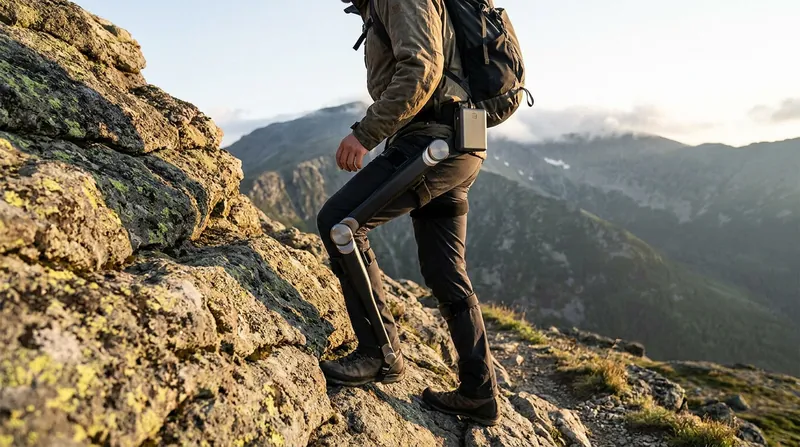
The benefits of rucking also extend into the psychological and neurological realms, leveraging a concept researchers call "green exercise." Rucking inherently takes place outdoors, combining the neurochemical cascade of aerobic exercise—which releases endorphins and brain-derived neurotrophic factor (BDNF)—with the stress-reducing properties of nature exposure.[2]
Studies consistently show that exercising in natural environments lowers cortisol levels and reduces sympathetic nervous system arousal more effectively than identical exercise performed indoors. Furthermore, when rucking is performed in the early morning, the exposure to natural sunlight helps regulate the body's circadian rhythm, improving nighttime sleep architecture and daytime hormonal balance. It is a holistic stack of interventions: resistance training, aerobic conditioning, and environmental therapy, all occurring simultaneously.[2]
Despite the overwhelming benefits, physical therapists and biomechanists caution that rucking is not without risks, particularly for overzealous beginners. The most common mistake is starting with too much weight. While military recruits may carry 70 pounds, civilian beginners who immediately strap on heavy loads risk altering their natural gait. Excessive weight can cause the walker to lean too far forward, shifting the load dangerously onto the lower back and compressing the lumbar spine.[1]
For individuals with pre-existing spinal conditions, such as herniated discs or severe scoliosis, the compressive strain of a heavy backpack can exacerbate pain if postural integrity fails. The natural tendency under load is to hunch the shoulders and drop the chest. Proper rucking mechanics require active resistance against this pull: the chest must remain proud, the shoulders pulled back, and the core braced to stabilize the pelvis.
To mitigate these risks, sports medicine professionals universally recommend a conservative entry point. Beginners should start with a load equal to roughly 10 to 15 percent of their body weight—typically 10 to 20 pounds for most adults. The initial focus should be on maintaining a brisk, natural stride over short distances of two to three miles. Only after the connective tissues have adapted to the load over several weeks should the weight or distance be incrementally increased.[1]
Ultimately, rucking represents a paradigm shift in how we view walking. It democratizes the benefits of heavy resistance training and intense cardiovascular conditioning, packaging them into an activity that requires nothing more than a backpack and a sidewalk. By turning a simple stroll into a full-body mechanical challenge, rucking proves that sometimes the most sophisticated fitness innovations are just ancient human behaviors, rediscovered and properly applied.[2]
Terms to know
- Rucking
- The fitness practice of walking or hiking while carrying a loaded backpack.
- Zone 2 Cardio
- A moderate aerobic intensity (60-70% of max heart rate) that builds endurance and metabolic health without requiring excessive recovery.
- Ground Reaction Force
- The mechanical shock and force transmitted through the body's joints with every footstrike during movement.
- Osteogenic Loading
- The application of mechanical stress or weight to the skeletal system, which stimulates the creation of new bone tissue.
- Pandolf Equation
- A metabolic formula developed by the military to calculate the exact calorie burn of walking with varying weights and speeds.
- Posterior Chain
- The group of muscles on the back of the body, including the calves, hamstrings, glutes, and lower back, heavily engaged during rucking.
Questions readers ask
What exactly is rucking?
Rucking is simply the act of walking or hiking while carrying a weighted backpack. It originated as a military training exercise but has been adapted for civilian fitness.
How much weight should I start with?
Beginners should start with 10 to 15 percent of their body weight (usually 10 to 20 pounds) to allow their joints and connective tissues to adapt safely.
Do I need a special backpack?
Not to start. Any sturdy backpack with padded shoulder straps will work for light weights. As you progress to heavier loads, a dedicated rucksack with a hip belt is recommended.
Is rucking better than running?
They serve different purposes. Running burns more calories per minute, but rucking offers similar cardiovascular benefits with 50 to 60 percent less impact on the joints.
Does rucking build muscle?
Yes. The added weight acts as resistance, progressively overloading the posterior chain, core, shoulders, and legs, which builds functional strength over time.
Different angles
Biomechanics & Longevity Researchers
Focuses on the metabolic and structural adaptations of loaded walking for long-term health.
This camp views rucking through the lens of longevity and sustainable fitness. They emphasize that rucking perfectly targets 'Zone 2' cardiovascular training while simultaneously providing the osteogenic loading necessary to prevent age-related bone density loss. For these researchers, the primary value of rucking is its ability to deliver high-yield physiological adaptations without the joint degradation that often forces aging runners to abandon their sport.
Clinical & Rehabilitation Specialists
Prioritizes joint preservation, injury prevention, and safe progression.
Physical therapists and chiropractors appreciate rucking as a low-impact alternative to jogging, often prescribing it for patients recovering from knee or Achilles injuries. However, they are the most vocal about the risks of poor execution. This camp warns that adopting heavy military-style loads too quickly can lead to lumbar spine compression and altered gait mechanics, stressing that posture and gradual weight progression are non-negotiable.
Recreational Fitness Advocates
Values the accessibility, mental health benefits, and efficiency of the workout.
For everyday fitness enthusiasts and outdoor brands, rucking is championed as the ultimate 'life hack' for busy schedules. This perspective highlights the mental health benefits of 'green exercise'—getting outside in the fresh air—and the efficiency of combining cardio and strength training into a single session. They focus less on the clinical data and more on the practical reality that rucking requires no gym membership and can be integrated into a daily commute or dog walk.
- Biomechanics & Longevity Researchers
- Focuses on the metabolic and structural adaptations of loaded walking for long-term health.
- Clinical & Rehabilitation Specialists
- Prioritizes joint preservation, injury prevention, and safe progression.
- Recreational Fitness Advocates
- Values the accessibility, mental health benefits, and efficiency of the workout.
Perspectives this story doesn't cover
- Urban commuters
- Wheelchair users / adaptive athletes
Sources
Source coverage
2 outlets
3 viewpoints surfaced


- [1]UW MedicineClinical & Rehabilitation Specialists
5 Reasons Why Rucking Is More Than a New Fitness Trend
Read on UW Medicine → - [2]Factlen Editorial TeamBiomechanics & Longevity Researchers
Synthesis by Factlen editorial team
Read on Factlen Editorial Team →

More in Fitness
See all →Metabolic Tracking
New Wearable Tech Brings Lab-Grade Lactate and Gas Analysis to the Field, Redefining Real-Time Endurance Training
4 sources

Exercise Physiology
Altitude Training Boosts Performance and Hemoglobin, But Not VO2max, Meta-Analysis Finds
4 sources

Wearable Robotics
The Science of AI Exoskeletons: How Wearable Robotics Reduce Outdoor Exertion by 39%
4 sources
Green Exercise
The Science of 'Green Exercise': How Outdoor Environments Alter the Physiology of a Workout
5 sources

Comments
Every angle. Every day.
Get Fitness stories with full source coverage and perspective breakdowns, free every day.