
The Science of Recovery: Why Athletes Are Trading Ice Baths for Saunas
While cold plunges remain popular for acute pain relief, emerging sports science reveals that heat therapy may be superior for long-term muscle growth and cellular adaptation.
By Factlen Editorial Team
- Strength & Adaptation Researchers
- Prioritizes long-term cellular adaptation, muscle growth, and strength gains over short-term pain relief.
- Acute Performance Advocates
- Focuses on immediate recovery and reducing soreness for rapid turnarounds in competition.
- Thermoregulatory Specialists
- Focuses on the cardiovascular and cellular benefits of heat stress and vasodilation.
What's not represented
- · Recreational athletes with limited access to facilities
- · Endurance runners vs. powerlifters nuance
Why this matters
Millions of recreational athletes use ice baths hoping to build muscle and recover faster, unaware that cold exposure can actually blunt long-term strength gains. Understanding when to use heat versus cold allows you to align your recovery protocol with your actual fitness goals.
Key points
- Cold water immersion effectively reduces acute muscle soreness and fatigue, making it ideal for mid-tournament recovery.
- Ice baths blunt the natural inflammatory response, which actively suppresses long-term muscle growth and strength adaptation.
- Heat therapy induces vasodilation, increasing blood flow to clear metabolic waste without halting the body's repair processes.
- Saunas trigger the release of Heat Shock Proteins, which actively repair damaged muscle fibers at a cellular level.
- Contrast water therapy alternates hot and cold to create a vascular pumping effect, effectively clearing blood lactate.
- Athletes should periodize recovery: use cold when immediate performance is required, and use heat when building muscle.
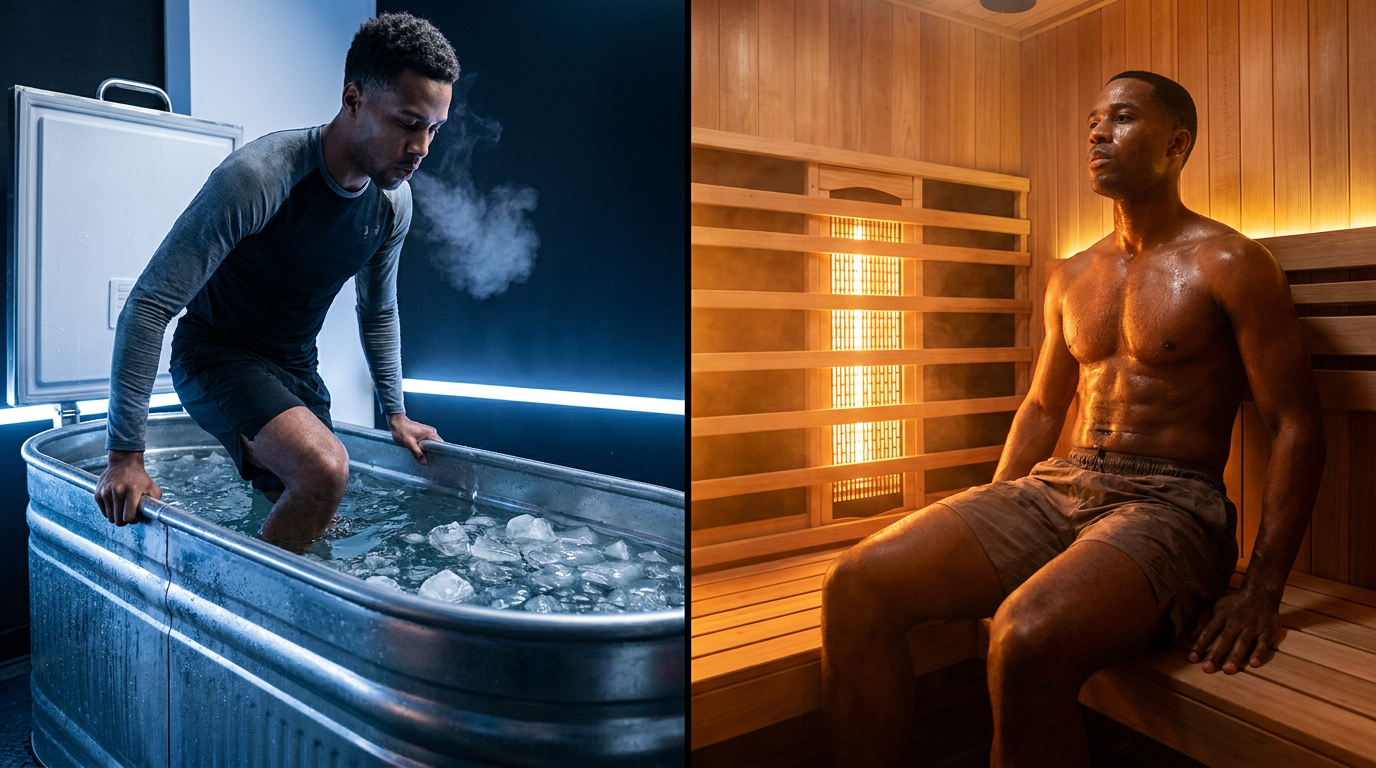
The modern locker room looks more like a thermodynamics laboratory than a changing area. Professional athletes and weekend warriors alike routinely plunge their bodies into 10-degree ice baths, sweat profusely in 50-degree infrared saunas, and cycle rapidly between the two extremes in search of the ultimate recovery hack. The wellness industry has capitalized on this thermal obsession, marketing expensive cold plunges and home saunas as mandatory tools for anyone serious about fitness. But beneath the marketing hype lies a complex physiological reality. For decades, the mantra of athletic recovery was simple: if it hurts, ice it. Cold water immersion became the unquestioned gold standard for treating everything from a sprained ankle to the full-body fatigue of a grueling marathon. However, as sports science has evolved and molecular measurement tools have become more precise, a fierce debate has emerged over whether freezing our muscles actually helps them heal, or if it merely masks the pain while stalling the actual cellular repair process.[6]
The physiological mechanism behind cold water immersion is straightforward but intensely powerful. When the human body is submerged in cold water—typically between 10 and 15 degrees Celsius—the immediate thermal shock triggers severe peripheral vasoconstriction. The blood vessels at the skin's surface and within the peripheral muscle tissue clamp down tightly, a survival mechanism designed to redirect warm blood to the core and protect vital organs. This clamping effect acts like a physiological tourniquet on the extremities. By restricting blood flow to micro-torn muscles that have just endured a heavy workout, cold water immersion dramatically reduces acute inflammation and localized swelling. Furthermore, the cold temperature slows the cellular metabolic rate, which limits secondary tissue damage caused by the accumulation of metabolic waste products. For an athlete who has just finished a brutal rugby match and needs to take the field again the very next morning, this mechanism is highly effective at reducing Delayed Onset Muscle Soreness (DOMS) and lowering perceived fatigue.[1][5]
However, sports scientists and molecular biologists have recently uncovered a significant, long-term catch to this anti-inflammatory magic. In the realm of exercise physiology, inflammation is not inherently bad; in fact, it is the essential biological trigger required for muscles to repair, adapt, and grow stronger. By artificially blunting the inflammatory response with an ice bath, athletes may be inadvertently short-circuiting their own physiological progress. A growing body of robust research demonstrates that routine cold water immersion following resistance training significantly blunts anabolic signaling pathways. In simple terms, taking an ice bath after lifting weights actively kills muscle hypertrophy. When the body is deprived of the natural inflammatory cascade, the cellular pathways responsible for synthesizing new muscle proteins are suppressed, leading to measurably smaller long-term gains in strength and muscle mass compared to athletes who simply rest at room temperature.[1]

This revelation regarding the blunting of hypertrophy has led to a major paradigm shift in high-performance training, pushing many athletes toward the opposite end of the thermometer: heat therapy. Whether administered through traditional dry cedar saunas, modern infrared cabins, or hot water immersion tubs, heat operates on a fundamentally different physiological premise than cold. Instead of restricting blood flow to preserve core temperature, heat stress induces widespread vasodilation. The blood vessels expand and relax, flushing the fatigued muscles with oxygen-rich blood and accelerating the clearance of metabolic byproducts like lactate that accumulate during intense exercise. This dramatically increased circulation delivers the exact nutrients, amino acids, and oxygen required for cellular repair directly to the damaged muscle tissues, effectively feeding the recovery process rather than freezing it in place.[2][6]
Beyond the simple mechanics of increased blood flow, heat stress triggers a profound and highly beneficial molecular response: the release of Heat Shock Proteins (HSPs). These specialized proteins act as cellular chaperones within the body. When the body's core temperature rises, HSPs are deployed to seek out damaged or misfolded proteins within the muscle fibers—the exact type of micro-damage caused by heavy resistance training or intense endurance work. The heat shock proteins actively repair these damaged structures, ensuring that the muscle rebuilds stronger than before. This mechanism not only accelerates the immediate recovery timeline but actively protects the muscle cells from future stress, creating a more resilient athlete over the long term.[2]
Beyond the simple mechanics of increased blood flow, heat stress triggers a profound and highly beneficial molecular response: the release of Heat Shock Proteins (HSPs).
Crucially, unlike cold water immersion, heat therapy does not blunt the adaptive response to exercise. Recent clinical studies examining female team sport athletes who utilized infrared saunas at 50 degrees Celsius demonstrated significant improvements in neuromuscular recovery and peak power output over a multi-week training block. Importantly, these performance gains occurred without any negative impact on muscle hypertrophy or body composition. The heat supported and amplified the body's natural repair processes rather than suppressing them. This makes sauna use an incredibly attractive option for athletes in a building phase, where the primary goal is to maximize the adaptive response to their training stimulus rather than simply numbing the pain of today's workout.[2]

The distinction between traditional dry saunas and modern infrared saunas also warrants attention in the recovery conversation. Traditional saunas heat the air around the user to very high temperatures, often exceeding 80 degrees Celsius, which then heats the body from the outside in. Infrared saunas, by contrast, use light waves to penetrate the skin and heat the body directly at much lower ambient temperatures, typically between 40 and 50 degrees Celsius. For athletes, infrared saunas are often preferred post-workout because they induce a deep, profuse sweat and elevate core temperature without the harsh, suffocating cardiovascular strain of a traditional hot-rock sauna. This allows the athlete to reap the vasodilatory and heat shock protein benefits without adding excessive central nervous system fatigue to a body that has already been pushed to its limits during training.[2][6]
For athletes who want to harness the benefits of both extremes, Contrast Water Therapy (CWT) has become a highly popular middle ground. By alternating between hot and cold immersion—typically spending one to two minutes in hot water followed immediately by thirty to sixty seconds in cold water—practitioners aim to create a mechanical "pumping action" within the vascular system. The rapid, forced cycling between heat-induced vasodilation and cold-induced vasoconstriction acts as a physiological pump, actively flushing metabolic waste and fluid buildup from the muscles while still providing some of the analgesic, pain-relieving benefits associated with cold exposure. Meta-analyses of collegiate swimmers and team sport athletes indicate that contrast therapy is particularly effective at clearing blood lactate and significantly reducing subjective feelings of fatigue after high-intensity interval training.[3][4]
So, which temperature is the true king of athletic recovery? The scientific consensus has firmly moved away from a one-size-fits-all answer and toward a nuanced strategy of "periodization." The optimal recovery tool depends entirely on the athlete's immediate goal: long-term adaptation versus acute, short-term performance. During the off-season or a heavy, foundational training block, the primary goal is adaptation. The athlete wants to build muscle, increase baseline strength, and force the body to adapt to increasing levels of stress. In this phase, cold water immersion should be strictly avoided immediately following resistance training. Instead, passive recovery, light active recovery, or heat therapy should be utilized to support the inflammatory repair process, maximize hypertrophy, and encourage the proliferation of heat shock proteins.[1][2]

Conversely, during a dense tournament schedule, a playoff series, or a multi-day endurance event like a cycling grand tour, cellular adaptation is entirely irrelevant. The only goal that matters is surviving the current effort and performing at a high level again tomorrow. In these high-stakes, short-turnaround scenarios, the pain-numbing, inflammation-blunting effects of an ice bath are invaluable. By artificially suppressing the inflammatory response, the athlete can step onto the field the next day feeling fresher and experiencing significantly less muscle soreness. Ultimately, recovery is not about eliminating physical stress; it is about managing it intelligently. Both the ice bath and the sauna are powerful physiological tools, but they are not interchangeable.[4][5]
Beyond the purely physiological metrics of blood lactate and creatine kinase, the psychological impact of temperature therapy cannot be overstated. The central nervous system plays a massive role in how an athlete perceives fatigue and readiness. The shock of an ice bath triggers a massive release of endorphins and norepinephrine, leaving the athlete feeling alert, invigorated, and mentally reset after a grueling effort. Conversely, the enveloping warmth of a sauna activates the parasympathetic nervous system—the body's "rest and digest" mode. This shift lowers cortisol levels, reduces anxiety, and promotes deep, restorative sleep, which remains the single most important recovery tool in human biology. The psychological belief that a recovery intervention is working often creates a powerful placebo effect that translates into genuinely improved performance on the field.[6]

As sports science continues to refine our understanding of human physiology, the era of blindly jumping into an ice bath after every workout is officially over. The modern athlete must be a tactician, deploying cold to blunt acute damage during competition and utilizing heat to foster growth during training. The locker room may look like a thermodynamics lab, but the formula for success is becoming clearer: freeze to perform tomorrow, heat to grow for next year. By aligning their thermal recovery strategies with their specific physiological goals, athletes can stop fighting their body's natural repair mechanisms and start working in harmony with them.[6]
How we got here
1978
The RICE protocol (Rest, Ice, Compression, Elevation) is coined, cementing cold therapy as the default treatment for athletic injuries.
Early 2000s
Cold water immersion (ice baths) becomes ubiquitous in professional locker rooms for post-match recovery.
2015
Landmark studies reveal that routine cold water immersion blunts anabolic signaling and reduces muscle hypertrophy.
2020s
Heat therapy and infrared saunas surge in popularity as athletes prioritize long-term cellular adaptation over acute pain relief.
Viewpoints in depth
Acute Performance Advocates
Focuses on immediate recovery and reducing soreness for rapid turnarounds in competition.
This camp, often comprising team sport coaches, athletic trainers, and tournament athletes, prioritizes the immediate reduction of Delayed Onset Muscle Soreness (DOMS) and perceived fatigue. They rely heavily on cold water immersion because it acts as a physiological tourniquet, blunting inflammation and numbing pain. For these practitioners, the long-term blunting of muscle hypertrophy is an acceptable trade-off if it means their star player can take the field feeling fresh for a playoff game the very next day.
Strength & Adaptation Researchers
Prioritizes long-term cellular adaptation, muscle growth, and strength gains over short-term pain relief.
Composed of exercise physiologists, molecular biologists, and strength coaches, this perspective views inflammation not as an enemy, but as a necessary biological signal for growth. They strongly caution against the routine use of ice baths after resistance training, citing robust evidence that cold exposure suppresses anabolic signaling and kills hypertrophy. Instead, they advocate for passive recovery or heat therapy, which supports the body's natural inflammatory repair cascade and ensures that the athlete actually reaps the physiological adaptations they worked so hard for in the gym.
Thermoregulatory Specialists
Focuses on the cardiovascular and cellular benefits of heat stress and vasodilation.
This viewpoint emphasizes the profound molecular responses triggered by heat therapy, particularly the release of Heat Shock Proteins (HSPs) and the benefits of increased blood flow. Researchers in this camp highlight that saunas and hot water immersion actively repair misfolded proteins and clear metabolic waste without blunting the body's adaptive response to exercise. They view heat not just as a recovery tool, but as an active training modality that improves vascular health, lowers cortisol, and builds long-term cellular resilience.
What we don't know
- The exact physiological threshold where the benefits of heat shock proteins plateau during prolonged sauna use.
- How individual genetic differences in thermoregulation affect a specific athlete's response to contrast water therapy.
- The long-term effects of combining extreme heat and cold therapies on the cardiovascular system over a multi-year athletic career.
Key terms
- Delayed Onset Muscle Soreness (DOMS)
- The muscle pain and stiffness that typically peaks 24 to 48 hours after unfamiliar or intense exercise.
- Hypertrophy
- The enlargement of an organ or tissue; in fitness, it refers specifically to the growth and increase of muscle cell size.
- Vasoconstriction
- The narrowing of blood vessels, typically in response to cold, which restricts blood flow to the extremities.
- Vasodilation
- The widening of blood vessels, typically in response to heat, which increases blood flow and oxygen delivery to tissues.
- Heat Shock Proteins (HSPs)
- Specialized proteins produced by cells in response to heat stress that help repair damaged or misfolded proteins.
Frequently asked
Should I take an ice bath after lifting weights?
No. Research shows that cold water immersion immediately after resistance training blunts the inflammatory response needed for muscle growth, significantly reducing long-term hypertrophy.
Is a sauna or cold plunge better for recovery?
It depends on your goal. Cold plunges are best for acute pain relief and rapid turnaround between events, while saunas are better for supporting long-term muscle adaptation and cellular repair.
How long should I stay in an ice bath?
Studies suggest the optimal dose for reducing muscle soreness is 11 to 15 minutes in water temperatures between 10 and 15 degrees Celsius.
What is contrast water therapy?
Contrast therapy involves rapidly alternating between hot and cold water immersion to create a "pumping" effect in the blood vessels, which helps clear metabolic waste like lactate.
Sources
Source coverage
6 outlets
3 viewpoints surfaced





[1]The Journal of PhysiologyStrength & Adaptation Researchers
Cold water immersion mechanisms for recovery following exercise
Read on The Journal of Physiology →[2]Frontiers in Sports and Active LivingThermoregulatory Specialists
Effects of repeated use of post-exercise infrared sauna on neuromuscular performance and muscle hypertrophy
Read on Frontiers in Sports and Active Living →[3]Sports MedicineThermoregulatory Specialists
Water immersion recovery for athletes: effect on exercise performance and practical recommendations
Read on Sports Medicine →[4]Journal of Strength and Conditioning ResearchAcute Performance Advocates
Effects of Cold Water Immersion and Contrast Water Therapy for Recovery From Team Sport
Read on Journal of Strength and Conditioning Research →Effects of cold-water immersion at different body regions on post-exercise muscle damage recovery
Read on Frontiers in Physiology →[6]Factlen Editorial TeamStrength & Adaptation Researchers
Synthesis by Factlen editorial team
Read on Factlen Editorial Team →
Every angle. Every day.
Get fitness stories with full source coverage and perspective breakdowns delivered to your inbox.