
The Science of Pilates: How Low-Impact Resistance Training Changes the Body and Brain
Once a niche fitness secret, Pilates is now backed by extensive biomechanical and neurological research. Clinical studies reveal how its controlled movements and eccentric loading not only rebuild core stability but significantly reduce anxiety and depression.

In short
- Pilates activates deep core stabilizers like the transverse abdominis, significantly improving postural alignment and reducing lower back pain.
- The Reformer apparatus provides eccentric loading through spring resistance, building functional strength without high-impact joint stress.
- Lateral thoracic breathing used in Pilates stimulates the vagus nerve, activating the parasympathetic nervous system to lower cortisol levels.
When Joseph Pilates developed his exercise system in the 1920s, he didn't name it after himself. He called it "Contrology"—the precise, conscious control of the mind over the body's muscles. Originally utilized to rehabilitate bedridden patients and later adopted by elite ballet dancers for injury prevention, the method spent decades as a niche fitness secret.
Today, however, Pilates has transcended its boutique studio reputation to become a frontline intervention in physical therapy and clinical psychology. The slow, deliberate movements that define the practice are no longer just anecdotal wellness trends; they are the subject of rigorous scientific scrutiny.[6]
The shift from subjective praise to empirical validation has fundamentally changed how medical professionals view low-impact resistance training. Biomechanists, neuroscientists, and kinesiologists are actively mapping exactly how these controlled exercises remodel both the musculoskeletal system and the brain's neural pathways. By isolating deep stabilizing muscles and synchronizing movement with breath, Pilates triggers a cascade of physiological responses that high-intensity interval training and heavy weightlifting often bypass. This growing body of evidence is prompting a reevaluation of what constitutes effective exercise for long-term health and longevity.[6]
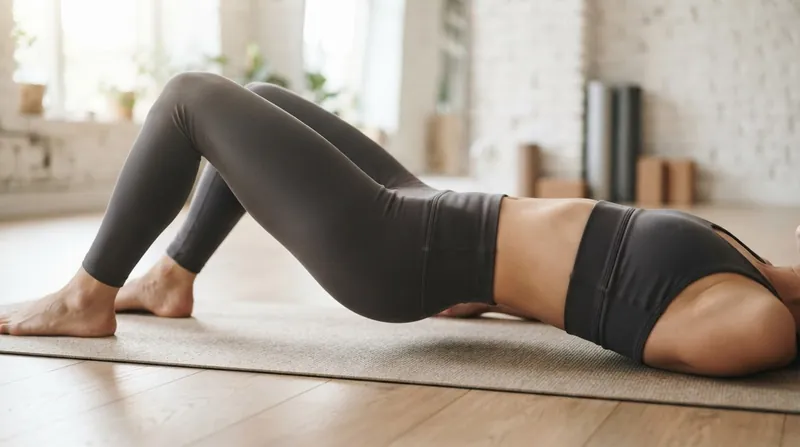
At the center of the Pilates method is the concept of the "powerhouse," a biomechanical hub that encompasses the deep abdominal muscles, the lower back, the hips, and the pelvic floor. Unlike traditional crunches or sit-ups that primarily target the superficial rectus abdominis—the visible "six-pack" muscles—Pilates demands the activation of the transverse abdominis and the multifidus.
These deep stabilizers wrap around the spine like an internal corset, providing essential structural support before any movement of the limbs even occurs. This inside-out approach to strength building is critical for functional movement and injury prevention.[3]
The clinical implications of this deep core activation are profound, particularly for the modern, sedentary workforce. Research published in the Journal of Bodywork and Movement Therapies demonstrates that regular Pilates practice significantly enhances postural control and frontal alignment of the shoulders and pelvis. By correcting these structural imbalances, the method actively reduces the mechanical stress placed on the lumbar spine. For individuals suffering from chronic, non-specific lower back pain, this improved alignment and muscular endurance often translate to substantial pain relief and restored mobility.[7]
Beyond the core, the science of Pilates extends to comprehensive joint health and longevity. Traditional high-impact exercises, while excellent for cardiovascular fitness, can subject the joints to repetitive stress and micro-trauma. Pilates, conversely, promotes controlled, fluid mobility that actively lubricates the joints without overloading them. By encouraging a full range of motion while simultaneously strengthening the surrounding stabilizing muscles, the practice enhances joint integrity. This makes it an invaluable tool not just for healthy adults, but for older populations seeking to maintain balance and prevent falls.[4]
Within the Pilates ecosystem, a persistent debate centers on the biomechanical differences between Mat and Reformer exercises. Mat Pilates relies entirely on the practitioner's body weight and gravity to create resistance. While it may appear less intimidating without the complex machinery, biomechanists note that Mat work can actually be more demanding in terms of neuromuscular control. Without the external support of a carriage or straps, the individual must generate their own stability, forcing dominant muscles to yield and allowing weaker, isolated muscles to engage and strengthen.[4]
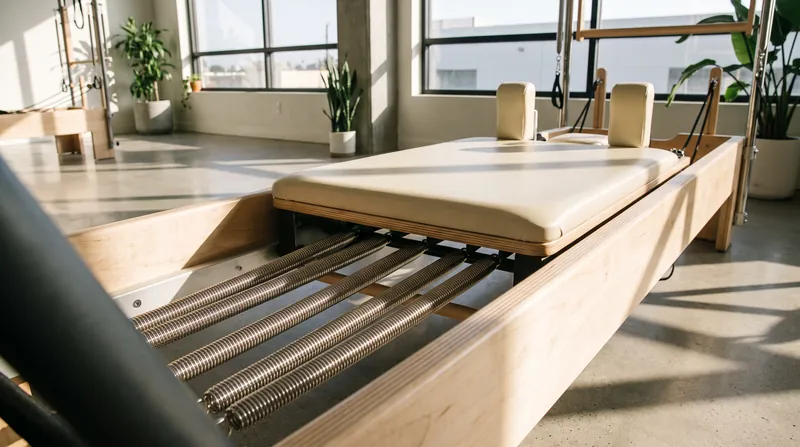
The Pilates Reformer, on the other hand, introduces a highly sophisticated variable resistance system. The apparatus features a sliding carriage tethered by a series of color-coded springs, alongside ropes and pulleys. This setup fundamentally alters the biomechanical load placed on the body.
A common misconception is that lighter springs make an exercise easier; in reality, lighter resistance often removes stability, forcing the deep core muscles to work overtime to control the carriage. Conversely, heavier springs are utilized to build strength in the prime mover muscles, such as the quadriceps and hamstrings.[4]
Sports science researchers have highlighted the Reformer's unique capacity for eccentric loading—the active lengthening of a muscle while it remains under tension. This type of muscle contraction is highly effective for building lean, functional strength and preventing athletic injuries. Furthermore, the addition of a jump board to the Reformer allows for low-impact plyometric training. Athletes can practice explosive, rebounding movements that build power and speed, all while lying horizontally to eliminate the compressive gravitational forces normally exerted on the spine and knees.[3]
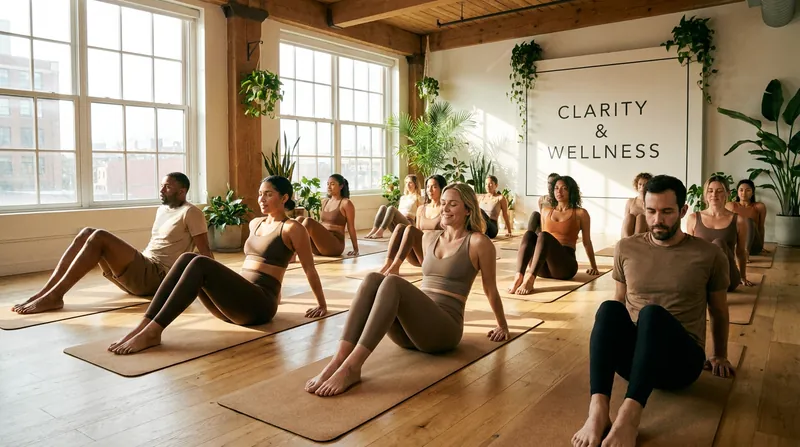
While the physical transformations associated with Pilates are well-documented, the most groundbreaking recent research focuses on its neurological and psychological impact. Pilates is inherently a mindful practice; it requires intense concentration, spatial awareness, and precise motor control. This sustained internal focus distinguishes it from traditional, repetitive exercise modalities where the mind can easily wander. By demanding total cognitive presence, Pilates effectively acts as a moving meditation, forcing the brain to forge new neural pathways and improve overall mind-body coordination.[6]
A critical component of this neurological shift is the specific breathing technique employed during practice. Pilates utilizes lateral thoracic breathing—expanding the ribcage laterally while maintaining a contracted abdominal wall. This deep, rhythmic breathing directly stimulates the vagus nerve, which serves as the main superhighway of the parasympathetic nervous system. Activating this "rest and digest" state actively lowers the production of stress hormones like cortisol, shifting the body out of the chronic "fight or flight" mode that characterizes much of modern life.[3][6]
The translation of these physiological mechanisms into measurable mental health outcomes has been the subject of extensive clinical review. A comprehensive meta-analysis published in MDPI examined 32 randomized and quasi-experimental trials involving over 1,200 participants. The researchers found that Pilates-based exercise interventions yielded statistically significant improvements in overall psychological well-being, quality of life, and self-esteem across both healthy and clinical populations. The data suggests that the method is a highly feasible and effective psychosocial intervention.[1]
Further investigations have isolated the method's efficacy in treating specific mood disorders. Research indexed by the National Institutes of Health and studies in the Journal of Clinical Psychology have documented large, heterogeneous reductions in depressive and anxiety symptoms among consistent Pilates practitioners. When compared to inactive control groups, individuals participating in supervised Pilates programs exhibited significant decreases in emotional distress, fatigue, and somatization, alongside marked increases in feelings of energy and emotional resilience.[2][5]
Researchers hypothesize that these psychological benefits are intrinsically linked to the physical mechanisms of the practice. Improvements in body awareness, physical self-perception, and postural confidence act as direct mediators for enhanced self-esteem and reduced social anxiety. For clinical populations dealing with chronic conditions, the physical reduction in pain and the restoration of functional mobility serve as primary catalysts for decreased depressive symptoms. The mind and body do not operate in silos; Pilates leverages their interconnectedness to foster holistic healing.[1]
Despite the overwhelmingly positive data, the scientific community acknowledges several areas of uncertainty regarding Pilates as a clinical prescription. The most prominent unknown is the optimal dosage required to achieve specific therapeutic outcomes. While studies indicate that even low-frequency programs—such as one session per week—can yield benefits, the exact combination of frequency, duration, and intensity needed for maximum clinical efficacy remains debated. The high heterogeneity across different study designs makes it difficult to establish a universal, standardized protocol.[1]
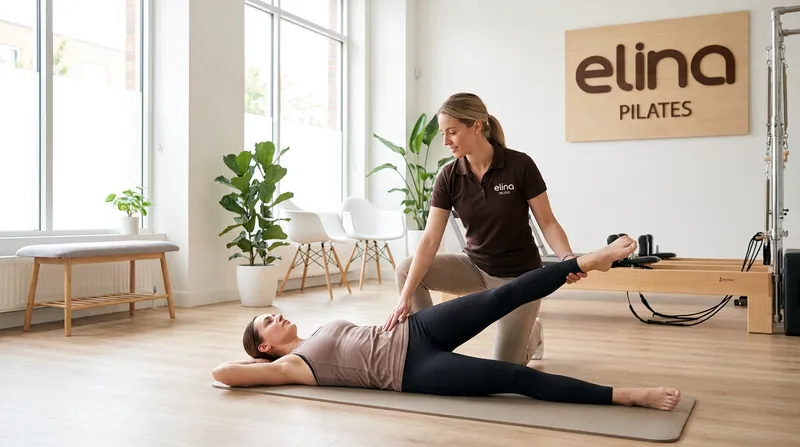
Additionally, the rapid expansion of digital health platforms has sparked debate over the most effective delivery method for Pilates instruction. Recent trials suggest that while healthy adults can reap comparable benefits from remote, online classes, the same may not hold true for clinical populations. Individuals recovering from injuries, dealing with chronic pain, or managing conditions like Long COVID often require the tactile feedback and nuanced neuromuscular cueing that only supervised, face-to-face instruction can provide.[1]
Ultimately, the science of Pilates validates what practitioners have intuitively known for a century: movement is medicine. By bridging the gap between physical rehabilitation and cognitive therapy, Pilates offers a comprehensive, evidence-based pathway to longevity. It is not merely a method for sculpting muscles, but a sophisticated system for optimizing biomechanics, protecting joint health, and fortifying mental resilience. As research continues to unravel the complexities of the mind-body connection, Pilates stands out as a foundational practice for a healthier, more capable life.[6]
Definitions
- Contrology
- The original name Joseph Pilates gave to his exercise method, emphasizing the mind's conscious control over the body's muscles.
- Transverse Abdominis
- The deepest layer of abdominal muscles that wraps around the spine like an internal corset, crucial for core stability.
- Eccentric Loading
- The active lengthening of a muscle while it remains under tension, commonly achieved using the spring resistance of a Pilates reformer.
- Parasympathetic Nervous System
- The 'rest and digest' division of the autonomic nervous system, activated by deep, controlled breathing to lower stress.
- Plyometric Training
- High-intensity jump training that involves muscles exerting maximum force in short intervals, which can be safely simulated on a reformer jump board.
Questions & answers
Can beginners safely start on a Pilates reformer?
Yes. The reformer's springs actually provide support and guided resistance, which can sometimes make it more accessible and safer for beginners than mat Pilates.
Does Pilates help with chronic lower back pain?
Research consistently shows that strengthening the deep core stabilizers through Pilates significantly improves spinal alignment and reduces chronic non-specific lower back pain.
How does Pilates improve mental health?
It combines mindful movement with lateral thoracic breathing, which stimulates the vagus nerve, activates the parasympathetic nervous system, and lowers stress hormones like cortisol.
Is mat Pilates less effective than reformer Pilates?
Not necessarily. Mat Pilates forces you to rely entirely on your own body weight and gravity for control, which can be highly challenging for core isolation and neuromuscular control.
Analysis by camp
Clinical Researchers
Focus on empirical data, meta-analyses, and measurable outcomes like pain reduction and psychological metrics.
This camp relies on rigorous randomized controlled trials to validate Pilates as a medical intervention. They emphasize quantifiable metrics—such as cortisol levels, heart rate variability, and standardized depression indices—to prove that the method's benefits extend beyond placebo. For these researchers, the primary goal is establishing standardized, evidence-based protocols that can be prescribed by physicians for specific conditions like chronic lower back pain or generalized anxiety disorder, moving Pilates out of the fitness studio and into the clinic.
Rehabilitation Specialists
Emphasize biomechanics, joint stability, progressive loading, and injury recovery.
Physical therapists and sports medicine professionals view Pilates primarily as a sophisticated tool for neuromuscular re-education. They focus on the method's ability to correct postural asymmetries and provide safe, eccentric loading through the Reformer's spring system. For this group, the value of Pilates lies in its adaptability; it allows them to isolate weak stabilizing muscles without overloading vulnerable joints, making it an ideal bridge between acute injury recovery and a return to high-performance athletics.
Mind-Body Practitioners
Highlight the holistic benefits, breathwork, and parasympathetic nervous system activation.
Instructors and holistic health advocates focus on the synergy between movement, breath, and mental presence. They argue that reducing Pilates to mere biomechanics misses the core of Joseph Pilates' original 'Contrology' philosophy. This camp champions the lateral thoracic breathing techniques that stimulate the vagus nerve, viewing the practice as a moving meditation that is essential for stress management, emotional resilience, and fostering a deep, intuitive connection with one's own body.
- Clinical Researchers
- Focus on empirical data, meta-analyses, and measurable outcomes like pain reduction and psychological metrics.
- Rehabilitation Specialists
- Emphasize biomechanics, joint stability, progressive loading, and injury recovery.
- Mind-Body Practitioners
- Highlight the holistic benefits, breathwork, and parasympathetic nervous system activation.
Perspectives this story doesn't cover
- Traditional weightlifting advocates
- High-intensity interval training (HIIT) researchers
Sources
Source coverage
7 outlets
3 viewpoints surfaced







- [1]MDPIClinical Researchers
Effects of Pilates-Based Exercise on Mental Health, Psychological Well-Being, and Quality of Life: A Systematic Review and Meta-Analysis
Read on MDPI → - [2]National Institutes of HealthClinical Researchers
Benefits of Pilates on Depression, Anxiety, and Stress: An Observational Study Comparing People Practicing Pilates to Non-Active Controls
Read on National Institutes of Health → - [3]IDEA Health & FitnessMind-Body Practitioners
The Science of Pilates Research
Read on IDEA Health & Fitness → - [4]Bend + Mend PhysiotherapyRehabilitation Specialists
Pilates Reformer Vs Mat Exercise
Read on Bend + Mend Physiotherapy → - [5]Journal of Clinical PsychologyClinical Researchers
The effects of pilates on mental health outcomes: A meta-analysis of controlled trials
Read on Journal of Clinical Psychology → - [6]Factlen Editorial TeamMind-Body Practitioners
Synthesis by Factlen editorial team
Read on Factlen Editorial Team → - [7]Journal of Bodywork and Movement TherapiesRehabilitation Specialists
Pilates enhances postural control and reduces spinal stress
Read on Journal of Bodywork and Movement Therapies →
More in Fitness
See all →Biomechanics
The Science of the Pilates Reformer: How Spring Resistance Alters Muscle Architecture
3 sources
Mind-Body Science
How Pilates Reduces Anxiety and Depression: The Science of Mindful Movement
5 sources
Back Pain Rehab
RCT Finds Supervised Pilates Superior to Home Exercise for Preventing Chronic Low Back Pain
5 sources
Pilates Biomechanics
Why Your Legs Lift During the Pilates Roll-Up: The Physics of Spinal Flexion and Torque
6 sources
Comments
Every angle. Every day.
Get Fitness stories with full source coverage and perspective breakdowns, free every day.