
The Science of Learning: How Active Recall and Spaced Repetition Rewire the Brain
Cognitive science reveals that passive studying creates an illusion of competence, while the strategic struggle of active recall and spaced repetition physically strengthens neural pathways. By understanding the brain's natural forgetting curve, learners can dramatically improve long-term memory retention.
By Factlen Editorial Team
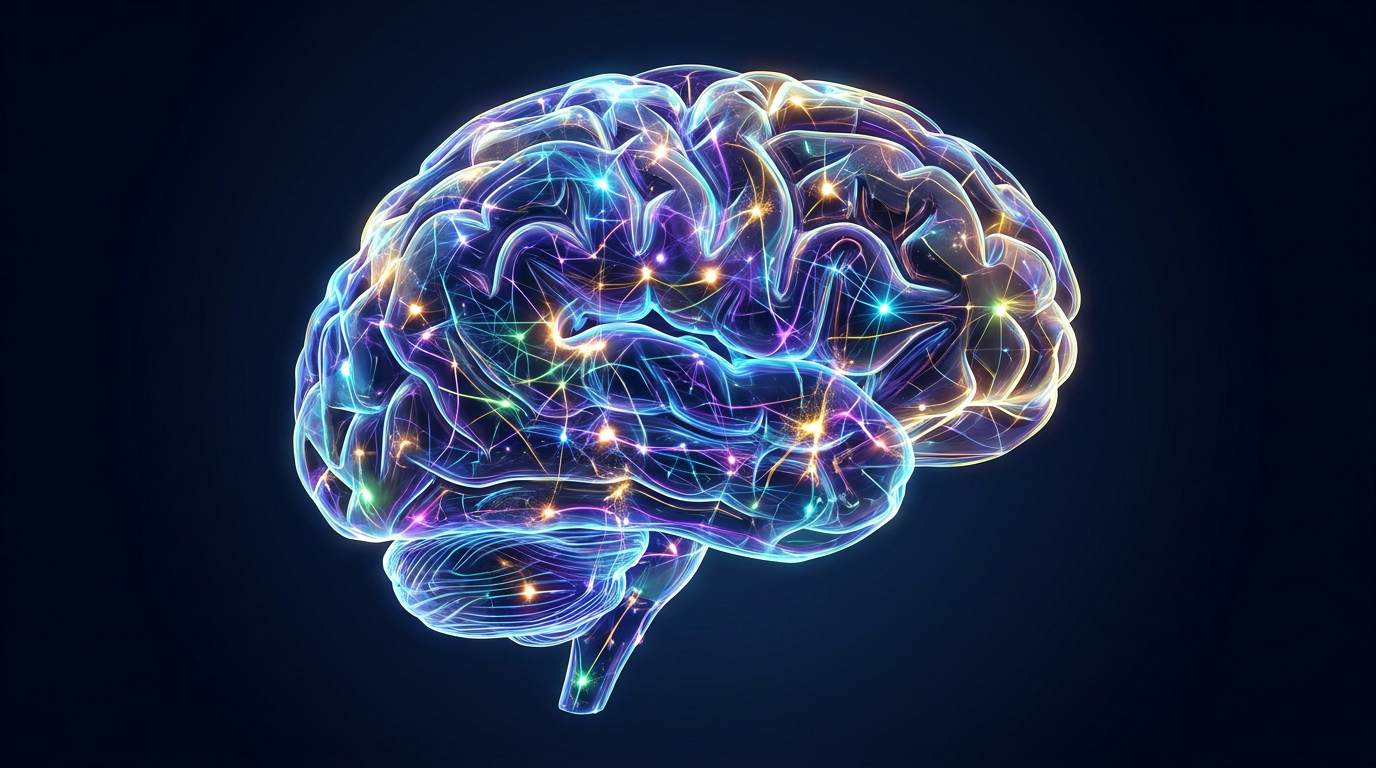
- Cognitive Scientists
- Focus on the neurological mechanisms of memory consolidation and synaptic plasticity.
- Educators & Instructional Designers
- Focus on translating cognitive science into practical classroom strategies and reducing cognitive load.
- Self-Directed Learners
- Focus on the practical application, efficiency, and the psychological hurdle of 'desirable difficulty.'
What's not represented
- · Neurodivergent Learners
- · Early Childhood Development Specialists
Why this matters
Most people waste countless hours on inefficient study methods like re-reading and highlighting. Understanding how the brain actually encodes and retrieves information allows students, professionals, and lifelong learners to master complex subjects in less time with significantly better results.
Key points
- The human brain is biologically wired to rapidly discard unused information to maintain cognitive efficiency.
- The Ebbinghaus Forgetting Curve shows that up to 80% of newly learned material is forgotten within a month without reinforcement.
- Passive study methods, such as re-reading and highlighting, create a false 'illusion of competence' without building durable memories.
- Active recall strengthens synaptic connections by forcing the brain to reconstruct knowledge from scratch.
- Spaced repetition strategically times review sessions just as a memory is fading, slowing the rate of future decay.
- Combining active recall and spaced repetition can improve long-term knowledge retention by up to 200% compared to cramming.
The frustration of studying is a nearly universal human experience. You spend hours reading, highlighting, and reviewing material, feeling entirely confident in your grasp of the subject. Yet, days later, sitting down for an exam or a presentation, the information vanishes. This phenomenon is not a personal failing or a sign of inadequate intelligence. According to cognitive scientists, it is a predictable biological default. The human brain is not designed to retain everything it encounters; it is designed to prioritize efficiency, rapidly discarding data that it deems unnecessary for survival.[8]
The mechanics of this memory loss were first systematically mapped in 1885 by German psychologist Hermann Ebbinghaus. Through painstaking self-experimentation, Ebbinghaus memorized lists of nonsense syllables and tracked exactly how long he could retain them. The resulting data formed the "Ebbinghaus Forgetting Curve," a steep, exponential downward trajectory that illustrates how quickly the human brain purges newly acquired information.[5]
The numbers behind the forgetting curve are stark. Without active reinforcement, the average person forgets roughly 40 percent of new information within just 20 minutes. After 24 hours, memory retention plummets to 30 percent, and within a month, a staggering 80 percent of the original material is gone. While modern researchers note that meaningful, contextualized information decays slightly slower than Ebbinghaus's nonsense syllables, replication studies have repeatedly confirmed that the fundamental shape of the curve remains entirely accurate.[5]

To combat this rapid decay, most students and professionals instinctively turn to passive review strategies: re-reading textbook chapters, highlighting text, or watching lecture videos multiple times. However, cognitive psychology reveals that these methods create a dangerous "illusion of competence." Because the material looks familiar when it is directly in front of the learner, the brain is tricked into believing the information is securely stored. In reality, passive exposure does little to build durable neural pathways.[1][3]
The antidote to the forgetting curve lies in two synergistic principles backed by over 130 years of cognitive science: active recall and spaced repetition. When combined, these techniques shift the focus of learning from passively cramming information into the brain to actively pulling information out of it. This fundamental pivot transforms how memories are encoded, consolidated, and retrieved.[2][7][8]
Active recall, known in academic literature as "retrieval practice," is the deliberate act of retrieving previously learned information from memory without the aid of notes or prompts. Instead of re-reading a chapter, a learner might close the book and attempt to explain the core concepts out loud, or write down everything they can remember on a blank sheet of paper. This process forces the brain to reconstruct the knowledge from scratch.[1][2][4]
At the neurological level, this reconstruction is where true learning occurs. When you learn something new, your brain creates fragile, temporary connections between neurons. Attempting to recall that information later requires mental effort, and that specific struggle triggers biological mechanisms that strengthen the synaptic connections. Researchers refer to this phenomenon as the "testing effect," demonstrating that the sheer act of retrieving a memory fundamentally alters and reinforces the memory trace itself.[3][6][7]
At the neurological level, this reconstruction is where true learning occurs.
However, active recall alone is not enough to permanently halt memory decay; the timing of the retrieval is equally critical. This is where spaced repetition enters the equation. Spaced repetition is the practice of reviewing material at gradually increasing intervals—for example, one day after initial learning, then three days later, then a week, and then a month.[7]
The effectiveness of spacing is rooted in how the brain consolidates memory. Each time a fading memory trace is successfully reactivated, the forgetting curve is essentially reset, and the subsequent rate of decay slows down. By strategically timing review sessions to occur just before the information is about to be forgotten, spaced repetition maximizes the neurological effort required to retrieve it. This effort facilitates the transfer of memories from the hippocampus, where short-term memories are held, to the neocortex for durable long-term storage.[6][7]

The synergy between active recall and spaced repetition produces a multiplier effect on retention. A 2024 study published in the Journal of Continuing Education in the Health Professions found that utilizing these combined methods improved long-term knowledge retention with effects persisting for up to two years. Across diverse populations—from primary school students to medical residents—retrieval practice consistently outperforms traditional studying, sometimes increasing retention by up to 200 percent compared to cramming.[2][7]
Beyond mere memorization, these techniques also optimize how the brain processes complex information. According to Cognitive Load Theory, our working memory can only hold a small amount of information at any given time. By using retrieval practice to firmly secure foundational knowledge in long-term memory, learners free up vital working memory capacity. This allows the brain to engage in higher-order thinking, problem-solving, and the synthesis of new, complex ideas without becoming cognitively overloaded.[4][8]
Implementing these science-backed strategies requires a shift in daily study habits. Educators and cognitive scientists recommend incorporating low-stakes quizzes, flashcards, and "brain dumps" into regular routines. The goal is to frequently expose gaps in knowledge and correct misunderstandings before they become entrenched. Crucially, this retrieval must be paired with timely feedback to ensure that learners are not reinforcing incorrect information.[2][3][4]
Technology has dramatically lowered the barrier to entry for these techniques. Modern digital platforms and artificial intelligence tools now utilize sophisticated algorithms to automate spaced repetition schedules. These systems track a learner's performance on individual concepts, automatically presenting difficult information more frequently while pushing mastered material further into the future, thereby optimizing the study time for maximum neurological impact.[7][8]
While the efficacy of these methods is universally recognized, cognitive scientists continue to debate the exact mechanisms of forgetting. While Ebbinghaus proposed that memories passively decay over time, later researchers like John A. McGeoch argued that forgetting is primarily driven by interference. In this view, memories do not simply fade; rather, new learning competes with and obscures older learning, making retrieval practice essential for cutting through the cognitive noise.[8]

Furthermore, the nature of the material dictates how aggressively these techniques must be applied. Highly meaningful, emotionally resonant, or deeply contextualized information naturally resists forgetting better than isolated facts or rote vocabulary. Therefore, the most effective learning environments first ensure that students deeply understand the underlying concepts before utilizing spaced repetition to lock those concepts into permanent memory.[4][5][8]
Ultimately, adopting active recall and spaced repetition requires learners to embrace what psychologists call a "desirable difficulty." Because spacing and retrieval force the brain to work harder, the study process can feel frustrating, inefficient, and slow compared to the smooth, easy illusion of re-reading a textbook. Yet, it is precisely that friction—the momentary struggle to pull a fading fact from the depths of the mind—that signals the brain is successfully rewiring itself for the future.[2][6][8]
How we got here
1885
German psychologist Hermann Ebbinghaus publishes his groundbreaking research establishing the Forgetting Curve.
1932
Researcher John A. McGeoch proposes that forgetting is driven by interference from new learning rather than simple decay.
2006
Cognitive scientists Roediger and Karpicke publish landmark studies solidifying the 'testing effect' as a superior learning strategy.
2015
A major replication study by Murre and Dros confirms the precise shape and timing of Ebbinghaus's original forgetting curve.
2020s
AI-powered spaced repetition systems become widely adopted, automating optimal review intervals for millions of learners.
Viewpoints in depth
Cognitive Scientists
Focus on the neurological mechanisms of memory consolidation and synaptic plasticity.
From a neurobiological perspective, learning is the physical alteration of the brain. Cognitive scientists emphasize that passive exposure to information fails to trigger the necessary biological mechanisms for long-term storage. Instead, they focus on the 'testing effect'—the empirical observation that the sheer act of retrieving a memory strengthens the synaptic connections associated with it. For these researchers, the struggle of recall is not a byproduct of learning; it is the engine of memory consolidation itself.
Educators & Instructional Designers
Focus on translating cognitive science into practical classroom strategies and reducing cognitive load.
Educators are primarily concerned with how to implement these findings in real-world learning environments. They advocate for a shift away from long, passive lectures and high-stakes summative exams, favoring frequent, low-stakes retrieval practices like daily 'brain dumps' or entry tickets. By securing foundational knowledge in students' long-term memory, instructional designers aim to free up working memory, preventing cognitive overload and allowing students to engage in higher-order critical thinking.
Self-Directed Learners
Focus on the practical application, efficiency, and the psychological hurdle of 'desirable difficulty.'
For students and professionals learning independently, the primary challenge of active recall is psychological. Because retrieval practice forces the brain to work harder, it feels inherently less productive and more frustrating than simply re-reading a familiar text. Self-directed learners must actively overcome this counterintuitive 'desirable difficulty,' increasingly relying on AI-powered flashcard apps and digital spaced repetition systems to automate their study schedules and maintain discipline.
What we don't know
- Whether memory decay is primarily caused by the passive fading of neural traces over time, or by new information actively interfering with older memories.
- The exact optimal spacing intervals for highly complex, interconnected conceptual frameworks versus isolated factual data.
- How individual differences in sleep quality, baseline neuroplasticity, and emotional state precisely alter the standard forgetting curve.
Key terms
- Active Recall
- The process of deliberately retrieving information from memory without looking at notes or prompts, which physically strengthens neural pathways.
- Spaced Repetition
- A learning technique that involves reviewing material at gradually increasing time intervals to halt the natural decay of memory.
- Ebbinghaus Forgetting Curve
- A mathematical formula and graph demonstrating the rapid, exponential rate at which the human brain forgets newly learned information.
- Testing Effect
- The psychological phenomenon where the mere act of taking a test or retrieving a memory significantly improves long-term retention of that material.
- Desirable Difficulty
- A learning task that requires a considerable but desirable amount of effort, thereby improving long-term performance despite feeling frustrating in the moment.
- Illusion of Competence
- The false belief that you have mastered material simply because it feels familiar when you are passively re-reading it.
Frequently asked
Why is re-reading my notes ineffective?
Re-reading creates an 'illusion of competence.' Because the material is right in front of you, it feels familiar, tricking your brain into thinking the information is securely stored without actually strengthening the neural pathways required to retrieve it later.
How often should I space out my review sessions?
While optimal intervals vary, a standard scientifically backed schedule involves reviewing material one day after initial learning, then three days later, then a week, and then a month. Digital tools can automate this process based on your performance.
What is a 'brain dump'?
A brain dump is a simple active recall exercise where you take a blank sheet of paper and write down everything you can remember about a specific topic without looking at any source material.
Does spaced repetition work for complex subjects like math or physics?
Yes. While it is famous for vocabulary and facts, spaced repetition is highly effective for complex subjects when used to secure foundational formulas and core concepts, freeing up working memory for higher-order problem solving.
Sources
Source coverage
8 outlets
3 viewpoints surfaced








[1]National Institutes of HealthCognitive Scientists
Neuroscience research on human learning and memory retention
Read on National Institutes of Health →[2]RetrievalPractice.orgEducators & Instructional Designers
Why retrieval practice improves learning and reduces forgetting
Read on RetrievalPractice.org →[3]EBSCOEducators & Instructional Designers
Retrieval practice: An active learning strategy
Read on EBSCO →[4]Department of Education NIEducators & Instructional Designers
Retrieval Practice: Cognitive psychology research
Read on Department of Education NI →[5]Mind MattersSelf-Directed Learners
Why the Ebbinghaus Forgetting Curve Still Matters
Read on Mind Matters →[6]The Learner LabCognitive Scientists
The Neuroscience Behind Spaced Repetition Learning
Read on The Learner Lab →[7]NutonSelf-Directed Learners
Spaced Repetition: The Complete Guide
Read on Nuton →[8]Factlen Editorial TeamCognitive Scientists
Synthesis by Factlen editorial team
Read on Factlen Editorial Team →


Every angle. Every day.
Get education stories with full source coverage and perspective breakdowns delivered to your inbox.