
The Science of High-Altitude Acclimatization: How the Human Body Adapts to Mountain Travel
As mountain tourism surges, understanding the physiological mechanisms of altitude adaptation is essential. We break down the science of hypoxia, acclimatization strategies, and how to safely navigate high-elevation travel.
By Factlen Editorial Team
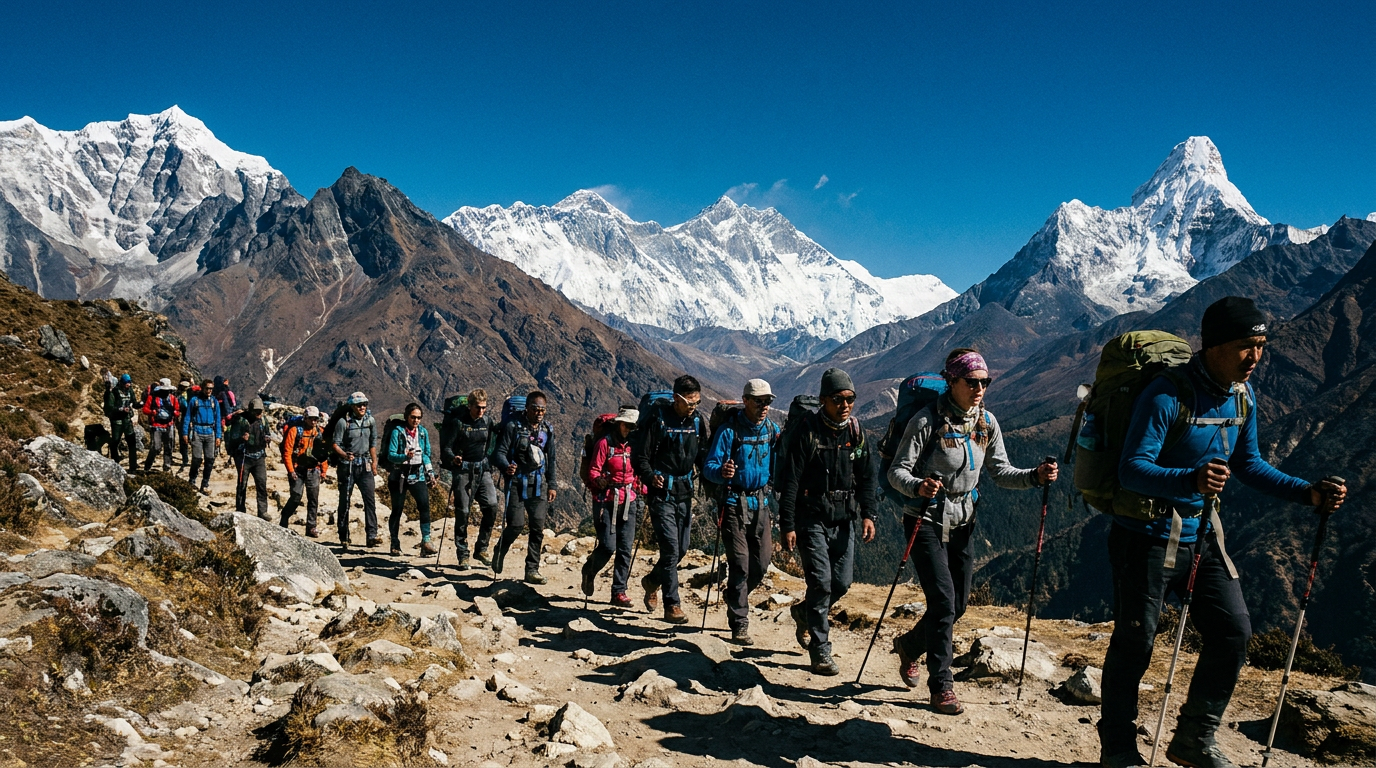
- Physiological Researchers
- Focuses on the biological mechanisms of hypoxia, genetic adaptations, and the long-term hematological changes required for true acclimatization.
- Expedition Guides
- Prioritizes practical field strategies, conservative ascent profiles, and the importance of monitoring clients for early symptoms of altitude illness.
- Travel Medicine Specialists
- Emphasizes pharmacological prevention, pre-travel health screenings, and strict protocols for emergency descent when severe symptoms arise.
What's not represented
- · Indigenous High-Altitude Populations
- · Commercial Trekking Operators
Why this matters
With more travelers attempting high-altitude treks like Everest Base Camp and Kilimanjaro, understanding how the body adapts to low oxygen can mean the difference between a successful summit and a dangerous medical emergency.
Key points
- Oxygen concentration remains 21% at altitude, but lower barometric pressure means fewer molecules per breath.
- The body's immediate response is increased ventilation, while long-term adaptation involves producing more red blood cells.
- Physical fitness does not prevent altitude sickness; genetic factors and ascent rate are the primary predictors.
- Experts recommend limiting sleeping elevation gains to 300–500 meters per day once above 3,000 meters.
- The medication Acetazolamide (Diamox) can accelerate acclimatization by acidifying the blood and stimulating deeper breathing.
Every year, hundreds of thousands of travelers leave sea level behind to trek the Himalayas, summit Kilimanjaro, or explore the high-elevation ruins of the Andes. These journeys offer unparalleled vistas and profound personal achievements, but they also introduce the human body to an invisible, formidable barrier: the physiological stress of high altitude. As adventure tourism surges, understanding how our bodies adapt to this extreme environment has become a critical component of travel preparation. The science of high-altitude acclimatization reveals a complex, multi-stage biological response designed to keep our tissues oxygenated when the atmosphere itself provides less support.[6]
The fundamental challenge of altitude is often misunderstood. A common misconception is that the air at high elevations contains a lower percentage of oxygen. In reality, the concentration of oxygen remains a constant 21 percent whether you are standing on a beach in California or at the summit of Mount Everest. The true variable is barometric pressure. As elevation increases, the weight of the atmosphere pressing down decreases, causing gas molecules to spread further apart. Consequently, every breath drawn at 10,000 feet contains significantly fewer oxygen molecules than a breath taken at sea level, leading to a state known as environmental hypoxia.[2][3]
When a traveler first arrives at altitude, the body’s immediate response is akin to an emergency protocol. Within minutes of sensing lower oxygen levels in the blood, the brain signals the respiratory system to increase ventilation. Breathing becomes faster and deeper, even at rest, in a desperate bid to pull more oxygen into the lungs. Simultaneously, the heart rate elevates to pump this limited oxygen more rapidly to vital organs and working muscles. While these acute responses are essential for immediate survival, they are highly inefficient and place a significant metabolic strain on the body, leaving travelers feeling fatigued and breathless during minor exertions.[1][3]

This rapid increase in breathing, however, creates a secondary physiological problem. Hyperventilation causes the body to exhale excessive amounts of carbon dioxide, which normally helps regulate the acidity of the blood. The rapid loss of carbon dioxide leads to a condition called respiratory alkalosis, where the blood becomes too alkaline. To counteract this imbalance, the kidneys initiate a crucial secondary phase of acclimatization. Over the first 24 to 48 hours at altitude, the kidneys begin excreting bicarbonate through urine to restore the blood's normal pH. This process explains why increased urination is a hallmark sign that the body is successfully beginning to adapt to the elevation.[1][6]
Because acclimatization is a gradual biological process, mountaineers and guides rely heavily on the "climb high, sleep low" strategy. This technique involves hiking to a higher elevation during the day to expose the body to increased hypoxia, which strongly stimulates the adaptive mechanisms of the respiratory and cardiovascular systems. The traveler then descends to a lower altitude to sleep. Sleeping at a lower elevation provides a denser atmosphere that allows the body to recover, ensuring better sleep quality and reducing the cumulative physiological stress that often triggers altitude illness.[6]
Because acclimatization is a gradual biological process, mountaineers and guides rely heavily on the "climb high, sleep low" strategy.
While the respiratory and renal systems handle the immediate crisis of hypoxia, true acclimatization requires a much longer timeline and a fundamental change in the blood itself. Over a period of weeks, the kidneys respond to sustained low oxygen levels by releasing a hormone called erythropoietin (EPO). EPO travels to the bone marrow and stimulates the production of new red blood cells. By increasing the sheer volume of red blood cells—and thus the hemoglobin available to carry oxygen—the body gradually restores its oxygen-carrying capacity to near sea-level efficiency, allowing the heart and breathing rates to normalize.[3][5]
The timeline for this hematological adaptation is often vastly underestimated by recreational trekkers. Research indicates that complete acclimatization—defined as the point where the hypoxia-catalyzed increase of red blood cells reaches a plateau—is measured in weeks and months rather than days. A landmark 2007 study found that full hematological adaptation requires roughly 11.4 days for every 1,000 meters of altitude gained. This means that fully adapting to the elevation of a typical high-altitude base camp could take over a month, a luxury of time that most commercial trekking itineraries simply do not afford.[5]

A persistent and dangerous myth in mountain travel is that superior physical fitness protects against altitude sickness. In reality, cardiovascular endurance and muscular strength have almost no correlation with how effectively a person's body acclimatizes to hypoxia. A marathon runner is just as likely to suffer from altitude illness as a sedentary office worker. The primary predictors of successful acclimatization are an individual's genetic predisposition, their historical performance at high altitude, and, most importantly, the rate at which they ascend. Relying on fitness to power through the symptoms of hypoxia is a frequent cause of severe medical emergencies in the mountains.[5][6]
When the rate of ascent outpaces the body's ability to adapt, acclimatization fails, resulting in Acute Mountain Sickness (AMS). AMS is the most common form of altitude illness, affecting up to 75 percent of people who ascend rapidly above 10,000 feet. The symptoms mimic a severe hangover, characterized by a throbbing headache, nausea, profound fatigue, dizziness, and a loss of appetite. While mild AMS is often considered a normal part of the acclimatization process and typically resolves with rest and hydration over a few days, it serves as a critical warning sign that the body is struggling to cope with the environmental stress.[1][4]
Ignoring the symptoms of AMS and continuing to ascend can lead to life-threatening complications. High Altitude Pulmonary Edema (HAPE) occurs when the lower air pressure causes fluid to leak from capillaries into the lungs, severely restricting oxygen exchange. Symptoms include a persistent cough, shortness of breath at rest, and extreme fatigue. High Altitude Cerebral Edema (HACE) is an even more critical condition where fluid accumulates in the brain, leading to confusion, loss of coordination, and eventually coma. Both HAPE and HACE require immediate descent to a lower altitude and urgent medical intervention, as they can be fatal within hours.[2][4]

To mitigate these risks, travel medicine specialists often prescribe pharmacological aids to assist the acclimatization process. The most common medication is Acetazolamide, widely known by the brand name Diamox. Acetazolamide works by forcing the kidneys to excrete bicarbonate more rapidly, artificially acidifying the blood. This tricks the brain into perceiving an excess of carbon dioxide, which in turn stimulates deeper and faster breathing. By accelerating the respiratory adaptations that normally take days to develop, Acetazolamide helps increase blood oxygen levels and significantly reduces the incidence and severity of AMS symptoms.[4][6]
Beyond medication, the cornerstone of safe mountain travel remains strict adherence to conservative ascent profiles. Wilderness medical guidelines universally recommend that once a traveler reaches 3,000 meters (roughly 10,000 feet), they should not increase their sleeping elevation by more than 300 to 500 meters per day. Furthermore, trekkers should incorporate a full rest day for every 1,000 meters of elevation gained. This deliberate pacing ensures that the body's physiological software has adequate time to update its settings, allowing travelers to safely experience the profound beauty of the world's highest landscapes.[4][6]
How we got here
First 24 hours
Heart rate and breathing rate increase significantly to compensate for lower oxygen pressure.
24 to 48 hours
Kidneys begin excreting bicarbonate to balance blood pH altered by hyperventilation.
3 to 5 days
Initial symptoms of mild acute mountain sickness typically peak and begin to resolve.
7 to 14 days
The body begins increasing red blood cell production to improve oxygen transport.
Weeks to months
Full hematological adaptation is reached, maximizing the blood's oxygen-carrying capacity.
Viewpoints in depth
Physiological Researchers
Focuses on the biological mechanisms of hypoxia and long-term hematological changes.
Medical researchers and physiologists view acclimatization primarily through the lens of cellular adaptation and blood chemistry. They emphasize that the immediate responses to altitude—such as hyperventilation and increased heart rate—are merely stopgap measures that place immense metabolic strain on the body. True acclimatization, they argue, is a long-term process driven by the kidneys' release of erythropoietin (EPO), which stimulates the production of new red blood cells. From this perspective, the weeks-long timeline required for full hematological adaptation highlights the inherent risks of rapid commercial trekking itineraries, which often push the human body faster than its biology can safely adapt.
Expedition Guides
Prioritizes practical field strategies and conservative ascent profiles.
For professional mountaineers and expedition guides, acclimatization is an active, strategic process managed through pacing and itinerary design. They rely heavily on the 'climb high, sleep low' methodology, using daytime altitude exposure to trigger the body's adaptive responses while ensuring clients sleep at lower, safer elevations to recover. Guides are acutely aware that physical fitness is a poor predictor of altitude tolerance, and they focus instead on strict daily elevation limits—typically capping sleeping elevation gains at 300 to 500 meters per day. Their primary concern is the early detection of Acute Mountain Sickness (AMS) symptoms to prevent progression into life-threatening conditions.
Travel Medicine Specialists
Emphasizes pharmacological prevention and strict protocols for emergency descent.
Travel medicine clinicians approach high-altitude travel with a focus on risk mitigation and pharmacological prophylaxis. They frequently prescribe medications like Acetazolamide (Diamox) to artificially accelerate the acclimatization process by altering blood pH and stimulating deeper breathing. While they acknowledge the importance of slow ascent profiles, they recognize that many travelers are bound by tight vacation schedules. Consequently, their guidance heavily emphasizes the absolute necessity of immediate descent at the first sign of severe symptoms, warning that conditions like High Altitude Pulmonary Edema (HAPE) and High Altitude Cerebral Edema (HACE) can become fatal within hours if ignored.
What we don't know
- Why certain individuals are highly susceptible to acute mountain sickness while others with similar fitness levels are not.
- The exact genetic mechanisms that allow some lowland populations to adapt faster than others.
- The long-term neurological impacts of repeated, severe high-altitude exposure on professional mountaineers.
Key terms
- Hypoxia
- A state in which oxygen is not available in sufficient amounts at the tissue level to maintain adequate homeostasis.
- Barometric Pressure
- The pressure exerted by the weight of the atmosphere, which decreases as altitude increases, causing gas molecules to spread apart.
- Acute Mountain Sickness (AMS)
- The mildest and most common form of altitude illness, characterized by headache, nausea, and fatigue, typically occurring above 8,000 feet.
- High Altitude Pulmonary Edema (HAPE)
- A severe, life-threatening condition where fluid accumulates in the lungs due to altitude exposure, restricting oxygen exchange.
- Acetazolamide
- A prescription medication (often sold as Diamox) that accelerates acclimatization by altering blood acidity to stimulate deeper breathing.
Frequently asked
Does being physically fit prevent altitude sickness?
No. While cardiovascular fitness helps with the physical exertion of trekking, it does not improve the body's ability to acclimatize to lower oxygen levels. The primary predictors of success are genetics and a slow rate of ascent.
Why do climbers 'walk high and sleep low'?
Exposing the body to higher altitudes during the day triggers necessary adaptation mechanisms, while sleeping at a lower elevation provides denser air that allows for better recovery and reduces the risk of illness.
Is the air really 'thinner' at high altitude?
The percentage of oxygen remains 21 percent at all altitudes, but decreased barometric pressure spreads the gas molecules further apart, meaning you inhale fewer oxygen molecules with every breath.
Sources
Source coverage
6 outlets
3 viewpoints surfaced





[1]National Institutes of HealthPhysiological Researchers
Nutritional Needs In Cold And In High-Altitude Environments
Read on National Institutes of Health →[2]University of Colorado AnschutzPhysiological Researchers
The Science of Altitude Sickness
Read on University of Colorado Anschutz →[3]Thoracic KeyPhysiological Researchers
Altitude Acclimatization
Read on Thoracic Key →[4]Travel Clinic New YorkTravel Medicine Specialists
High-altitude sickness prevention medication
Read on Travel Clinic New York →[5]AWExpeditionsExpedition Guides
Acclimatization: Myths & Facts
Read on AWExpeditions →[6]Factlen Editorial TeamExpedition Guides
Synthesis by Factlen editorial team
Read on Factlen Editorial Team →
Every angle. Every day.
Get travel stories with full source coverage and perspective breakdowns delivered to your inbox.