
The Science of Grilling: Mastering the Maillard Reaction and Minimizing Health Risks
Understanding the chemistry behind the grill—from the flavor-building Maillard reaction to the formation of carcinogens—can help you cook steaks that are both tastier and safer.
By Factlen Editorial Team
- Culinary Scientists
- Focuses on optimizing flavor and texture through precise temperature control and the mechanics of the Maillard reaction.
- Public Health Researchers
- Emphasizes the carcinogenic risks of high-heat cooking and advocates for evidence-based mitigation strategies.
- Everyday Grillers
- Seeks to balance achieving steakhouse-quality flavor with practical, easy-to-implement health and safety steps.
What's not represented
- · Vegetarian and vegan advocates who argue against meat consumption entirely
- · Commercial grill manufacturers designing infrared or low-flare-up systems
Why this matters
By understanding the chemical reactions that occur on the grill, home cooks can simultaneously elevate the flavor of their meals and significantly reduce their exposure to known carcinogens.
Key points
- The Maillard reaction requires temperatures above 285°F to create the complex flavors associated with grilled meat.
- Surface moisture must evaporate before the meat can exceed 212°F and begin browning.
- The reverse sear method dehydrates the surface at low heat, allowing for a perfect, rapid sear later.
- High-heat grilling produces HCAs and PAHs, which are linked to cancer in animal studies.
- Marinating meat in herbs and acids can reduce HCA formation by up to 90 percent.
- Flipping meat frequently and grilling vegetables are effective ways to minimize carcinogen exposure.
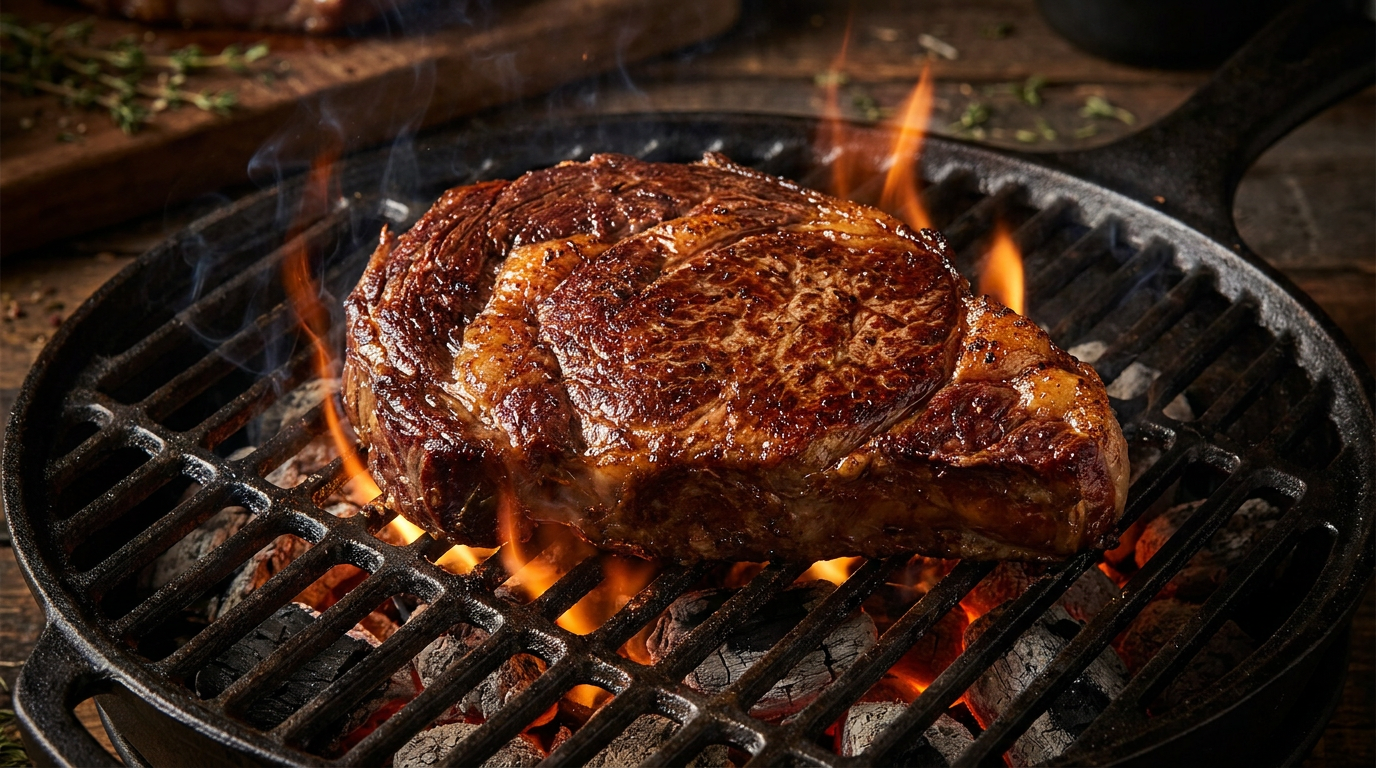
The sensory experience of grilling—the sharp sizzle, the intoxicating aroma, the deep browning of the crust—is not just a culinary tradition; it is a complex chemical symphony. At the heart of this transformation is a process that food scientists and chefs revere as the cornerstone of flavor development: the Maillard reaction. Understanding how to manipulate this reaction is the difference between an average backyard burger and a steakhouse-quality meal.[1][8]
First described by French chemist Louis-Camille Maillard in 1912, the Maillard reaction is a form of non-enzymatic browning. It occurs when the amino acids found in protein-rich foods react with reducing sugars under high heat. In the context of a steak or a chicken breast, the muscle tissue provides the necessary protein, while glycogen—a form of stored energy in the muscle—acts as the required sugar.[1][3]
The underlying chemistry is intricate and cascading. The reaction begins with a nucleophilic attack of the amino group on the carbonyl carbon of the sugar, forming what chemists call a Schiff base. This base quickly rearranges into Amadori compounds, which then break down into hundreds of aromatic and flavorful molecules, including pyrazines, furans, and aldehydes. These compounds are the unsung heroes responsible for the savory, roasted, and complex flavors we associate with perfectly grilled meats.[2]

However, the Maillard reaction has a strict set of environmental demands. It generally requires temperatures above 285 degrees Fahrenheit (140 degrees Celsius) to occur rapidly and efficiently. But there is a thermodynamic catch: water boils at 212 degrees Fahrenheit, meaning the surface of the meat cannot exceed that temperature as long as liquid moisture is actively evaporating from it.[1][3]
This is why the initial "sizzle" when a steak hits the grill is so critical. That sound is the rapid evaporation of surface moisture. Only after the surface is adequately dehydrated can the temperature rise into the Maillard zone. If a steak is too wet, or the heat of the grill is too low, the meat will steam rather than sear, resulting in a gray, flavorless exterior.[1]
To solve the moisture problem and achieve the perfect crust, culinary experts increasingly advocate for the "reverse sear" method. Instead of searing the meat over high heat immediately, the reverse sear starts the steak in a low-temperature environment—typically an oven or the cool side of a two-zone grill set between 225 and 275 degrees Fahrenheit.[4]
To solve the moisture problem and achieve the perfect crust, culinary experts increasingly advocate for the "reverse sear" method.
This low-and-slow phase serves two vital purposes. First, it cooks the interior of the meat evenly from edge to edge, avoiding the dreaded gray band of overcooked meat just beneath the crust. Second, the prolonged exposure to dry, gentle heat thoroughly dehydrates the exterior of the steak. When the meat is finally moved to a blistering hot grill for the finishing sear, the Maillard reaction occurs almost instantly, creating a deep, flavorful crust before the interior has a chance to overcook.[4]

But the science of the grill isn't solely about maximizing flavor; it also involves understanding the chemical byproducts of high-heat cooking. When muscle meats are exposed to intense flames or hot metal surfaces, they can form two types of potentially harmful compounds: heterocyclic amines (HCAs) and polycyclic aromatic hydrocarbons (PAHs).[5][6]
HCAs are produced when the amino acids, sugars, and creatine found in muscle meats react at high temperatures—essentially a dark side of the same heat that drives the Maillard reaction. PAHs, on the other hand, form when fat and juices drip onto the heat source, creating smoke. That smoke, laden with PAHs, billows up and adheres to the surface of the food. Both compounds have been shown to cause DNA mutations in laboratory studies, and animal models link them to an increased risk of cancer.[5][7]
While the doses used in animal studies are exponentially higher than what a human consumes at a typical backyard barbecue, public health organizations still recommend minimizing exposure. Fortunately, the same scientific principles that govern flavor can be manipulated to drastically reduce the formation of these compounds without sacrificing the joy of grilling.[5][6]
One of the most effective mitigation strategies happens long before the meat hits the grates: marinating. Research shows that marinating meat in acidic liquids like vinegar or lemon juice, combined with herbs such as rosemary, thyme, oregano, and basil, can reduce HCA formation by up to 90 percent. The antioxidants in these herbs act as a chemical shield, interrupting the specific reactions that create carcinogens.[6][7]

On the grill itself, technique matters immensely. Continuously flipping the meat prevents the surface temperature from spiking too high for too long, significantly reducing HCA production compared to leaving the meat untouched. Additionally, trimming excess fat prevents the flare-ups and smoke that coat the food in PAHs.[5][7]
Interestingly, the reverse sear method naturally aligns with these health recommendations. By doing the bulk of the cooking at a low temperature, the meat spends only a fraction of the time exposed to the intense, HCA-producing heat required for the final sear. Pre-cooking meat in a microwave or oven before finishing it on the grill achieves a similar protective effect.[4][5][7]

Finally, the simplest way to avoid grilling carcinogens is to diversify the menu. Because HCAs require muscle proteins to form, grilled fruits and vegetables produce zero HCAs, regardless of how hot the grill gets. While they can still accumulate PAHs if exposed to heavy smoke from nearby meats, a grill basket filled with olive oil-tossed vegetables offers the Maillard reaction's browning benefits with virtually none of the chemical risks.[6][7]
Viewpoints in depth
Culinary Scientists
Focuses on optimizing flavor and texture through precise temperature control and the mechanics of the Maillard reaction.
For food scientists and professional chefs, the grill is a chemistry lab. Their primary objective is maximizing the Maillard reaction while maintaining the structural integrity of the meat. This camp advocates heavily for techniques like the reverse sear because it solves the thermodynamic problem of surface moisture. By separating the cooking process into a low-heat dehydration phase and a high-heat browning phase, culinary experts argue that home cooks can achieve a perfect, edge-to-edge medium-rare with a steakhouse-quality crust, eliminating the guesswork of traditional direct grilling.
Public Health Researchers
Emphasizes the carcinogenic risks of high-heat cooking and advocates for evidence-based mitigation strategies.
Epidemiologists and oncologists view the grill through the lens of risk reduction. While acknowledging that backyard grilling is a beloved pastime, they point to decades of animal models and observational human studies linking HCAs and PAHs to various cancers. This camp does not necessarily demand the abandonment of grilling, but rather the adoption of harm-reduction techniques. They heavily promote the use of antioxidant-rich marinades, frequent flipping, trimming fat to reduce smoke, and incorporating more vegetables—which cannot form HCAs—into the barbecue repertoire.
Everyday Grillers
Seeks to balance achieving steakhouse-quality flavor with practical, easy-to-implement health and safety steps.
For the average consumer, the goal is to enjoy a weekend barbecue without needing a degree in organic chemistry or feeling overwhelming anxiety about health risks. This perspective values practical, low-effort interventions. Adopting a simple rosemary marinade or choosing to flip a burger a few extra times represents an easy compromise that satisfies both the desire for traditional grilled flavor and the modern awareness of dietary health, proving that safety and taste do not have to be mutually exclusive.
What we don't know
- The exact threshold at which dietary exposure to HCAs and PAHs translates to a measurable cancer risk in humans.
- How different specific wood types (hickory, apple, mesquite) alter the exact chemical composition of the Maillard compounds formed.
Key terms
- Maillard reaction
- A chemical reaction between amino acids and reducing sugars that gives browned food its distinctive flavor.
- Heterocyclic amines (HCAs)
- Potentially carcinogenic chemicals formed when muscle meat is cooked at high temperatures.
- Polycyclic aromatic hydrocarbons (PAHs)
- Harmful chemicals formed when fat drips onto a heat source, creating smoke that adheres to the food.
- Reverse sear
- A cooking technique where meat is cooked slowly at a low temperature before being finished with a brief, high-heat sear.
- Amadori compounds
- Intermediate chemical compounds formed during the early stages of the Maillard reaction before breaking down into flavor molecules.
Frequently asked
Do vegetables form HCAs on the grill?
No. Heterocyclic amines (HCAs) require muscle proteins and creatine to form, meaning grilled fruits and vegetables produce zero HCAs.
Why do marinades make grilling safer?
Marinades containing acidic ingredients (like lemon juice) and herbs (like rosemary and thyme) are rich in antioxidants, which act as a chemical shield to interrupt the formation of carcinogens by up to 90 percent.
What is the reverse sear method?
The reverse sear involves cooking meat at a low temperature (225-275°F) until the interior is nearly done, then finishing it with a rapid, high-heat sear to create a crust without overcooking the inside.
At what temperature does the Maillard reaction start?
The Maillard reaction begins to occur rapidly and efficiently at temperatures around 285 degrees Fahrenheit (140 degrees Celsius).
Sources
Source coverage
8 outlets
3 viewpoints surfaced








[1]NC State UniversityCulinary Scientists
The Science of Grilling: The Maillard Reaction
Read on NC State University →[2]AsyntCulinary Scientists
The Maillard Reaction: Chemistry on the Grill
Read on Asynt →[3]GrillSeekerCulinary Scientists
The Maillard Reaction: What It Is and Why You Should Care
Read on GrillSeeker →[4]Virginia Boys KitchensCulinary Scientists
The Science of Reverse Sear Filet Mignon
Read on Virginia Boys Kitchens →[5]National Cancer InstitutePublic Health Researchers
Grilling with a Healthier Mindset
Read on National Cancer Institute →[6]Dana-Farber Cancer InstitutePublic Health Researchers
Does Grilling Meat Cause Cancer? How to reduce exposure to HCAs and PAHs
Read on Dana-Farber Cancer Institute →[7]Columbia SurgeryPublic Health Researchers
How to Safely Grill; Decrease Your Risk for Cancer
Read on Columbia Surgery →[8]Factlen Editorial TeamEveryday Grillers
Synthesis by Factlen editorial team
Read on Factlen Editorial Team →
Every angle. Every day.
Get food drink stories with full source coverage and perspective breakdowns delivered to your inbox.