
The Road to Brazil: How the 2027 Women's World Cup Field is Taking Shape
With just over a year until the 2027 FIFA Women's World Cup kicks off in Brazil, the global qualification picture is coming into focus as regional powerhouses secure their spots and underdogs fight through revamped confederation pathways.
By Factlen Editorial Team
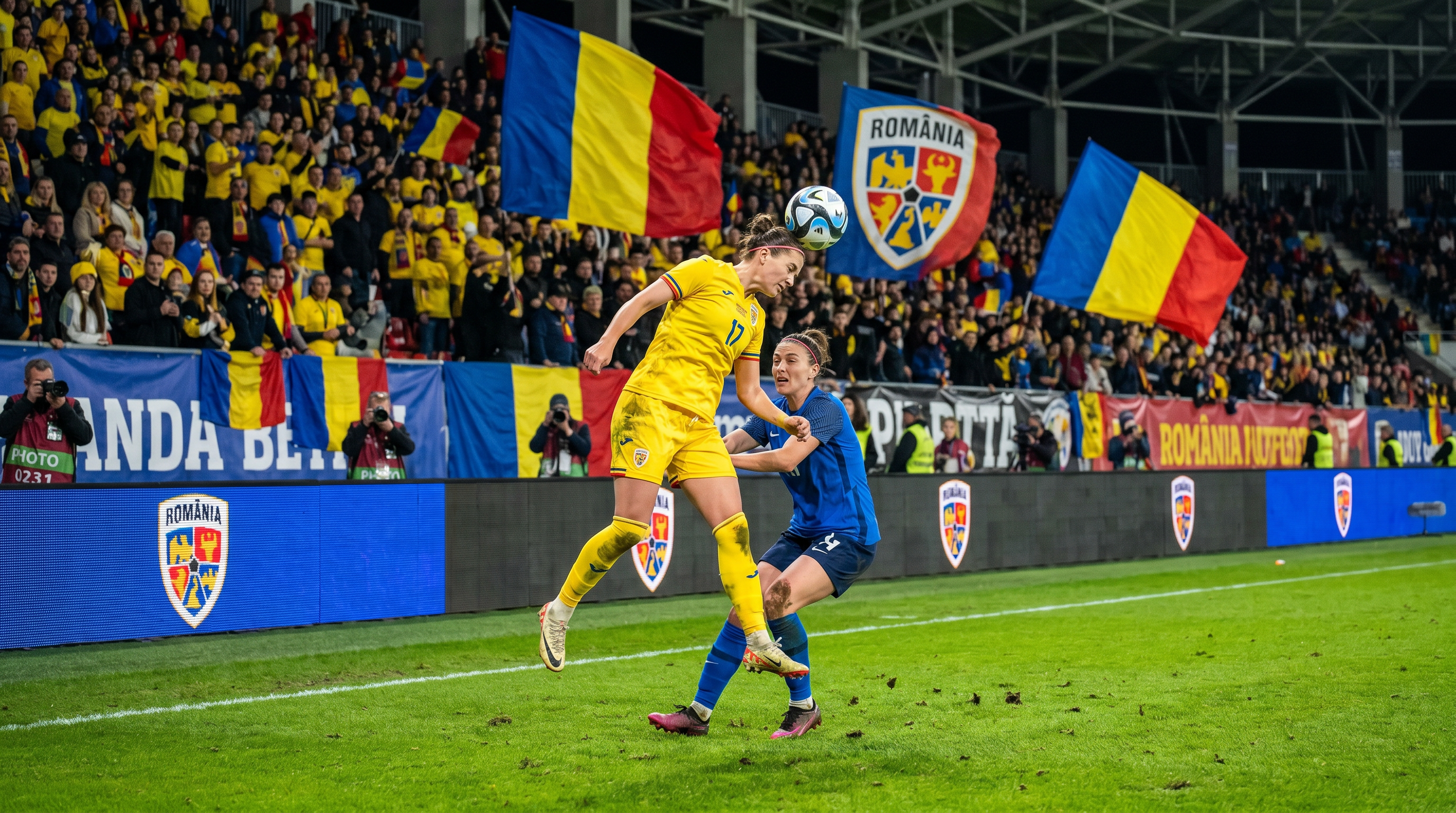
- National Team Supporters
- Fans eagerly tracking their country's path to Brazil, focusing on points, permutations, and avoiding the dreaded playoffs.
- Neutral Analysts
- Tactical observers evaluating how the new Nations League-style formats are elevating the baseline quality of women's international football.
- Developing Federations
- Emerging football programs valuing the expanded qualification pathways and guaranteed competitive minutes.
What's not represented
- · Host Nation Organizers
- · Domestic Club Managers
Why this matters
The qualification phase determines which 32 nations will compete on the sport's biggest stage in Brazil next year. For fans and federations alike, these matches dictate the future of their national programs, influencing funding, youth development, and global prestige for the next four years.
Key points
- The 2027 FIFA Women's World Cup in Brazil will feature 32 teams, with eight nations already confirmed as of June 2026.
- Japan, Australia, China, South Korea, North Korea, and the Philippines have secured Asia's direct qualification spots.
- New Zealand claimed Oceania's direct berth, while Papua New Guinea advanced to the inter-confederation play-offs.
- UEFA's revamped Nations League-style qualifiers are currently underway, with only four direct spots available for League A group winners.
- The United States and Canada will compete in the CONCACAF W Championship in November to finalize North America's representatives.
The countdown to the 2027 FIFA Women's World Cup in Brazil is accelerating. As the global football calendar flips to June 2026, the 32-team field that will compete in South America's first-ever Women's World Cup is beginning to solidify. Across six confederations, national teams are navigating a complex web of regional tournaments, revamped league structures, and high-stakes knockout brackets. While the host nation enjoys the luxury of automatic qualification, the rest of the world is fighting for the remaining 31 tickets to the sport's grandest stage. For established powerhouses, the objective is to secure direct flights and avoid the treacherous inter-confederation play-offs. For emerging programs, the expanded qualification pathways offer unprecedented competitive minutes and a genuine chance at history.[1][3]
The Asian Football Confederation (AFC) was the first to finalize its primary representatives during the 2026 AFC Women's Asian Cup, held in Australia this past March. The tournament served as a dual-purpose event, crowning a continental champion while simultaneously awarding direct World Cup berths to the top performers. Japan ultimately claimed the Asian crown with a clinical 1-0 victory over the host Matildas in the final at Stadium Australia. However, the pressure of qualification had already been lifted from both finalists, as reaching the semi-finals guaranteed their spots in Brazil.[4][6]
Joining Japan and Australia as direct qualifiers from the AFC are China and South Korea, who both reached the semi-finals of the Asian Cup before bowing out to the eventual finalists. Subsequent placement matches and playoff rounds within the confederation saw North Korea and the Philippines also punch their tickets. For the Filipinas, securing a second consecutive World Cup appearance marks a monumental achievement for a rapidly rising program, fueled by standout performances from young talents who successfully navigated a grueling group stage against seasoned opposition.[1][4]

In Oceania, the qualification pathway concluded in April with a familiar result, though the journey featured several notable surprises. New Zealand secured the OFC's single direct berth by defeating Papua New Guinea in the final of the Round Three knockout stage at North Harbour Stadium in Albany. The Football Ferns, who co-hosted the previous World Cup, will make their sixth successive appearance on the global stage. Papua New Guinea's impressive run to the final, however, did not end empty-handed; their runner-up finish earned them a vital lifeline in the inter-confederation play-offs scheduled for early 2027.[1][6]
Meanwhile, the European theater is currently in the thick of its revamped, highly competitive qualification process. Moving away from traditional standalone qualifying groups, UEFA has integrated World Cup qualification into a Nations League-style format. The continent's 53 eligible teams have been split into three tiers based on their 2025 Nations League rankings. League A features the absolute heavyweights of European football battling in four groups of four, where the margins for error are razor-thin and every dropped point dramatically alters the trajectory to Brazil.[2][5]
Meanwhile, the European theater is currently in the thick of its revamped, highly competitive qualification process.
The stakes in UEFA's League A are straightforward but brutal: only the four group winners will secure automatic qualification when the league phase concludes this month. Group A3 has drawn particular attention, pitting reigning world champions Spain against Euro 2025 winners England, alongside Iceland and Ukraine. Elsewhere, France navigates a tricky Group A2 featuring the Netherlands, while Germany and Sweden headline Groups A4 and A1, respectively. The runners-up and third-placed teams in League A will not be eliminated, but they will be forced into a treacherous two-round playoff gauntlet in late 2026 alongside the top performers from Leagues B and C.[2][5]

Across the Atlantic, the field is officially set for the 2026 CONCACAF W Championship, which will serve as North America's final qualifier in November and December. Traditional powers the United States and Canada received automatic byes directly to the eight-team tournament, bypassing the preliminary rounds. They will be joined by Costa Rica, El Salvador, Haiti, Jamaica, Mexico, and Panama, who all successfully navigated the preliminary qualifying phase that concluded in April with dominant group-stage performances.[1][7]
The format for the CONCACAF W Championship, which will be hosted in the United States, guarantees high drama from the opening whistle. The four teams that advance to the semi-finals will book direct flights to Brazil. The losing quarter-finalists will not be immediately eliminated; instead, they will compete in play-in matches to determine the two CONCACAF representatives that will advance to the inter-confederation play-offs. For teams like Mexico, who are attempting to return to the World Cup for the first time since 2015, the winter tournament represents a critical juncture.[1][7]

In South America, host nation Brazil is already guaranteed a spot, leaving the rest of CONMEBOL to fight for two direct berths via the inaugural CONMEBOL Women's Nations League. This new format replaces the Copa América Femenina as the sole World Cup qualifier, providing South American teams with a sustained calendar of competitive fixtures. Early results in the round-robin phase have seen Argentina and Colombia emerge as the frontrunners, with both sides playing to a tense draw on matchday seven as they look to distance themselves from the chasing pack.[1][8]
Africa's qualification process remains fiercely contested, with traditional heavyweights like Nigeria, South Africa, and Zambia navigating a grueling multi-round system to claim one of CAF's four direct spots. As the regional tournaments converge toward the end of the year, the final makeup of the 2027 World Cup will become increasingly clear. The entire global cycle will culminate in the inter-confederation play-offs in early 2027, a final ten-team tournament that will award the last three precious tickets to Brazil, completing the 32-team mosaic.[1][3]
How we got here
March 2026
Japan wins the AFC Women's Asian Cup, finalizing Asia's direct qualifiers alongside Australia, China, and South Korea.
April 2026
New Zealand secures Oceania's direct berth by winning the OFC qualifying tournament.
June 2026
UEFA League A group stage concludes, awarding four direct European spots.
Nov-Dec 2026
The CONCACAF W Championship takes place in the United States to determine North America's representatives.
February 2027
The inter-confederation play-offs award the final three tickets to Brazil.
Viewpoints in depth
National Team Supporters
Fans eagerly tracking their country's path to Brazil, focusing on points, permutations, and avoiding the dreaded playoffs.
For supporters of established footballing nations, the revamped qualification formats have introduced a new level of anxiety. In Europe, the Nations League structure means that top-tier teams are constantly playing each other, increasing the likelihood of dropped points and forcing fans to obsess over goal differentials and head-to-head tiebreakers. The primary objective is securing direct qualification to avoid the unpredictable nature of the inter-confederation play-offs, where a single bad match can end a World Cup dream.
Neutral Analysts
Tactical observers evaluating how the new Nations League-style formats are elevating the baseline quality of women's international football.
Tactical analysts and neutral observers have broadly praised the shift away from lopsided qualifying groups. By pitting evenly matched teams against one another in UEFA and CONMEBOL's new league structures, federations are forced to play high-stakes, competitive minutes rather than coasting through double-digit victories against minnows. Analysts argue this iron-sharpens-iron approach will ultimately result in a higher quality of play at the 2027 World Cup, as teams will arrive in Brazil battle-tested and tactically refined.
Developing Federations
Emerging football programs valuing the expanded qualification pathways and guaranteed competitive minutes.
For emerging programs in regions like Oceania and Asia, the qualification cycle is about more than just reaching the World Cup; it is about sustained development. The expanded 32-team format and the introduction of secondary pathways, such as the inter-confederation play-offs, provide developing federations with tangible goals and vital international exposure. Even for teams that ultimately fall short of Brazil, the guaranteed fixtures against higher-ranked opponents offer invaluable experience that accelerates domestic investment and youth development.
What we don't know
- Which European heavyweights will be forced into the unpredictable UEFA playoff rounds.
- Whether emerging South American teams can upset traditional powers to claim CONMEBOL's direct spots.
- Which nations will ultimately secure the final three tickets via the inter-confederation play-offs in early 2027.
Key terms
- Inter-confederation play-offs
- A final global tournament held before the World Cup where teams from different continents compete for the last remaining qualification spots.
- CONCACAF W Championship
- The premier women's football tournament for North America, Central America, and the Caribbean, serving as the region's World Cup qualifier.
- UEFA Women's Nations League
- A tiered league competition for European national teams that determines seeding and qualification pathways for major tournaments.
- CONMEBOL
- The South American Football Confederation, which is hosting the 2027 Women's World Cup in Brazil.
Frequently asked
How many teams will play in the 2027 Women's World Cup?
The tournament will feature 32 teams, maintaining the expanded format introduced at the 2023 edition in Australia and New Zealand.
Has the United States qualified yet?
Not yet. The USWNT received an automatic bye to the CONCACAF W Championship in November 2026, where they must reach the semi-finals to secure a direct spot.
How does the European qualifying format work?
UEFA uses a Nations League system where 53 teams are split into three tiers. Only the four group winners in League A qualify directly, while others enter a playoff phase.
Who has already qualified for the tournament?
As of June 2026, host Brazil is joined by Asian qualifiers Japan, Australia, China, South Korea, North Korea, and the Philippines, as well as Oceania qualifier New Zealand.
Sources
Source coverage
8 outlets
3 viewpoints surfaced







[1]FIFANeutral Analysts
FIFA Women's World Cup 2027™ Qualifiers
Read on FIFA →[2]Sky SportsNational Team Supporters
Women's World Cup 2027 European qualifying fixtures, results, groups
Read on Sky Sports →[3]BBC SportNational Team Supporters
All you need to know about 2027 Women's World Cup
Read on BBC Sport →[4]Olympics.comDeveloping Federations
AFC Women's Asian Cup Australia 2026: Full schedule and all results
Read on Olympics.com →[5]UEFANeutral Analysts
2027 FIFA Women's World Cup qualification (UEFA)
Read on UEFA →[6]ReutersNeutral Analysts
Global field takes shape for 2027 Women's World Cup in Brazil
Read on Reuters →[7]CONCACAFDeveloping Federations
Haiti, Jamaica, Mexico and more reach Concacaf W Championship
Read on CONCACAF →[8]FOX SportsNational Team Supporters
2026 Copa América Femenina Schedule and Fixtures
Read on FOX Sports →

More in sports
See all 13 stories →Olympic Sustainability
How the LA 2028 Olympics Will Run Entirely on Existing Stadiums
0 sources

NBA Finals
New York Knicks Win 2026 NBA Finals, Ending 53-Year Championship Drought
0 sources

NBA Finals
New York Knicks Capture First NBA Championship Since 1973
0 sources

Hockey Strategy
How the PWHL's 'Jailbreak' and 'No Escape' Rules Are Rewriting Hockey Strategy
0 sources

Every angle. Every day.
Get sports stories with full source coverage and perspective breakdowns delivered to your inbox.