
The Rise of the Deep Energy Retrofit: How Homeowners Are Building 'Houses Without Bills'
A new wave of home remodeling focuses on 'deep energy retrofits,' transforming drafty older houses into hyper-efficient, climate-resilient homes that generate as much energy as they consume.
By Factlen Editorial Team
- Building Scientists
- Argue that the 'fabric first' approach and rigorous standards like EnerPHit are essential to prevent moisture damage and ensure true efficiency.
- Real Estate Economists
- Focus on the financial ROI, viewing the high upfront costs as a sound long-term asset play that boosts property value and hedges against rising energy prices.
- Climate Policymakers
- Emphasize that decarbonizing the existing housing stock is mandatory to meet global net-zero goals, as new construction alone cannot solve the emissions crisis.
What's not represented
- · Low-income homeowners who cannot access the upfront capital required for deep retrofits
- · Historic preservationists concerned about altering the exterior aesthetics of heritage homes
Why this matters
Buildings account for a massive portion of global carbon emissions, and upgrading existing homes is essential for meeting climate goals. For homeowners, these deep retrofits offer a path to eliminate utility bills, drastically improve daily comfort, and protect their families during extreme weather and grid failures.
Key points
- Deep energy retrofits aim to reduce a home's total energy consumption by 50% to 90%.
- The process relies on a 'fabric first' approach, prioritizing extreme insulation and airtightness before upgrading mechanical systems.
- Airtight homes use heat recovery ventilation (MVHR) to provide constant fresh air without losing thermal energy.
- While upfront costs can reach $200,000, the upgrades eliminate utility bills and significantly boost property resale value.
- Deeply retrofitted homes offer 'thermal resilience,' maintaining safe temperatures for days during winter grid outages.
For decades, the pinnacle of home remodeling was defined by cosmetic upgrades: granite countertops, open-concept living spaces, and luxury bathrooms. But in 2026, a different kind of renovation is dominating the housing market. Homeowners are increasingly looking past the surface and investing in the very bones of their properties, driven by rising utility costs and a desire for long-term climate resilience.[3][5]
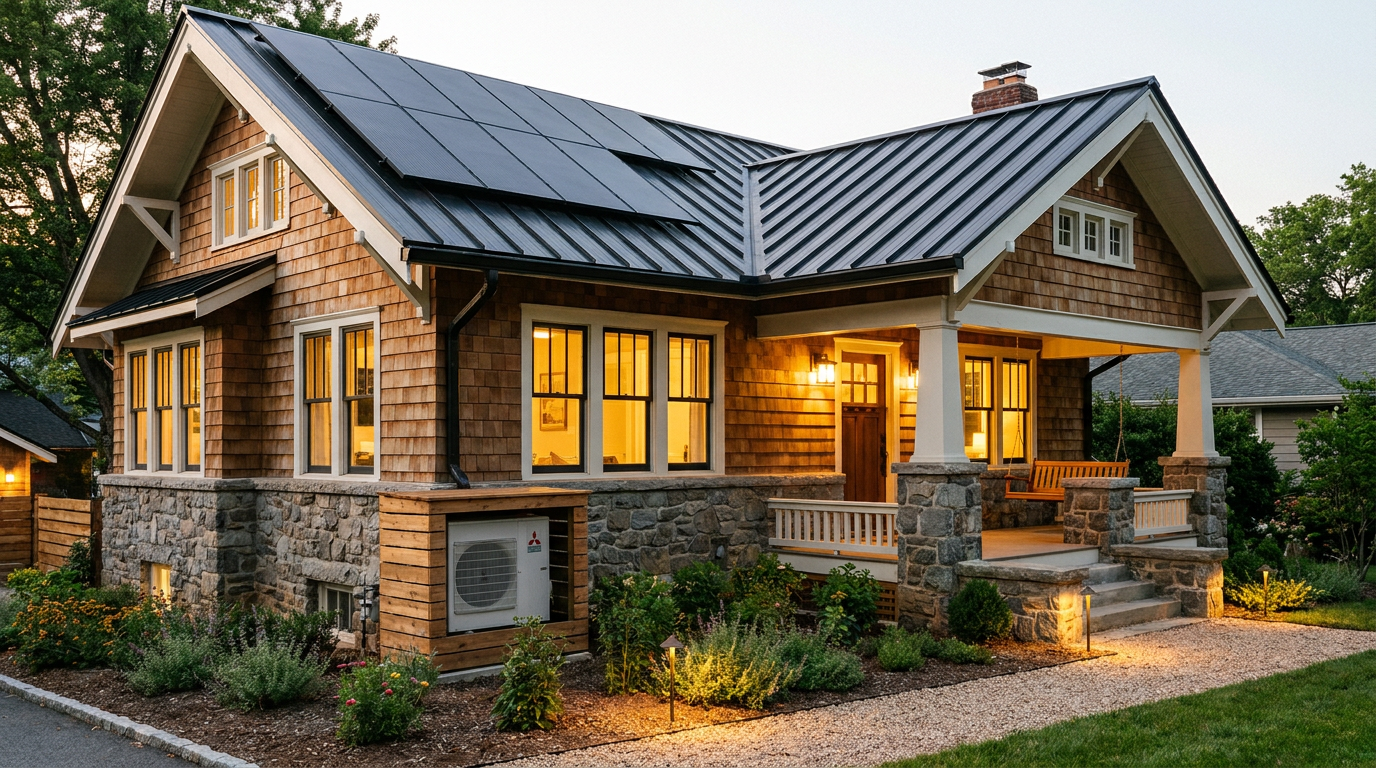
This shift has given rise to the "deep energy retrofit," a comprehensive overhaul designed to drastically reduce a home's energy consumption. Unlike conventional weatherization—which might involve caulking a few windows or adding a couple of rolls of fiberglass to the attic—a deep retrofit is a whole-building transformation that treats the house as an interconnected system.[1][3]
The goal is not merely to trim a utility bill by 10 percent, but to slash a building's energy demand by 50 to 90 percent. By fundamentally changing how a house interacts with the elements, these renovations can turn aging, drafty structures into near net-zero properties that produce as much energy as they consume over the course of a year.[3][4]

At the core of this movement is a philosophy known in building science as the "fabric first" approach. Before any new heating or cooling technology is installed, the building's physical envelope must be perfected. This means creating a continuous, unbroken thermal barrier around the home to prevent heat from escaping in the winter and entering in the summer.[2][6]
Achieving this requires substantial structural interventions. Contractors typically add thick layers of high-performance insulation to exterior walls, roofs, and foundations. Single- or double-pane windows are swapped for heavy, triple-glazed units. Crucially, the entire structure is meticulously sealed to achieve near-total airtightness, eliminating the invisible drafts and thermal bridges that plague older homes.[4][6]
Once the building envelope is sealed, the mechanical systems must be entirely rethought. Because an airtight home no longer "breathes" through random cracks and leaks in the walls, it requires active, managed ventilation to maintain healthy indoor air quality and prevent moisture buildup.[2][5]
To solve this, deep retrofits rely on Mechanical Ventilation with Heat Recovery (MVHR) systems. These units continuously draw fresh air from outside while exhausting stale indoor air. Before the two airstreams leave the building, they pass through a heat exchanger, allowing the outgoing air to warm or cool the incoming air without the streams ever mixing. This provides a constant supply of filtered, fresh air without sacrificing the home's thermal energy.[2][3]

To solve this, deep retrofits rely on Mechanical Ventilation with Heat Recovery (MVHR) systems.
With the home's heating and cooling loads drastically reduced by the improved envelope, massive conventional furnaces and boilers become obsolete. They are typically replaced by highly efficient electric heat pumps, which move heat rather than generating it through fossil fuel combustion, allowing the home to be fully electrified.[1][6]
This combination of extreme insulation, airtightness, and heat recovery forms the basis of the "EnerPHit" standard, a rigorous certification developed by the Passivhaus Institute specifically for retrofits. While achieving full new-build Passive House standards in an existing building is notoriously difficult, EnerPHit provides a tailored, verified pathway to reach what advocates call a "house without bills."[2][5]
The financial equation of a deep energy retrofit is perhaps its most debated aspect. Reaching net-zero or EnerPHit standards is a massive undertaking, with costs in 2026 typically ranging from $100,000 to $200,000 for a standard single-family home, depending on the region and the starting condition of the property.[3][4]
However, real estate analysts point out that the return on investment extends far beyond monthly utility savings. In many markets, a fully decarbonized, net-zero home commands a significant premium, driving resale values up by 15 to 25 percent as buyers increasingly prioritize energy independence.[4]

Furthermore, the economics are increasingly supported by a web of government incentives. In the United States and Canada, enhanced tax credits, performance-based rebates, and specialized green financing programs are helping to offset the initial capital required. As carbon pricing and building performance mandates tighten globally, the financial penalty for owning an inefficient home is growing.[1][3][6]
Beyond the balance sheet, the most immediate impact for homeowners is a radical improvement in daily comfort. Deep retrofits eliminate the cold spots, drafts, and temperature swings common in older homes. The interior remains at a consistent, comfortable temperature year-round, regardless of the weather outside.[2][4]
This thermal stability also provides a crucial layer of safety, known as "thermal resilience." During extreme weather events or grid outages—such as a severe winter polar vortex—a deeply retrofitted home can maintain safe indoor temperatures for days or even weeks without any mechanical heating, protecting occupants from dangerous extremes.[5][6]

Ultimately, the surge in deep energy retrofits represents a paradigm shift in how society views its existing housing stock. Tearing down inefficient homes to build new ones generates massive amounts of landfill waste and embodied carbon emissions, making renovation the far more sustainable choice.[5]
By choosing to retrofit, homeowners are proving that the greenest house is often the one that is already standing. As the construction industry scales its workforce to meet this demand, the deep energy retrofit is transitioning from a niche environmental pursuit into a mainstream blueprint for the future of housing.[3][6]
Viewpoints in depth
Building Scientists
Argue that the 'fabric first' approach and rigorous standards like EnerPHit are essential to prevent moisture damage and ensure true efficiency.
Building scientists and architects emphasize that a house operates as a holistic system. Simply adding a high-efficiency heat pump to a drafty house is a waste of resources. They advocate for the 'fabric first' approach, insisting that perfecting the building envelope through extreme insulation and airtightness is the only way to achieve true energy independence. Furthermore, they stress that airtightness must be paired with mechanical ventilation; failing to do so can trap moisture and lead to mold, which is why rigorous frameworks like the EnerPHit standard are critical for quality control.
Real Estate Economists
Focus on the financial ROI, viewing the high upfront costs as a sound long-term asset play that boosts property value and hedges against rising energy prices.
Financial analysts acknowledge the sticker shock of a $100,000 to $200,000 renovation, but they view the expenditure through the lens of long-term asset management. By eliminating monthly utility bills, homeowners effectively pre-pay their energy costs for the next several decades, hedging against volatile fossil fuel markets. Additionally, as climate mandates tighten and buyers become more energy-conscious, net-zero homes are commanding a 15% to 25% premium on the real estate market, meaning the upfront capital is largely recovered upon resale.
Climate Policymakers
Emphasize that decarbonizing the existing housing stock is mandatory to meet global net-zero goals, as new construction alone cannot solve the emissions crisis.
For government officials and climate advocates, deep energy retrofits are a matter of national infrastructure and emissions math. Buildings account for a massive percentage of global carbon output, and the vast majority of the homes that will exist in 2050 have already been built. Policymakers argue that society cannot simply build its way out of the climate crisis with new green construction; it must aggressively decarbonize the existing housing stock. This perspective drives the push for expanded tax credits, rebates, and mandatory building performance standards to accelerate adoption.
What we don't know
- Whether the construction industry can train enough specialized contractors to meet the growing demand for deep retrofits.
- How quickly local municipalities will update zoning laws to accommodate exterior insulation and heat pump placements on older properties.
Key terms
- Deep Energy Retrofit (DER)
- A comprehensive, whole-building renovation designed to reduce a home's energy consumption by 50% or more.
- Building Envelope
- The physical separator between the conditioned and unconditioned environment of a building, including walls, roof, foundation, and windows.
- Thermal Bridge
- An area in a building's envelope that has significantly higher heat transfer than the surrounding materials, leading to energy loss.
- Mechanical Ventilation with Heat Recovery (MVHR)
- A system that provides fresh filtered air to a building while retaining the thermal energy of the exhausted stale air.
- Thermal Resilience
- A building's ability to maintain safe and comfortable indoor temperatures during extreme weather events or power outages without active heating or cooling.
Frequently asked
What is the difference between weatherization and a deep energy retrofit?
Weatherization typically involves minor upgrades like caulking windows or adding attic insulation for a 10-30% energy savings. A deep energy retrofit is a whole-building overhaul that aims to reduce energy consumption by 50-90%.
What is the EnerPHit standard?
EnerPHit is a rigorous energy efficiency certification developed by the Passivhaus Institute specifically for retrofitting existing buildings, acknowledging the unique challenges of older structures.
Do airtight homes have poor indoor air quality?
No. Deep retrofits require Mechanical Ventilation with Heat Recovery (MVHR) systems, which constantly supply the home with fresh, filtered outdoor air while exhausting stale indoor air.
How much does a deep energy retrofit cost?
In 2026, a comprehensive whole-home retrofit typically costs between $100,000 and $200,000, though government incentives and tax credits can significantly lower the out-of-pocket expense.
Sources
Source coverage
6 outlets
3 viewpoints surfaced






[1]U.S. Department of EnergyClimate Policymakers
Deep Energy Retrofits
Read on U.S. Department of Energy →[2]Passivhaus TrustBuilding Scientists
Passivhaus Retrofit: A House Without Bills
Read on Passivhaus Trust →[3]SolarTech OnlineReal Estate Economists
Deep Energy Retrofit Trends 2026: Market Drivers and Savings
Read on SolarTech Online →[4]RenoQuotesReal Estate Economists
Net-Zero Home Renovation Cost in Canada (2026): Budget, Rebates and ROI
Read on RenoQuotes →[5]Factlen Editorial TeamBuilding Scientists
Synthesis by Factlen editorial team
Read on Factlen Editorial Team →[6]Environment Global WarmingClimate Policymakers
Net Zero Buildings and Retrofits 2026: Challenges and Future Outlook
Read on Environment Global Warming →
Every angle. Every day.
Get home stories with full source coverage and perspective breakdowns delivered to your inbox.