
The Rise of Astrotourism: Why Travelers Are Chasing the Darkest Skies on Earth
As light pollution erases the stars for 80% of the global population, a booming travel movement is turning remote, pitch-black regions into highly sought-after economic engines.
By Factlen Editorial Team
- Rural Economic Developers
- View astrotourism as a vital tool for job creation and economic revitalization that relies on existing natural assets rather than expensive infrastructure.
- Conservationists & Astronomers
- Focus on the urgent need to reduce artificial light at night to protect nocturnal wildlife, human health, and the scientific value of the cosmos.
- Sustainable Travel Advocates
- Emphasize the need to manage visitor influxes carefully, ensuring that the popularity of dark sky destinations doesn't introduce the very light pollution tourists are trying to escape.
What's not represented
- · Indigenous communities whose traditional lands are being marketed for astrotourism
- · Local residents in rural areas who may oppose strict new lighting ordinances
Why this matters
Astrotourism offers a rare win-win for the travel industry: it provides rural communities with a sustainable economic lifeline while incentivizing the preservation of natural ecosystems and the night sky.
Key points
- Astrotourism is a rapidly growing travel sector focused on visiting remote areas with minimal light pollution.
- The Bortle Scale is used to measure sky darkness, with Class 1 representing the most pristine, unpolluted skies on Earth.
- Because stargazing requires overnight stays, it serves as a massive economic driver for rural and developing communities.
- Dark Sky Sanctuaries enforce strict lighting ordinances, which also protect nocturnal wildlife and migrating birds from disorientation.
For most of human history, the night sky was a shared cultural canvas, a navigational tool, and a universal source of wonder. Today, it is rapidly disappearing. Artificial light at night has increased so dramatically over the last century that an estimated 80 percent of the global population now lives under light-polluted skies. For urban dwellers, the Milky Way is no longer a visible reality, but a concept found only in photographs and planetariums.[6]
In response to this vanishing natural resource, a new travel movement has taken hold: astrotourism. Rather than flocking to sun-drenched beaches or crowded historic city centers, a growing demographic of travelers is venturing into the world's most remote, pitch-black regions specifically to look up.[1]
Astrotourism is defined as travel to destinations with minimal light pollution to observe celestial phenomena, from meteor showers and auroras to deep-space objects. By 2026, it has evolved from a niche hobby for amateur astronomers into a major driver of sustainable ecotourism, reshaping how rural communities market themselves to the world.[2]
The mechanism driving this shift is the formal measurement and protection of darkness. Astronomers and conservationists rely on the Bortle Scale, a nine-level numeric system created in 2001 by amateur astronomer John E. Bortle. The scale quantifies the observability of celestial objects against the interference of atmospheric skyglow.[4]
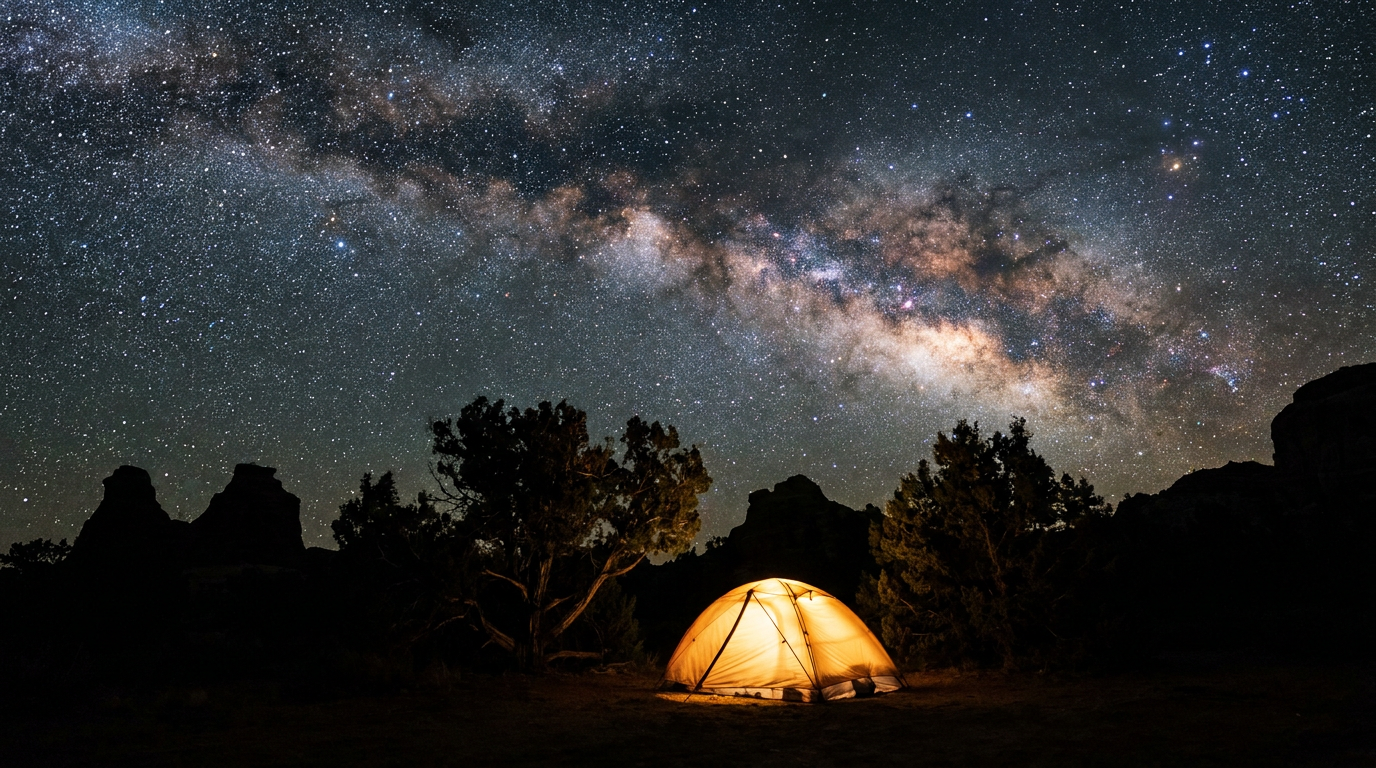
On the Bortle Scale, a Class 9 represents an inner-city sky where only the brightest planets and a handful of stars are visible through the orange haze. A Class 1, conversely, represents the darkest skies on Earth—environments so pristine that the Milky Way casts a visible shadow on the ground, and faint phenomena like zodiacal light can be seen clearly with the naked eye.[4][6]

To protect these Class 1 and 2 environments, organizations like DarkSky International have established rigorous certification programs. Destinations can apply to become International Dark Sky Parks, Reserves, or—the rarest and most stringent designation—Dark Sky Sanctuaries.[4]
Achieving sanctuary status is not merely about being located in the middle of nowhere; it requires active, legislated stewardship. Communities must adopt strict outdoor lighting ordinances, ensuring that all fixtures are fully shielded, point downward, and use warm-colored bulbs that minimize atmospheric scattering.[1][4]
Achieving sanctuary status is not merely about being located in the middle of nowhere; it requires active, legislated stewardship.
The Cosmic Campground in western New Mexico serves as a prime example. Located in the Gila National Forest, this designated Dark Sky Sanctuary enforces strict rules to maintain its pristine environment. It operates as a strict "no-headlights zone," requiring visitors to arrive before dark or use red-light flashlights, and features dedicated concrete pads for telescopes and astrophotography gear.[1]
Beyond the romantic appeal of stargazing, astrotourism is proving to be a potent economic engine, particularly for rural and developing regions that have historically struggled to attract visitors. Because stargazing inherently requires darkness, it forces a behavioral shift in tourists: they must stay overnight.[2][5]
Overnight stays are the holy grail of destination marketing. A tourist who stays the night books lodging, eats multiple meals at local restaurants, and often hires local guides. A 2019 study focusing on the Colorado Plateau—a region spanning parts of Arizona, Colorado, New Mexico, and Utah—forecasted that astrotourists would inject $5.8 billion into the local economy over a ten-year period, supporting thousands of jobs.[5]

This economic injection extends globally. In Sutherland, South Africa, the establishment of the Southern African Large Telescope and subsequent astrotourism initiatives dramatically increased the number of local guesthouses. By drawing tens of thousands of visitors to a remote area, the observatory created direct employment and stimulated a micro-economy of hospitality services, demonstrating how astronomy can catalyze rural development.[3]
Crucially, astrotourism is highly sustainable compared to traditional tourism models. It requires minimal infrastructure investment—no massive theme parks, no sprawling resort complexes, and no landscape-altering construction. The primary asset is the natural environment exactly as it is, meaning the economic incentive aligns perfectly with conservation.[2][6]
The environmental benefits of preserving dark skies extend far beyond human enjoyment. Artificial light at night severely disrupts local ecosystems. It disorients nocturnal pollinators, alters the feeding habits of mammals, and proves fatal to millions of migrating birds each year. By enforcing dark-sky lighting ordinances, astrotourism destinations inadvertently create massive, protected ecological corridors.[4][6]

However, the rapid growth of astrotourism presents a unique paradox: the very act of visiting a dark sky sanctuary threatens the darkness. As remote areas become popular, the influx of rental cars, smartphones, and new lodging developments introduces the exact light pollution the destination was certified to prevent.[3][6]
Furthermore, researchers point out an equity issue within the astrotourism boom. Because these destinations are often highly remote, accessing them requires significant financial resources, reliable transportation, and time off work. There is an ongoing debate about how to democratize access to the night sky so that its benefits do not exclusively favor wealthy travelers.[3]

To combat these challenges, destination management organizations are shifting toward "regenerative" astrotourism. This involves capping visitor numbers, mandating dark-sky education prior to arrival, and ensuring that indigenous astronomical knowledge—such as Māori stargazing traditions in New Zealand—is centered in the visitor experience.[1][6]
As the world navigates the solar maximum in 2026, bringing heightened auroral activity to lower latitudes, the demand for unpolluted skies will only intensify. Astrotourism stands as a rare sector where doing nothing to the landscape is the most profitable action a community can take, proving that sometimes the most valuable resource is simply the absence of light.[1][6]
How we got here
2001
Amateur astronomer John E. Bortle publishes the Bortle Scale in Sky & Telescope magazine to quantify light pollution.
2007
Mont-Mégantic in Quebec becomes the world's first certified International Dark Sky Reserve.
2019
A Missouri State University study projects $5.8 billion in astrotourism spending for the Colorado Plateau over a decade.
2024
The Oregon Outback earns certification, becoming the largest officially designated dark sky place on the planet.
2026
The solar maximum drives record interest in dark sky destinations as travelers seek out heightened auroral activity.
Viewpoints in depth
Rural Economic Developers
View astrotourism as a vital tool for job creation and economic revitalization.
For rural municipalities, astrotourism represents a low-barrier entry into the global tourism market. Unlike traditional resort tourism, which requires massive capital for infrastructure, astrotourism relies on an asset these communities already possess: darkness. By marketing their unpolluted skies, remote towns can capture the highly lucrative overnight-stay demographic, injecting capital into local guesthouses, restaurants, and guide services without fundamentally altering the character of their towns.
Conservationists & Astronomers
Focus on the urgent need to reduce artificial light at night to protect ecosystems.
From a scientific and ecological perspective, the value of Dark Sky Sanctuaries extends far beyond tourism. Conservationists argue that artificial light at night (ALAN) is a severe, yet often overlooked, form of pollution. It disrupts the circadian rhythms of local wildlife, disorients millions of migrating birds, and interferes with nocturnal pollinators. By using astrotourism as an economic incentive, conservationists can successfully lobby for strict lighting ordinances that create massive, protected ecological corridors.
Sustainable Travel Advocates
Emphasize the paradox of access and the risk of loving pristine areas to death.
Sustainable travel experts warn of the inherent paradox in astrotourism: the more popular a dark sky destination becomes, the more likely it is to lose its darkness. The influx of rental cars with bright headlights, tourists with smartphones, and the subsequent development of new lodging can quickly degrade a Class 1 Bortle sky. These advocates push for "regenerative" models that strictly cap visitor numbers and prioritize education, ensuring that the pursuit of stargazing doesn't destroy the very resource it relies upon.
What we don't know
- Whether the economic benefits of astrotourism will remain localized or eventually be captured by large, out-of-town hospitality developers.
- How effectively remote destinations can manage the carbon footprint of travelers flying long distances specifically to engage in ecotourism.
Key terms
- Astrotourism
- Travel to destinations with minimal light pollution specifically to observe celestial phenomena.
- Bortle Scale
- A nine-level numeric scale that measures the brightness of the night sky and the observability of celestial objects.
- ALAN
- Artificial Light At Night; human-made illumination that alters natural outdoor light levels, causing light pollution.
- Skyglow
- The brightening of the night sky over inhabited areas caused by artificial light scattering in the atmosphere.
- Dark Sky Sanctuary
- A public or private land with an exceptional quality of starry nights, strictly protected for its scientific and natural value.
Frequently asked
What makes a Dark Sky Sanctuary different from a Dark Sky Park?
Sanctuaries are typically the most remote and isolated dark sky places on Earth. They have the strictest lighting regulations and the lowest levels of light pollution, prioritizing conservation over high-volume public access.
How does astrotourism help local economies?
Because stargazing happens at night, it requires visitors to book overnight accommodations. This significantly increases their spending at local restaurants, hotels, and guide services compared to day-trippers.
Can light pollution be reversed?
Yes. Unlike chemical pollution, light pollution disappears the moment a light is turned off or properly shielded, making it one of the most immediately solvable environmental issues.
Sources
Source coverage
6 outlets
3 viewpoints surfaced






[1]Outside MagazineSustainable Travel Advocates
The Best Dark Sky Destinations for Astrotourism
Read on Outside Magazine →[2]ResearchGateRural Economic Developers
Astro-tourism as a catalyst for sustainable regional economic development
Read on ResearchGate →[3]arXivConservationists & Astronomers
Empowering Rural Communities through Astrotourism
Read on arXiv →[4]DarkSky InternationalConservationists & Astronomers
Bortle Scale Interpretation and Dark Sky Certification
Read on DarkSky International →[5]Miles PartnershipRural Economic Developers
Studying Dark Sky Tourism's Potential Economic Impacts
Read on Miles Partnership →[6]Factlen Editorial TeamSustainable Travel Advocates
Synthesis by Factlen editorial team
Read on Factlen Editorial Team →

Every angle. Every day.
Get travel stories with full source coverage and perspective breakdowns delivered to your inbox.