
The Revival of the 'Third Place': How Micro-Communities Are Replacing Screens
Driven by digital fatigue, a new generation is rebuilding physical social infrastructure through run clubs, co-living spaces, and revitalized community hubs.
By Factlen Editorial Team
- Community Builders
- Focused on social connection, mental health, and combating loneliness through shared activities.
- Urban Planners & Sociologists
- Focused on the structural need for accessible, non-commercial public spaces.
- Fitness & Wellness Advocates
- Focused on the dual benefits of physical health and organic networking.
- Housing Innovators
- Focused on structural living changes like co-living to solve affordability and isolation.
What's not represented
- · Elderly populations facing isolation
- · Rural communities lacking dense social infrastructure
Why this matters
As digital fatigue peaks, the revival of physical community spaces is reshaping how people date, live, and combat loneliness. Understanding this shift reveals why traditional social venues are struggling and where the next generation is finding genuine connection.
Key points
- Young adults are increasingly abandoning dating apps and bars in favor of hobby-based micro-communities like run clubs.
- The trend is a direct response to the 'social fatigue' and atomization exacerbated by years of digital-first interaction.
- Sociologists refer to these essential community hubs as 'third places,' distinct from the home and the workplace.
- Co-living developments are surging as a way to integrate third-place social benefits directly into affordable housing.
- Urban planners emphasize the need to protect free, public third places like libraries and parks to ensure communities remain inclusive.
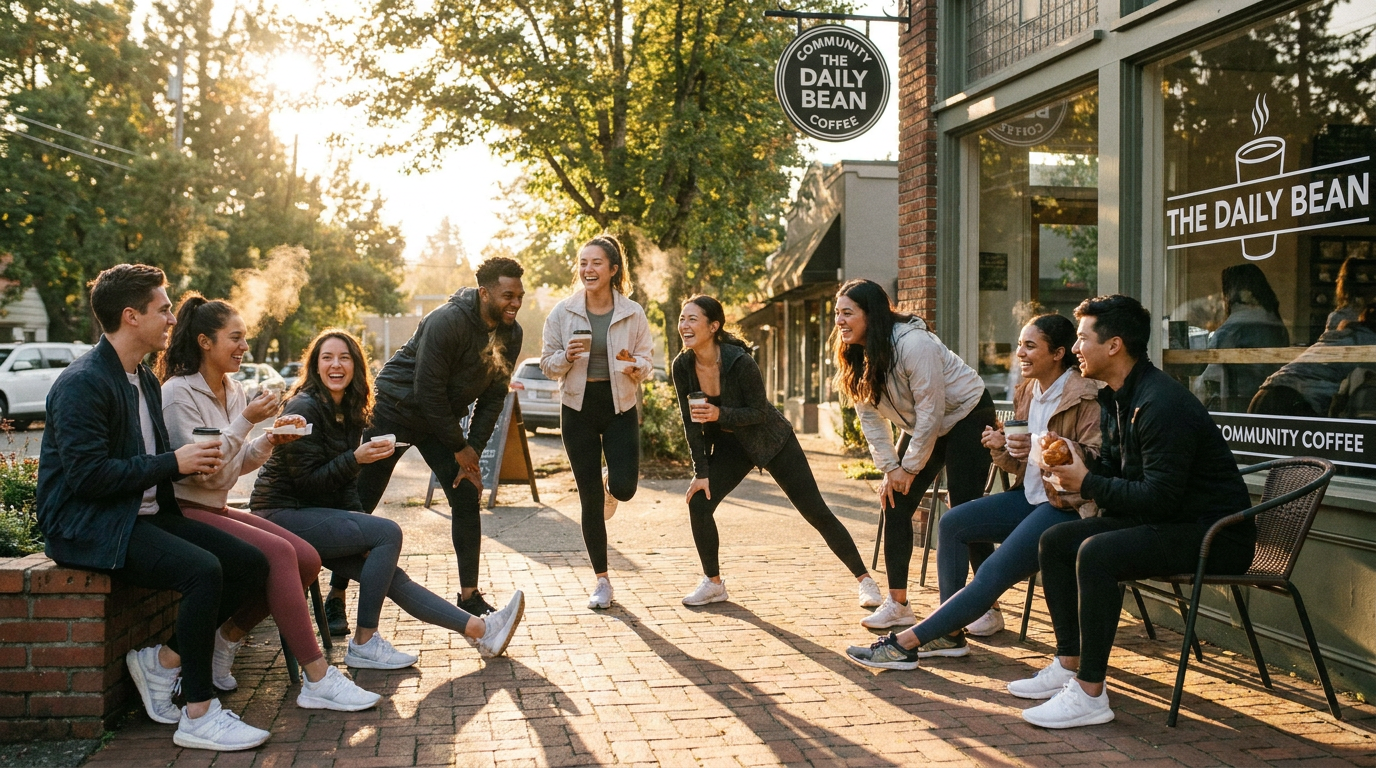
Forget the dimly lit nightclub or the endless scroll of a dating app. In 2026, the hottest place to meet someone might just be a parking lot outside a neighborhood coffee shop at 6:00 a.m., laces tied and pace optional. Across the globe, a quiet revolution is pulling young adults away from their screens and back into the physical world.[1]
For a generation that came of age during an era of lockdowns and digital-first friendships, the novelty of the online world has worn thin. The new frontier isn't a virtual metaverse; it is the running path in the park, the local library, and the shared kitchen of a co-living space.[4]
Sociologists have a name for these crucial social anchors: "third places." Coined by American sociologist Ray Oldenburg in his 1989 book The Great Good Place, the term describes the informal public gathering spots that exist outside of the home (the first place) and the workplace (the second place).[3][6]
Historically, these were the diners, barbershops, church basements, and bowling alleys that served as the crucibles of civic life. They were neutral grounds where friendships formed organically, ideas were exchanged, and a sense of local belonging was nurtured.[2]

Over the last decade, however, those physical spaces were increasingly replaced by digital alternatives. Group chats, Discord servers, and sprawling social media platforms became the default third places. While they offered a semblance of connection without the need to leave the house, the pandemic-era acceleration of this trend revealed its stark limitations.[4]
The result was widespread social fatigue and atomization. According to the 2024 American Social Capital Survey, half of Americans reported never or seldom visiting a park in the previous year, and 63 percent said they rarely walked through the doors of a local library.[2]
But the pendulum is swinging back with force. The most visible manifestation of this "great reconnection" is the explosion of hobby-based micro-communities, particularly run clubs. Data from fitness platforms shows that club participation has surged dramatically over the last two years.[1][4]
These groups are no longer just about chasing a personal best; they have explicitly become the new singles bars. Research indicates that around 72 percent of Gen Z runners report joining these clubs specifically to meet new people.[1]
These groups are no longer just about chasing a personal best; they have explicitly become the new singles bars.
The appeal lies in the authenticity of the interaction. Dating apps, while used by at least 30 percent of American adults, leave users evenly split on whether the experience is actually positive. Swiping through curated profiles often feels performative and exhausting.[1]

In contrast, shared physical activities strip away the pretense. Bonding over the shared exertion of a morning run—where everyone is already in activewear and sweating—removes the pressure of a formal first date. It is a natural way to connect, free from ghosting and awkward wardrobe decisions.[1]
Beyond fitness, the third place revival is spawning new types of intentional venues. Take the rise of the "listening bar"—spaces dedicated not to loud mingling, but to the communal, high-fidelity experience of appreciating an album from start to finish. These venues prioritize a shared, meditative vibe over the transactional nature of traditional nightlife.[4]
Yet, as private entities seize the opportunity to revive social life, a debate is emerging about accessibility. Today's third places increasingly blur the line between community space and commercial enterprise.[3]
The rise of hobbyism has led to specialized spaces aligned with particular interests, which can sometimes feel like exclusive subcultures rather than broadly inclusive neighborhood hubs. When a third place requires an expensive membership or a specific lifestyle aesthetic, it risks leaving behind those who cannot afford the price of entry.[3]

To combat this, some urbanites are taking the concept a step further by integrating the third place directly into their primary residence through "co-living." Co-living developments combine private bedrooms with extensive shared amenities—from communal garden plots and creative labs to shared kitchens and wellness spaces.[5]
This model is proving to be more than just a lifestyle trend; it is a structural response to both the housing affordability crisis and the epidemic of urban loneliness. By sharing resources, some co-living models report reducing housing costs by up to 30 percent, while simultaneously fostering a built-in community.[5]
The social impact is measurable. Residents in intentional co-living communities frequently report significant drops in feelings of isolation, with some spaces citing a 64 percent reduction in loneliness among their members.[5]

Meanwhile, traditional, non-commercial third places are also experiencing a renaissance. Public libraries are being reimagined not just as repositories for books, but as vibrant community hubs. At university libraries and civic centers, these spaces host everything from study sessions to pop-up services and casual game nights, filling in the cracks of daily life.[6]
The challenge for the next decade will be ensuring that this social infrastructure remains robust and accessible. Urban planners and sociologists argue that true livability requires walkability and spaces that cultivate informal interactions among strangers from all walks of life.[2][6]
Whether it is a free neighborhood run club, a revitalized public park, or an intentional co-living community, the underlying message is clear. A new generation is consciously choosing tangible, real-world connection over digital content, proving that the human need for a shared space is stronger than any algorithm.[4][7]
How we got here
1989
Sociologist Ray Oldenburg coins the term 'Third Place' to describe essential community gathering spots.
2020–2022
Pandemic lockdowns accelerate digital atomization, pushing social life almost entirely online.
2024
The American Social Capital Survey reveals a stark drop in public space usage, with half of Americans rarely visiting parks.
2025–2026
A massive surge in IRL micro-communities, with run clubs and co-living spaces seeing record participation as antidotes to digital fatigue.
Viewpoints in depth
Urban Planners & Sociologists
Advocating for accessible, non-commercial public infrastructure.
This camp emphasizes that true community resilience relies on spaces that are free or low-cost. They warn that while commercialized third places like boutique gyms and listening bars are valuable, they risk creating gated subcultures. True civic health, they argue, requires investment in public parks, libraries, and walkable neighborhoods where diverse groups can interact organically without a price of admission.
Fitness & Wellness Advocates
Championing active micro-communities as the ultimate social hack.
Wellness advocates point to the dual benefits of groups like run clubs. By combining physical exertion with social interaction, participants lower their stress levels and build habits that stick. They argue that shared suffering—like a 6:00 a.m. run in the cold—strips away the performative layers of modern dating, resulting in faster, more authentic human connections.
Housing Innovators
Redesigning the 'first place' to solve the third place deficit.
Real estate developers and co-living advocates argue that the modern city has made traditional socializing too expensive. Their solution is to build the third place directly into the home. By sacrificing private square footage for expansive communal kitchens, gardens, and coworking spaces, they believe they can simultaneously solve the housing affordability crisis and the loneliness epidemic.
What we don't know
- Whether commercialized third places will eventually price out lower-income residents, creating exclusive subcultures rather than inclusive communities.
- How traditional nightlife venues and dating app companies will pivot to survive the ongoing exodus of Gen Z users.
Key terms
- Third Place
- An informal public gathering space outside of the home and workplace that fosters community and social interaction.
- Atomization
- A sociological trend where individuals become increasingly isolated and disconnected from their broader community.
- Co-living
- A modern housing model that combines private living quarters with extensive shared communal spaces to reduce costs and increase social connection.
- Listening Bar
- A venue designed for high-fidelity audio appreciation where patrons listen to music together, prioritizing shared experience over loud socializing.
Frequently asked
What exactly is a 'third place'?
Coined by sociologist Ray Oldenburg, a third place is an informal public gathering spot outside of the home and workplace where people can socialize and build community.
Why are run clubs replacing dating apps?
Many young adults report 'social fatigue' from the performative nature of dating apps, preferring the authentic, low-pressure environment of shared physical activities.
How does co-living address social isolation?
Co-living integrates shared amenities and communal spaces into residential buildings, fostering daily, organic interactions that significantly reduce feelings of loneliness.
Sources
Source coverage
7 outlets
4 viewpoints surfaced







[1]Miami HeraldFitness & Wellness Advocates
Why Run Clubs Are the New Dating Apps for Young Singles
Read on Miami Herald →[2]Washington MonthlyUrban Planners & Sociologists
The Shrinking Space Between Home and Work
Read on Washington Monthly →[3]ArchDailyUrban Planners & Sociologists
Third Places in the United States: Commercialized or Community-Centered?
Read on ArchDaily →[4]Young HollywoodCommunity Builders
Gen Z's Third Place Revival: Community Over Content
Read on Young Hollywood →[5]Everything ColivingHousing Innovators
Top 16 Coliving Trends for 2025
Read on Everything Coliving →[6]BU TodayCommunity Builders
Why Is Everybody Talking About “Third Places” Right Now?
Read on BU Today →[7]Factlen Editorial Team
Synthesis by Factlen editorial team
Read on Factlen Editorial Team →
Every angle. Every day.
Get lifestyle stories with full source coverage and perspective breakdowns delivered to your inbox.