
The Revival of the Letter to the Editor: How 'Slow Media' is Fixing Public Discourse
As news outlets abandon toxic comment sections, a digital renaissance of the traditional letter to the editor is fostering healthier, verified community debate.
By Ling Zhou

In short
- Major news outlets are replacing toxic digital comment sections with curated, verified reader letters.
- The trend is rooted in 'Slow Media,' which uses constructive friction to elevate the quality of debate.
- Newspaper chains like Gannett are scaling back syndicated columns to prioritize local community voices.
The digital public square is exhausted. For the better part of two decades, the internet promised a sweeping democratization of opinion, inviting anyone with a keyboard and an internet connection to sound off in comment sections and social media feeds. The theory was that removing gatekeepers would lead to a vibrant, global exchange of ideas.
Yet, as algorithmic platforms increasingly optimized for outrage and frictionless engagement, that utopian vision rapidly devolved into a toxic free-for-all. Instead of thoughtful debate, the digital commons became dominated by bad-faith arguments, coordinated harassment campaigns, and algorithmic amplification of the most extreme voices, leaving the average reader alienated and exhausted by the constant noise.[1]
In response to this deteriorating environment, major news organizations quietly began boarding up their comment sections in the late 2010s. Publishers cited the insurmountable financial and emotional cost of moderating vitriol, spam, and hate speech.
But the fundamental human desire for public dialogue and community connection did not disappear when the comment boxes vanished; it simply needed a better, more structured container. Readers still wanted to respond to the news, challenge assumptions, and share their lived experiences, but they required an environment where their contributions would be respected rather than drowned out by anonymous trolls.[1]
Enter the unexpected revival of one of journalism's oldest and most traditional formats: the Letter to the Editor (LTE). Once relegated to the dusty back pages of print newspapers and viewed as a quaint relic of a bygone era, curated reader correspondence is currently experiencing a vibrant digital renaissance. Modern news outlets are reimagining these sections not as an afterthought, but as premium, highly visible digital real estate designed to showcase the best of community thought and constructive pushback.[1]
This resurgence is not a nostalgic accident or a temporary trend. It is a deliberate, highly calculated editorial strategy rooted deeply in the "Slow Media" movement. Emerging as a counter-response to the relentless pace of the 24-hour news cycle, Slow Media is a philosophy that advocates for mindful, deliberate consumption and production of information. It asks both publishers and readers to prioritize depth, sustainability, and nuance over the fleeting dopamine hits of breaking news alerts and instant hot takes.
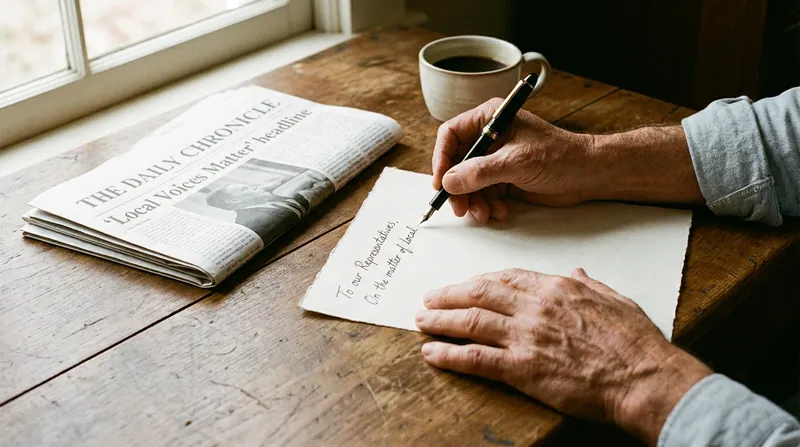
At the absolute heart of the Slow Media approach is the concept of constructive friction. On social media platforms, the distance between an emotional reaction and a globally published post is measured in milliseconds. There is no pause for reflection, no requirement for evidence, and no barrier to entry. Writing a letter to the editor, by stark contrast, requires a significant investment of time and effort. It is an inherently slow process that demands intentionality from the very first sentence.
A prospective writer aiming for the opinion page must formulate a coherent, well-structured argument, adhere to strict publication guidelines, and ruthlessly edit their thoughts to fit within tight word limits—typically landing between 150 and 250 words. Furthermore, they must submit their work for rigorous editorial review, attach their real name, and often verify their identity, professional credentials, and local residency with the publication's staff before their words ever see the light of day. This process inherently weeds out the impulsive reactions that dominate other platforms.
This built-in friction acts as a remarkably powerful filter for public discourse. It strips away the cloak of anonymity that so often fuels digital harassment and forces contributors to rely on verifiable evidence rather than ad hominem attacks.
When people know their real names will be attached to their words, and that a professional editor will scrutinize their claims, the tone of the conversation naturally elevates. The result is a carefully curated space where communities can disagree passionately but constructively, focusing on the substance of the issue rather than tearing down the character of their opponents.[1]
The shift toward curated reader voices is fundamentally reshaping the business model of opinion journalism across the country. In 2022, Gannett, the publisher of USA Today and over 250 local daily newspapers, initiated a radical and highly publicized restructuring of its editorial pages. Facing declining institutional trust and shrinking print revenues, the media behemoth realized that its traditional approach to the opinion section was no longer serving its readership or its bottom line. They needed a format that built community rather than driving wedges between neighbors.[2]
The chain began systematically scaling back traditional unsigned editorials and syndicated political columns, which internal data suggested were actively alienating readers and exacerbating partisan polarization. Instead, Gannett and other publishers pivoted aggressively toward elevating local voices, commissioning guest essays from community experts, and expanding the footprint of verified community letters. The overarching goal was to transform the opinion page from a top-down megaphone for the institutional elite into a vibrant, democratic mirror reflecting the genuine concerns, expertise, and debates of the local population.[2]
Other major publications have eagerly followed suit, recognizing that modern audiences no longer want to be lectured by an anonymous, omniscient editorial board. The Los Angeles Times, for instance, has heavily promoted its "Hear Me Out" and Letters sections, actively framing the readers who "write back to the news" as essential, valued collaborators in the journalistic process. By treating reader submissions as premium content rather than filler, these outlets are successfully rebuilding the civic trust that was lost during the chaotic early years of the digital media revolution.[3]
Beyond fostering a healthier environment for civic debate, the modern Letter to the Editor holds significant, tangible political weight in the halls of government. While a viral social media post might generate fleeting national noise and cable news outrage, a published letter in a local newspaper is treated by those in power as a verified, highly credible signal of constituent sentiment. Politicians and their staffs understand the friction involved in the editorial process, and they weigh these published opinions heavily when making policy decisions, knowing they represent highly engaged voters.
Civic advocacy organizations, ranging from the Citizens Climate Lobby to the Union of Concerned Scientists, actively train their grassroots members in the precise art of crafting the perfect LTE. They understand a crucial, often-overlooked reality of modern politics: elected officials and their legislative staffs meticulously monitor local opinion pages every single morning. These organizations provide templates, writing workshops, and strategic timing advice to ensure their members' voices break through the noise and land directly on the desks of decision-makers.
To a busy congressional staffer or a city council member, a single published letter represents dozens, if not hundreds, of local voters who care deeply enough about a specific issue to navigate the rigorous editorial process. It is a tangible, geographically verified metric of community priorities that digital algorithms and bot networks cannot easily fake. When a coordinated wave of well-reasoned letters hits a local paper, it can force a previously ignored issue onto the legislative agenda faster than almost any other form of grassroots lobbying.
However, the revival of the curated opinion section is not without its significant structural challenges and vulnerabilities. The very editorial oversight that makes LTEs so valuable—the rigorous fact-checking, the identity verification, the careful line-editing, and the back-and-forth communication with authors—requires dedicated human labor. In an era defined by shrinking newsroom budgets, declining ad revenues, and widespread industry layoffs, this kind of meticulous, slow-media curation is a resource that is in dangerously short supply across the broader media landscape.[1]
Hedge-fund-owned newspapers, facing relentless, quarter-by-quarter pressure to cut operational costs and maximize profit margins, have occasionally targeted opinion desks for outright elimination. Some local papers have abandoned their letters sections entirely, arguing that verifying authors and fact-checking claims is simply too expensive and legally risky for a hollowed-out newsroom to manage effectively. When these curated sections disappear, communities lose one of their most vital, accessible platforms for democratic engagement, leaving a vacuum that is almost always filled by the toxicity of unmoderated digital platforms.
There is also the persistent, evolving threat of "astroturfing," a deceptive practice where public relations firms, corporate lobbyists, or political campaigns ghostwrite letters and submit them through local proxies to simulate organic grassroots support. As the political value of the LTE rises, so too does the incentive to manipulate the format. Opinion editors must constantly evolve their verification tactics, employing digital forensics and mandatory phone interviews to maintain the strict integrity of the page against increasingly sophisticated influence operations.[1]
Despite these formidable hurdles, the deliberate elevation of slow, curated opinion represents a profoundly hopeful trajectory for the future of digital media. It serves as a powerful acknowledgment that while the internet successfully made publishing free and instantaneous, constructive public discourse still requires architecture, moderation, and human care to thrive. By investing in these spaces, publishers are signaling a renewed commitment to their civic duty, prioritizing the health of the community over the cheap metrics of viral outrage.[1]
By trading the chaotic, overwhelming volume of the unmoderated comment section for the deliberate, thoughtful friction of the editorial page, publications are proving a vital point: readers still desperately want to engage with one another on the issues that matter.
They are not apathetic, nor are they inherently toxic; they simply need a structured environment where listening is valued just as highly as speaking, and where the ultimate goal is mutual understanding rather than scoring cheap digital points. The revival of the letter to the editor is a testament to the enduring power of slow, intentional communication.[1]
Definitions
- Slow Media
- A movement advocating for mindful, deliberate consumption and production of media, prioritizing depth and sustainability over speed.
- Astroturfing
- The deceptive practice of masking the sponsors of a message to make it appear as though it originates from grassroots participants.
- Constructive Friction
- The intentional addition of steps or barriers—such as word limits and identity verification—designed to slow down reactions and encourage thoughtful communication.
Questions & answers
Why did news websites remove their comment sections?
Most major outlets removed them because they became unmanageable hubs for toxicity, spam, and harassment, requiring too many resources to moderate effectively.
Do politicians actually read letters to the editor?
Yes. Congressional staffers and local politicians actively monitor local opinion pages as a verified barometer of constituent priorities, often valuing them more than social media metrics.
How is a letter to the editor different from a social media post?
An LTE goes through an editorial filter: it is fact-checked, edited for clarity, and verified for the author's identity, adding a layer of credibility and accountability absent on social platforms.
Analysis by camp
Constructive Journalism Advocates
Curated friction creates better dialogue.
Proponents of the Slow Media movement argue that the internet's original sin was removing the friction from publishing. By requiring real names, enforcing strict word limits, and subjecting submissions to editorial review, the modern LTE filters out the impulsive outrage that plagues social media. This friction forces writers to refine their arguments and rely on evidence, ultimately elevating the quality of public discourse and creating a space where communities can disagree without descending into vitriol.
Civic Advocacy Groups
The most direct line to local power.
For environmental, political, and social advocacy groups, the opinion page is not just a forum for debate—it is a strategic lever for policy change. Organizations routinely train their members to write LTEs because they know elected officials treat these sections as a verified barometer of constituent sentiment. Unlike a viral hashtag, which can be easily manipulated by bots, a published letter represents a local voter who cared enough to navigate a rigorous editorial process.
Industry Pragmatists
Evolve the opinion page or lose the reader.
From a business perspective, the shift toward community-sourced opinion is a matter of survival. Internal data at major newspaper chains has repeatedly shown that readers are alienated by unsigned editorials and syndicated columns that tell them what to think. By pivoting to guest essays and verified local letters, publishers are attempting to rebuild trust, offering a platform that reflects the community rather than dictating to it.
- Constructive Journalism Advocates
- Argue that curated, friction-heavy formats foster healthier public debate than instant comment sections.
- Civic Advocacy Groups
- View the letters section as a vital, verified channel to influence local politicians and demonstrate community consensus.
- Industry Pragmatists
- Believe traditional unsigned editorials are obsolete, and that opinion pages must pivot to local voices to survive financially.
- Digital Media Skeptics
- Worry that cutting opinion sections entirely to save money removes a crucial democratic safety valve.
Perspectives this story doesn't cover
- Social Media Executives
- Political PR Firms
Sources
Source coverage
3 outlets
4 viewpoints surfaced



- [1]Factlen Editorial TeamConstructive Journalism Advocates
Synthesis by Factlen editorial team
Read on Factlen Editorial Team → - [2]The Washington PostIndustry Pragmatists
Gannett, nation's largest newspaper chain, shrinks its opinion pages
Read on The Washington Post → - [3]Los Angeles TimesIndustry Pragmatists
The people who write back to the news
Read on Los Angeles Times →

More in Opinion
See all →Public Discourse
The Science of Persuasion: How Open Letters and Letters to the Editor Actually Change Minds
3 sources

Civic Engagement
The Science of the Open Letter: How Public Opinion Writing Actually Changes Minds
4 sources
Slow Communication
The Science of Slow Communication: Why Handwritten Letters Are Rewiring Our Brains
4 sources

Mental Health
The Science of Gratitude Letters: How Written Appreciation Rewires the Brain
3 sources

Comments
Every angle. Every day.
Get Opinion stories with full source coverage and perspective breakdowns, free every day.