
The Race to Ningbo: Global Weightlifting Standings Reset as New Olympic Weight Classes Take Effect
With the IWF's new eight-division bodyweight categories taking effect in August, elite weightlifters worldwide are jockeying for position ahead of the critical 2026 World Championships in China.
By Ryder James
- National Federations
- Governing bodies are focused on navigating the new weight classes to maximize their Olympic quotas.
- Strategic Adapters
- Athletes and coaches prioritizing the physical transition to the new eight-division bodyweight categories.
- Next-Generation Contenders
- Highlighting the surge of youth and junior lifters disrupting the senior standings.
Perspectives this story doesn't cover
- Athletes forced into early retirement due to eliminated weight classes
The global weightlifting calendar has reached its critical mid-year pivot. With the conclusion of the 2026 IWF Youth World Championships in Cali, Colombia, this week, the international focus now shifts entirely to the senior circuit and the upcoming World Championships in Ningbo, China.
Scheduled for late October, the Ningbo championships represent far more than an annual title bout. They serve as the official starting gun for the 2028 Los Angeles Olympic qualification cycle. For athletes currently jockeying for position in the global standings, the stakes have never been higher, as performances in China will dictate early Olympic quotas.[2]
Adding unprecedented volatility to the current standings is a sweeping regulatory change. Effective August 1, 2026, the International Weightlifting Federation (IWF) is implementing a revised set of bodyweight categories. The new framework reduces the competitive field to eight divisions per gender, down from the previous ten, to better align with the streamlined Olympic program.[2]
For men, the new classes range from 60 kilograms up to the +110 kilogram super-heavyweights, while the women's divisions span from 49 kilograms to +86 kilograms. This consolidation is forcing a massive strategic reshuffle across the sport. Lifters who previously dominated non-Olympic or eliminated weight classes are currently undergoing rigorous bulking or cutting regimens to fit into the new brackets.[2]
As a result, the pound-for-pound rankings—often measured by the Sinclair formula—are experiencing a dramatic reset. On the men's side, Colombia's Yeison Lopez remains a formidable presence at the top of the absolute standings, though the shifting weight classes threaten to introduce new challengers into his immediate orbit.[3]
As a result, the pound-for-pound rankings—often measured by the Sinclair formula—are experiencing a dramatic reset.
In the women's divisions, North Korea's Ri Suk has established herself as the undisputed premier lifter of 2026. Competing primarily in the mid-weight categories, she recently posted a staggering 111-kilogram snatch, routinely outpacing her closest competitors and solidifying her status as the athlete to beat heading into Ningbo.[3]
However, the senior veterans are facing intense pressure from a surging wave of younger talent. At the recent Junior World Championships, China's Yang Liu Yui sent shockwaves through the standings by snatching a junior world record of 112 kilograms. Her performance signals that the host nation is cultivating immense depth ahead of their home World Championships.[2][3]
The youth pipeline is equally robust. At the Youth World Championships that wrapped up on July 12 in Cali, Russia dominated the boys' team standings with 513 points, while Mexico captured the girls' team title with 451 points. Standout performances, including a youth world record clean and jerk of 93 kilograms by Aruba's Aurora Van Ulft, highlight the rapidly rising baseline of the sport.
For national federations, the shifting landscape presents a logistical puzzle. Organizations like USA Weightlifting and British Weight Lifting are currently finalizing their Ningbo rosters based on these volatile mid-year rankings. British Weight Lifting, for instance, has mandated that athletes must hit strict Minimum Qualification Standards within the new weight categories to even be considered for the squad.[1]
The strategic dilemma for coaches now is load management. With major regional events like the Commonwealth Games in Glasgow occurring in late July, federations must decide whether to risk their top athletes in mid-summer peaks or hold them back to ensure maximum performance in Ningbo.
Ultimately, the 2026 global standings are a snapshot of a sport in transition. As the August 1 weight class mandate approaches, the theoretical rankings will finally be tested on the platform. When the chalk settles in Ningbo this fall, the hierarchy for the Los Angeles 2028 Olympics will be firmly established.[2]
The essentials
- The IWF is reducing bodyweight categories to eight per gender effective August 1, 2026.
- The new weight classes are forcing athletes to strategically bulk up or cut weight.
- The 2026 World Championships in Ningbo mark the first major qualifier for the LA 2028 Olympics.
- Russia and Mexico recently topped the team standings at the 2026 Youth World Championships.
- Rising junior stars like China's Yang Liu Yui are disrupting the senior pound-for-pound rankings.
Timeline
July 12, 2026
IWF Youth World Championships conclude in Cali, Colombia.
August 1, 2026
New IWF eight-division bodyweight categories officially take effect.
October 27, 2026
IWF World Championships begin in Ningbo, China.
July 2028
Los Angeles Olympic Games.
Glossary
- Sinclair Formula
- A mathematical formula used in weightlifting to compare the absolute strength of athletes across different bodyweight categories.
- Snatch
- The first of two Olympic weightlifting events, where the athlete lifts the barbell from the floor to overhead in one continuous motion.
- Clean and Jerk
- The second Olympic weightlifting event, consisting of two distinct movements: bringing the bar to the shoulders, then thrusting it overhead.
- Minimum Qualification Standard (MQS)
- The baseline total weight an athlete must successfully lift in sanctioned events to be eligible for international team selection.
Sources
Source coverage
3 outlets
3 viewpoints surfaced


- [1]USA WeightliftingNational Federations
2026 Senior World Championships Rankings
Read on USA Weightlifting → - [2]WikipediaStrategic Adapters
2026 World Weightlifting Championships
Read on Wikipedia → - [3]Weightlifting House TVNext-Generation Contenders
Who is the best weightlifter in the world? 2026 Rankings
Read on Weightlifting House TV →
Comments
More in Sports
See all →Managerial Shift
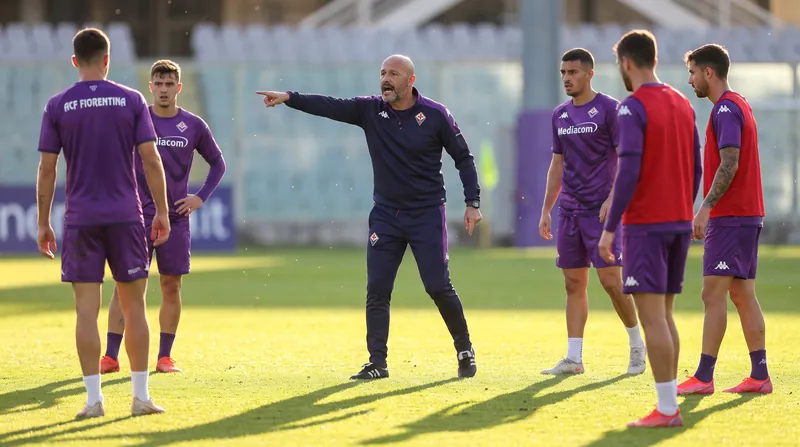
Fiorentina Re-Hire Paolo Vanoli as Head Coach After Sacking Fabio Grosso Three Matches Into Season
6 sources
Revenue Distribution
The €853 Million 'Value Pillar': How UEFA's New Champions League Revenue Engine Actually Works
7 sources
Mount Mizhirgi
Avalanche Kills 11 Climbers and Leaves Six Missing on Russia's Mount Mizhirgi
6 sources

WSL Rules
Crystal Palace Faces Points Deduction After Using Four Substitution Windows in WSL Opener Win
6 sources
Every angle. Every day.
Get Sports stories with full source coverage and perspective breakdowns delivered to your inbox.